
That white, chunky topping is doing more work than it looks like. Pretzel salt is coarse enough to stay crunchy through a full bake, and it carries a faint alkaline tang that makes baked dough taste unmistakably pretzel-like. A pretzel salt substitute needs to match two things: grain size and at least a hint of that tang.
Pure saltiness alone often falls flat.
Most swaps lean one way or the other. Some nail the crunch but skip the tang.
Others add flavor but shift the direction. Knowing what your recipe actually needs, surface salt for crunch or that alkaline bite, helps you pick the right one fast.
The best pretzel salt substitutes are pretzel seasoning blended with coarse salt, kosher salt with a baking soda pinch, everything bagel topping, smoked salt mixed with kosher salt, and plain coarse salt. Match grain size first, then add tang if your recipe needs it.
5 Best Pretzel Salt Swaps (Quick Reference)
Use the table below to scan your options by tang vs texture priority before reading the full detail for each. If tang matters to your recipe, look at the "Key Note" column first.
| # | Substitute | Best For | Ratio | Key Note |
|---|---|---|---|---|
| 1 | Pretzel Seasoning + Coarse Salt | ★ Both | 1:1 | Closest flavor match overall |
| 2 | Kosher Salt + Baking Soda | ★ Both | 1:1 | DIY tang, keep soda minimal |
| 3 | Everything Bagel Topping | Baking | 1:1 | Savory shift, no pure tang |
| 4 | Smoked Salt + Kosher Salt | ★ Both | 1:1 | Depth without exact tang |
| 5 | Plain Coarse Salt | Emergency | 1:1 | Saltiness only, no tang |
1. Pretzel Seasoning + Coarse Salt
Pretzel seasoning already leans salt-forward and carries the recognizable pretzel profile, so combining it with extra coarse salt covers both flavor and crunch in one move. Because that alkaline bite is baked into most pretzel seasonings, you get closer to the real thing than with any plain salt alone.
- Flavor match: Very close. The seasoning carries tang; the coarse salt adds the expected saltiness.
- Texture match: Good, as long as the seasoning itself is not finely milled or clumped.
- When to use: Soft pretzels, pretzel rolls, pretzel-crusted snacks, and any baked surface where flavor accuracy matters.
- Ratio: Use a 1:1 swap by volume, then add a small extra pinch of coarse salt if you want more visible grain.
Skip if: your pretzel seasoning is very fine or clumped together, since the visual crunch of true pretzel salt depends on keeping the grains large and distinct.
2. Kosher Salt + Baking Soda
Kosher salt has a flat, clean salinity that works well on baked surfaces, and a tiny pinch of choosing a leavener alternative helps recreate the mild alkaline bite that makes pretzels taste like pretzels. Baking soda mimics that tang because pretzel dough is traditionally dipped in an alkaline solution before baking.
Kosher Salt + Baking Soda Pinch
Works for: baked pretzels, pretzel buns, any recipe where you miss the alkaline tang
Skip if: you're making a delicate dessert topping where any soapy or harsh note shows
Plain Kosher Salt Only
Works for: recipes where texture and saltiness are the only concern
Skip if: the recipe depends on tang for its pretzel-forward identity
- Baking soda ratio: Use no more than ¼ teaspoon baking soda per 2 tablespoon kosher salt. More reads as flat or slightly harsh.
- Texture tip: Kosher salt grains stay coarse and crunchy through baking, which is exactly what you want.
- Timing: Mix dry before applying. Sprinkle immediately before the item goes into the oven so it toasts in place.
Skip if: the recipe is a delicate sweet bake where baking soda flavor would compete with the other ingredients.
3. Everything Bagel Topping
Everything bagel topping is salt-forward by nature, so it covers the main job of pretzel salt on any baked surface. If you want picking a bagel-style base and you're okay with the sesame, poppy, and onion notes it adds, it sticks well and toasts beautifully.
It won't replicate the pure pretzel tang, but it trades that for a savory complexity that works on rolls, flatbreads, and snack mixes.
- Best uses: Pretzel rolls, focaccia, savory crackers, and breadsticks where an onion-herb-sesame note fits the recipe.
- Flavor shift: Expect garlic, onion, and sesame notes alongside the salt. It's a different direction, not a wrong one.
- Texture fix: If the blend has large flake salt already, no adjustment needed. If it's fine, mix in a few extra coarse salt crystals.
- Ratio: Use the same volume as you would pretzel salt, then taste after baking and add a small plain salt pinch if it needs more edge.
Skip if: your recipe needs a neutral, purely pretzel-like flavor without any onion, garlic, or seed notes coming through.
4. Smoked Salt + Kosher Salt
Smoked salt adds a bold, savory depth that can stand in for the complexity pretzel salt provides, even when the tang is not quite there. We prefer smoky crystalline options that stay coarse through baking rather than fine smoked varieties that dissolve into the crust quickly.
The trick is balance. Too much smoked salt and the topping tastes like barbecue.
A partial mix with kosher salt keeps the focus on salty and savory without going smoky-sweet.
| Use | Ratio | Notes |
|---|---|---|
| Pretzel rolls / soft buns | 1 part smoked + 2 parts kosher | Keeps smokiness subtle, crunch intact |
| Snack crackers / flatbreads | 1 part smoked + 1 part kosher | More depth OK here; bold flavor fits |
| General bread topping | ½ part smoked + 2 parts kosher | Background smoke, mostly salt-forward |
- Best uses: Hearty breads, pretzel-style snacks, savory buns, and anything with a sturdy crust that can carry a bolder topping.
- Grain check: Choose coarse smoked salt, not the fine powdery kind, so the topping stays visible and crunchy after baking.
Skip if: your dish already has smoky seasonings in the dough or filling, since layering smoked salt on top pushes it past the point of balance.
5. Plain Coarse Salt
No tang, no complexity, but it still does the most important thing: it keeps the outside of your bake properly salted and crunchy. If you need coarse grain swaps when kosher is also out, flaky sea salt or pickling salt both hold up on baked surfaces similarly well.
It won't taste like a classic pretzel, but it won't taste wrong either.
- Best application spots: Soft pretzels, pretzel bites, rolls, and breadsticks where some saltiness is required even if tang is missing.
- Tang workaround: If the pretzel-like bite matters, add a very small baking soda pinch directly to the dough next time rather than the topping.
- Ratio: Use the same volume as pretzel salt. Coarse varieties cover the crust in a similar spread pattern.
Skip if: you're specifically targeting the classic pretzel bite and your base dough is otherwise mild, since plain salt won't compensate for missing tang.
Making Pretzel Salt Substitutes Work (Timing + Texture)
The biggest reason substitutes fail on baked surfaces is timing. Apply your swap immediately before the item goes into the oven so the grains toast rather than sit and absorb moisture.
If you're working with storing older salt blends that have clumped, break them apart before sprinkling so coverage stays even. Grain size and the moment you add the topping matter more than the specific salt variety you chose.
- Before vs after baking: Apply coarse substitutes before baking for adhesion and toasting. Reserve fine salts for post-bake if you want a lighter, non-dissolved finish.
- Texture fix: If your substitute is too fine, mix it with a few coarse flakes or pulse briefly to create mixed grain sizes that mimic pretzel salt's irregular crystals.
- Final taste check: Once baked, taste a plain piece. If saltiness is missing, add a pinch at the table. If tang is missing, add a small baking soda pinch to the wash or dough on your next batch.
Frequently Asked Questions
Use a 1:1 volume swap for any coarse substitute. If your replacement is finer than pretzel salt, reduce by about 20 percent to avoid over-salting the surface.
Add a small baking soda pinch to the egg wash or boiling water instead. That puts the tang into the crust itself rather than the topping.
Apply immediately before baking, right after brushing with egg wash or water. The moisture helps the grains bond to the surface before they toast.
Mix fine table salt with any coarser grain you have, even a small amount. Apply it after baking rather than before so it doesn't fully dissolve into the crust.
No. Boiling uses baking soda dissolved in water, not surface salt. Pretzel salt substitutes are only for topping after the boiling step is done.
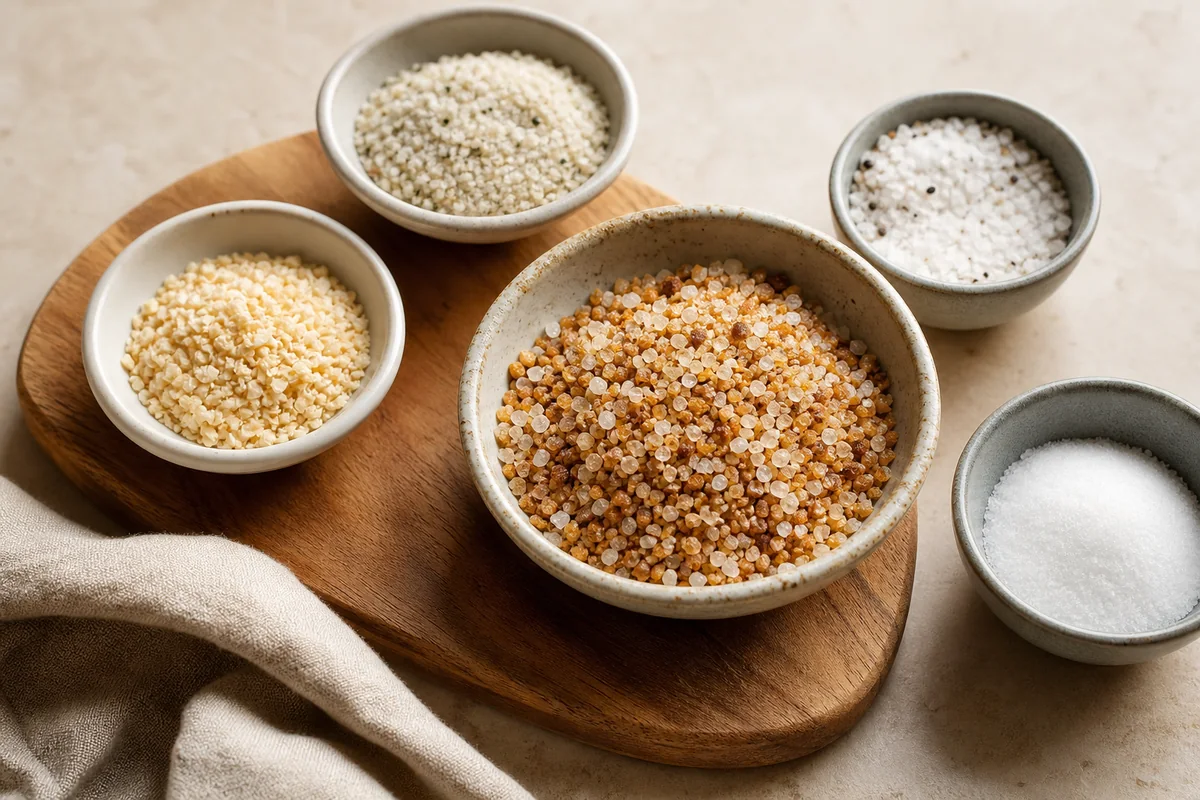
5 Best Pretzel Salt Substitutes You Can Trust
Ingredients
Equipment
Method
- Choose the closest match: use the baking soda–salt blend if you need tang, or a pretzel seasoning if you need direct flavor.
- Match the amount using the 1:1 ratio, then check the surface coverage for visual salt crunch.
- If your substitute is finer than pretzel salt, pulse it briefly or add a few extra coarse grains so it stays crunchy on the crust.
- Add the topping immediately before baking (or right after shaping for quick bakes) so it adheres and toasts.
- Taste once baked and adjust: add a tiny pinch more salt for saltiness, or add a very small baking soda pinch next time for tang.
Notes
- Baking soda is potent—use it sparingly in any DIY blend.
- Texture matters: pretzel salt is usually coarse, so aim for visible grains.
Tried this recipe?
Let us know how it was!
Carrie is a food writer and editor with more than 15 years of experience. She has worked for some of the biggest names in the food industry, including Bon Appétit, Food & Wine, and Martha Stewart Living.
As the Editor in Chief of EpicureDelight, Carrie oversees all of the content on the site. She also manages the team of contributing writers and editors, who help to create delicious recipes, helpful tips, and informative articles that you’ll find on the site.
A native of the Chicago area, Carrie is passionate about all things food. She loves trying new restaurants and experimenting with new recipes in her kitchen. She’s also a graduate of the Culinary Institute of America, so she knows a thing or two about food!



