
That sweet-tart pop raspberries give a sauce or filling is surprisingly hard to fake. Finding the right raspberries substitute means thinking about two things at once: flavor brightness and whether the texture matters in your specific recipe.
A cooked filling forgives a lot. A no-bake topping or a delicate cheesecake swirl is less forgiving.
The substitute that works for a baked muffin may turn a fresh fruit tart watery.
Most berry swaps are closer than you think. The adjustments are small: a squeeze of lemon here, a 2-minute simmer there.
The best raspberry substitutes are blackberries, strawberries with lemon, sour cherries, cranberry compote, and pomegranate arils. Each swap works best when you match tartness first, then adjust thickness by simmering or straining. Most work at a 1:1 ratio with small tweaks.
5 Best Raspberry Substitutes for Baking and Toppings
Tartness is the real separator here. Berries like sour cherries and blackberries are naturally tart; strawberries often need lemon to compensate.
Use this table to pick fast, then read the detail below.
| # | Substitute | Best For | Ratio | Key Note |
|---|---|---|---|---|
| 1 | Blackberries | Both | 1:1 | Reduce sugar slightly |
| 2 | Strawberries + lemon | Both | 1:1 | Add 1 teaspoon lemon per cup |
| 3 | Sour Cherries | Baking | 1:1 | Simmer 3-5 min to thicken |
| 4 | Cranberry Compote | Baking | ¾:1 | Cook with sugar; mash well |
| 5 | Pomegranate Arils | Cooking | ¾:1 | Reduce liquid if too thin |
1. Blackberries
Blackberries are the closest thing to raspberries in the berry world. They share a similar seeded texture, they cook down at the same rate, and they hold their shape in pie layers and compotes.
If you want dark berry swaps that go beyond just this one option, there are several worth knowing.
The flavor skews slightly deeper and less bright than raspberries. In very sweet recipes, reduce added sugar by 1-2 tablespoon per cup to keep the balance right.
Blackberries
Works for: pie fillings, cooked sauces, tarts, creamy dessert swirls, muffins
Skip if: you need a brighter, lighter flavor - blackberries read earthier than raspberries
- Ratio: Use 1:1 by volume, fresh or frozen.
- Texture: Seeds are similar to raspberries, so no need to strain unless the recipe calls for it.
- Sugar adjustment: Reduce by 1-2 tablespoon per cup in sweeter batters or fillings.
- Sauce tip: Mash and simmer 3 minutes for a compote-style consistency that matches raspberry sauce.
*Skip if* your recipe depends on that bright, almost floral top note raspberries carry - blackberries won't replicate it.
2. Strawberries (with lemon)
Strawberries are the most available swap, but they need help. On their own, they're sweeter and milder than raspberries.
Knowing how strawberries taste by variety helps you pick a riper, slightly tart one that needs less correction. Add about 1 teaspoon of lemon juice per cup of mashed strawberries to bring the tartness into range.
They work best in recipes where you mash or cook the fruit. In a baked muffin or a jammy filling, the difference is hard to spot once adjusted.
- Ratio: 1:1 by volume, then add lemon juice to taste.
- Tang fix: 1 teaspoon fresh lemon juice per cup is the starting point; go up to 1½ teaspoon if the recipe is very sweet.
- Consistency: Strawberries release more liquid. Simmer an extra 2 minutes or drain 1-2 tablespoon before adding to batter.
- Strain option: If your recipe wants a smooth sauce, strawberries strain very cleanly after mashing.
*Skip if* you're making a seed-forward topping where raspberry texture is part of the visual. Strawberries won't replicate that.
3. Sour Cherries (pitted)
For cooked desserts that need genuine tart punch, sour cherries are hard to beat. They're available jarred, frozen, and occasionally fresh in summer.
The cherry variety comparison makes clear why variety matters here - sweet cherries won't substitute the same way at all.
The flavor is cherry-forward, not berry-identical. But in a baked filling or swirl, the tartness reads close enough that most people won't notice the difference.
- Ratio: 1:1, pitted (always pitted - a stray pit is bitter and hard).
- Prep: Mash slightly and simmer 3-5 minutes for a raspberry-style compote texture.
- Sweetness: Sour cherries need about 1-2 tablespoon added sugar per cup when used raw in a compote.
- Best in: Pie fillings, cheesecake swirls, sauces, and any recipe that cooks the fruit.
*Skip if* you're sensitive to that distinct cherry note. It's tart, but it's not a berry flavor.
4. Cranberries (quick compote)
Raw cranberries are almost inedibly sour. Cooked with a little sugar, they become a tangy, spreadable substitute that works well in baked fillings and sauces.
If you want to understand that tart, waxy profile before cooking them, it helps set expectations for how much sweetening they need.
The key is gradual sweetening. Start with 1 tablespoon sugar per ½ cup cranberries and taste as you go.
Over-sweetening is easy and kills the tartness that makes them a useful swap.
| Use | Ratio | Notes |
|---|---|---|
| Pie filling | ¾:1 | Cook until burst, mash, sweeten to taste |
| Sauce / swirl | ¾:1 | Simmer 5 min; strain for smooth finish |
| Muffin batter | ¾:1 | Fold in compote; reduce batter sugar by 1 tbsp |
*Skip if* your recipe needs a no-cook topping or a delicate fresh fruit layer. Raw cranberries don't work here.
5. Pomegranate Arils
Pomegranate arils carry real tartness and a jewel-red color that looks close to raspberry in layered desserts. The catch is juice.
They're far more liquid than raspberries, so any sauce made with mashed arils will run thin unless you reduce it. For yogurt parfaits, smoothie bowls, or lightly cooked swirls, that thinness is fine.
- Ratio: Use ¾ cup arils per 1 cup raspberries called for.
- Thickness fix: Simmer mashed arils for 2-4 minutes after mashing to reduce and concentrate.
- Best in: Yogurt toppings, layered desserts, smoothies, and light compote swirls.
- Texture note: The seeds feel harder than raspberry seeds. For a smooth sauce, always strain after mashing.
*Skip if* your recipe relies on that soft, seeded raspberry texture as part of the experience. Pomegranate seeds are crunchier and feel very different.
Making Raspberry Substitutes Work Every Time
The biggest mistake people make is choosing a substitute by sweetness alone. Tartness is what makes raspberries taste like raspberries, so match that first, then fix consistency.
When storing lemon juice for tartness corrections, fresh juice keeps well for 2-3 days refrigerated in a sealed container.
- Start with tartness: If your substitute is sweeter than raspberries, add lemon juice in ½ teaspoon increments and taste before adding more.
- Control thickness: Simmer any watery substitute for 2-5 minutes after mashing. Reduce by about 2 tablespoon per cup for a jammy, spreadable result.
- Strain for smooth finishes: Run cooked berry mixtures through a fine mesh strainer if you want a seedless sauce or filling. Press firmly to extract all the flavor.
Frequently Asked Questions
Blackberries are the closest 1:1 swap for baking. They share a similar seeded texture and tart flavor, and they cook down at the same rate as raspberries in batters and fillings.
Add lemon juice in small amounts, starting at ½ teaspoon per cup, until the tartness feels right. Also reduce any added sugar in the recipe by 1-2 tablespoon when using sweeter fruits like strawberries.
In baked goods like muffins, yes - add them frozen directly to batter. For sauces or fillings, thaw and drain first to prevent a watery result.
Yes, if seeds bother you or the recipe expects a smooth texture. Press the cooked, mashed mixture through a fine mesh strainer and discard the solids.
Simmer over medium heat and stir until reduced by about 2 tablespoon per cup. For faster results, a small pinch of cornstarch whisked in at the end works well.
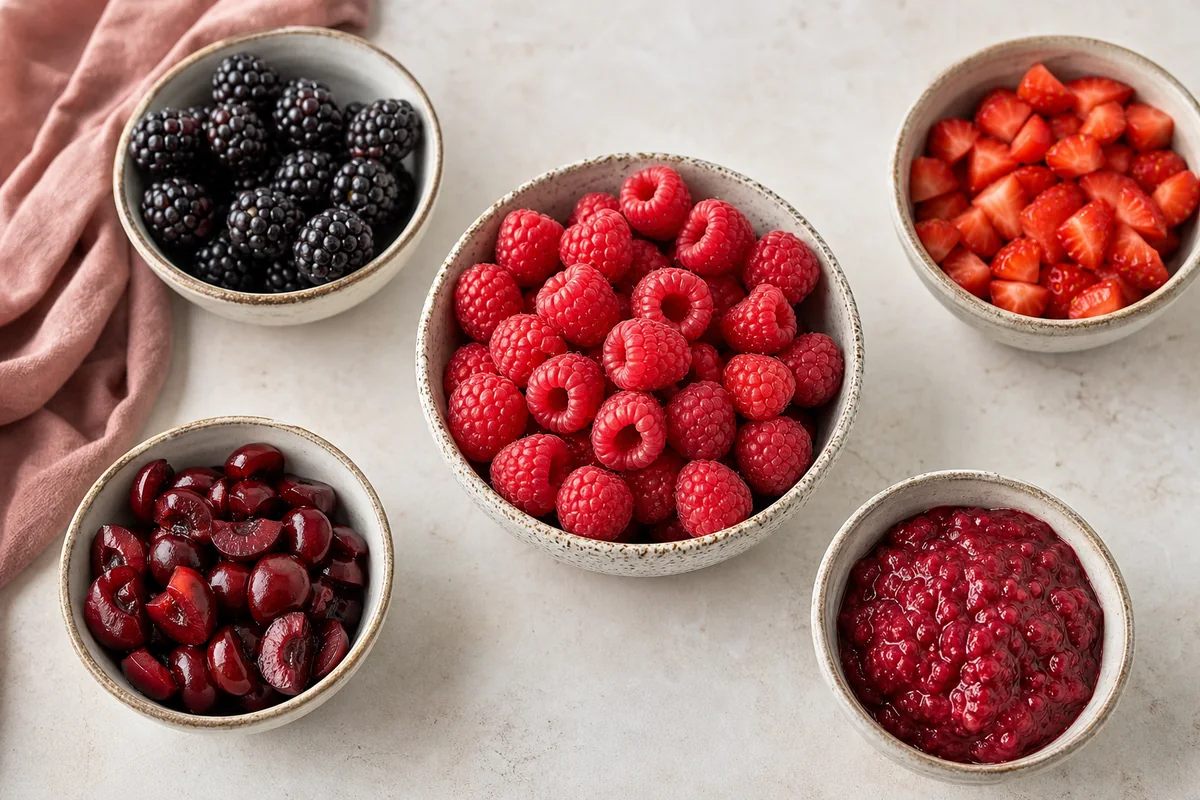
5 Best Raspberries Substitutes for Any Recipe
Ingredients
Equipment
Method
- Identify your use case: topping, cake/muffin batter, or a cooked filling/sauce (tartness and thickness are handled differently).
- Choose a substitute from the list: match closest texture first (blackberries), then match sweetness/tang (cherries, strawberries + lemon).
- Use the listed ratio. If your substitute is sweeter than raspberries, reduce added sugar in the recipe by about 1–2 tablespoon per cup of fruit.
- If you need a smoother finish for sauces or fillings, mash thoroughly; for seedless style, strain after cooking.
- Taste-test: add a squeeze of lemon for tang or a pinch of salt to boost berry flavor before serving or baking.
Notes
- Ratios are for cooked or mashed fruit. For whole-berry toppings, start with the 1:1 ratio and adjust sweetness with lemon.
Tried this recipe?
Let us know how it was!
Carrie is a food writer and editor with more than 15 years of experience. She has worked for some of the biggest names in the food industry, including Bon Appétit, Food & Wine, and Martha Stewart Living.
As the Editor in Chief of EpicureDelight, Carrie oversees all of the content on the site. She also manages the team of contributing writers and editors, who help to create delicious recipes, helpful tips, and informative articles that you’ll find on the site.
A native of the Chicago area, Carrie is passionate about all things food. She loves trying new restaurants and experimenting with new recipes in her kitchen. She’s also a graduate of the Culinary Institute of America, so she knows a thing or two about food!



