
Reblochon is the cheese that quietly holds a tartiflette together. It melts into a creamy, almost silky layer with a mild, nutty edge from its bloomy rind.
Finding a good reblochon cheese substitute means matching that behavior first: the slow, even melt and the gentle tang, not just the look.
The rind is what matters most in baked dishes. Without that bloomy character, you lose the subtle earthiness that keeps reblochon from tasting flat.
Most good swaps are soft, rind-on cheeses with similar moisture content.
Reblochon is a creamy, bloomy-rind cheese with a mild nutty flavor and smooth melt. The best substitutes match its soft texture and even melt first, then its gentle tang. Taleggio and Brie are the closest all-around swaps, especially for gratins and baked dishes.
5 Best Reblochon Cheese Substitutes, Ranked by Closeness
Each of these cheeses matches a different part of reblochon's profile. Pick based on whether you need the rind flavor, the melt, or both.
This nutty bloomy rind is what defines the original, so keep that in mind as you scan.
| # | Substitute | Best For | Ratio | Key Note |
|---|---|---|---|---|
| 1 | Taleggio | Both | 1:1 | Keep rind-on for flavor |
| 2 | Brie | Both | 1:1 | Choose young, soft Brie |
| 3 | Munster | Baking | 1:1 | Use less if dish is mild |
| 4 | Camembert | Both | 1:1 | Slice thicker to avoid pooling |
| 5 | Emmental | Baking | 1:1 | Grate for even melt |
1. Taleggio
Taleggio is the closest structural match to reblochon. Both are washed or bloomy-rind cheeses with a soft paste, a creamy melt, and a flavor that releases slowly as the cheese heats.
In a tartiflette or gratin, Taleggio behaves almost identically to reblochon at 190°C over 25 minutes.
Keep the rind on. It drives the earthy, slightly tangy edge that defines the dish.
If you want to explore bloomy rind options beyond Taleggio itself, there are several worth knowing.
- Flavor: Mildly tangy with a meaty, earthy note-slightly stronger than reblochon but very close.
- Melt: Creamy and even; the rind softens into the dish rather than separating.
- Ratio: Use 1:1 by weight; no adjustment needed for most baked recipes.
Taleggio
Works for: gratins, baked cheese courses, melted sandwiches, tartiflette
Skip if: your recipe is delicate or you need a very mild aroma-Taleggio can be noticeably tangier.
2. Brie
Brie is the most accessible swap and works well in any baked application where reblochon would be sliced over the top. Choose a younger, softer wheel.
A firmer, extra-aged Brie is too chalky inside and won't melt smoothly at gratin temperatures.
The Brie flavor profile is worth understanding before you commit, since softness varies a lot by age. Slice it to the same thickness as your reblochon layer so it finishes melting at the right moment.
- Flavor: Mild, buttery, and slightly mushroomy-very close to reblochon's gentler side.
- Melt: Smooth and dependable; pairs well with potato-based gratin dishes.
- Ratio: 1:1 by weight; match slice thickness for even cooking.
Skip if: you're baking at high heat (above 220°C) for a short time. Brie can over-soften and pool before the rest of the dish finishes cooking.
3. Munster (Alsace-Style)
Munster is bolder than reblochon. It has the same creamy paste and bloomy-rind melt, but the aroma is more pungent and the flavor pushes into savory, almost meaty territory.
In a mild potato gratin, that difference is noticeable.
Use it at the full 1:1 ratio only if the dish has strong partners: caramelized onion, smoked lardons, or a splash of white wine. For a lighter recipe, pull back to about 80% of the original reblochon weight.
Cut it in even slices, roughly 4-5mm thick, and watch the last 5 minutes of bake time so the rind doesn't over-brown.
Munster's melt is still creamy and stays cohesive. It won't pool or separate the way softer cheeses can at higher temperatures.
It is a reliable choice when you want rind character but can't find Taleggio.
If you need to balance a mild Swiss-style melt against the stronger aroma, consider mixing half Munster and half Emmental. That blend keeps the bloomy flavor without overwhelming a delicate dish.
Skip if: you or your guests are sensitive to strong cheese aromas. Munster in a hot oven fills the kitchen fast.
4. Camembert
Camembert shares the most similar rind profile with reblochon. When aged to a similar stage, both have that soft, white mold rind and a paste that turns gooey under heat.
The flavor is earthy and mildly tangy, which makes Camembert a natural stand-in for cheese courses and baked platters.
The catch is softness. Camembert can go runny faster than reblochon, especially in a high-moisture gratin.
Cut it into thicker slices, at least 6-8mm, to slow that process.
Camembert
Works for: bloomy-rind baked dishes, cheese courses, low-and-slow gratins
Skip if: your recipe needs the cheese to stay sliceable or hold shape through a long bake.
- Flavor: Earthy and bloomy-arguably the closest rind flavor to reblochon of all five options.
- Melt: Very soft; use thicker slices and a moderate oven (around 180°C) to control pooling.
- Ratio: 1:1 by weight, but cut thicker and reduce bake time by 3-4 minutes.
5. Emmental
Emmental is not a bloomy-rind cheese. It has no earthy tang from a rind, and the flavor is milder and slightly sweet.
But it melts cleanly, browns well, and holds together in a gratin without pooling. It is the right call when you can't source any soft-rind cheese and still need a good melt.
| Use | Ratio | Notes |
|---|---|---|
| Potato gratin | 1:1 grated | Mix with a spoon of crème fraîche for creaminess |
| Baked cheese topping | 1:1 grated | Broil last 3 min for golden, bubbly surface |
| Melted sandwich | 1:1 sliced | Pairs well with Dijon mustard for flavor boost |
- Texture tip: Grate Emmental rather than slicing it. Grated cheese spreads evenly and melts in half the time.
- Flavor boost: Add a teaspoon of crème fraîche or a small knob of butter to replicate reblochon's creamy center.
- Best use: Gratins and browned cheese toppings where melt and browning matter more than rind flavor.
Skip if: the whole point of the dish is that bloomy, earthy tang from the rind. Emmental won't replicate it.
Making Reblochon Cheese Substitutes Work
The biggest variable isn't which cheese you pick-it's temperature. Bloomy-rind cheeses melt unevenly when they go straight from the fridge into a hot oven.
Pull your substitute out 10 minutes before baking and let it sit at room temperature. That alone closes most of the gap between a good result and a great one.
If your substitute is stronger than reblochon, balance it with mild components. Potatoes, cream, and sautéed onion all soften bold cheese flavors without changing the dish's character.
Knowing how to handle storing soft cheese correctly also matters, since a past-peak Camembert or Brie will melt poorly and taste sharp.
- Thickness: Match slice thickness to your recipe's bake time. Thinner slices melt faster; thicker ones stay cohesive longer.
- Temperature: Bake at 180-190°C for most gratin-style dishes. High heat causes soft cheeses to pool before other ingredients finish cooking.
- Seasoning: If the substitute is milder than reblochon (Brie, Emmental), add a pinch of fleur de sel on top before baking to bring up the flavor.
Frequently Asked Questions
Taleggio is the closest match. It has the same creamy melt and bloomy-rind character, and it behaves almost identically to reblochon in a potato gratin at standard baking temperatures.
Yes, if you use a younger Brie and bake at 180-190°C. Keep slices at least 5mm thick and avoid very high heat, which causes Brie to pool before the dish finishes cooking.
Taleggio is slightly tangier but not overwhelming. Reduce the amount by 10-15% and pair it with cream or mild potatoes to bring the overall flavor closer to reblochon's gentler profile.
Emmental is your best option. Grate it over the dish and add a spoonful of crème fraîche to mimic reblochon's creamy center. It won't match the rind flavor but melts well.
For Taleggio and Camembert, yes-the rind delivers the earthy flavor that makes the swap work. For Brie or Emmental, the rind is less important and can be trimmed if preferred.
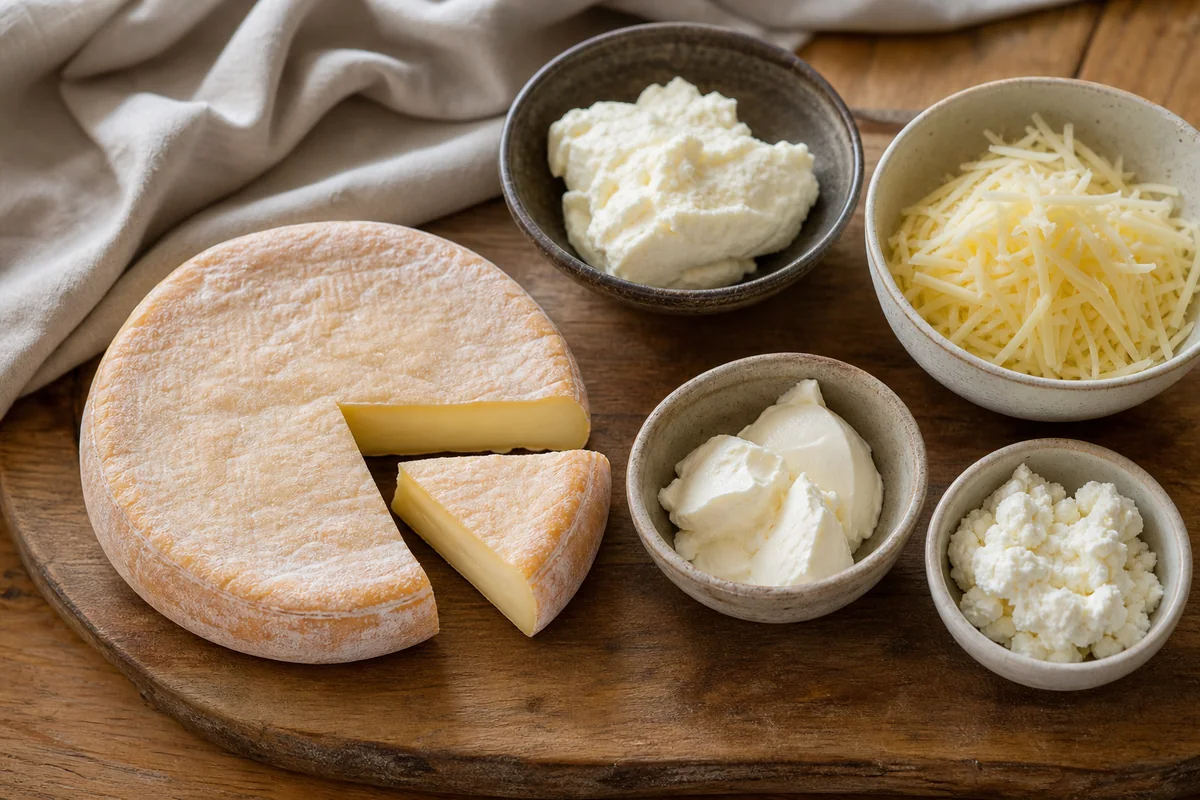
5 Best Reblochon Cheese Substitutes (Closest Match)
Ingredients
Equipment
Method
- Identify your use: melting (baked/gratin) vs. slicing (platter). Choose the closest match to the melt behavior first.
- Use the listed 1:1 ratio, then adjust thickness: aim for a layer thickness that melts within your recipe’s bake time.
- If the substitute is softer/looser than reblochon, reduce spread by using smaller pieces or slightly thicker slices.
- Taste for salt and aroma: if it’s stronger (Munster/Camembert), pair with milder ingredients or reduce the amount slightly.
- For best melt, bring the cheese closer to room temperature before baking (about 10 minutes) and watch closely near the end.
Notes
- Reblochon is a creamy, bloomy-rind cheese; best substitutes should melt smoothly without becoming oily.
- If your recipe is reblochon-forward (baked cheese), prioritize Brie/Taleggio/Tomorrow-style bloomy rind options.
Tried this recipe?
Let us know how it was!
Carrie is a food writer and editor with more than 15 years of experience. She has worked for some of the biggest names in the food industry, including Bon Appétit, Food & Wine, and Martha Stewart Living.
As the Editor in Chief of EpicureDelight, Carrie oversees all of the content on the site. She also manages the team of contributing writers and editors, who help to create delicious recipes, helpful tips, and informative articles that you’ll find on the site.
A native of the Chicago area, Carrie is passionate about all things food. She loves trying new restaurants and experimenting with new recipes in her kitchen. She’s also a graduate of the Culinary Institute of America, so she knows a thing or two about food!



