
That small jar of red pepper flakes does a lot of work. It adds heat, yes, but also a slightly bitter, dried-chili depth that powder alone can't always match.
Finding a solid red pepper flakes substitute is mostly about two things: heat strength and texture. A visible flake on top of pizza needs something different from a pinch stirred into tomato sauce at the back of the stove.
The good news is that several pantry staples cover both cases well. Whether you need flake texture or just the spicy kick, the swaps below are tested and ranked.
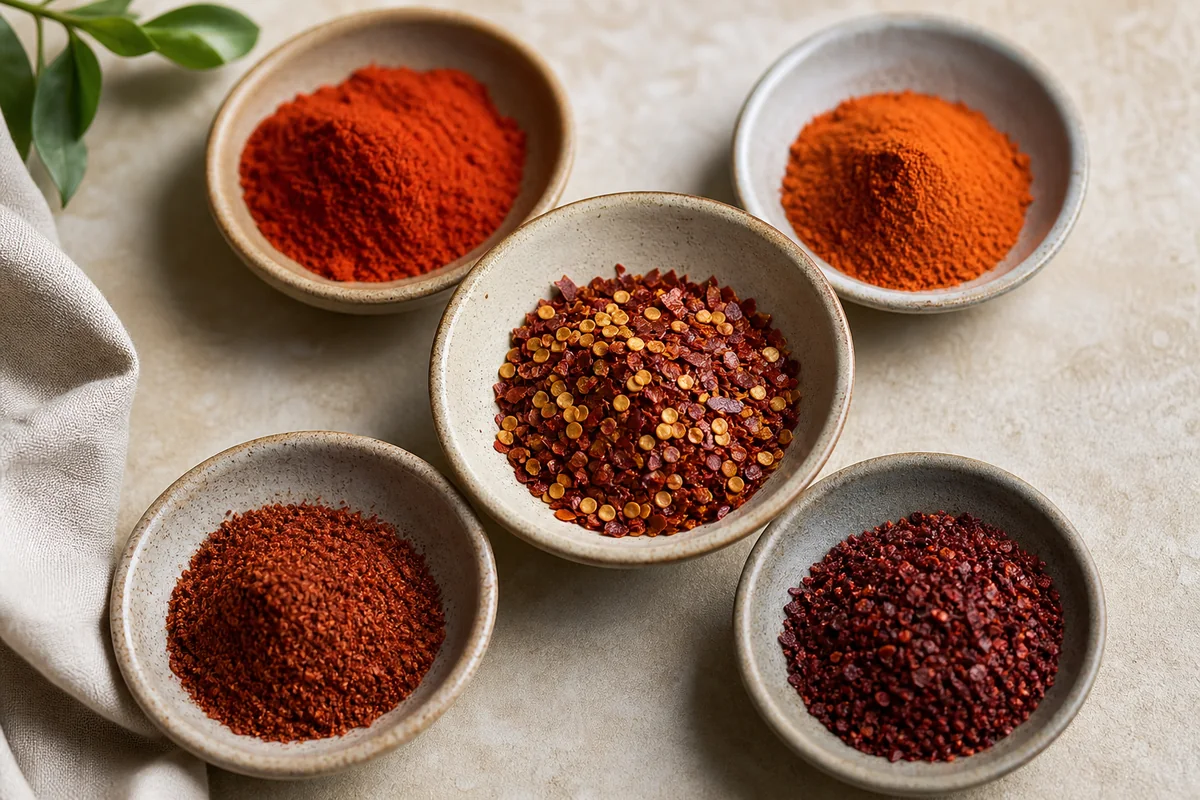
Gochugaru is the closest flake-texture match at a 1:1 ratio. Cayenne pepper gives the most reliable heat at ¾ of the amount. For mild pepper flavor without the bite, paprika or Aleppo pepper work well. Chili powder covers sauces but changes the flavor profile.
5 Best Red Pepper Flakes Substitutes, Ranked by Heat and Texture
Every substitute below is rated by heat level, texture match, and best use. The table gives you the fast view; the sections below explain the details.
| # | Substitute | Best For | Ratio | Key Note |
|---|---|---|---|---|
| 1 | Gochugaru | Both | 1:1 | Closest flake texture match |
| 2 | Cayenne Pepper | Both | ¾:1 | Hotter - start lower |
| 3 | Aleppo Pepper | Both | 1:1 | Milder, fruity warmth |
| 4 | Crushed Dried Chili | Both | 1:1 | Heat varies by variety |
| 5 | Paprika | Both | 1:1 | Low heat, good color |
1. Gochugaru
Gochugaru is the swap we reach for first when a recipe needs visible chili flakes. Its texture is almost identical to red pepper flakes, and you can find Korean chili flavor notes useful if you're new to this spice.
- Flavor and heat: Medium heat with a slightly fruity, mildly smoky edge - closer to red pepper flakes than cayenne
- Best uses: Pizza toppings, pasta, stir-fries, and any dish where visible flakes matter
- Cooking note: In sauces, taste before you finish - the fruity undertone can shift a neutral tomato sauce slightly sweet
- Ratio: Use 1:1 as a starting point, then nudge up if you need more heat
Skip if: you need a clean, neutral chili heat with no fruit notes - cayenne is the better pick.
2. Cayenne Pepper
Cayenne is the most reliable pure-heat swap in this list. It is significantly hotter than most red pepper flakes, so this ground-chili swap needs a lighter hand at first.
Cayenne Pepper
Works for: Sauces, soups, marinades, and baking where even heat distribution matters
Skip if: You can't handle an uptick in heat - start at ½ the amount and taste once the dish is hot
- Ratio: Start at ¾ teaspoon cayenne per 1 teaspoon red pepper flakes, then adjust
- Timing in sauces: Add early so it blooms in oil - this rounds out the sharpness
- Timing in baking: Stir thoroughly into dry ingredients to avoid hot pockets in the finished dish
- Bitterness risk: Don't use high heat for too long after adding - it can turn bitter in a dry pan
3. Aleppo Pepper
Aleppo pepper sits at the mild end of this list, and that's exactly when it earns its place. The fruity warmth it adds - think a hint of dried cherry over a low chili burn - is genuinely good on flatbreads, roasted vegetables, and eggs.
Check out swapping mild fruity peppers if you want more options in this heat range.
- Best for toppings: Sprinkle on pizza, hummus, or labneh where you want color and gentle warmth
- Best for baking and sauces: Low-heat muffins, spiced flatbreads, and tomato-cream sauces where bold heat would overpower
- Boosting heat: Add a pinch of cayenne or black pepper alongside Aleppo if the recipe expects a real kick
- Ratio: 1:1, then increase in ¼ teaspoon increments and taste before adding more
Skip if: the dish genuinely needs aggressive heat - spicy chili or a fiery arrabbiata won't get there with Aleppo alone.
4. Crushed Dried Chili
Crushing a dried chili by hand is often the fastest path to something that looks and behaves exactly like red pepper flakes. The key variable is the chili you pick: an ancho gives you mild and earthy, an árbol gives you sharp heat.
- How to crush: Crumble dried chilis by hand or pulse briefly in a spice grinder - aim for rough flakes, not powder
- Starting dose: Begin at ½ teaspoon per 1 teaspoon called for, then add more after tasting
- Best applications: Pizza, grain bowls, eggs, and any dish where flake texture is part of the visual
- Avoid: Fine-textured baked goods where uneven flake size creates inconsistent heat pockets
Skip if: you need a repeatable result every time - gochugaru or cayenne are more consistent across batches.
5. Smoked or Sweet Paprika
Paprika is not a heat-for-heat replacement. It is a mild, pepper-forward powder that adds color and gentle flavor where red pepper flakes would add fire.
The mild peppery warmth of sweet paprika suits dishes that are already well-seasoned.
- Smoked paprika: Best when the dish benefits from a charred, slightly earthy backdrop - roasted meats, lentil soups, shakshuka
- Sweet paprika: Better for neutral warmth without smokiness - use in cream sauces, egg dishes, or bread doughs
- Ratio: Start at 1:1 by volume, but know you're trading heat for color and mild pepper flavor
- Baking suitability: Excellent - it distributes evenly, holds its color, and won't create spicy surprises in a baked dish
Skip if: your recipe needs real spiciness - paprika is best as a stand-in for color and pepper aroma, not heat.
Making Red Pepper Flakes Substitutes Work
The biggest mistake is adding too much too fast. Because swapping dried peppers always involves guessing at heat strength, the start-low method saves nearly every dish.
- Start and taste: Add half the substitute, let the dish cook for 1-2 minutes so heat blooms, then re-taste before adding more - heat perception rises as the dish rests
- Texture for toppings: Use flake-style substitutes (gochugaru, Aleppo, or crushed dried chili) when the recipe calls for a visible garnish - powder will disappear into the surface and lose the intended texture; this matters especially for blended ground spices that distribute rather than sit on top
- Bloom timing: For sauces, add your substitute early in hot oil; for baking, mix evenly into dry ingredients before any liquid goes in
Frequently Asked Questions
No - cayenne is noticeably hotter, so start at ¾ teaspoon cayenne per 1 teaspoon red pepper flakes. Taste after the dish heats through, then adjust up if needed.
Gochugaru is the best match - it has nearly the same flake size and a comparable heat level. Aleppo pepper works if you prefer milder heat on your slice.
You can't get the same heat from paprika alone - pair it with a small pinch of cayenne to restore the spicy edge while keeping paprika's color and pepper flavor.
It can, but chili powder's cumin and garlic notes will come through in the finished bake. Use ¾ the amount and only in savory recipes where those flavors fit.
If too hot, balance with dairy, a squeeze of citrus, or a pinch of sugar. If too mild, add more in small increments after letting the dish rest for two minutes.
5 Best Red Pepper Flakes Substitutes (Tested Swaps)
Ingredients
Method
- Identify your use: topping (needs flake texture) vs. baking/sauce (powder is easier to distribute).
- Start with the listed swap ratio, then add spice in small increments if your substitute is hotter or milder than flakes.
- For baking or thick sauces, stir well and taste after 1–2 minutes of heat so the flavor fully blooms.
- If using a less-heat substitute (paprika or Aleppo), increase by small steps and balance with salt/acid so it doesn’t taste flat.
- Let the dish sit briefly (2–5 minutes) and re-taste—heat perception often rises as it rests.
Notes
- Heat levels vary by brand and spice grind—always start slightly lower if you’re unsure.
- If you need visible flakes for texture, choose a flake-style chili (gochugaru, Aleppo, crushed dried chili) over pure powder.
Tried this recipe?
Let us know how it was!
Carrie is a food writer and editor with more than 15 years of experience. She has worked for some of the biggest names in the food industry, including Bon Appétit, Food & Wine, and Martha Stewart Living.
As the Editor in Chief of EpicureDelight, Carrie oversees all of the content on the site. She also manages the team of contributing writers and editors, who help to create delicious recipes, helpful tips, and informative articles that you’ll find on the site.
A native of the Chicago area, Carrie is passionate about all things food. She loves trying new restaurants and experimenting with new recipes in her kitchen. She’s also a graduate of the Culinary Institute of America, so she knows a thing or two about food!



