
Stir-fry time and your bottle of rice bran oil is empty. That happens, and it matters less than you'd think-several pantry oils share the same neutral profile and comfortable heat range.
The right rice bran oil substitute is mostly a question of what you're cooking and how hot the pan gets.
Rice bran oil is valued for its mild flavor and good behavior at the temperatures most home cooks actually use: sautéing, stir-frying, shallow-frying, and baking. Most swaps work at a 1:1 ratio.
You only need to adjust when the substitute carries stronger flavor than you want in the finished dish.
For a fast rice bran oil replacement, canola oil is the closest everyday match-neutral flavor, similar texture, 1:1 ratio. Avocado oil is the better pick when heat is the priority. Use safflower or high-oleic sunflower when you want a very clean flavor with good shelf stability.
5 Best Rice Bran Oil Swaps (and the Ratios to Use)
Before going item by item, here's the full reference in one place. Every substitute below works at a 1:1 ratio unless your oil carries a noticeable flavor-in that case, pull back by 1-2 teaspoon and balance with a blander oil.
| # | Substitute | Best For | Ratio | Key Note |
|---|---|---|---|---|
| 1 | Canola Oil | Both | 1:1 | Most neutral everyday swap |
| 2 | Avocado Oil (Light) | Both | 1:1 | Best high-heat performance |
| 3 | High-Oleic Sunflower Oil | Both | 1:1 | Stable, clean, medium-high heat |
| 4 | Safflower Oil | Both | 1:1 | Very mild, lightly seasoned dishes |
| 5 | Vegetable Oil Blend | Both | 1:1 | Handy pantry backup |
1. Canola Oil
Canola is the most practical swap here. It is nearly flavorless, handles a wide range of cooking temperatures, and sits in most kitchens already.
Use it 1:1 in every recipe where rice bran oil would otherwise disappear into the background. That includes stir-fries, sautéed vegetables, shallow-fried proteins, and baked goods where the oil is there for moisture rather than flavor.
If you want a broader look at neutral oil options, that comparison covers the full range.
- Best use: Stir-fry, sauté, shallow-fry, baking-anywhere flavor neutrality matters
- Ratio: 1:1, no adjustment needed for most recipes
- Flavor impact: Virtually none; it behaves almost identically to rice bran oil in finished dishes
- Smoke point: Solid for typical home-cooking heat; not ideal for sustained very-high-heat deep-frying
Skip if your recipe demands extra smoke-point margin above typical sauté temperatures-canola performs well but isn't the highest-smoke option available.
2. Avocado Oil (Light/Mild)
Light avocado oil handles heat confidently. It has one of the higher smoke points among common cooking oils, which makes it a strong candidate for stir-frying and searing where the pan gets genuinely hot.
The flavor is mild but not zero. Most people won't detect it in a stir-fry with strong seasonings, but it can show up faintly in a simple pan sauce.
If you're tracking keeping this oil fresh over time, it benefits from cool, dark storage after opening.
- Best use: Stir-fry, searing, and shallow-frying at high heat
- Ratio: 1:1, no scaling needed
- Flavor impact: Mild and clean; faint avocado note in very simple dishes
Skip if you're making a delicate, lightly seasoned sauce where even a faint oil character could read through.
3. High-Oleic Sunflower Oil
This is the version to look for on the label-high-oleic, not standard sunflower. It is more stable at medium-high heat and stays cleaner in flavor than regular sunflower oil.
Use it 1:1 for everyday sautéing, stir-frying, or baking batters that call for a neutral oil. For anyone already exploring similar neutral oil swaps, high-oleic sunflower sits at the more reliable end of that group.
- Best use: Medium-high sauté, stir-fry, baking mixes
- Ratio: 1:1 across cooking methods
- Flavor impact: Very clean; occasional faint nutty note in some brands
Skip if your recipe is sensitive to even subtle nutty undertones-some batches carry more of that character than others.
4. Safflower Oil
Safflower oil is one of the most flavor-neutral cooking oils available. It won't compete with your seasoning, which makes it a good match for lightly dressed dishes where the oil needs to stay invisible.
If you want to understand what makes safflower so mild, its fatty acid profile is a big part of the story.
Use it at a 1:1 ratio. It behaves predictably at sauté and shallow-fry temperatures.
Safflower vs. Canola
Works for: Very lightly seasoned dishes, baking, and recipes where flavor neutrality is the top priority
Skip if: You need maximum high-heat tolerance-canola edges it out for sustained very-high-heat frying
- Best use: Light sautéing, baking, simple pan dishes
- Ratio: 1:1 for a direct swap
- Flavor impact: Essentially none-one of the cleanest options on this list
5. Vegetable Oil Blend
Most households have a bottle of vegetable oil. It is the emergency swap when no other option is on hand, and it works for the majority of everyday recipes at a 1:1 ratio.
The catch is that "vegetable oil" isn't one thing-it is usually a blend of soy, corn, or canola, and quality varies by brand. Test it before committing to a large batch.
For a closer look at how common cooking oil differences play out in practice, that comparison is worth a read.
- Best use: General sautéing and recipes where a neutral, mild oil won't change the dish
- How to test: Heat 1 teaspoon in a pan-if it smokes quickly or smells sharp, switch to a more consistent neutral oil
- Ratio: 1:1, but treat it as a "works most of the time" swap, not a guaranteed match
Skip if your blend smokes early or carries a noticeable flavor. In that case, canola or safflower is a more reliable choice.
Making a Rice Bran Oil Substitute Work
Swapping oils is usually straightforward, but a few small habits keep the results consistent. Most neutral oil alternatives perform best when you match the substitute to your heat level first-then consider flavor second.
If you're working with extra-light olive oil and want a clearer sense of the mildly fruity character it can bring, that's worth checking before you use it in a delicate bake.
- Choose by cooking heat: For stir-fry and shallow-frying above 375°F, use avocado oil or high-oleic sunflower; canola handles everything else with ease
- Adjust for flavor: If your substitute has a stronger note than expected, pull it back by 1-2 teaspoon per ¼ cup and finish with a neutral oil to balance
- Check oil freshness: A sharp or stale smell before heating is a sign to switch bottles-off-flavors in the oil will carry through to the dish
Frequently Asked Questions
Yes, canola oil works at a 1:1 ratio in virtually every recipe. Its flavor is neutral enough that most finished dishes won't taste any different from the original.
Light avocado oil has the highest smoke point among the five substitutes listed here. Use it 1:1 when your pan is at full stir-fry heat.
It can handle moderate frying but isn't ideal for sustained deep-frying. It may carry a faint olive character and performs better in lower-heat cooking.
Reduce the substitute by 1-2 teaspoon per ¼ cup and balance it with a neutral oil like canola. A bitter note often signals the oil was overheated-lower your pan temperature.
Yes, at a 1:1 ratio most neutral liquid oils produce the same crumb texture. Avoid substitutes with strong flavor if the baked good is lightly seasoned.
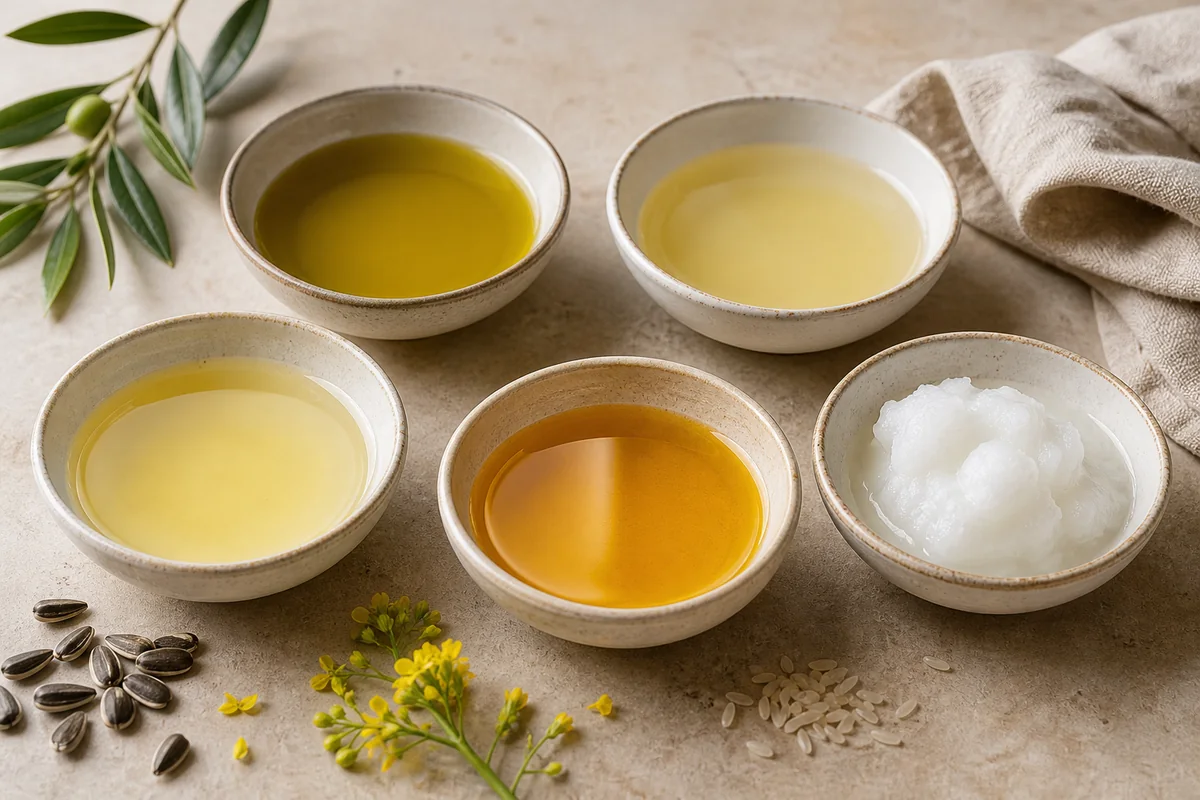
5 Best Rice Bran Oil Substitutes (with Ratios)
Ingredients
Equipment
Method
- Match your cooking method: for high-heat stir-fry or shallow-frying, choose canola, avocado, or high-oleic sunflower.
- Use the listed ratio (most swaps are 1:1). If your substitute tends to taste stronger, reduce by 1–2 teaspoon per ¼ cup and add a neutral oil to balance.
- If your recipe uses a lot of oil for frying, do a quick test: heat 1 teaspoon first—if it smokes heavily, switch oils.
- For baking, keep the swap 1:1 and avoid substitutes with strong flavor notes that can carry through to the crumb.
- Store any used oil promptly to limit off-flavors, especially if it was heated to high temperatures.
Notes
- Most rice bran oil swaps are 1:1 by volume.
- Flavor impact matters most in light sauces and baking where oil character shows.
Tried this recipe?
Let us know how it was!
Carrie is a food writer and editor with more than 15 years of experience. She has worked for some of the biggest names in the food industry, including Bon Appétit, Food & Wine, and Martha Stewart Living.
As the Editor in Chief of EpicureDelight, Carrie oversees all of the content on the site. She also manages the team of contributing writers and editors, who help to create delicious recipes, helpful tips, and informative articles that you’ll find on the site.
A native of the Chicago area, Carrie is passionate about all things food. She loves trying new restaurants and experimenting with new recipes in her kitchen. She’s also a graduate of the Culinary Institute of America, so she knows a thing or two about food!



