
Roquefort is not a polite cheese. It bites back with salt, a vinegary tang, and that sharp, damp-cave funk that only comes from sheep's milk and blue mold.
Finding a good roquefort cheese substitute means matching those three signals-salt, tang, and funk-not just swapping in anything crumbly.
The good news is that most blue cheeses land close. The better news is that two non-blue options (feta and goat) can step in when funk isn't the point and salt-tang contrast is.
To learn more about what mold-ripening actually does to flavor, this sharp mold profile breaks it down clearly.
Pick by job first. Crumbling over steak or salad asks for something dry enough to hold its shape.
Sauce and dressing work asks for something that melts evenly without clumping.
The best roquefort substitutes are Bleu d'Auvergne and Gorgonzola piccante for near-identical funk. Stilton and Maytag Blue are strong backup options. Feta or goat cheese work when blue-cheese funk is not required-use them for salt and tang only.
5 Best Roquefort Cheese Replacements
| # | Substitute | Best For | Ratio | Key Note |
|---|---|---|---|---|
| 1 | Bleu d'Auvergne | Both | 1:1 | Closest funk and salt |
| 2 | Gorgonzola | Both | 1:1 | Dolce for sauces, piccante for funk |
| 3 | Stilton | Both | 1:1 | Nuttier, slightly less tangy |
| 4 | Maytag Blue | Both | 1:1 | Bold tang, good crumble |
| 5 | Feta (drained) | Cold | ¾:1 | Salt-tang only, no funk |
When you can't source any of the blue-cheese options above, the wider bold-cheese options list is worth a look before reaching for feta.
1. Bleu d'Auvergne
Bleu d'Auvergne is the cleanest swap on this list. It is a French blue, mold-ripened from cow's milk, with salt and tang that land nearly on top of roquefort's profile.
The texture crumbles well at refrigerator temperature. Some brands are slightly less sharp than roquefort, but the difference is small enough that most tasters won't notice it in a finished dish.
- Flavor match: Salty, mold-ripened tang; occasionally a touch milder than roquefort depending on age
- Texture: Crumbly and firm; holds shape well on salads and steak toppings
- Best use: 1:1 in any roquefort application-salads, sauces, dressings, or board pairings
Bleu d'Auvergne
Works for: near-identical salt and mold-ripened funk in crumbles and warm sauces
Skip if: you need the sharpest possible bite-some batches are noticeably milder than aged roquefort
Skip if your recipe depends on an aggressively sharp, vinegary hit. In that case, taste first and add a few drops of white wine vinegar to close the gap.
2. Gorgonzola
Go piccante when you want roquefort's sharp funk. Go dolce when the recipe asks for something sauce-friendly and creamy.
Piccante is aged longer and crumbles more like roquefort. Dolce is softer and blends into warm sauces without clumping.
For flavor differences between the two styles, the breakdown is worth reading before you buy.
- Flavor intensity: Piccante rivals roquefort's sharpness; dolce is milder and sweeter
- Texture: Piccante crumbles firm; dolce is almost spreadable at room temp
- Best dish: 1:1 on warm dishes-pasta, steak, grain bowls; taste and adjust salt
Skip if you are making a no-cook salad and the recipe needs discrete, dry crumbles. Dolce will go mushy. Use piccante instead, or move to Bleu d'Auvergne.
3. Stilton
Stilton is bold and blue, but it has a nutty undertone that roquefort doesn't. That depth is an asset in some dishes and a mild distraction in others.
Let it come to room temperature before crumbling. Cold Stilton resists breaking down evenly in warm dressings and sauces.
When picking a Stilton stand-in is the actual problem, that page covers the next layer of swaps.
- Closest use: Crumbled onto soups, pear salads, or warm flatbreads where nutty depth adds to the dish
- Texture handling: Room-temperature crumbles spread more evenly; colder pieces clump in dressings
- Best pairing: Dishes with fruit, walnuts, or honey, where the nuttier profile is welcome
Stilton
Works for: dishes that benefit from blue-cheese depth with a nutty, layered quality
Skip if: you need that sharp, vinegary tang-add a small acid splash to compensate if needed
4. Maytag Blue
Maytag Blue is an American blue cheese with a strong, reliable bite. It is salty and tang-forward, which makes it one of the better choices when you want roquefort's punch in a salad or on a steak.
It crumbles cleanly and holds its shape under heat reasonably well. Salinity varies between batches, so taste before you add the full amount.
- Flavor: Sharp, salty tang with a bold blue profile; closer to piccante gorgonzola than to dolce
- Texture: Firm crumble that works on salads, steak sauces, and grain bowls
- Best use: 1:1 swap in cold or warm applications; reduce slightly if the batch reads very salty
Skip if you are after a mellow, creamy blue. Maytag Blue is consistently sharp, and it won't tone down in a dish the way dolce gorgonzola does.
5. Feta
Feta is not a blue cheese, and it brings zero mold-ripened funk. What it does bring is salt and tang, and when those two elements are the main contribution roquefort makes in a recipe, feta can do the job.
Drain it well before using. Excess brine will thin dressings and make sauces watery.
Pat crumbles dry with a paper towel if the recipe is delicate. For a side-by-side look at feta and another fresh tangy option, the fresh cheese comparison is useful before deciding.
- Flavor: Salty and tangy with no blue-funk character; works best in recipes where roquefort is a background note
- Texture: Crumbly but slightly wet; dry well before adding to avoid diluting the dish
- Best use: ¾:1 ratio in cold salads and grain bowls; taste for salt before adding more
Skip if your recipe is specifically built around blue-cheese flavor. Feta will taste noticeably different, and the dish will read as a different recipe entirely.
Making a Roquefort Substitute Taste Right
Getting the ratio right is step one. Getting the flavor right is a separate job.
Most substitutes differ from roquefort more in salt level than in tang, so taste in the last minute of cooking rather than at the start.
For sauces and dressings, let crumbled cheese sit at room temperature for ten minutes before adding it. It disperses more evenly and doesn't leave cold clumps.
When a mild creamy tang is what the substitute delivers, a small acid adjustment can bring the sharpness back up fast.
- Adjust salt last: Taste your finished dish before seasoning-most blue substitutes and feta run saltier than expected once warmed
- Close the funk gap: If the substitute tastes flat, add a few drops of white wine vinegar or fresh lemon juice rather than piling on more cheese
- Fix texture: For dressings, blend crumbled substitute with a teaspoon of olive oil at room temp so it emulsifies cleanly instead of clumping
Frequently Asked Questions
Bleu d'Auvergne is the closest match-same mold-ripened salt and tang, similar crumble. Use it 1:1 in any roquefort application.
Yes, use piccante gorgonzola at 1:1 for the closest flavor in cold salads. Dolce is too soft and will turn mushy rather than crumble.
It works for salt and tang, but not for blue-cheese funk. Drain it well first, use ¾ the amount, and taste for salt before adding more.
Start with ¾ of the amount called for, then taste at the end. Add the remaining cheese only if the flavor needs more body.
Add a small splash of white wine vinegar or fresh lemon juice to the dish. Do not add more cheese-extra acid closes the funk gap faster.
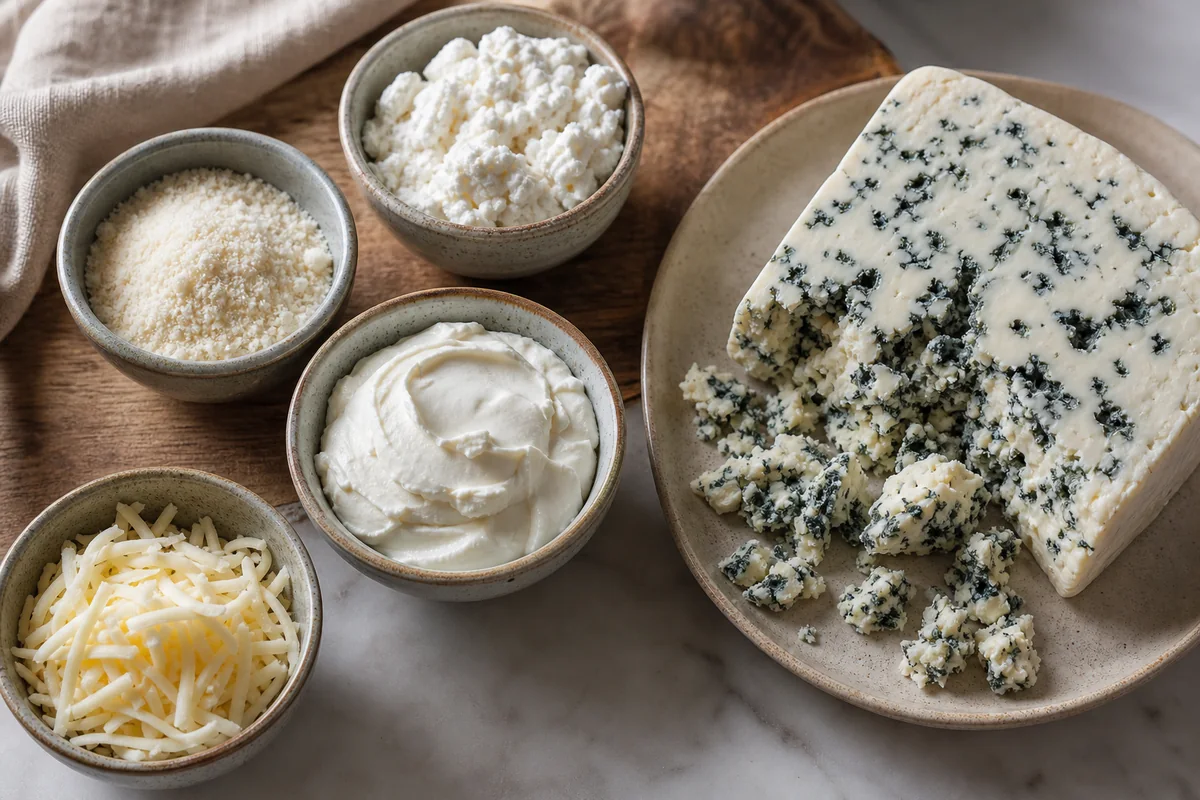
5 Best Roquefort Cheese Substitutes (Easy Swaps)
Ingredients
Equipment
Method
- Match the job: choose a blue-cheese option for the closest “funk,” or a salty tang option (feta/goat) if you just need sharp flavor.
- Use the ratio above to swap roquefort in the same quantity (for stronger brands, start with slightly less and top up).
- If substituting a wetter cheese (like feta), drain well first to prevent watery sauces.
- Adjust at the end: taste your dish and fine-tune with salt (for feta/goat) or a touch of acid (lemon/vinegar) if it tastes flat.
- For dressings/sauces, let crumbled cheese come to room temperature so it disperses more evenly.
Notes
- Roquefort varies by brand and age—if your substitute is milder, increase slightly to reach the same punch.
- For cold applications (salads, finishing), crumbled blue substitutes should be closer to room temp for best flavor release.
Tried this recipe?
Let us know how it was!
Carrie is a food writer and editor with more than 15 years of experience. She has worked for some of the biggest names in the food industry, including Bon Appétit, Food & Wine, and Martha Stewart Living.
As the Editor in Chief of EpicureDelight, Carrie oversees all of the content on the site. She also manages the team of contributing writers and editors, who help to create delicious recipes, helpful tips, and informative articles that you’ll find on the site.
A native of the Chicago area, Carrie is passionate about all things food. She loves trying new restaurants and experimenting with new recipes in her kitchen. She’s also a graduate of the Culinary Institute of America, so she knows a thing or two about food!



