
That warm, slightly sweet aroma that rises off a spiced cake batter? That's rum extract doing its job.
When the bottle is empty, the right rum extract substitute keeps that signature fragrance intact without starting over or driving to the store.
Rum extract is mostly about aroma. Its flavor is concentrated and carries a molasses-like darkness that you won't get from just any pantry swap.
The best replacements fall into three groups: alcohol-based options (closest in aroma), syrup-based options (convenient but sweeter), and flavoring extracts (alcohol-free and pantry-stable).
The best rum extract replacements are dark rum (1:1), store-bought rum-flavor extract (1:1), and rum-flavored baking syrup (1:1, reduce sugar). For alcohol-free needs, use an alcohol-free rum flavoring at 1:1. Vanilla plus a coffee boost works when nothing else is available.
5 Best Rum Extract Substitutes (with Ratios)
The table below is your quick reference. Use it to pick a starting ratio, then adjust after a taste.
Alcohol-based options hold aroma better when added during mixing. Syrup-based and extract-only swaps can go in at the end of mixing for a brighter finish.
Understanding stored extract potency matters here because older bottles lose intensity, which means your baseline "1 teaspoon of rum extract" may already be weaker than you think.
| # | Substitute | Best For | Ratio | Key Note |
|---|---|---|---|---|
| 1 | Dark Rum | Both | 1:1 | Closest aroma match |
| 2 | Rum-Flavor Extract | Both | 1:1 | Strength varies by brand |
| 3 | Rum-Flavored Syrup | Baking | 1:1 | Reduce sugar elsewhere |
| 4 | Vanilla + Coffee | Baking | ¾:1 | Not a true rum profile |
| 5 | Alcohol-Free Rum Flavoring | Both | 1:1 | Taste and adjust |
1. Dark Rum
Dark rum is the closest behavioral match for rum extract. It carries the same molasses-forward aroma, and at a 1:1 ratio it integrates seamlessly into batters, glazes, and sauces.
The alcohol cooks off in baked goods, so the boozy edge disappears. What stays is the fragrance.
With the darker rum choice you get more of the caramel depth that rum extract is known for.
- When to add: During the mixing stage so aroma distributes evenly throughout the batter
- Flavor strength: Slightly less concentrated than extract, so 1:1 is the right starting point
- Liquid adjustment: If your batter is already very wet, reduce another liquid by 1 teaspoon per teaspoon of rum used
Skip if: your recipe must be alcohol-free. Choose option 5 below instead.
2. Rum-Flavor Extract (Store-Bought)
Store-bought rum-flavor extract is the most direct product swap. It mimics rum's aroma profile using the same concentrated approach as rum extract, though brand strength varies.
One brand's 1 teaspoon may taste twice as strong as another's.
Start at the amount your recipe calls for, then taste before adding more. This is especially true in frostings where the flavor has nowhere to cook off.
- How to dose: Begin at 1:1, then add a few drops more only after tasting the mixed batter or frosting
- When to add: During mixing for baked goods; near the end for glazes to preserve top notes
- Too strong: Dilute by adding a splash of milk or water to the batch, then retaste
- Too weak: Add in ¼ teaspoon increments until aroma is where you want it
Skip if: you can't confirm whether the product is alcohol-based or syrup-based. The handling is different for each, and mislabeled products can throw off texture.
3. Rum-Flavored Baking Syrup
Rum-flavored baking syrup carries a clear rum aroma, but it also brings sweetness and viscosity. Those two factors change the balance of your recipe more than extracts do.
The concentrated aromatic character you want is still there, just wrapped in extra sugar.
Use a 1:1 volume swap, then reduce your recipe's sugar by about 1 to 2 teaspoon per tablespoon of syrup added. This keeps the sweetness level from climbing.
- Sugar compensation: Cut added sugar by 1-2 teaspoon for every 1 tablespoon of syrup you use
- Best recipes: Pound cake, scones, bundt glazes, and cream cheese frosting handle the extra moisture well
- Prevent stickiness: Mix the syrup into wet ingredients before combining with dry; don't add it on top of dry mix
Skip if: your recipe is already heavily sweetened, like a caramel cake with a sweet glaze. The added sugar from syrup will push it over. Use dark rum or vanilla-coffee instead.
4. Vanilla Extract + Dark-Coffee Depth
Rum-Like Aroma
Works for: dark rum character in chocolate cake, spiced cookies, caramel sauces
Skip if: your recipe needs a true rum profile - choose dark rum or rum-flavor extract
Warm Vanilla + Roast Depth
Works for: any recipe where rum is a background note rather than the star flavor
Skip if: rum is the main event - this reads as vanilla-forward, not rum-forward
Vanilla extract alone won't replicate rum's darker character. Adding a small amount of strong brewed coffee or instant espresso brings in the roasted, slightly bitter depth that makes this combo feel closer to rum.
The single vs. double shot distinction matters here because too much coffee overwhelms the vanilla.
- Ratio: Use ¾ teaspoon vanilla extract per 1 teaspoon rum extract called for, then add ¼ teaspoon strong coffee or a pinch of instant espresso
- Best in: Chocolate brownies, dark spice cake, caramel frosting, and pecan pie filling
- If it tastes flat: Add a tiny pinch of cinnamon or a drop more coffee, not more vanilla
Skip if: the recipe relies on a clear rum identity. This swap works as a background flavor, not a star.
5. Alcohol-Free Rum Flavoring
Alcohol-free rum flavorings are made to deliver rum's aroma without the alcohol content. They work at a 1:1 ratio and hold up in both batter and frosting, making them the safest choice for recipes where alcohol isn't an option.
Because formulations vary by brand, always taste after mixing. Some are stronger than others, so adjust in ¼ teaspoon increments rather than doubling the amount.
- Dosing: Start at 1:1, then add more in small drops after tasting
- Best uses: Frosting, unbaked cheesecake filling, custard, and any recipe where alcohol can't cook off
Skip if: the product you have is actually a syrup rather than a flavoring. If it pours thick and sweet, use the syrup guidelines from option 3 instead.
Making Rum Extract Substitutes Taste Right
Getting the ratio right is only half the job. Aroma behavior changes depending on where in the process you add your substitute, and sweetness can creep up if you're not watching.
If you're unsure how your swap holds up over time, it helps to know that aging vanilla extracts face similar fading issues, and the same principle applies to rum-based flavorings.
- Add alcohol-based swaps during mixing: Heat and agitation help the aroma bind to fat molecules in butter and eggs, which carries the scent through baking
- Add extract-only swaps at the end: Flavor-only products lose their top notes quickly under heat, so stir them in after the main mixing is done
- Taste before you bake: Spoon a small amount of unbaked batter and taste it; aroma intensifies slightly in the oven but not dramatically, so trust what you taste raw
Frequently Asked Questions
Yes, dark rum works at a 1:1 swap. The alcohol cooks off in the oven, leaving behind the same molasses-forward aroma that rum extract provides.
Use a 1:1 volume swap, but reduce your recipe's added sugar by 1 to 2 teaspoon per tablespoon of syrup to keep sweetness balanced.
Alcohol-free rum flavoring works well in frosting at a 1:1 ratio. Taste after mixing and adjust in small increments since brand strength varies.
Stir in a small splash of milk or water to dilute, then retaste. For baked goods already in the pan, a lighter glaze on top can offset an overpowering interior flavor.
Dark rum and rum-flavor extract won't change sweetness noticeably. Rum-flavored syrup will, so reduce other sugar in the recipe when using it.
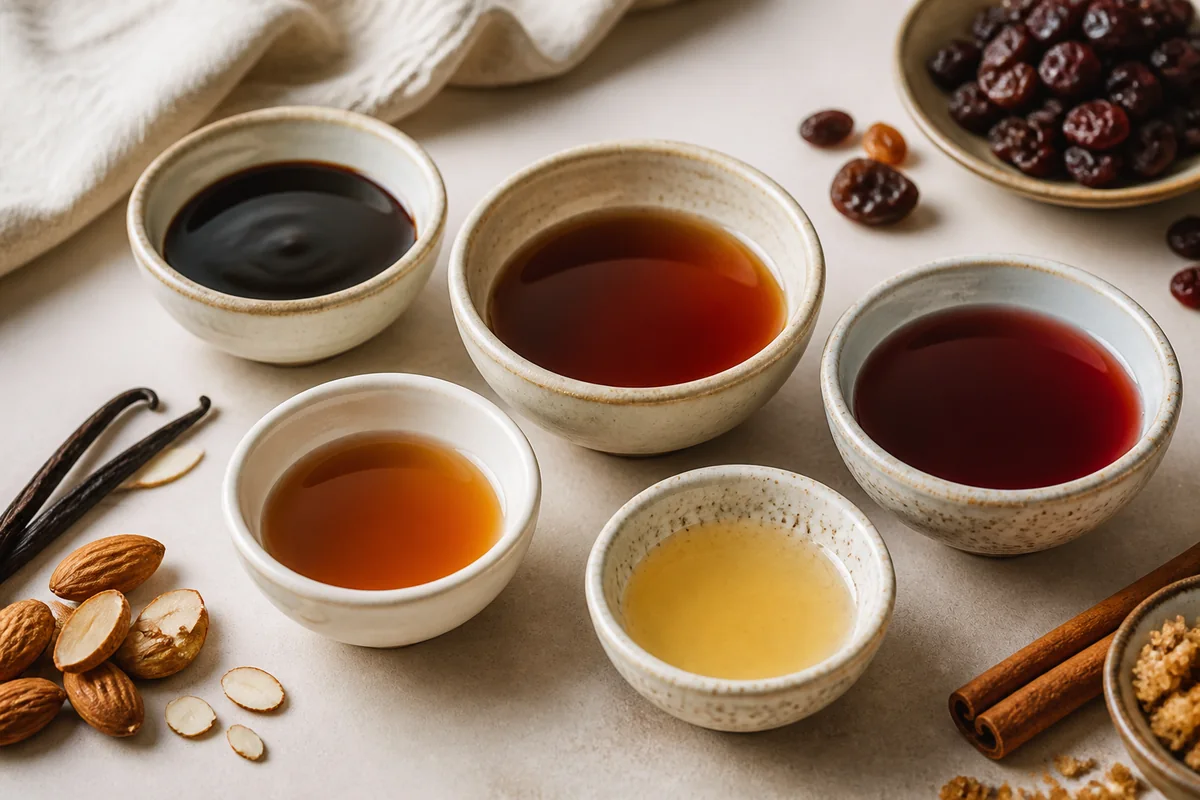
5 Best Rum Extract Substitutes (with Ratios)
Ingredients
Equipment
Method
- Identify what your recipe is doing: baked goods (aroma needs mixing), sauces (simmering can mellow), or glaze (finish at the end).
- Start with the closest ratio from the table: 1:1 for dark rum or rum flavoring extract; use the lowered ratio for non-rum flavors.
- Adjust after tasting once the base flavor is developed (especially for syrups and vanilla-heavy swaps).
- For alcohol-based substitutes, add during mixing; for glazes, add near the end so the aroma stays bright.
Notes
- Rum extract is intensely aromatic; small amount changes can shift the final flavor quickly.
- Sweet substitutes (rum syrup) can require compensating sugar reduction.
Tried this recipe?
Let us know how it was!
Carrie is a food writer and editor with more than 15 years of experience. She has worked for some of the biggest names in the food industry, including Bon Appétit, Food & Wine, and Martha Stewart Living.
As the Editor in Chief of EpicureDelight, Carrie oversees all of the content on the site. She also manages the team of contributing writers and editors, who help to create delicious recipes, helpful tips, and informative articles that you’ll find on the site.
A native of the Chicago area, Carrie is passionate about all things food. She loves trying new restaurants and experimenting with new recipes in her kitchen. She’s also a graduate of the Culinary Institute of America, so she knows a thing or two about food!



