
That specific chew, the dense pull of a good rye slice with its earthy undertone, is hard to fake. But when the bread box is empty, the right rye bread substitute depends on what rye is actually doing in your recipe.
Is it the tang? The firm crumb that holds a sandwich together?
Or the dark density you need for croutons or stuffing?
For sandwiches, flavor and texture both matter. For baking, crumb density takes priority over taste.
Knowing which role rye plays will save you from picking the wrong swap.
Pumpernickel is the closest match for earthy flavor and dense chew. Whole wheat covers structure. Sourdough brings the tang. Spelt adds nutty depth. Oat bread works as a last-resort swap, but needs extra toasting to firm up the crumb.
5 Best Rye Bread Substitutes (Quick Swaps)
Each of these swaps targets a different strength of rye bread. Pumpernickel and sourdough cover flavor and tang.
Whole wheat and spelt cover bite and structure. Oat bread is the emergency fallback when nothing else is around.
| # | Substitute | Best For | Ratio | Key Note |
|---|---|---|---|---|
| 1 | Pumpernickel | Both | 1:1 | Closest earthy flavor match |
| 2 | Whole Wheat | Both | 1:1 | Best structure substitute |
| 3 | Sourdough | Both | 1:1 | Best for tang replacement |
| 4 | Spelt Bread | Both | 1:1 | Nutty, hearty crumb |
| 5 | Oat Bread | Cooking | ¾:1 | Toast well; can be too soft |
1. Pumpernickel Bread
Pumpernickel is the best starting point when you need that dense, dark character that earthy dark loaf delivers in a sandwich or a grain bowl. The two breads share ancestry, and the crumb density matches well enough that a slice-for-slice swap holds up without structural changes.
- Flavor match: Very close to rye, with molasses-dark earthiness and a slight bitterness
- Density match: Firm, tight crumb that behaves like rye in croutons and open-face toasts
- Best use: Sandwiches, croutons, charcuterie boards, rye-style toast with smoked fish
- Texture hack: Toast slices 2 to 4 minutes longer than you would whole wheat to match rye's crisp bite
Pumpernickel vs Rye
Works for: dense sandwiches, croutons, dark-bread stuffing, earthy open-face toppings
Skip if: you need a mild, light rye flavor - pumpernickel can taste more intense than standard light rye loaves
Skip if your recipe calls for a subtle, lightly flavored rye. Pumpernickel's darker notes will dominate.
2. Whole Wheat Bread
Whole wheat is the most reliable structural swap, matching rye's firmness better than any soft white loaf. The flavor is milder, with no tang, but for sandwiches where you care most about a bread that doesn't collapse, it performs well.
- When it shines: Hearty sandwiches, stuffing, crumb toppings where bite matters more than flavor
- When it falls short: Recipes where rye's tang is part of the dish, like a Reuben or a dark bread dip
- Toast method: Go darker than you think. A longer toast compensates for the softer natural crumb
- Sandwich pairing tip: Pair with strongly flavored fillings, like sharp cheddar or smoked meats, to mask the missing rye note
For baking crumbs, whole wheat holds shape well and won't turn mushy if you toast the cubes first. You can also see how whole wheat stacks up against white bread texture options when choosing the firmest base.
Skip if rye tang is the centerpiece of your dish. Whole wheat is neutral in a way that rye never is.
3. Sourdough (Whole-Grain)
Sourdough is the go-to replacement when tang is the flavor you can't lose. The acidity overlaps with rye's sharpness, and a whole-grain or darker sourdough loaf comes close to rye's chew.
The flavor profile of this fermented loaf makes it the clearest stand-in for rye's signature bite.
- Best sourdough type: Whole-grain, seeded, or dark rye-sourdough blends beat light white sourdough every time
- Toast for density: Broil or toast at high heat for 3 to 5 minutes to firm up the crumb before using in croutons
- Sandwich performance: Holds fillings well, especially with assertive ingredients like mustard, pickles, or aged cheese
- Flavor balance: Add a tiny smear of whole-grain mustard to the bread to nudge the flavor toward rye's earthier range
Skip if your sourdough is a large-hole, airy style. That open crumb is too light for rye-like texture and will fall apart under heavy fillings.
4. Spelt Bread (Whole-Grain)
Spelt bread brings a nutty, slightly sweet depth that's different from rye but still hearty enough to hold its own. The crumb is tighter than most wheat breads, which means it slices cleanly and doesn't compress the way softer loaves do under sandwich pressure.
For density in baking, spelt behaves better than you might expect. Cut the slices slightly thicker than you would rye, and toast them a minute or two longer to get the firm edges that work well in croutons or crumb toppings.
For anyone curious about baking with alternative grain breads, shaping bread for baking covers useful handling techniques.
Skip if your recipe depends on rye's acidity. Spelt is gentle and mellow, with none of the sour notes that make rye distinctive in dishes like Reuben sandwiches or dark bread soups.
5. Oat Bread (Whole-Grain)
Oat bread is the emergency swap, the one you use when nothing else is in the kitchen. It's softer and often slightly sweeter than rye, which can push savory dishes off-balance.
Use a smaller initial quantity, roughly three-quarters of what the recipe needs, then adjust for feel.
- Flavor difference: Milder and sweeter; add a smear of mustard or a splash of cider vinegar to a sandwich to compensate
- Texture fix: Toast or broil slices for 4 to 6 minutes before assembly; the firmer crust helps it behave more like rye
- Best roles: Croutons, pan-toasted cubes, open-face toasts where the topping carries the flavor load
- Ratio guidance: Start at a ¾:1 ratio by weight for baked crumbs, then add more if the mixture feels too dry
The golden rule with oat bread: always toast before you build. A raw slice will turn soft and spongy within minutes of hitting wet ingredients.
Oat Bread vs Rye
Works for: emergency swaps, croutons, pan toasting, open-face toasts with strong toppings
Skip if: you need rye's dense bite without extra toasting - raw oat bread is too soft to hold up
Making Rye Bread Substitutes Work
The method here has two steps: match density first, then fix the flavor. Start by choosing the firmest loaf you have available.
Then taste and adjust. If the bread feels too soft, toast or broil it to firm the crumb before using.
If the flavor reads as flat, a small splash of apple cider vinegar or a squeeze of lemon added to a dressing or spread can restore some of the sharpness rye brings naturally. Knowing how long your chosen loaf stays fresh also matters for storing tangy bread without losing texture.
- Toast for structure: For croutons or crumbs, toast cubes at 375°F for 10 to 12 minutes, turning once, until edges are dry and firm
- Add acid for flavor: Stir 1 teaspoon of apple cider vinegar into 2 tablespoons of mayo or mustard before spreading, to mimic rye's tang
- Check density before building: Press the bread slice gently. If it springs back fully with no resistance, toast it another 2 minutes before use
Frequently Asked Questions
Pumpernickel is the closest match, with a similar dark, dense crumb and earthy flavor. Use it 1:1 and toast slightly longer to match rye's firm bite.
Yes, at a 1:1 ratio. Whole wheat handles crumb and crouton applications well, though it won't replicate rye's tangy flavor.
Whole-grain sourdough is the best choice for tang. Its natural fermentation acidity closely mirrors the sharpness rye bread carries.
Always toast oat bread before use. Broil or bake slices at high heat for 4 to 6 minutes until edges feel dry and firm.
Yes, for softer substitutes like oat or whole wheat. Add 2 to 4 extra minutes of toasting to match rye's naturally firmer, drier crumb.
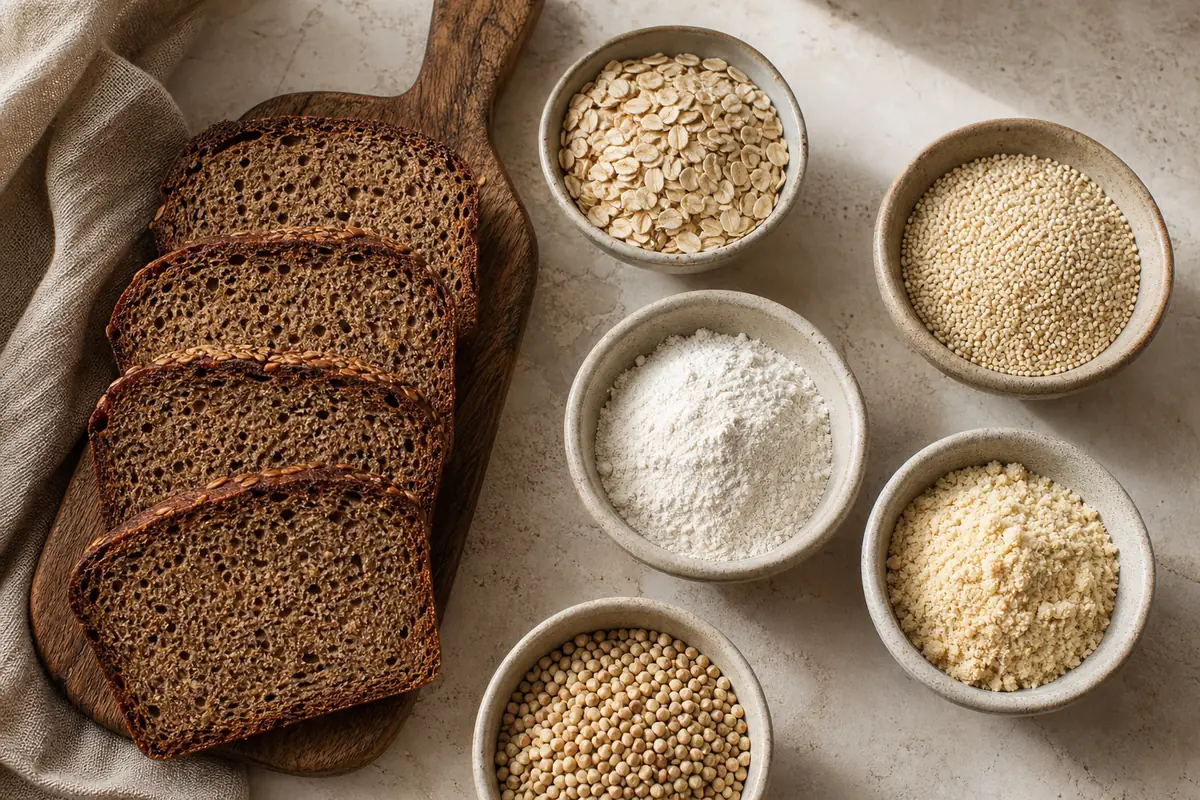
5 Best Rye Bread Substitutes (Quick Swaps)
Ingredients
Method
- Identify what you need from rye bread: tangy flavor, dense chew, or baking structure (e.g., stuffing, crust base, croutons).
- Pick the substitute that matches that role from the rye bread substitute table, starting with pumpernickel for closest rye-like character.
- Use the listed ratio. If your substitute is softer (like oat bread), toast or bake it a few extra minutes to firm up the crumb.
- For baked uses (croutons/crumbs), cube/slice to the same size you would use for rye so texture browns evenly.
- Taste after assembly and adjust: add acidity (lemon/vinegar) if the flavor feels flat compared with rye.
Notes
- Rye’s ‘signature’ comes from a mix of acidity/tang and a denser crumb—choose based on which matters most for your recipe.
Tried this recipe?
Let us know how it was!
Carrie is a food writer and editor with more than 15 years of experience. She has worked for some of the biggest names in the food industry, including Bon Appétit, Food & Wine, and Martha Stewart Living.
As the Editor in Chief of EpicureDelight, Carrie oversees all of the content on the site. She also manages the team of contributing writers and editors, who help to create delicious recipes, helpful tips, and informative articles that you’ll find on the site.
A native of the Chicago area, Carrie is passionate about all things food. She loves trying new restaurants and experimenting with new recipes in her kitchen. She’s also a graduate of the Culinary Institute of America, so she knows a thing or two about food!



