Spaghetti squash is one of those vegetables that seems like it should last forever, sitting quietly on your counter. The reality is more nuanced, and getting the storage wrong can cost you a perfectly good squash.

A whole, uncut spaghetti squash can last 2-3 weeks at room temperature in a cool, dry spot. Cut it open, and that timeline drops sharply to just 3-5 days in the refrigerator.
Most people lose squash to one of two mistakes: storing a cut half on the counter overnight, or tucking a whole squash in a humid spot near the stove. Neither ends well.
If you have ever bought a beautiful squash at the farmers market and found soft, slimy patches two weeks later, this guide is for you. Yellow squash follows similar rules, so the storage habits you build here apply across your squash rotation.
Below you will find exact timelines for every storage state, the right containers for cut squash, a clear freezer plan, and the specific signs that tell you a squash has crossed the line.
A whole spaghetti squash lasts 2-3 weeks at room temperature or up to 2-3 months in a cool pantry. Once cut, refrigerate it and use within 3-5 days. Cooked squash freezes well for up to 8 months; raw whole squash does not freeze reliably.
Whole, uncut spaghetti squash stored in a cool pantry gives you the most flexibility. Refrigerate or freeze only after cooking for best results.
Shelf Life at a Glance
The single biggest factor in how long spaghetti squash lasts is whether the rind is intact. An unbroken skin is a natural barrier against bacteria and moisture loss, and it is what makes whole squash so shelf-stable compared to most vegetables.
A cool pantry at or below 70°F (21°C) is the sweet spot for whole squash. At those temperatures, a properly cured spaghetti squash can stay fresh for 2-3 months.
Warmer conditions in a typical kitchen, around 72-75°F, reduce that window to 2-3 weeks.
- Whole, room temperature (above 70°F): 2-3 weeks in a dry, dark place with decent air circulation.
- Whole, cool pantry (below 70°F): Up to 2-3 months with no refrigeration needed.
- Cut, refrigerated: 3-5 days tightly wrapped or in a sealed container, seeds removed.
- Cooked, refrigerated: 4-5 days in an airtight container.
- Cooked, frozen: Up to 8 months with minimal quality loss if portioned before freezing.
Freshness also shows on the squash itself before you ever cut into it. A fresh whole squash has a firm, evenly tan or pale-yellow rind with no give when pressed.
Any soft area, dark discoloration, or sticky residue on the outside is an early warning.
- Whole, uncut in a cool dry spot: Expect about 2-3 months if the temperature stays below 70°F.
- Whole, uncut in a warm kitchen: The window drops to about 2-3 weeks once the room runs warm.
- Cut, raw in the fridge: Wrapped or sealed pieces keep for roughly 3-5 days.
- Cooked, shredded in an airtight container: Plan on 4-5 days before texture and flavor slide.
Cooked spaghetti squash follows the same general refrigerator rules as other cooked vegetables. Cooked proteins stored alongside it typically share a similar 4-5 day window, which makes meal prep planning straightforward.
A warm, humid spot near the stove can cut a whole squash's room-temperature life in half. Keep it away from heat sources and out of direct sunlight.
Save This for Later
Pin this how long does spaghetti squash last? does it go bad? guide so you always have it when you need it.
How to Store Spaghetti Squash?
Storing spaghetti squash correctly is mostly about controlling two things: moisture and airflow. Too much moisture causes mold; too little airflow traps ethylene gas from nearby produce, which speeds ripening and decay.
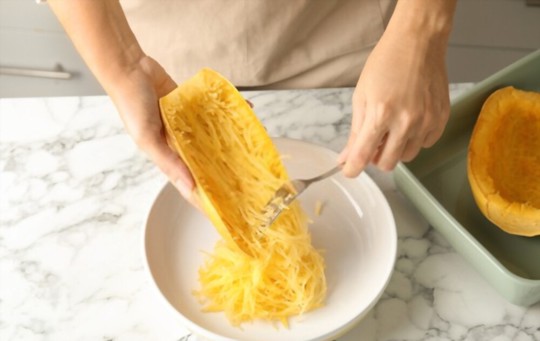
For a whole, uncut squash, a dark pantry shelf, a cool basement, or a dry garage works well. Avoid stacking squash directly against each other, since contact points soften faster.
Leave a few inches between each one so air can circulate.
- Pantry storage: Store whole squash in a cool, dark area with good airflow. Avoid plastic wrap directly against the rind, which traps moisture and invites mold.
- Refrigerating cut squash: Wrap each cut half tightly in plastic wrap or place it cut-side down in an airtight container. Remove the seeds first to reduce moisture pockets.
- Container choice: A glass or BPA-free plastic container with a secure lid works better than loose foil for cut pieces, since it prevents the squash from absorbing refrigerator odors.
- Keep it dry: Pat the cut surface with a paper towel before wrapping to pull excess moisture away from the flesh.
Whole squash stored near apples, bananas, or tomatoes will deteriorate faster. Those fruits produce significant amounts of ethylene gas.
Acorn squash has the same sensitivity, so a shared pantry spot with high-ethylene produce shortens shelf life for both.
If you only used half a squash for dinner, the remaining half can go straight into the refrigerator. Wrap it tightly and plan to use it within 3-5 days for the best texture.
The flesh starts to dry out and develops an off-flavor beyond that window even if it looks fine visually.
Cooked spaghetti squash strands should be drained well before refrigerating. Excess water at the bottom of the container creates a soggy, watery texture by day two.
Pasta dishes that include spaghetti squash keep well for 3-4 days when stored the same way.
Never leave a cut spaghetti squash at room temperature for more than 2 hours. Bacteria multiply rapidly on exposed flesh, and no amount of refrigeration later reverses that.
Can You Freeze Spaghetti Squash?
Freezing works well for spaghetti squash, with one important condition: it must be cooked first. Raw, whole spaghetti squash freezes poorly because its high water content causes ice crystals to rupture the cell walls, turning the flesh into a waterlogged, mushy mass after thawing.
Cooked and shredded squash freezes much better. The strands hold their shape reasonably well when frozen in flat, portioned bags and thawed correctly.
Expect a slightly softer texture compared to fresh, but the flavor stays intact for up to 8 months.
- Cook it first: Roast or steam the squash fully before freezing. Do not freeze it raw.
- Cool completely: Let the strands cool to room temperature before packaging. Freezing warm squash creates condensation and ice buildup inside the bag.
- Portion before freezing: Divide into 1-2 cup portions in freezer-safe zip bags. Press out as much air as possible before sealing.
- Drain the strands: Use a colander or press the cooked strands between paper towels before bagging. Less moisture means less ice and better texture after thawing.
- Label with date: Quality starts to decline after 8 months. Write the freeze date directly on the bag.
If you plan to use the squash in soups, casseroles, or baked dishes, the texture change after freezing is barely noticeable. Pumpkin puree follows a nearly identical freeze-and-thaw arc, making it a useful benchmark for planning.
For dishes like spaghetti and meatballs where texture matters more, fresh or refrigerated squash is the better choice over frozen.
Freeze cooked spaghetti squash strands in single-serving portions on a parchment-lined tray first, then transfer to bags. This prevents the strands from clumping into a solid frozen block.
Spoilage Cues: When Spaghetti Squash Has Gone Bad
Spaghetti squash gives clear signals before it becomes unsafe. Knowing what to look and smell for prevents you from using a bad squash and from throwing out a perfectly edible one based on minor cosmetic issues.

- Mold growth: Visible mold, white, green, or black, on the rind or flesh means the squash is done. Do not scoop around it; discard the whole squash.
- Soft spots with liquid seepage: A damp, sunken area on the rind indicates rotting beneath the surface. If pressing the rind leaves an indentation, it has started to break down internally.
- Off smell: An unusually strong sour or rotten odor from either a whole or cut squash is a clear disposal signal. Fresh spaghetti squash smells faintly sweet and neutral.
- Discolored flesh: Brown or gray streaks in the cut flesh, especially with a slippery texture, indicate the squash has spoiled even if the rind looks intact.
- Hollow sound is normal: A whole squash that sounds hollow when tapped is fine. The strands inside naturally pull away from the walls as it matures.
A small surface blemish or scuff on the rind is not spoilage. Those are handling marks and do not affect the interior.
Cut the squash open and check the flesh directly if the outside looks questionable. Leftover squash-based dishes show spoilage in the same ways as cooked vegetables, with off odor and visible sliminess being the first signs.
If a cut piece in the refrigerator smells fine but the flesh has dried and hardened at the edges, that is quality loss, not spoilage.
Cooked proteins stored nearby can absorb odors from deteriorating squash, so check the squash first if anything smells off in your refrigerator.
Frequently Asked Questions
How can I tell if a spaghetti squash stored in the pantry is still good?
Press the rind firmly. A fresh squash is completely hard with no soft spots. Any give, stickiness, or visible mold on the surface means it should be discarded.
Is there a difference in shelf life between organic and conventional spaghetti squash?
No meaningful difference exists in shelf life. Both last the same 2-3 weeks at room temperature; the storage conditions matter far more than how the squash was grown.
What's the best way to thaw frozen spaghetti squash without mush?
Thaw overnight in the refrigerator, then drain in a colander for 15 minutes. Pressing the strands gently removes excess water and improves texture significantly before reheating.
Can I store sliced spaghetti squash in a mason jar with water?
Skip the water method. It accelerates texture breakdown in spaghetti squash. Wrap cut pieces tightly in plastic or store them in a dry, sealed container for the full 3-5 days.
How long does cooked spaghetti squash last in the fridge?
Cooked spaghetti squash lasts 4-5 days refrigerated in an airtight container. Drain the strands well before storing to avoid waterlogged texture by day two.

Carrie is a food writer and editor with more than 15 years of experience. She has worked for some of the biggest names in the food industry, including Bon Appétit, Food & Wine, and Martha Stewart Living.
As the Editor in Chief of EpicureDelight, Carrie oversees all of the content on the site. She also manages the team of contributing writers and editors, who help to create delicious recipes, helpful tips, and informative articles that you’ll find on the site.
A native of the Chicago area, Carrie is passionate about all things food. She loves trying new restaurants and experimenting with new recipes in her kitchen. She’s also a graduate of the Culinary Institute of America, so she knows a thing or two about food!