
Stracchino is one of those cheeses that earns its place through quiet personality. It's soft, almost spreadable, faintly buttery, and it melts into a gentle creaminess rather than pulling into strings or going greasy.
That low-key behavior is what makes a good stracchino cheese substitute harder to find than you'd expect.
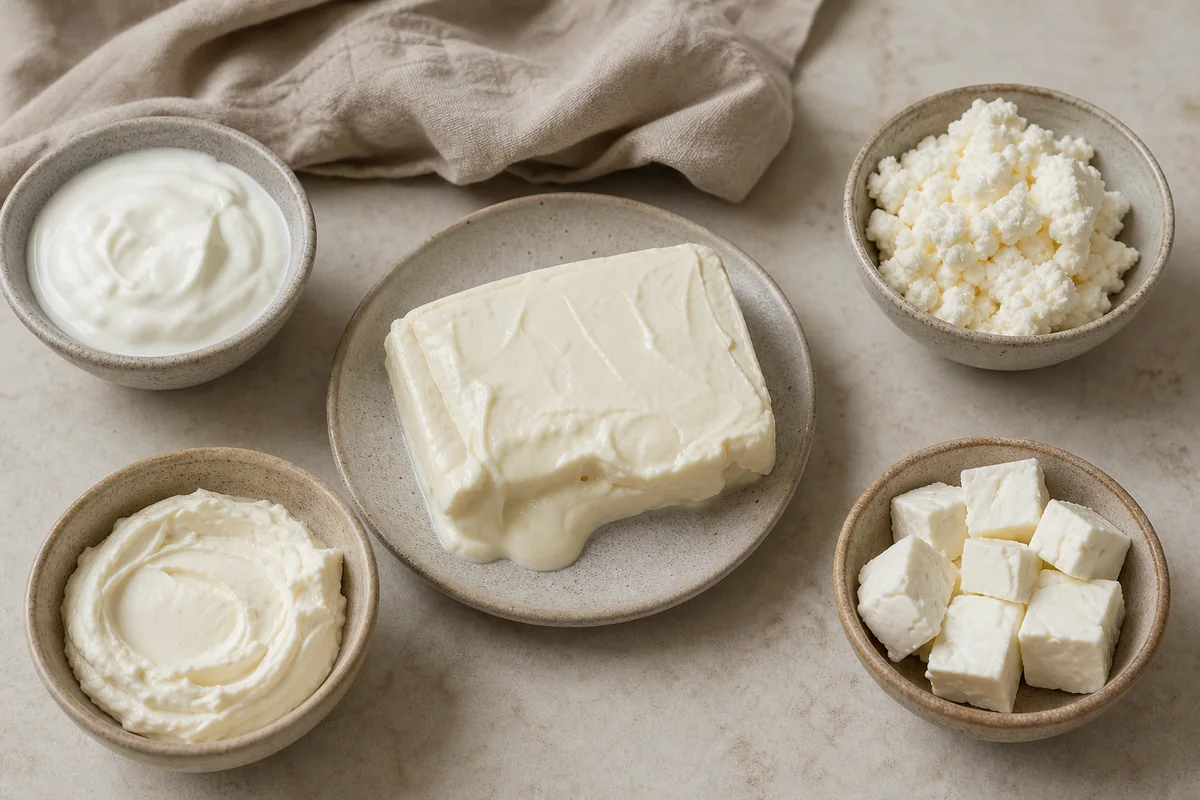
The five swaps below cover both cold spreading and warm melting. Some lean on soft-ripened texture, one is drained for body, and one is a fast pantry fix.
Pick by what your recipe actually needs.
Taleggio (rind off) and Brie are the closest soft-ripened matches for melt and spread. Ricotta (drained) and Camembert handle spreads and warm toppings well. Cream cheese is the fast pantry swap for cold spreading when nothing else is available. All ratios start at 1:1 except cream cheese, which runs ¾:1.
5 Best Stracchino Cheese Substitutes (Easy Swaps)
Stracchino's fresh, mild paste spoils quickly, which is exactly why you may find yourself needing a replacement on short notice. The table below gives you a fast comparison before you read the full breakdowns.
| # | Substitute | Best For | Ratio | Key Note |
|---|---|---|---|---|
| 1 | Taleggio (rind off) | Both | 1:1 | More savory; use gently |
| 2 | Brie (soft-ripened) | Both | 1:1 | Mildest ripened swap |
| 3 | Ricotta (drained) | Spread | 1:1 | Drain 20-30 min first |
| 4 | Camembert (rind off) | Both | 1:1 | Earthier; add herbs |
| 5 | Cream cheese | Spread | ¾:1 | Tangier; adjust salt |
1. Taleggio (Rind Removed)
When swapping soft Italian cheeses, Taleggio is the first place to look. Remove the rind entirely, and the interior is soft, yielding, and close to stracchino's buttery melt at 1:1.
Taleggio (Rind Off)
Works for: warm toast, baked toppings, gentle sandwich melt where some savory depth is welcome
Skip if: you need a totally neutral, barely-there flavor-Taleggio can taste noticeably savory even without the rind
- Ratio: 1:1 by weight or volume; taste after the first small addition
- Heat behavior: softens and spreads at low-to-medium warmth, like stracchino does
- Rind tip: always remove the rind fully-even a small piece raises pungency sharply
- Best dishes: focaccia topping, grilled cheese, polenta finish
2. Brie (Soft-Ripened)
Brie is the mildest soft-ripened swap in this list, and that reliability is its main advantage. The creamy soft-cheese options page covers it in more depth, but for stracchino's purposes, rind-off Brie at 1:1 delivers a clean, buttery melt with almost no pungency.
- Ratio: 1:1; Brie softens quickly, so warm it slowly
- Rind: remove it for the cleanest flavor-leave it on if you want a very faint mushroomy note
- Texture watch: high heat turns Brie greasy fast; stop as soon as it looks creamy
- Best dishes: open-faced sandwiches, warm flatbread, egg dishes
Skip if: your recipe needs aged or sharp flavor-Brie is mild to the point of neutrality.
3. Ricotta (Whole Milk, Drained)
Ricotta trades the buttery melt for spoonable creaminess. It's a solid swap for cold spreads and fillings, but it won't pull into that same soft-ripened stretch.
The key step is draining: this fresh, grainy cheese holds a lot of liquid, and 20-30 minutes in a fine sieve makes it thick enough to work like stracchino in most spread and filling contexts.
- Ratio: 1:1; loosen with a teaspoon of whole milk if spreading feels stiff
- Drain time: 20-30 minutes in a fine mesh sieve, or blot firmly with paper towels
- Best uses: bruschetta spread, stuffed pasta filling, crêpe or flatbread filling
- Texture tip: stir drained ricotta until smooth before using it as a spread
| Use | Ratio | Notes |
|---|---|---|
| Spread (cold) | 1:1 | Drain fully; stir until smooth |
| Stuffed pasta filling | 1:1 | Drain well; pat dry after sieving |
| Warm sauce base | ¾:1 | Add a splash of milk; stir off heat |
Skip if: you need a true soft-ripened melt with buttery body-ricotta stays spoonable, not glossy.
4. Camembert (Soft-Ripened)
Camembert has the right softness and a spreadable interior very close to stracchino's paste. The difference is flavor: it's earthier and more assertive, especially as it warms.
Pair it with storing Camembert correctly in mind, since flavor sharpens fast once cut.
Camembert (Rind Off)
Works for: warm toasts, baked dips, or any dish where garlic, herbs, or black pepper are already in the recipe to absorb the extra earthiness
Skip if: your recipe depends on a delicate, barely-present cheese flavor-Camembert will dominate a light dish
- Ratio: 1:1; taste after the first addition before adding more
- Flavor control: mix in a pinch of garlic powder or fresh thyme to round off the earthier edge
- Heat tip: low heat only-Camembert separates faster than Brie at high temperatures
- Best dishes: baked topping, cheese board spread, crostini with honey
5. Cream Cheese (Full-Fat, Softened)
This is the emergency swap when the fridge holds nothing else. It won't replicate soft-ripened flavor, but keeping softened cream cheese on hand means you always have a workable cold-spread option.
Use ¾:1 to keep the tang from taking over.
- Ratio: ¾:1; start conservative and add a bit more if you want a thicker spread
- Tang reduction: stir in a very small amount of sour cream (about 1 teaspoon per 2 tbsp) to smooth the sharpness
- Texture fix: let it soften fully at room temperature before spreading-cold cream cheese tears bread
- Best uses: cold sandwiches, bagels, cold bruschetta topping, quick dip base
- Avoid in hot dishes: cream cheese is choosing a different base territory once heat is involved-it can turn gluey
Skip if: you need any ripened-cheese flavor, or if the dish is warm and needs a smooth, flowing melt.
Making Stracchino Cheese Substitutes Work
The biggest factor after choosing your swap is knowing what the soft, mild paste actually does in your dish: melt into a gloss, or hold shape as a spread. Get that right and the rest is small adjustments.
- Match by use first: for warm melting, choose Taleggio, Brie, or Camembert; for cold spreading or fillings, use drained ricotta or cream cheese at the adjusted ratio
- Prep before you cook: remove rinds from soft-ripened cheeses fully; drain ricotta for at least 20 minutes so it doesn't weep into the dish
- Control heat carefully: all soft-ripened substitutes break at high heat-use low to medium warmth, pull off the heat early, and stir once to check consistency before serving
Frequently Asked Questions
Brie with the rind removed is the closest match for gentle melt and mild flavor. Use it at 1:1 over low heat and pull it off before it turns greasy.
Yes, drained whole-milk ricotta works well at 1:1 for stuffed pasta and light sauces. Drain it 20-30 minutes first so it doesn't turn the dish watery.
Start at ¾:1 to avoid an overly tangy result. Stir in a small amount of sour cream if the flavor still tastes sharp.
Taleggio and Camembert both carry more pungency than stracchino. Add garlic, black pepper, or fresh herbs to the dish to balance the sharpness without masking it.
Watery texture usually means ricotta wasn't drained long enough or heat was too high. Drain ricotta 30 minutes before use and always melt soft-ripened cheeses over low heat.
5 Best Stracchino Cheese Substitutes (Easy Swaps)
Ingredients
Equipment
Method
- Match the use: for melt on warm bread, prioritize Taleggio/Brie/Camembert; for a quick spread, Ricotta (drained) or cream cheese works best.
- Use the listed ratio: start with 1:1 for soft ripened cheeses; use ¾:1 when swapping with cream cheese to avoid an overly tangy result.
- Prep for texture: remove rinds from soft-ripened cheeses; drain ricotta until scoopable (20–30 minutes).
- Taste-adjust after the swap: add salt only if your dish needs it, and add herbs/garlic to cover stronger rind-ripened flavors.
Notes
- Soft-ripened swaps melt/soften quickly; avoid high heat to prevent oil separation.
- If you’re using it cold (sandwiches), choose the mildest swap you can find.
Tried this recipe?
Let us know how it was!
Carrie is a food writer and editor with more than 15 years of experience. She has worked for some of the biggest names in the food industry, including Bon Appétit, Food & Wine, and Martha Stewart Living.
As the Editor in Chief of EpicureDelight, Carrie oversees all of the content on the site. She also manages the team of contributing writers and editors, who help to create delicious recipes, helpful tips, and informative articles that you’ll find on the site.
A native of the Chicago area, Carrie is passionate about all things food. She loves trying new restaurants and experimenting with new recipes in her kitchen. She’s also a graduate of the Culinary Institute of America, so she knows a thing or two about food!



