That creamy, spoonable center is hard to fake. Stracciatella has a texture that sits between liquid and cheese, milky and mild with just enough elasticity to pull apart on a fork.
When you need a stracciatella cheese substitute, the key is to match that soft, loose creaminess first and worry about stretch second.
The right swap depends on how you're using it. For cold toppings on toast, pizza, or salad, almost anything soft and drainable will work.
For warm dishes where you add cheese at the last minute, you need something that loosens with heat rather than seizing up.
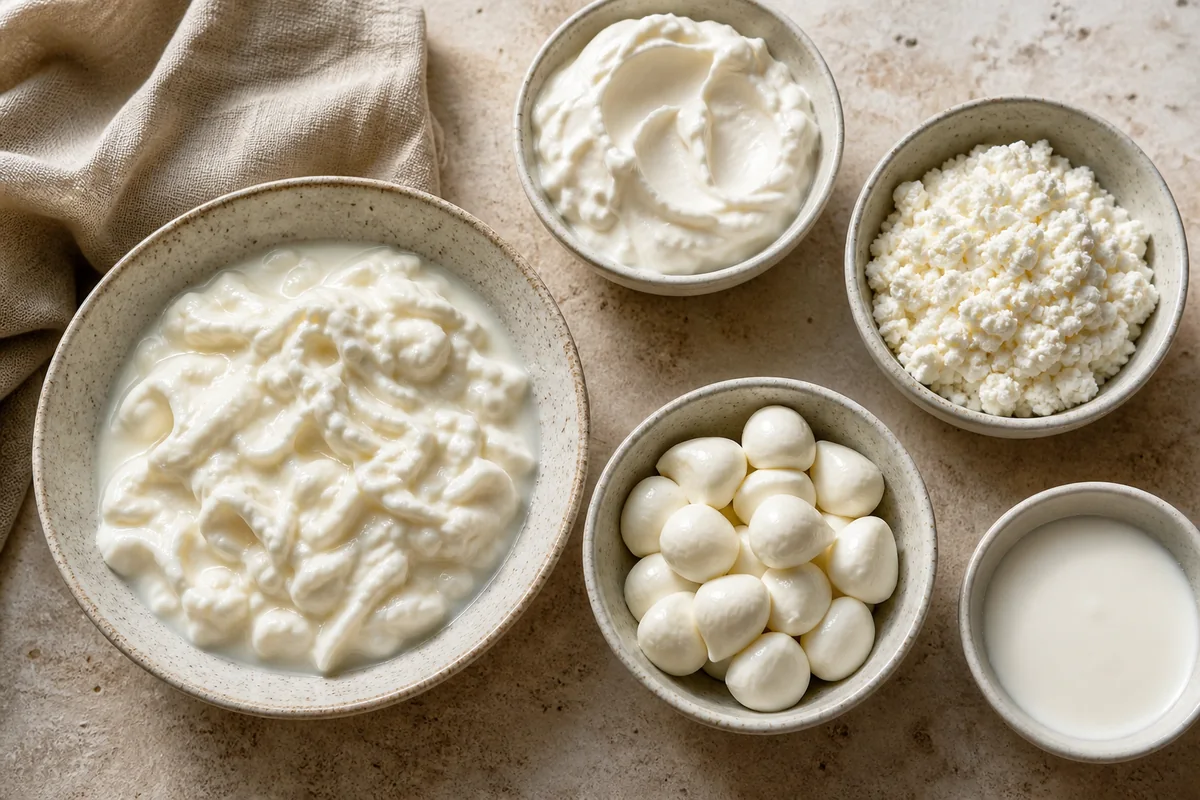
Burrata is the closest swap overall. For a DIY approach, blended fresh mozzarella with heavy cream delivers soft stretch. Ricotta (strained) and Greek yogurt work for cold toppings. Cottage cheese blended smooth and cream cheese loosened with milk are solid emergency picks.
5 Best Stracciatella Cheese Substitutes Ranked by Texture
Each row below is optimized for a specific use: cold topping, warm melt, or baking texture. Read the "Best For" column first to find your match, then check the ratio before you start.
| # | Substitute | Best For | Ratio | Key Note |
|---|---|---|---|---|
| 1 | Burrata | ★ Fresh + Warm | 1:1 | Tear, don't slice |
| 2 | Mozzarella + Cream | ★ Warm Dishes | ¾:1 | Blend until stretchy |
| 3 | Ricotta (strained) | ★ Cold Topping | 1:1 | Strain 20-30 min |
| 4 | Skyr / Greek Yogurt | ★ Bowls + Salads | 1:1 | Balance tang with salt |
| 5 | Cottage Cheese | ★ Emergency Dollop | 1:1 | Blend until fully smooth |
1. Burrata
Burrata is the most direct swap because the interior, the creamy filling, is literally stracciatella. You get the same milky soft center without any blending or prep beyond tearing it open.
Burrata
Works for: fresh cold toppings, pizza finished after baking, salads, bread spreads, pasta spooned at the table
Skip if: you're baking it for more than 5 minutes at high heat-the center turns watery and flat
- Ratio: Use 1:1 by volume; one small burrata replaces roughly 3-4 tablespoons of stracciatella
- Handling: Tear it open over a plate, drain any excess liquid with a quick tilt, then spoon or spread the center
- Timing for warm dishes: Add after you pull the dish from heat; residual warmth is all it needs to soften
- Storage note: Check this fresh ball cheese before using-it turns fast once the bag is open
2. Fresh Mozzarella + Heavy Cream
This is the best DIY route when burrata is unavailable. Blending slightly chilled fresh mozzarella with heavy cream produces a texture that is creamy with faint elasticity, close enough for pasta, flatbreads, and warm grain bowls.
The ratio matters here. Use 3 parts mozzarella torn into small pieces to 1 part cream, then pulse in a blender until the mixture is smooth but still slightly pulls.
If you want guidance on picking the right cream, lighter options like half-and-half will make the blend looser and less stretchy.
- Prep: Chill the mozzarella for 20 minutes before blending so it holds shape rather than turning into a paste
- Blend time: 20-25 seconds in short pulses; over-blending removes all elasticity
- Warm use: Spoon over hot pasta off the heat and let the dish's warmth loosen the blend naturally
- Baking use: Add in the final 2 minutes only; long oven time dries it out
Skip if you want a true long-bake melt. This blend is a finishing cheese, not a melting one.
3. Ricotta (Whole-Milk, Strained)
Whole-milk ricotta has the same mild, dairy-forward flavor as stracciatella's base. It won't stretch, but when strained properly it spooned beautifully over salads, pasta, and toasted bread.
- Straining setup: Line a strainer with cheesecloth or a clean paper towel, set over a bowl, refrigerate for 20-30 minutes
- Cold use: Serve straight from the strainer; it holds a soft, thick dollop shape without running
- Warm use: Stir in 1 teaspoon of warm water before spooning over hot dishes to keep it loose
- Best dishes: Stuffed shells, caprese-style salads, crostini, simple pasta with olive oil
Skip if you need stretch or a pull. Ricotta is creamy but entirely non-elastic.
4. Skyr or Thick Greek Yogurt
Skyr and thick Greek yogurt are tangier than stracciatella, but when strained they hit a similar thick-and-spoonable consistency. The flavor shift is real, so this swap works best in dishes that already have acidity, like grain bowls, roasted vegetable plates, or tomato-dressed pasta.
If the tang feels too forward, a pinch of fine salt and a teaspoon of whole milk will soften the edge without adding more acid. When swapping strained dairy in fresh applications, keep the substitute cold until the last second so it stays thick on the plate.
Skip if you're serving the dish plain with no other flavors. The yogurt tang reads loud without seasoning to balance it.
5. Cottage Cheese (Blended Smooth)
Cottage cheese seems like an odd pick until you blend it. The curds disappear entirely after 30-40 seconds in a blender, leaving a smooth, mild, spoonable texture that is closer to stracciatella's center than you'd expect.
| Use | Ratio | Notes |
|---|---|---|
| Cold topping | 1:1 | Blend 30-40 sec, chill before spooning |
| Pasta finish | 1:1 | Add off-heat, stir once to loosen with pasta water |
| Baking dollop | ¾:1 | Drain first if watery, add in the final 3 minutes |
- Drain first: If the cottage cheese looks wet, pour off the liquid before blending
- Blend fully: Stop only when zero visible curds remain; a grainy texture ruins the effect
- Flavor fix: Add a small pinch of salt and one drop of lemon juice to brighten the flavor
Skip if you want the clean mozzarella-milk flavor. Blended cottage cheese tastes slightly different, and that shows in plain dishes.
Making Stracciatella Substitutes Work
The single principle that ties every substitute together is this: match texture first, add late, adjust moisture last. Any soft dairy can mimic stracciatella's spoonable quality if you get the consistency right before it hits the plate.
What breaks most swaps is adding them too early in a hot pan, which drives off moisture and turns a creamy topper into a rubbery lump.
- Moisture control: Strain or blend any substitute that looks grainy or watery; the target consistency is thick yogurt that falls slowly off a spoon
- Heat timing: For warm dishes like assembling a fresh layered plate, spoon the substitute on after the dish leaves the burner, not before
- Flavor balance: If the substitute tastes flat, a pinch of flaky salt fixes it; if it tastes heavy or rich, a teaspoon of milk or a small squeeze of lemon loosens both texture and flavor
Frequently Asked Questions
Burrata is the closest option. Tear it open, spoon the creamy center, and use it at a 1:1 ratio anywhere you'd spoon stracciatella cold.
It can if you add it in the final 3-4 minutes of baking. Whole-milk ricotta strained beforehand holds moisture better than part-skim varieties under direct heat.
Drain off any visible liquid first, then blend for a full 30-40 seconds until no curds remain. A pinch of salt added during blending also smooths the flavor.
The fresh mozzarella and heavy cream blend loosens most naturally with residual heat. Burrata is a close second for the same off-heat finishing method.
Add a small pinch of fine salt and stir in one teaspoon of whole milk. Avoid adding more acid, which amplifies the tang rather than balancing it.
5 Best Stracciatella Cheese Substitutes That Taste Right
Ingredients
Equipment
Method
- Decide how you’ll use stracciatella: fresh topping (needs “spoonable” creaminess) or cooked/melted dishes (needs better heat behavior).
- Start with the substitute ratio in the table: use 1:1 for creamy spoonable swaps, or the blended ratios where mozzarella needs cream to mimic the center.
- If your substitute is thick or grainy (ricotta, skyr, cottage cheese), strain or blend until smooth for that stracciatella-like bite.
- For warm applications, add the substitute later (off-heat or last 1–2 minutes) to preserve creaminess and prevent dryness.
- Taste for balance: if the swap reads flat, add a tiny pinch of salt; if it tastes heavy, loosen with a teaspoon of milk or balance with a small squeeze of lemon.
Notes
- Best-match substitutes mimic both the cream center and the mild, milky flavor profile.
- Avoid “crumbly” cheeses unless you’re mixing with cream to restore spoonable texture.
Tried this recipe?
Let us know how it was!
Carrie is a food writer and editor with more than 15 years of experience. She has worked for some of the biggest names in the food industry, including Bon Appétit, Food & Wine, and Martha Stewart Living.
As the Editor in Chief of EpicureDelight, Carrie oversees all of the content on the site. She also manages the team of contributing writers and editors, who help to create delicious recipes, helpful tips, and informative articles that you’ll find on the site.
A native of the Chicago area, Carrie is passionate about all things food. She loves trying new restaurants and experimenting with new recipes in her kitchen. She’s also a graduate of the Culinary Institute of America, so she knows a thing or two about food!