
That bright, tangy pour you get from a bottle of taco sauce is harder to fake than it looks. The good news: a solid taco sauce substitute is almost always hiding in your pantry, and most need just one or two tweaks to taste right.
Taco sauce is tomato-forward with acidity and chili heat. Any swap needs to hit all three notes, not just one.
Keep lime juice and a pinch of chili powder nearby while you work.
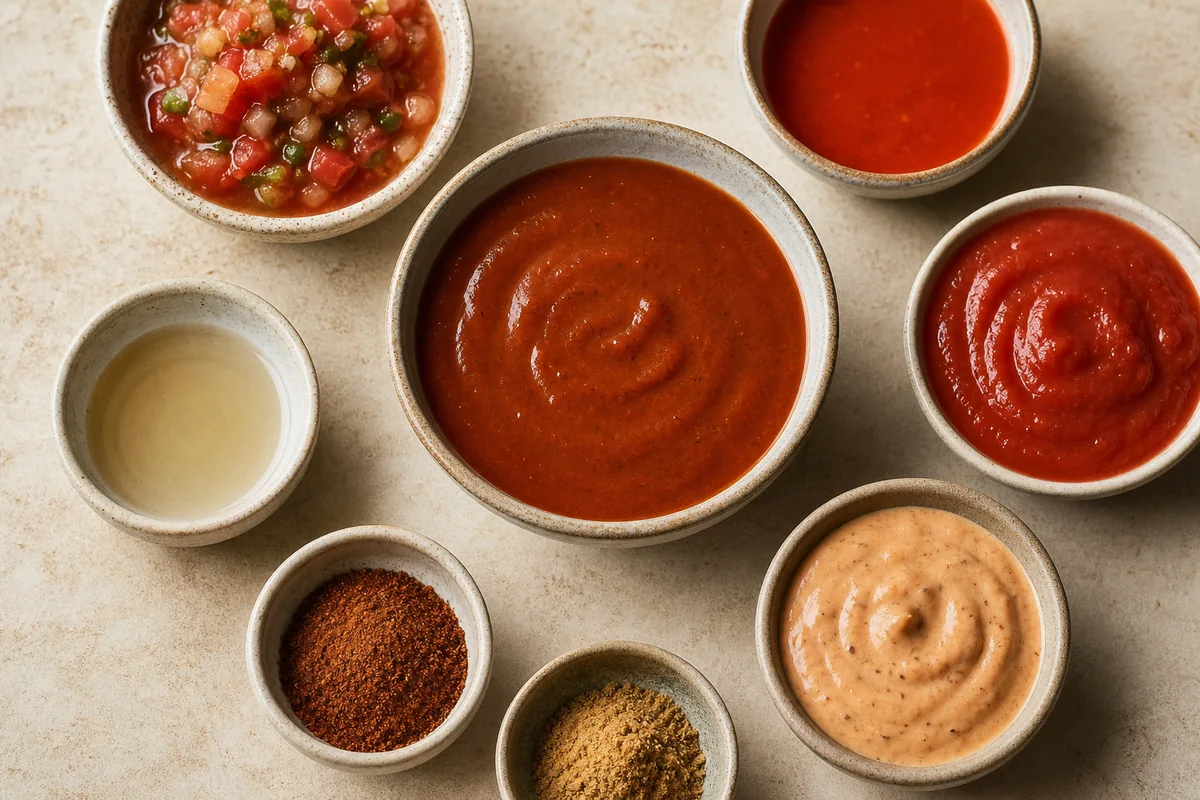
The best taco sauce substitute is mild enchilada sauce used at a 1:1 ratio. It matches the tomato base and chili heat. Jarred salsa (blended) is a close second. For a fast DIY version, mix ketchup and hot sauce with chili powder and a squeeze of lime.
5 Best Taco Sauce Substitutes Ranked
Each swap below covers a different pantry situation. Pick the one you actually have on hand.
| # | Substitute | Best For | Ratio | Key Note |
|---|---|---|---|---|
| 1 | Jarred Salsa (blended) | Both | 1:1 | Blend smooth, add lime |
| 2 | Enchilada Sauce (mild) | Both | 1:1 | Closest body and heat |
| 3 | Ketchup + Hot Sauce | Both | 1:1 | Balance sweetness with lime |
| 4 | Tomato Sauce + Taco Seasoning | Both | 1:1 | Simmer 2-3 min to thicken |
| 5 | Fire-Roasted Tomatoes (blended) | Both | 1:1 | Thin with water, add lime |
1. Jarred Salsa
Tomato-based salsa is one of the easiest swaps. It already has the right acidity, tomato base, and often some chili heat, though its chunky texture needs fixing before it pours right.
For dishes that rely on taco sides pairing well with a saucy finish, knowing your taco accompaniment options makes the choice even clearer.
- Ratio: Use 1:1 salsa in place of taco sauce
- Texture fix: Blend until smooth for a pourable consistency, about 30 seconds
- Tang boost: Add a squeeze of lime if the salsa tastes flat or sweet
- Heat adjustment: Stir in a pinch of chili powder if your salsa is mild
Taste it after blending. If it still feels thick, thin with 1 teaspoon of water at a time until it coats a spoon the way taco sauce does.
Skip if: your salsa is fruit-forward (mango, peach, pineapple) or noticeably sweet. Those flavors will carry through and make your tacos taste like a fruit relish.
2. Enchilada Sauce
Enchilada sauce is the closest structural match to taco sauce. Both are tomato-based, both use chili seasoning, and both have that savory depth that makes a taco feel complete.
For more on how the chili-tomato flavor profile works in that sauce, it helps to understand what you're actually adding.
- Ratio: Use 1:1 without any adjustment as your starting point
- Too thick: Thin with 1-2 teaspoons of water per ½ cup until pourable
- Too salty: Add a small squeeze of lime to balance the salt without diluting flavor
- Flavor check: Taste before adding any extra heat. Most mild enchilada sauces need nothing else.
Skip if: your enchilada sauce is chipotle-heavy or deeply smoky. That smoke note will overpower the bright, tangy character that taco sauce is known for.
3. Ketchup + Hot Sauce
This combo works because the sweet tomato condiment gives you body and tomato flavor right away, and hot sauce adds the heat taco sauce carries. The gap is sweetness.
Ketchup skews sugary, and without correction it reads more like a barbecue situation than a taco one.
Mix them at 1:1 and then add chili powder or a pinch of taco seasoning for cumin and chili notes. A squeeze of lime and a small pinch of salt will pull the sweetness back fast.
Ketchup + Hot Sauce
Works for: quick tacos, nachos, any dish where you need an instant tangy-spicy pour
Skip if: you need a smoke-free, low-sugar, or ketchup-free sauce. Use salsa or enchilada sauce instead.
- Base ratio: 1 tablespoon ketchup to 1 tablespoon hot sauce, then adjust from there
- Cumin fix: Add ¼ teaspoon chili powder per 2 tablespoons of the mix
- Sweetness fix: Squeeze half a lime and stir. Taste again before adding more.
- Salt: Add a small pinch if it still tastes flat after the lime
4. Tomato Sauce + Taco Seasoning
You can build a very clean taco-sauce flavor from scratch with two things you likely already have. Start with plain tomato sauce as your 1:1 base swap.
Understanding your tomato-base swap options helps if you need to go even further back in the pantry.
| Use | Ratio | Notes |
|---|---|---|
| Direct swap | 1:1 tomato sauce | Add 1 teaspoon taco seasoning per ¼ cup sauce |
| Thicker sauce | 1:1 + simmer | Cook 2-3 minutes on medium-low, stirring often |
| Extra tang | Add lime | Squeeze ¼ lime per ¼ cup after simmering |
| More heat | Add chili | Pinch of cayenne or a dash of hot sauce |
Simmer for 2-3 minutes after mixing. That short cook softens the raw edge of dry seasoning and lets the sauce thicken just enough.
- Seasoning tip: Start with less taco seasoning than you think you need, then taste and add
- Texture: If it thickens too much during simmering, add water 1 teaspoon at a time
- Storage: Cool completely, then refrigerate in a sealed jar for up to 5 days
Skip if: you have no taco seasoning, cumin, or chili powder at all. Without those spices, plain tomato sauce will taste like pasta sauce, not taco sauce.
5. Fire-Roasted Diced Tomatoes
Canned fire-roasted tomatoes are a solid emergency swap with real tomato character. They have a slightly smoky edge, which you can dial back with lime and a little extra tang.
Check that your dried spice stock is still fresh before building the sauce, since old seasoning won't do much here.
- Prep: Blend the full can until completely smooth, about 45 seconds
- Thin it: Add water 1 teaspoon at a time until the texture pours like taco sauce
- Tang boost: Add a squeeze of lime to counter the roasted, smoky note
- Heat: Stir in chili powder or a dash of hot sauce to build taco-sauce heat
- Salt: Most canned tomatoes are already salted. Taste before adding any extra.
Skip if: your can has added peppers or heavy seasoning that's already very spicy. With kids at the table, start with half the can and taste before committing.
Making the Taco Sauce Swap Taste Right
Getting any substitute to land correctly comes down to three variables: thickness, tang, and heat. Fix them in that order and your swap will taste intentional, not makeshift.
If your dish needs some brightness to balance a heavier filling, thinking about peppery heat options and saucy pantry staples together saves you a trip to the store.
- Thickness first: Thin with water 1 teaspoon at a time until the sauce coats a spoon and pours cleanly. Adjust this before anything else.
- Tang second: Add lime juice or a small splash of white vinegar. Start with ¼ teaspoon, taste, and repeat.
- Heat last: Drop in hot sauce or chili powder after tang is set. Heat is easier to add than remove, so go slow.
Frequently Asked Questions
Mild enchilada sauce is the fastest, closest match. Use it 1:1 and add a small squeeze of lime if it tastes flat.
Add lime juice and a pinch of chili powder. The acid cuts the sugar quickly, and cumin pulls the flavor toward taco territory.
Yes, 1:1 works well. Blending is worth the 30 seconds if you want a pourable, smooth texture instead of chunky spoonfuls.
Blended fire-roasted diced tomatoes with lime and chili powder gives you smokiness without chipotle intensity. It stays mild enough to adjust easily.
Thin with water one teaspoon at a time, stirring after each addition. Stop when the sauce coats the back of a spoon and pours in a steady stream.
5 Best Taco Sauce Substitutes (Tested Swaps)
Ingredients
Equipment
Method
- Start by matching the texture: if you want a pourable sauce, choose salsa or enchilada sauce; if you want thick, use tomato sauce (optionally simmer 2 minutes).
- Match the flavor balance with two add-ons: brightness (lime) and heat (hot sauce or extra chili).
- Thin with water a teaspoon at a time until it coats tacos the way your original taco sauce did.
- Taste and fine-tune: add taco seasoning (more cumin/chili) for classic taco-sauce vibes, or add salt to lock in the flavor.
Notes
- Best flavor match comes from a tomato base + tang (lime/vinegar) + chili (hot sauce or chili powder).
- If your substitute is too sweet, fix it with lime and a pinch of salt.
Tried this recipe?
Let us know how it was!
Carrie is a food writer and editor with more than 15 years of experience. She has worked for some of the biggest names in the food industry, including Bon Appétit, Food & Wine, and Martha Stewart Living.
As the Editor in Chief of EpicureDelight, Carrie oversees all of the content on the site. She also manages the team of contributing writers and editors, who help to create delicious recipes, helpful tips, and informative articles that you’ll find on the site.
A native of the Chicago area, Carrie is passionate about all things food. She loves trying new restaurants and experimenting with new recipes in her kitchen. She’s also a graduate of the Culinary Institute of America, so she knows a thing or two about food!



