
Bright, sweet-tart citrus flavor is something a recipe depends on. When tangerines are out of season or just not in the store, the wrong swap can flatten a glaze or make a batter taste muddy.
The right tangerine substitute keeps that aromatic citrus edge intact.
Before you pick a swap, know what your recipe actually needs. Zest behaves differently from juice, and juice behaves differently from fresh segments.
A substitute that works perfectly for a citrus glaze may fall short when you need whole fruit pieces in a fruit salad or a tart filling.
For most recipes, mandarin orange or clementine swaps 1:1 and keeps the sweet-tart profile close. Use orange zest + juice for baking when mandarins aren't available. For glazes only, a small splash of rice vinegar in orange juice adds the brightness tangerine juice naturally carries.
5 Best Tangerine Substitutes Ranked by Use
Each swap below covers a specific recipe need. Scan the ratio table first, then read the right section for your form.
| # | Substitute | Best For | Ratio | Key Note |
|---|---|---|---|---|
| 1 | Mandarin Orange | Both | 1:1 | Closest overall profile |
| 2 | Clementine | Both | 1:1 | Bright, easy to find |
| 3 | Orange (zest + juice) | Both | 1:1 | Less floral, still aromatic |
| 4 | Bottled Tangerine Juice | Juice only | 1:1 | Add zest if flavor is flat |
| 5 | Orange + Lemon Blend | Juice/Glaze | ¾:1 | Emergency acid lift |
When picking a swap, keep aroma in mind. If your recipe is zest-forward, avoid swaps that are mostly sweet with minimal aromatic oils.
1. Mandarin Orange
Mandarin is the nearest thing to a tangerine you'll find at most grocery stores. The citrus flavor contrast is subtle-mandarin runs a touch sweeter and a shade less tart, but the aromatic profile is close enough that most recipes won't notice.
Use it 1:1 across all three forms: segments where the recipe needs pieces, juice where it calls for liquid, and zest where it calls for grated peel.
Mandarin Orange
Works for: fruit salads, citrus cakes, glazes, marinades, and any baking recipe using tangerine zest or juice
Skip if: your recipe needs sharp citrus tartness-mandarin sweetness is higher and won't provide that acidic punch
- Segments: Swap 1:1 by count or weight; peel carefully to keep segments intact
- Juice: Squeeze fresh mandarin at 1:1 by volume; taste before adding all of it
- Zest: Use 1:1 by measurement; mandarin zest carries similar floral notes
2. Clementine
Clementines are consistently sweet with a clean citrus edge. They work especially well in baked goods because their juice isn't as acidic as lemon or grapefruit, so your batter stays balanced.
The mild, candy-like tang translates well in quick breads and muffin recipes.
Use 1:1 for juice, zest, and segments. Strain the juice if you want fewer pulp bits in a smooth glaze.
- Batter: Fold zest into dry ingredients first; add juice gradually to avoid loosening the mix
- Glaze: Strain juice through a fine mesh for a cleaner finish on cakes or scones
- Segments: Use peeled clementine segments 1:1; they're seedless and easy to separate
- Flavor note: If the result tastes muted, add a little extra zest rather than more juice
Skip if: your recipe depends on tangerine's floral, slightly musky edge. Clementine is cleaner and milder on that front.
3. Orange (Zest + Juice)
Orange is in almost every kitchen, which makes it the most practical option. It is less floral than tangerine, but when you use the dried vs. fresh zest comparison as a guide, fresh orange zest restores a lot of that aromatic lift the fruit naturally carries.
Treat it as zest plus juice together, not juice alone. The zest is what closes the gap between orange and tangerine flavor in baked goods.
Orange (Zest + Juice)
Works for: cakes, muffins, citrus sauces, marinades, and any recipe where tangerine juice and zest are both called for
Skip if: the recipe needs fruit segments-orange segments are larger and have thicker membranes than tangerine
- Golden Rule: Always use zest with the juice; juice alone tastes flat compared to tangerine
- Ratio: 1:1 by volume for juice; match zest teaspoon for teaspoon
- Compensation: If flavor still reads flat, add a small squeeze of lemon-about 1 teaspoon per ¼ cup orange juice
4. Bottled Tangerine Juice
This is the most consistent option for recipes that call purely for tangerine juice. The flavor doesn't vary with the season, and you don't need fresh fruit.
For a more aromatic result, you can pair bottled juice with a milder extract choice if the juice tastes flat from processing.
Use 1:1 by volume. Add zest from any citrus fruit alongside the bottled juice if the aroma seems weak.
Bottled juice works well in glazes, marinades, and custards. It is less ideal for segment-based recipes-those need actual fruit.
If the label shows added sugar, reduce any other sweetener in your recipe by about 1 teaspoon per 2 tablespoon of juice used.
Skip if: the bottle is sweetened and your dessert is already sweet. The sugar compounds quickly and throws off balance.
5. Orange + Lemon Blend
This is the emergency option for when you only have supermarket basics. Orange juice alone is too mellow for tangerine's brightness, but a measured addition of lemon juice lifts the acid and sharpens the flavor.
Think of the choosing a sharper acid approach applied in reverse-you're using lemon to prop up orange, not replace it.
Start with 3 parts orange juice to 1 part lemon juice. Taste before adding more lemon.
Add slowly-the goal is tangerine brightness, not lemon dominance.
| Use | Ratio | Notes |
|---|---|---|
| Glaze | 3 tablespoon OJ + 1 tablespoon lemon | Whisk before adding powdered sugar |
| Batter (cake/muffin) | 3 tablespoon OJ + 1 tablespoon lemon | Add lemon in two small pours, taste between |
| Marinade | 3 tablespoon OJ + 1.5 tablespoon lemon | Lean more lemon for savory brightness |
- Starting point: Always build from orange as the base-lemon is only the accent
- Balance check: If the blend tastes sour, add a pinch of sugar and stir before adding to your recipe
- Zest add-on: A pinch of orange zest takes this blend much closer to fresh tangerine flavor
Skip if: your recipe is fruit-forward and depends on real citrus sweetness. This blend leans acidic and reads "lemony" rather than "tangerine."
Making Tangerine Substitutes Taste Right
Getting the flavor right is mostly about timing and proportion. When you're baking, add zest during the dry-ingredient stage so the oils coat the flour and distribute evenly.
For juice, fold in similar citrus-swap approaches by adding liquid in increments-too much at once loosens batter before you can catch it.
- Zest timing: Mix zest with dry ingredients first; this releases aromatic oils into the fat and flour before liquid hits
- Sweetness and acidity: If your swap tastes sweeter than tangerine (mandarin, clementine), add 1 teaspoon lemon juice per ¼ cup to restore balance; if it tastes too tart, stir in a pinch of sugar
- Segment texture: Pat fruit segments dry with a paper towel before folding into batter-excess moisture from a wetter substitute can sink pieces or add steam pockets
Frequently Asked Questions
Yes, use orange juice at a 1:1 ratio. Add fresh orange zest alongside it-juice alone lacks the aromatic oils that make tangerine flavor distinctive in baked goods.
Clementine or mandarin zest is the closest match. Use either at a 1:1 ratio by teaspoon-both carry similar aromatic oils to tangerine peel.
Add 1 teaspoon of fresh lemon juice per ¼ cup of substitute juice. Stir, taste, and repeat once if needed-stop before the mix reads sour.
No-bottled juice replaces liquid, not texture. For recipes needing segments, use fresh mandarin or clementine pieces instead.
Only if you add too much lemon. Keep lemon at no more than 1 part to 3 parts orange juice, and taste before adding it all.
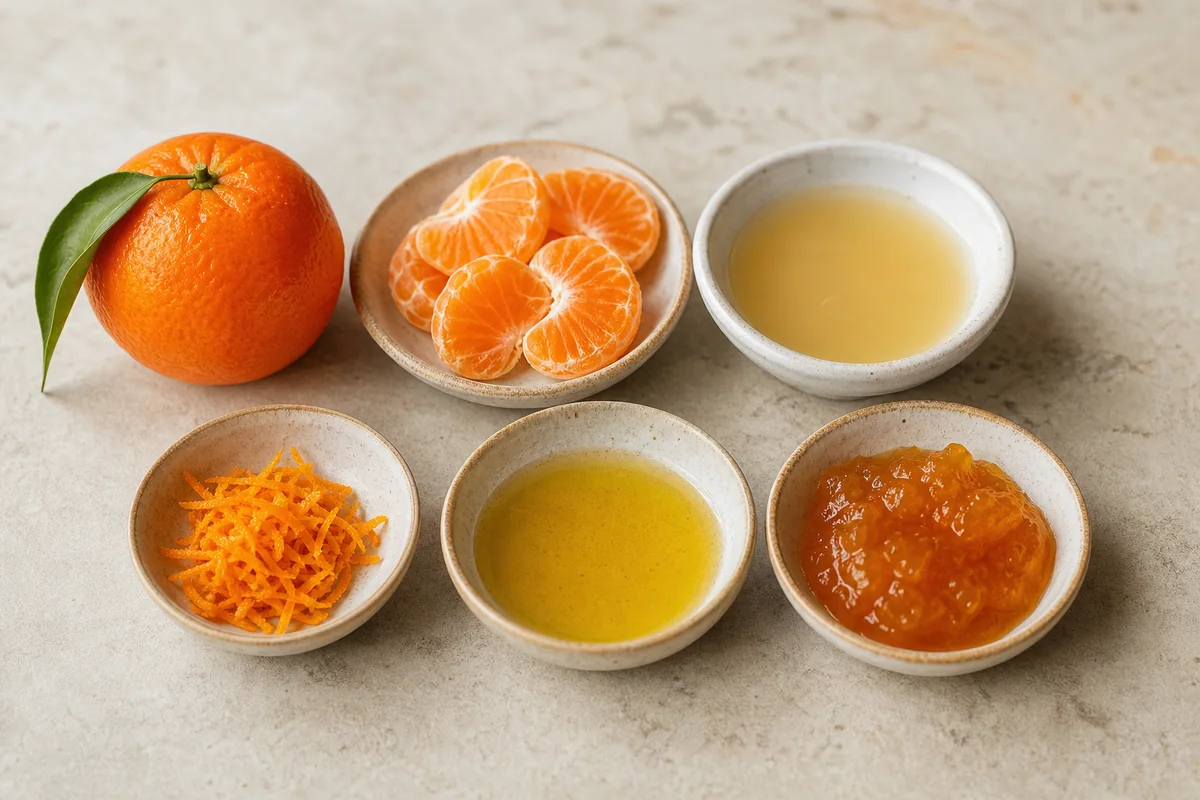
5 Best Tangerine Substitutes (with Ratios)
Ingredients
Equipment
Method
- Identify what your recipe needs: fruit segments, tangerine zest, or tangerine juice.
- Choose the closest substitute from the list (segments for pieces; zest+juice for baking flavor).
- Apply the ratio as written; for juice-based swaps, measure by volume.
- If the swap tastes too sweet, add a small squeeze of lemon; if too tart, add a pinch of sugar.
- For baked goods, fold in zest during mixing and add juice gradually if your batter looks too loose.
Notes
- Use zest when you want the perfume-like citrus aroma.
- Use segments only when texture matters (salads, toppings, some cakes).
- When substituting juice, taste first—brand acidity and sweetness vary.
Tried this recipe?
Let us know how it was!
Carrie is a food writer and editor with more than 15 years of experience. She has worked for some of the biggest names in the food industry, including Bon Appétit, Food & Wine, and Martha Stewart Living.
As the Editor in Chief of EpicureDelight, Carrie oversees all of the content on the site. She also manages the team of contributing writers and editors, who help to create delicious recipes, helpful tips, and informative articles that you’ll find on the site.
A native of the Chicago area, Carrie is passionate about all things food. She loves trying new restaurants and experimenting with new recipes in her kitchen. She’s also a graduate of the Culinary Institute of America, so she knows a thing or two about food!



