
That shattery, glass-thin crust on a good piece of tempura is not an accident. It comes from a specific flour blend built around starch, low gluten, and ice-cold batter.
When you're out of tempura flour substitute options at the store, the fix is knowing which kitchen staples can replicate that dry, puffed bite.
Tempura flour is mostly starch-forward and lower in protein than all-purpose flour. That low protein level means less gluten development, which keeps the coating from turning chewy or dense.
Your substitutes need to follow the same logic: lean on starch, keep mixing minimal, and keep everything cold.
The best tempura flour substitutes all share one thing: a starch component that drives crispness. A 1:1 all-purpose flour and cornstarch blend is the most reliable swap. For gluten-free needs, rice flour plus cornstarch is the closest match. Results vary by oil temperature and how cold your batter stays.
5 Tempura Flour Substitutes That Mimic Lacy Crispness
Every substitute below adds starch in some form, because starch is what turns a wet batter into a dry, shattering shell on contact with hot oil. Understanding that brittle outer layer helps you pick the right swap before you heat the oil.
| # | Substitute | Best For | Ratio | Key Note |
|---|---|---|---|---|
| 1 | All-purpose flour + cornstarch | Both | 1:1 | Classic crunch, light coat |
| 2 | Rice flour + cornstarch | Both | 1:1 | Laciest texture, browns fast |
| 3 | Cake flour or pastry flour | Both | 1:1 | Lighter coat, less shatter |
| 4 | Potato starch + all-purpose flour | Both | 1:1 | Driest crust, coat evenly |
| 5 | Self-rising flour | Both | ¾:1 | Quick swap, reduce leavening |
1. All-Purpose Flour + Cornstarch
This is the most pantry-friendly swap, and it works because cornstarch lowers the effective protein level of the batter. The coating comes out light and pleasantly crunchy, though not quite as lacy as a rice flour blend.
- Ratio: Mix equal parts all-purpose flour and cornstarch before adding cold water.
- Water temperature: Use ice-cold water and stir just until combined; lumps are fine and actually help.
- Best for: Shrimp, broccoli, onion rings, and any classic tempura application where you want a reliable, crowd-pleasing crust.
- Mixing tip: Sift the two dry ingredients together first so the cornstarch distributes evenly before you add liquid.
Understanding standard flour flavor profiles helps you predict how much the batter will taste "floury" compared to a purer starch blend.
Skip if: you need a gluten-free batter. This blend contains all-purpose flour and is not safe for gluten-free diets.
2. Rice Flour + Cornstarch
Rice flour is naturally low in gluten, which is exactly why it produces that signature lacy, almost web-like crust that tempura is known for. Paired with cornstarch at a 1:1 ratio for storing and mixing purposes, the two together outperform either ingredient alone.
- Browning speed: Rice flour darkens faster than all-purpose flour, so keep oil at 340-350°F and watch closely.
- Batter thickness: This blend runs thinner than all-purpose mixes; that's normal and gives the characteristic lacy pattern.
- Best for: Shrimp, zucchini, bell pepper strips, and any vegetable where you want a very delicate shell.
- Gluten-free note: This blend is naturally gluten-free if both ingredients are certified GF.
We also recommend reading about neutral-grain flour options if you're comparing white and brown rice flour for frying.
Skip if: you need deep, even browning on thicker cuts. Rice flour can color unevenly on large pieces.
3. Cake Flour or Pastry Flour
Cake flour has a protein content around 7-8%, significantly lower than all-purpose flour's 10-12%. That lower protein means less gluten development and a finer, more delicate coating on fried food.
Use it as a straight 1:1 swap for tempura flour, mixed with cold water until just combined. The batter is silkier than a cornstarch blend and produces a thin, even coat rather than a shattery shell.
If your batter feels too thick, add cold water 1 tablespoon at a time.
Cake flour is a better fit for delicate items like thin asparagus spears or small shrimp. For a deeper look at how fine-milled flour types compare in structure, that comparison is worth reading before you decide.
Skip if: peak tempura crunch is your goal. Starch-based blends (options 1 and 2 above) produce noticeably more shatter than cake flour alone.
4. Potato Starch + All-Purpose Flour
Potato starch produces one of the driest, crispiest frying crusts of any common pantry starch. When you blend it with all-purpose flour at a 1:1 ratio, you get a coating that stays crunchy longer than a straight flour batter and resists sogginess well.
Potato Starch
Works for: thick vegetables, chicken, any food that needs a substantial, dry shell that holds up over time
Skip if: your batter keeps thinning out and you can't control consistency; thin batter under-coats with this blend
Arrowroot
Works for: lighter proteins and vegetables where you want a glossy, crisp surface and slightly translucent look
Skip if: you're frying at very high heat; arrowroot can turn slimy if oil temperature drops or if the crust sits too long
- Ratio: Combine 1 part potato starch (or arrowroot) with 1 part all-purpose flour before mixing in cold water.
- Consistency check: Batter should coat the back of a spoon lightly. If it drips off too fast, add 1 tablespoon more starch.
- Best for: Sweet potato slices, chicken strips, thick zucchini rounds, and any item with a denser flesh that needs more batter structure.
When storing potato starch long-term, keep it sealed and dry to prevent clumping, which affects batter consistency.
5. Self-Rising Flour
Self-rising flour contains baking powder and salt already mixed in, which changes the dynamic of a tempura batter. The leavening creates a slightly puffier coat rather than a thin, shattery one.
It is a workable emergency swap, but the texture is closer to a light beer-batter fry than true tempura.
Use it at a ¾:1 ratio (¾ cup self-rising flour per 1 cup of tempura flour called for). This lightly reduces the lift so the coating doesn't balloon off the food.
Check the flavor profile of this leavened flour type before committing, since the salt and powder content affects the final taste.
| Use | Ratio | Notes |
|---|---|---|
| Shrimp | ¾:1 | Works well; coat stays light if batter is cold |
| Thick vegetables | ¾:1 | Coat may puff and detach; press batter on firmly |
| Delicate greens | Avoid | Leavening overpowers thin pieces; use option 2 instead |
Skip if: your recipe already uses baking powder. Doubling up the leavening makes the crust taste chalky and over-aerated.
Making Your Tempura Flour Substitute Taste and Fry Like Tempura
The flour blend matters, but technique is what separates a greasy, heavy coat from a proper crispy one. Cold batter and hot oil are the two non-negotiables, regardless of which substitute you choose.
- Oil temperature: Keep oil between 340°F and 360°F. Below 340°F, the coating absorbs oil before it sets; above 370°F, it darkens before the food cooks through.
- Mix minimally: Stir batter only 8-10 times. Lumps are fine and actually create the uneven surface that fries up lacy and light.
- Fry and rest on a rack: Fry immediately after battering, then transfer to a wire rack. A plate traps steam and softens the crust within minutes.
Frequently Asked Questions
Yes, but pure cornstarch batter is very thin and can slide off food before it sets. Mixing it with at least some flour (all-purpose or rice flour) gives it enough body to coat properly.
Stay between 340°F and 360°F. That range sets the starch fast enough to trap steam inside, which creates the puffed, dry shell tempura is known for.
Use batter within 10-15 minutes of mixing. After that, the flour hydrates fully and the coating fries up dense rather than light and shattery.
Rice flour plus cornstarch at a 1:1 ratio is the top gluten-free option. Use certified GF versions of both and keep batter cold for the best lacy result.
Oil temperature dropped too low, or the batter sat too long before frying. Both cause the coating to absorb oil instead of crisping on contact with heat.
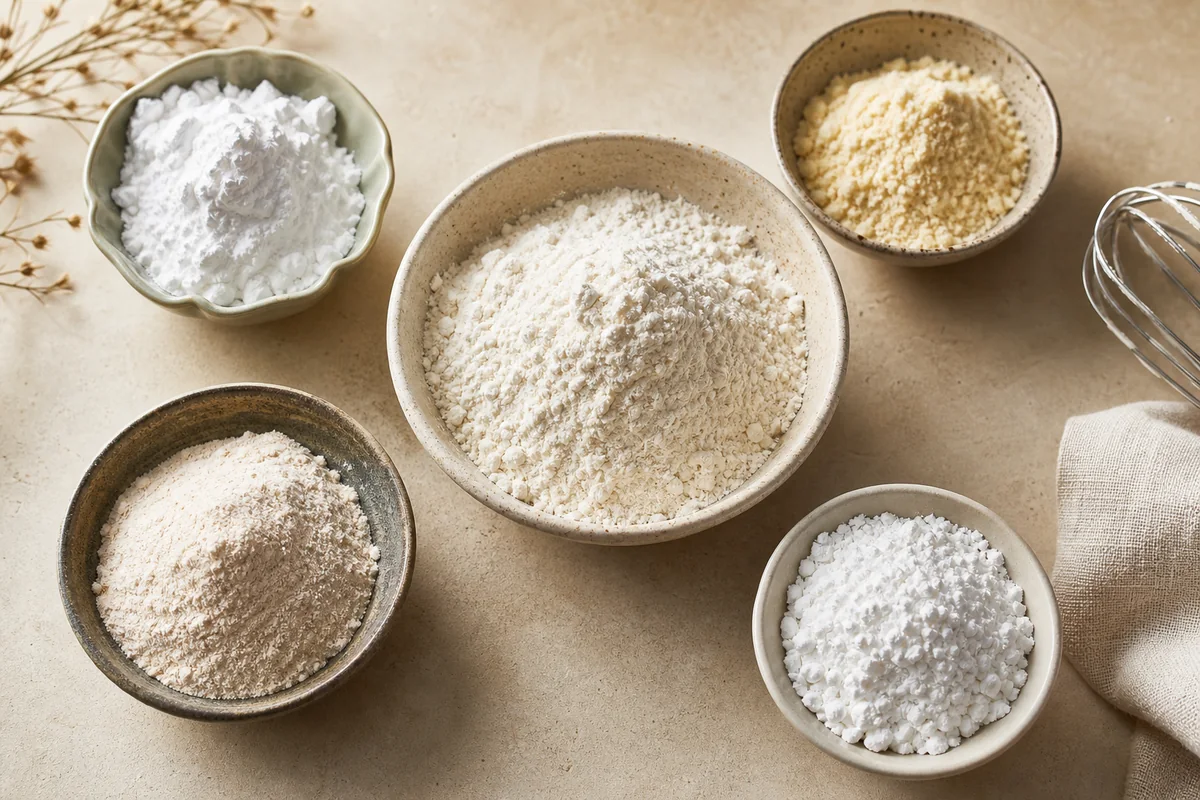
5 Best Tempura Flour Substitutes in Every Recipe
Ingredients
Equipment
Method
- Choose the substitute that matches your goal: maximum crunch (starch blends) or lighter coating (cake/pastry flour).
- Mix flour with cornstarch/potato starch/rice flour in the listed ratio (use the blend as your “tempura flour” for the recipe).
- Use cold water (and keep batter chilled); for best tempura-style results, mix just until combined—small lumps are fine.
- Fry immediately after battering; if it sits, the coating can hydrate and lose crispness.
- After frying, rest on a rack; avoid stacking so the crust stays shattery.
Notes
- For substitutes, the key is starch + minimal gluten development: cold mixing and quick frying matter as much as the flour choice.
- If your substitute blend seems too thick, thin slightly with cold water right before frying.
Tried this recipe?
Let us know how it was!
Carrie is a food writer and editor with more than 15 years of experience. She has worked for some of the biggest names in the food industry, including Bon Appétit, Food & Wine, and Martha Stewart Living.
As the Editor in Chief of EpicureDelight, Carrie oversees all of the content on the site. She also manages the team of contributing writers and editors, who help to create delicious recipes, helpful tips, and informative articles that you’ll find on the site.
A native of the Chicago area, Carrie is passionate about all things food. She loves trying new restaurants and experimenting with new recipes in her kitchen. She’s also a graduate of the Culinary Institute of America, so she knows a thing or two about food!



