
Tigernut flour has a natural, gentle sweetness that most flours can't quite match straight from the bag. It also thickens batters and sauces with a soft hand, which means your swap has to pull double duty on both flavor and texture.
Pick the right tigernut flour substitute and your bake will land close enough that no one notices.
Absorption is the thing most people get wrong. Tigernut flour sits in the middle of the absorbency scale, so replacing it with a highly thirsty flour like coconut can leave your batter dry and crumbly.
Always mix first, then judge by the batter's pour before adding more liquid.
Tigernut flour brings mild sweetness and moderate thickening to baked goods and sauces. Almond flour is the closest all-around swap at 1:1. Cassava flour works best for thickening. Coconut flour needs half the amount. Oat flour handles everyday bakes. Cornstarch is for sauces only.
5 Tigernut Flour Replacement Swaps (By Texture and Use)
These five swaps cover baking, thickening, and everyday cooking. The table below gives you the starting ratio at a glance.
Absorbent flours like cassava and coconut almost always need a small liquid adjustment after the first mix.
| # | Substitute | Best For | Ratio | Key Note |
|---|---|---|---|---|
| 1 | Almond flour | Both | 1:1 | Bump sweetener slightly |
| 2 | Cassava flour | Both | 1:1 | Add liquid after mixing |
| 3 | Coconut flour | Baking | ½:1 | Very high absorption |
| 4 | Oat flour | Baking | 1:1 | Don't overmix the batter |
| 5 | Cornstarch | Thickening | ⅓:1 | Sauces and curds only |
1. Almond Flour
Blanched, finely ground almond flour is the easiest swap for most baking recipes. It matches tigernut flour's tender crumb, and the nutty baked-good character it brings is close enough to tigernut's profile that you rarely notice the difference.
The one gap is sweetness. Tigernut flour has a subtle natural sugar that almond flour doesn't quite replicate, so add 1-2 teaspoons of your preferred sweetener per cup if you want the flavor to land in the same place.
Because this blanched fine flour absorbs slightly less than tigernut flour, your batter may look a touch looser at first-that's normal.
- Best recipe types: Cookies, muffins, quick breads, pancakes
- Texture outcome: Tender and slightly moist crumb, similar to tigernut flour results
- Liquid adjustment: Batter may look slightly thin; hold back 1 tablespoon liquid and add it only if needed
Skip if: you need a nut-free recipe or you have an almond sensitivity.
2. Cassava Flour
Cassava flour is the best option when your recipe asks tigernut flour to do structural or thickening work. It is naturally grain-free, has a fairly neutral flavor, and the starchy, smooth flour simmers into sauces with a clean, glossy finish.
In baking, cassava absorbs noticeably more liquid than tigernut flour does. Mix your batter first, then assess: if it looks thick or crumbly, add liquid 1 tablespoon at a time until it flows smoothly.
Cassava Flour
Works for: thickening sauces and creams, gluten-free baking where structure matters, grain-free bread recipes
Skip if: you want a soft, light, airy crumb or you're avoiding springy starchy textures
- Baking behavior: Produces a slightly firmer, more bread-like crumb than tigernut flour
- Thickening behavior: Simmers quickly into glossy sauces; stir constantly and simmer 1-2 minutes
- Liquid adjustment: Expect to add 1-3 tablespoon extra liquid per cup of cassava flour in batter
3. Coconut Flour
Coconut flour absorbs roughly twice as much liquid as most other flours-that's the single fact that changes everything about using it here. You only need half the amount: use ½ cup of coconut flour for every 1 cup of tigernut flour called for.
The slight natural sweetness in coconut flour is actually a good match for tigernut flour's profile. The coconut note itself is mild in cookies and denser bakes, but it can be more noticeable in pale, delicate desserts.
For a deeper look at how it compares with similar products, the powder versus flour tradeoff is worth knowing before you shop.
- Starting ratio: ½ cup coconut flour per 1 cup tigernut flour; do not go higher at first
- When to add liquid: After the first mix, check consistency-add milk or water 1 tablespoon at a time until batter flows slowly off a spoon
- Best applications: Dense cookies, brownies, pancakes, and flourless-style muffins
Skip if: you need a neutral flavor and you're making light-colored or delicately flavored baked goods.
4. Oat Flour
Oat flour is the most kitchen-friendly option on this list. It is widely available, has a mild grain flavor that doesn't compete with other ingredients, and swaps in at a straight 1:1 ratio without much adjustment.
The texture is slightly chewier than tigernut flour, and recipes with higher moisture can turn gummy if the batter is overmixed. Keep mixing to a minimum and bake at the recipe's stated temperature without cutting the time short.
For most everyday bakes like muffins, cookies, and breakfast loaves, oat flour handles the swap cleanly.
| Use | Ratio | Notes |
|---|---|---|
| Baking (standard) | 1:1 | Oat flour; mix briefly, bake fully to avoid gummy centers |
| Baking (structure needed) | 1.1-1.2:1 | Oat flour; add 10-20% more for cakes or dense muffins |
| Thickening (light sauces) | 1:1 | Oat flour; simmer 2-3 minutes and stir well to remove raw taste |
- Ratio guidance: 1:1 for baking; increase by 10-20% if the recipe needs extra structure or thickness
- Texture expectation: Slightly chewier crumb, especially in moist recipes; pairs well with fruit-based batters
- Avoid gummy results: Don't overmix; bake through to the center using a toothpick test
Skip if: you need certified gluten-free results and your oat flour isn't labeled as such.
5. Cornstarch (Thickening Only)
Cornstarch is not a flour replacement for baking. It has no fiber, no crumb structure, and it won't give cookies or cakes any useful body.
What it does well is thicken sauces, curds, and puddings-and in that role, it outperforms most of the flours on this list.
When tigernut flour is acting as a thickener in a sauce, this fine sweet flour typically uses a larger volume to get the job done. Cornstarch needs only one-third that amount-use about 1 teaspoon of cornstarch for every 1 tablespoon of tigernut flour your recipe calls for.
Cornstarch
Works for: thickening sauces, gravies, curds, puddings, and creamy soup bases
Skip if: you're making cookies, cakes, or muffins that need real flour structure and crumb
- Thickening ratio: Use ⅓ the amount of tigernut flour called for (1 teaspoon cornstarch per 1 tablespoon tigernut flour)
- Simmer time: Whisk into a cold liquid first, then simmer 1-2 minutes until the sauce coats a spoon and looks glossy
- Avoid lumps: Always slurry-mix cornstarch with a few tablespoons of cold liquid before adding to a hot pan
Skip if: the recipe needs tigernut flour's fiber content, baking structure, or subtle natural sweetness.
Making Tigernut Flour Substitutes Work (Texture + Liquid Rules)
The difference between a successful swap and a gummy or dry result usually comes down to two things: how much liquid the new flour drinks and how long you let it cook. Understanding this mildly sweet flour's natural behavior helps you predict where each substitute will drift.
Adjust incrementally and you'll avoid most common mistakes.
- Absorption rule: After your first mix, wait 30-60 seconds before adding more liquid-absorbent flours like cassava and coconut keep drinking as they sit, so batter that looks dry at first often corrects itself
- Thickening timing: For cornstarch and cassava used as thickeners, simmer 1-2 minutes past the point where the sauce looks "almost done"-this removes any raw starch taste and locks in gloss
- Flavor balance: If your substitute lacks tigernut flour's gentle sweetness, a small addition of honey, coconut sugar, or vanilla extract (½-1 teaspoon per cup of flour) brings the flavor back without changing batter structure
Frequently Asked Questions
No. Coconut flour absorbs far more liquid, so a 1:1 swap will produce a dense, dry result. Use half the amount and add liquid gradually until batter flows correctly.
Cornstarch is the most efficient thickener at one-third the volume. Cassava flour is a close second and works at a 1:1 ratio with a slightly longer simmer time.
Usually yes. Cassava flour absorbs more than tigernut flour in batter. Add liquid 1 tablespoon at a time after mixing until the batter reaches the right consistency.
Mildly. Oat flour has a light grain flavor that's less sweet than tigernut flour. It works well in most recipes but may be noticeable in very delicate or lightly flavored bakes.
No. Cornstarch has no fiber or crumb structure, so cookies made with it alone will not hold together. Use almond flour or oat flour for cookie baking instead.
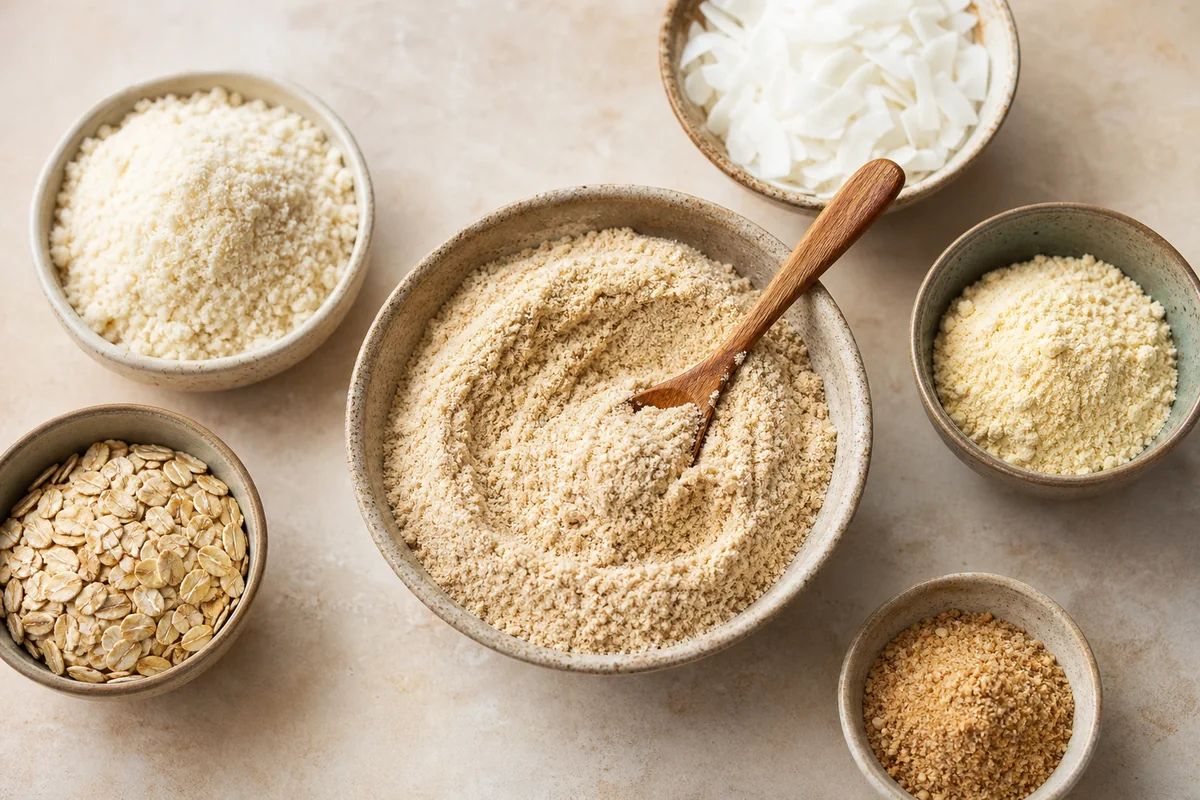
5 Best Tigernut Flour Substitutes That Taste Right
Ingredients
Equipment
Method
- Identify your use: baking (cookie/cake/muffins) vs thickening (sauce/cream).
- Swap by the ratio in the table; for cassava/coconut, start with the listed amount first (they absorb more).
- Mix and assess texture after 30–60 seconds: if it looks dry/grainy, add small splashes of water/milk (1 tablespoon at a time).
- For thickening, simmer 1–2 minutes longer than you think you need, then check gloss and thickness.
- If you miss the gentle sweetness of tigernut flour, add a small pinch of sugar/honey or a teaspoon of vanilla.
Notes
- Tigernut flour is both a flour and a mild thickener—texture changes are mostly about absorption.
- When switching flours, do a small texture check after mixing (before baking) so you can adjust liquid.
Tried this recipe?
Let us know how it was!
Carrie is a food writer and editor with more than 15 years of experience. She has worked for some of the biggest names in the food industry, including Bon Appétit, Food & Wine, and Martha Stewart Living.
As the Editor in Chief of EpicureDelight, Carrie oversees all of the content on the site. She also manages the team of contributing writers and editors, who help to create delicious recipes, helpful tips, and informative articles that you’ll find on the site.
A native of the Chicago area, Carrie is passionate about all things food. She loves trying new restaurants and experimenting with new recipes in her kitchen. She’s also a graduate of the Culinary Institute of America, so she knows a thing or two about food!



