Tuna salad lasts 3 to 4 days in a refrigerator at 40°F or colder. Count from the day you mix it, refrigerate it promptly, and write that date on the container.
Discard tuna salad after 2 hours at room temperature, or after 1 hour when the air is above 90°F. Those warm minutes stay on the clock even if the bowl goes back into the refrigerator.

Use refrigerated tuna salad within 3 to 4 days, but let its full warm-time history override that date. Keep travel portions between cold packs, and freeze only when you can accept a softer, watery texture.
How Long Does Tuna Salad Last in the Refrigerator?
A Monday afternoon batch starts its refrigerator clock on Monday, not when you first open the container on Tuesday. The tuna, binder, vegetables, and any cooked add-ins become one perishable mixture as soon as they meet.
| Situation | Limit | Decision |
|---|---|---|
| Held at 40°F or colder | 3 to 4 days | Date the container and use the shorter ingredient clock |
| Room temperature up to 90°F | 2 hours total | Refrigerate before the limit or discard |
| Air above 90°F | 1 hour total | Keep under active cooling or discard |
| Frozen while still sound | Safety clock pauses | Expect texture loss after thawing |
Eat that Monday batch by Thursday or Friday only if it stayed cold. If you mixed in tuna, eggs, or dressing that was already two days old, the oldest safe ingredient sets the earlier finish.
An unopened can follows a different pantry clock. Check the sealed and opened tuna limits before mixing a can with a dent, leak, or uncertain opening date.
A tight lid protects quality, but it cannot turn day five into day three. The same 3-to-4-day limit applies whether the binder is mayonnaise, yogurt, avocado, or one of the measured tuna salad binders.
The binder may change texture without changing safety. Ideas in our no-mayonnaise salad collection still need a separate cold-storage clock for every finished bowl.
How Long Can Tuna Salad Sit Out?
A cold refrigerator slows bacterial growth, but it does not erase earlier exposure. Counter time is cumulative, so add every warm serving period, commute, and forgotten break together.
A desk lunch can use most of the allowance
Suppose a sandwich sits in a warm office for 90 minutes, then the remaining salad spends another 45 minutes on the dinner table. The total is 2 hours and 15 minutes, so the leftovers belong in the trash.
Putting the container back into a refrigerator between those periods does not reset the count. A normal smell cannot prove that the warm exposure was harmless.
Heat shortens the decision
Above 90°F, the limit drops to 1 hour. A parked car, sunny picnic table, or hot outdoor kitchen can cross that line while the center of the salad still feels slightly cool.
Do not taste a bowl to test its safety after the limit. If the mayonnaise itself has an uncertain history, separate mayonnaise storage rules can help before you mix the next batch.
How Should You Pack Tuna Salad for Travel?
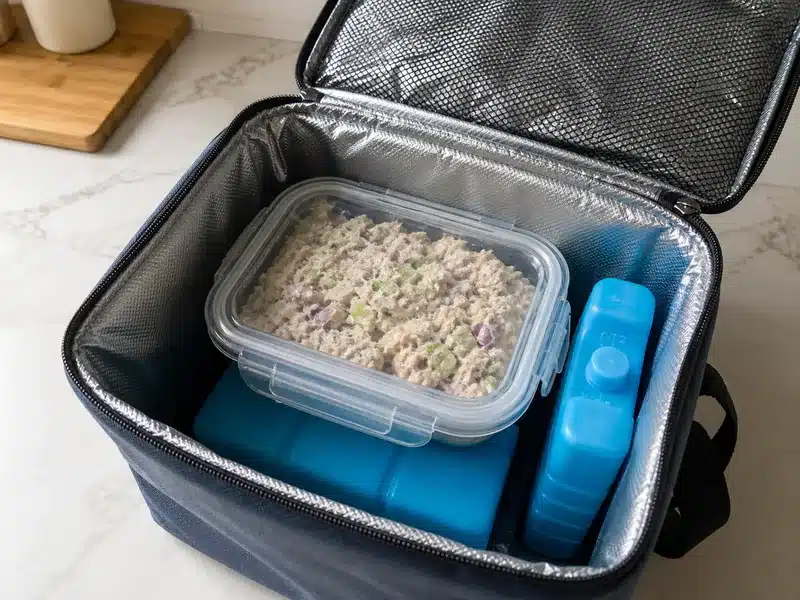
Pack one meal-size portion in a leakproof container, then place it between two frozen cold sources in an insulated bag. One pack below cools the base while a second above helps when warm air enters the bag.
Keep the bag zipped and out of direct sun. A cold pack beside the container is more useful than one buried under drinks that people remove throughout the day.
At a picnic, set only a small serving bowl over ice and leave the reserve portion in the cooler. Refill the bowl with a clean spoon instead of warming the entire batch on the table.
Discard leftovers if the packs thawed completely, the bag sat hot, or you cannot reconstruct the temperature history. Side dishes from our tuna plate pairings may travel well, but every perishable item needs its own cooling plan.
What Container Keeps Tuna Salad Fresh?
One deep tub cools more slowly than two shallow containers because the center holds heat. Divide a large batch before refrigeration, especially when the tuna or cooked add-ins were still warm.
- Choose a shallow container. Spread the salad in a modest layer so the center chills quickly.
- Date the lid. Record the mixing day instead of relying on memory.
- Use an interior shelf. The refrigerator door warms each time it opens.
- Serve a separate portion. Keep crumbs, saliva, and repeat warming away from the main batch.
A clean spoon matters because mixed salad offers moisture and nutrients throughout the container. Repeated dipping can move contamination far beyond the visible spot where it entered.
Celery and pickles release water as they sit, even in a safely stored batch. The celery freshness cues help you start with crisp stalks, while tuna salad dressings explain why some binders loosen sooner than others.
Watery texture alone is a quality problem when the date and temperature history are sound. It becomes a discard decision when it appears with slime, gas, mold, or an unsafe clock.
Can Tuna Salad Smell Normal and Still Be Unsafe?
A day-five salad can look normal and still be outside the recommended window. Start with the date and temperature record, then use sensory changes as extra reasons to discard.
- Sour or rotten odor. A sharp smell that was absent when mixed is not normal tuna or pickle aroma.
- Slick or ropy surface. Slime differs from a little clean vegetable water at the bottom.
- Gas or active bubbling. Fizzing in a still salad points to microbial activity.
- Pink, green, or dark growth. Unexplained patches mean the whole mixed batch should go.
Do not scrape away one patch and eat the rest. Unlike a hard block of food, chopped tuna salad gives moisture and microbes many paths through the container.
If a fishy flavor is the only concern and the batch is still safely within time, adjust the next recipe rather than masking this one. Tuna substitutes show how another protein changes both flavor and storage.
Can You Freeze Tuna Salad?
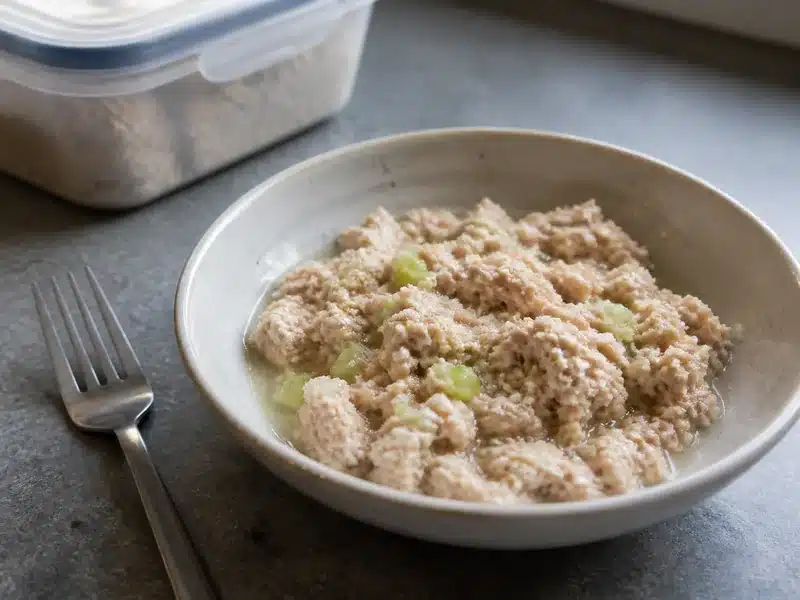
Freezing a sound batch before its refrigerator window ends can prevent waste, but it does not preserve the original bite. Ice crystals break the dressing emulsion and damage crisp plant cells.
The best freezer plan starts before mixing
Freeze plain drained tuna in a recipe-size portion, then add fresh binder and vegetables after it thaws in the refrigerator. This keeps celery crisp and avoids asking a broken mayonnaise emulsion to become smooth again.
If you build tuna bowls often, ideas from fresh tuna salad combinations can help you keep the frozen protein separate until serving day.
An already-mixed batch needs a tolerant use
Pack mixed salad with little empty space, date it, and thaw it overnight in the refrigerator. Stir once and drain only obvious clean water, since aggressive mixing can make softened vegetables mushier.
A safely thawed loose batch works better in a cooked filling than in a cold sandwich. A hot use such as tuna noodle casserole can hide texture damage, but heat cannot rescue salad that was spoiled or left warm too long.
Do not thaw the container on the counter because the outside warms while the center remains frozen. Finish the thaw under refrigeration and use the portion promptly.
Sources
- USDA Food Safety and Inspection Service leftovers guidance
- FDA seafood selection, storage, and serving guidance
These limits address hazards that sight and smell cannot measure. Use the shorter rule whenever the ingredients or temperature record call for it.
Follow the package date if it is sooner, and count any time since the seal was broken. Keep it at 40°F or colder throughout storage.
Cool a large amount of cooked tuna quickly in a shallow container first. Hot tuna can warm the binder and the center of the finished bowl.
No. Yogurt, avocado, and oil-based binders do not remove the time limit from moist tuna and chopped add-ins.
You may improve texture, but fresh dressing does not restart the storage clock. Use or discard the salad based on its original mixing date.
Keep the reserve container cold and refill a small bowl set over ice. Replace the serving spoon if it falls onto a shared table.

Carrie is a food writer and editor with more than 15 years of experience. She has worked for some of the biggest names in the food industry, including Bon Appétit, Food & Wine, and Martha Stewart Living.
As the Editor in Chief of EpicureDelight, Carrie oversees all of the content on the site. She also manages the team of contributing writers and editors, who help to create delicious recipes, helpful tips, and informative articles that you’ll find on the site.
A native of the Chicago area, Carrie is passionate about all things food. She loves trying new restaurants and experimenting with new recipes in her kitchen. She’s also a graduate of the Culinary Institute of America, so she knows a thing or two about food!