Ube ice cream tastes creamy, nutty, vanilla-like, and gently earthy. The purple yam gives the scoop a fuller body and a mild root-vegetable note, while sugar and dairy make the flavor soft rather than savory.
It should not taste like grape or berry just because it is purple. Real ube, ube jam, extract, dairy, and coconut can produce different versions, so color alone tells you less than the label and the softened scoop.

Think of vanilla ice cream with a nutty purple-yam center. Let a rock-hard scoop soften for a few minutes, then look for a creamy body, a mild earthy finish, and no large ice crystals.
What Does Ube Ice Cream Taste Like?
Ube is a purple yam. On its own, it has a mild starchy sweetness and a nutty, earthy aroma.
An ice cream base adds fat and sugar, which rounds the root flavor and makes vanilla-like notes easier to notice.
Aroma
Soft vanilla, cooked yam, and a faint nutty note.
First Taste
Creamy sweetness with no fruit-like tartness.
Finish
Mild earthiness and a fuller, slightly starchy body.
The flavor often feels familiar even to someone who has never eaten ube. Vanilla supplies the clean dessert note, while the yam creates depth.
Coconut may appear in the base or topping and can make the nuttiness stronger. Compare the effect with the flavor of coconut.
A strong candy smell, sharp bitterness, or raw powder finish is not the ideal target. Those traits can come from heavy extract, too little real ube, or an unbalanced base rather than the yam itself.
Why Doesn't Purple Ube Ice Cream Taste Like Grape?
People often connect purple food with grape candy or berries.
Ube has no grape tartness, juice, or tannic skin note. Its color and flavor come from a yam, so the scoop stays creamy and earthy.
Real ube adds flavor and body
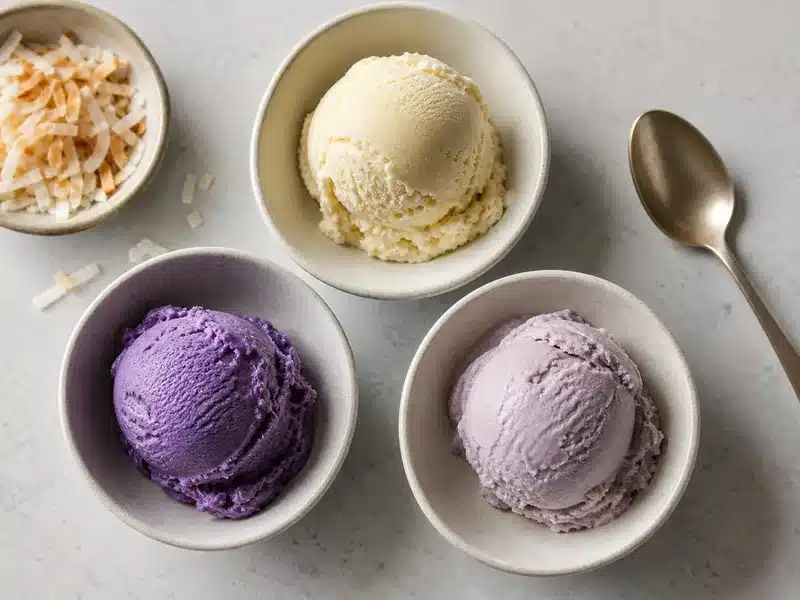
Mashed cooked ube can thicken the base and give it a quieter lavender or purple shade. The flavor feels rounded because the yam contributes texture as well as aroma.
Ube halaya adds sweetness and richness
Ube halaya is a sweet cooked yam preparation. In ice cream it can create a deeper dessert flavor because sugar, milk, or coconut may already be part of the jam.
Extract and color can look stronger than they taste
Extract helps a commercial or homemade batch smell consistent, and added color can make it vivid. Neither proves that much yam is present.
A neon scoop may taste good, but it may lean toward vanilla candy while a paler scoop tastes more like cooked ube.
Judge after the scoop softens. Vanilla flavor helps separate the clean base note from ube's nutty root finish.
How Does Ube Ice Cream Compare with Vanilla, Taro, and Sweet Potato?
Ube shares a creamy dessert role with vanilla, a starchy body with taro, and root sweetness with sweet potato. Each comparison explains one side of the scoop, but none is a complete match.
| Flavor | What Feels Similar | Main Difference |
|---|---|---|
| Vanilla | Soft, creamy dessert aroma | No yam body or earthy finish |
| Taro | Starchy, mild, common in drinks | Usually paler, lighter, and more neutral |
| Sweet potato | Cooked root sweetness | Warmer and more caramel-like |
| Pistachio | Nutty dairy finish | More roasted and distinctly nut-like |
Taro is the comparison that causes the most confusion. In a sweet milk base, both can taste gentle and starchy.
Ube usually reads richer, more vanilla-like, and more strongly tied to dessert. Compare taro root with taro bubble tea to see how a milk base changes that root too.
Sweet potato becomes caramel-like after roasting, while ube keeps a cooler nutty note. If a recipe needs another root puree, sweet potato substitutes may match texture before they match flavor.
Pistachio is not a yam substitute, but it gives a useful nutty ice cream reference. Pistachio ice cream shows the more roasted direction.
How Does Temperature Change Ube Ice Cream?
A rock-hard scoop can taste mostly cold and sweet because deep cold mutes aroma. Let the tub stand just long enough for a spoon to enter without force, then taste before the edges melt.
Best Tasting Point
Serve ube ice cream when it bends under the spoon but still holds a round scoop. At that point, the yam aroma opens without the base turning watery.
Good ube ice cream should feel dense and smooth. Real yam or halaya can give more body than plain vanilla.
A coconut-milk base may melt differently and leave a lighter or more fragrant finish than a dairy-heavy base.
Large ice crystals suggest that the tub warmed and refroze or spent too long exposed to air. The scoop may remain edible when kept frozen, but crystals dilute the creamy texture and make the flavor seem flat.
Half-melted ice cream is also a poor tasting point.
Sugar becomes louder as the base warms, while the delicate yam note can disappear under sweetness. Taste one plain spoonful before adding toppings.
What Toppings Pair Well with Ube Ice Cream?
Ube is mild enough to accept many toppings, but the best choice solves a specific problem.
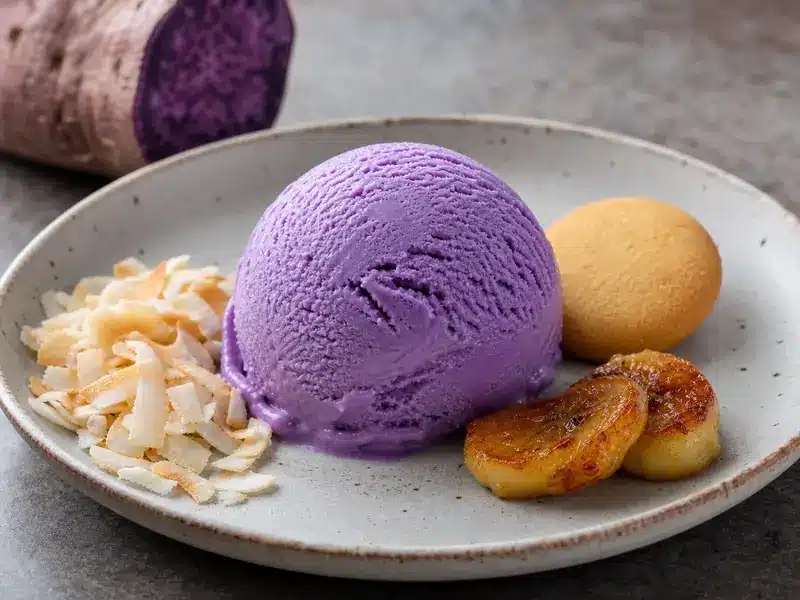
Add salt or crunch to a very sweet tub. Add a soft cake or cream to a scoop with a stronger earthy finish.
| What The Scoop Needs | Add | Result |
|---|---|---|
| Less heavy sweetness | Salted butter cookie | Salt and crunch sharpen the finish |
| More nutty aroma | Toasted coconut | Supports ube without hiding it |
| Softer earthiness | Plain sponge or butter cake | Spreads the flavor through a mild bite |
| More dessert richness | Condensed milk or leche flan | Creates a sweeter Filipino-dessert direction |
| Fresh contrast | Banana or mild mango | Adds fruit without suggesting grape |
Chewy toppings change the eating rhythm without adding a loud flavor. Tapioca pearls can work in a bowl inspired by bubble tea.
Keep the portion small so the chewy pieces do not crowd out the scoop.
Matcha offers a bitter earthy contrast rather than a supporting flavor. Compare matcha boba when you want a sharper pairing.
For a first taste, toasted coconut or plain cake gives ube more room.
How Do Real Ube, Halaya, and Extract Change the Scoop?
Two brands can both call a product ube ice cream and still taste different. Read the ingredient list and base before deciding that one tub defines the flavor.
- Real ube or purple yam: Expect more body and a gentle cooked-root flavor.
- Ube halaya: Expect a richer, sweeter, more dessert-like scoop.
- Ube extract: Expect a clear aroma, but check whether the base supplies enough body.
- Coconut base: Expect a fragrant finish that can make the nutty note easier to notice.
- Dairy-heavy base: Expect a rounder, creamier flavor that may lean closer to vanilla.
Choose a tub with an intact seal, smooth surface, and few visible crystals. Bright color is a style choice, not a quality certificate.
Let the first scoop soften before deciding whether it tastes flat.
If you enjoy sweet milk drinks, milk tea offers a useful base comparison. For a milder root flavor with a different texture, poi shows how a starch can taste gentle without dairy or freezing.
A homemade batch also changes with the form of ube. Mashed yam may need straining for a smooth base, halaya may require less added sugar, and extract works best as support rather than the only source of character.
Frequently Asked Questions
It is usually medium to very sweet because ube itself is mild. Real ube should still leave a nutty, earthy note under the sugar.
They share a mild starchy quality, but ube usually tastes nuttier, richer, and more vanilla-like than taro.
The base may contain little real ube, or the scoop may be too cold for the yam aroma to open. Let it soften slightly and taste again.
Some versions use coconut milk or coconut flavor, but dairy-based tubs may contain none. Check the ingredient list.
Toasted coconut is the easiest match because it adds crunch and supports the nutty flavor without hiding the yam.

Carrie is a food writer and editor with more than 15 years of experience. She has worked for some of the biggest names in the food industry, including Bon Appétit, Food & Wine, and Martha Stewart Living.
As the Editor in Chief of EpicureDelight, Carrie oversees all of the content on the site. She also manages the team of contributing writers and editors, who help to create delicious recipes, helpful tips, and informative articles that you’ll find on the site.
A native of the Chicago area, Carrie is passionate about all things food. She loves trying new restaurants and experimenting with new recipes in her kitchen. She’s also a graduate of the Culinary Institute of America, so she knows a thing or two about food!