
Vanilla bean paste sits in its own category. It delivers concentrated vanilla flavor, a thick consistency, and those visible seeds that turn a plain custard or frosting into something worth looking at twice.
When you run out, the swap you choose matters more than people expect, because no single substitute covers all three qualities at once.
Vanilla bean paste substitute is worth thinking through carefully before you reach for whatever's closest in the pantry. The paste's thickness affects batter structure. The seeds affect appearance. The flavor concentration affects how much you add.
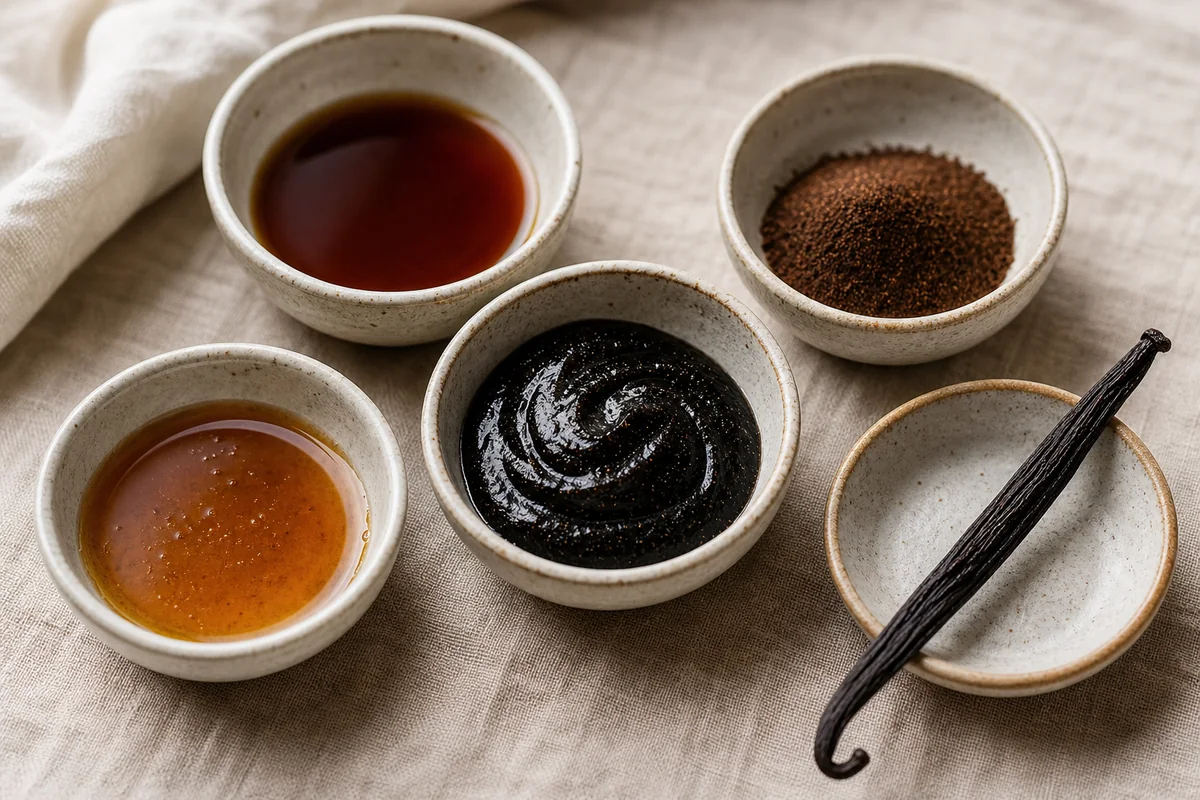
Vanilla bean paste combines thick consistency, concentrated vanilla flavor, and visible bean specks. The best substitute depends on what matters most in your recipe. Vanilla extract covers flavor. Vanilla bean powder covers aroma and specks. Scraped seeds cover the visual effect most closely.
5 Best Vanilla Bean Paste Substitutes (That Keep the Bean Flavor)
Pick your substitute based on what the recipe actually needs. Some recipes can drop the specks without anyone noticing.
Others, like a white frosting or vanilla panna cotta, look unfinished without them. Use the table below to match your priority.
| # | Substitute | Best For | Ratio | Key Note |
|---|---|---|---|---|
| 1 | Vanilla Extract | Both | 1:1 | No specks, pure flavor |
| 2 | Vanilla Bean Powder | Baking | 1:1 | Hydrate before adding |
| 3 | Scraped Seeds + Sugar | Both | 1:1 | Real speckles, grind first |
| 4 | Homemade Vanilla Paste | Baking | 1:1 | Needs a thickening step |
| 5 | Vanilla Sugar | Both | 1:1 | Reduce other sugar first |
1. Vanilla Extract
Vanilla extract is the most common swap, and it performs well across almost every baked recipe. The flavor profile is close, especially if you use a quality, alcohol-based extract rather than an imitation version.
Use it in cookies, quick breads, simple buttercreams, and any batter where the vanilla-speck look is optional. If you know how storing extract properly affects potency, you already understand why fresh extract gives you the best result here.
- Ratio: 1:1 by volume, stirred into wet ingredients first
- Best for: Cookies, cakes, simple creams, and whipped toppings
- Texture fix: If batter seems thinner than usual, reduce another liquid by 1-2 teaspoons or add a small pinch of cornstarch before cooking
- Flavor tip: Use pure vanilla extract; imitation versions often taste flat and slightly chemical
Skip this if you need visible vanilla seeds in the finished product. Extract brings zero specks.
2. Vanilla Bean Powder
Vanilla bean powder is dried, ground vanilla beans, and it carries a strong, concentrated aroma that matches paste closely. It also has dark specks, so it comes closer to the visual effect of paste than extract does.
The key is hydration. Stir the powder into a small amount of warm liquid before adding it to the batter.
Understanding the extract versus powder differences helps you decide which one fits your recipe structure.
- Ratio: 1:1 by volume as a starting point
- Hydration tip: Mix powder into 1-2 teaspoons of warm milk, cream, or water before stirring into the batter
- Heat performance: Holds up well in baking; aroma stays stable under oven heat
- Watch clumping: Adding powder dry into flour can create sandy pockets, so always hydrate first
Skip this if you cannot hydrate the powder before mixing. Dry powder in a custard or cream can feel gritty.
3. Scraped Vanilla Bean Seeds + Sugar
Fresh vanilla bean seeds are the most direct visual match for paste. The black specks look identical in a finished cream or frosting, and the flavor is genuinely as good as paste, not a compromise.
Seeds alone can clump in cold butter or thick cream. Blending them with a small amount of granulated sugar before using helps them disperse evenly.
If you're curious about swapping whole beans in other contexts, the technique is similar: scrape, combine, then incorporate gently.
Seeds Only
Works for: Warm custards and sauces where seeds disperse naturally in liquid
Skip if: Mixing into cold buttercream or thick batters where clumping is likely
Seeds + Sugar
Works for: Frostings, whipped creams, pastry fillings, and any recipe needing even speckle distribution
Skip if: Recipe has no room for even 1 teaspoon of extra sugar
- Ratio: Seeds from 1 bean equals roughly 1 teaspoon of paste
- Method: Scrape seeds, combine with 1 teaspoon sugar, rub together until evenly mixed
- Best for: Whipped creams, pastry fillings, frostings, and speckle-forward desserts
Skip this if you do not have vanilla beans on hand or don't have 5 minutes to scrape and prep.
4. Homemade Vanilla Paste
If thickness is your main concern, making a quick paste at home is the most accurate fix. You get the specks, the consistency, and the flavor, all in one go.
It takes about 10 minutes.
The quick method uses seeds mixed into warm honey or simple syrup and cooled before use. The traditional method simmers a vanilla mixture until it reduces and coats a spoon.
Both work, but storing your beans correctly beforehand means they'll still be moist enough to scrape easily.
Quick Thickener Method
Works for: Last-minute baking when you need paste texture in under 10 minutes
Skip if: You want a longer shelf life and cleaner flavor with no honey notes
Traditional Simmer Method
Works for: Thick custards and glazes where a clean, neutral paste base matters
Skip if: You need a no-cook swap with zero stovetop time
- Quick method: Scrape 2 beans, stir seeds into 2 tablespoons warm honey or simple syrup, cool fully before using
- Traditional method: Warm seeds with ½ cup water and 2 tablespoons sugar; reduce gently until it coats a spoon
- Ratio: Use 1:1 in place of paste once made
- Best for: Thick custards, glazes, and frostings where paste-like cling helps
Skip this if you need a completely no-cook solution. Both methods require at least a brief thickening step.
5. Vanilla Sugar
Vanilla sugar works well when the recipe has room for a little extra sweetness. It adds genuine vanilla aroma and, depending on the brand, small visible specks from ground bean particles.
The trade-off is clear: it adds sugar along with flavor. You need to reduce other sugar in the recipe to keep the balance right.
| Use | Ratio | Notes |
|---|---|---|
| Cookies | 1:1 | Reduce added sugar by 1 teaspoon per tablespoon of vanilla sugar used |
| Custard | 1:1 | Dissolve in warm cream before adding; reduce recipe sugar by same amount |
| Buttercream | 1:1 | Mix into softened butter first; cut powdered sugar by 1-2 tbsp |
| Whipped Cream | 1:1 | Use in place of paste plus sugar; no extra sweetener needed |
- Ratio: 1:1 by volume, then reduce recipe sugar by roughly the same amount
- Dissolution tip: Stir into warm liquid or fat first so it dissolves cleanly without graininess
- Best for: Cookies, cakes, and simple desserts where vanilla sugar fits naturally
Skip this if your recipe is precisely calibrated for sweetness. A small sugar imbalance shows up noticeably in delicate custards.
Making Vanilla Bean Paste Substitutes Work (Without Flavor Loss)
Choosing the right substitute is only half the job. The flavor profile of vanilla beans is complex enough that a careless swap can flatten a dessert, even if the amount is technically correct.
Start by deciding what the recipe actually depends on: visible specks, thick paste texture, or concentrated vanilla flavor. Then pick accordingly and adjust from there.
- Match specks first: If visible vanilla seeds matter (frostings, panna cotta, shortbread), use scraped seeds, powder, or homemade paste. Extract and plain syrup add zero specks.
- Fix thin texture: Extract and vanilla syrup are both more liquid than paste. Reduce another wet ingredient by 1-2 teaspoons, or stir a small pinch of cornstarch into the cold liquid before heating.
- Control sweetness: Vanilla sugar and vanilla syrup both add sugar. Reduce the recipe's other sweetener by roughly the same volume you're adding to keep balance intact.
Frequently Asked Questions
Yes, use vanilla extract at a 1:1 ratio by volume. It matches the flavor well but adds no visible speckles and is thinner than paste.
Scraped vanilla bean seeds mixed with sugar are the closest match for visible specks. Vanilla bean powder also adds dark flecks and works well.
Yes, it can feel sandy or form pockets if added dry. Always stir it into 1-2 teaspoons of warm liquid first before incorporating into batter.
Yes. Reduce the recipe's other sugar by roughly the same volume of vanilla sugar you add. The swap adds real sweetness, not just flavor.
Reduce another liquid in the recipe by 1-2 teaspoons, or whisk a small pinch of cornstarch into the cold liquid before heating to restore thickness.
5 Best Vanilla Bean Paste Substitutes That Taste Right
Ingredients
Equipment
Method
- Check whether you need (1) strong bean flavor, (2) speckles, and (3) paste-like thickness; pick the substitute that matches the most important of those.
- Use the listed ratio, then stir into wet ingredients first so the vanilla disperses evenly (especially for powder and seeds).
- If the swap is thinner than paste (like extract or syrup), reduce another liquid in your recipe slightly or thicken with a small amount of cornstarch for custards/creams.
- If the swap is too sweet (vanilla sugar or syrup), reduce added sugar to keep the final dessert balanced.
- Taste the batter/cream before baking; adjust with a few drops of vanilla (or a pinch more powder/seeds) rather than doubling all at once.
Notes
- For best speckle, use scraped vanilla seeds (or seeds + sugar) rather than extract.
- For best thickness, use a syrup with careful sweetness adjustment or pair powder/seeds with a small thickening step.
Tried this recipe?
Let us know how it was!
Carrie is a food writer and editor with more than 15 years of experience. She has worked for some of the biggest names in the food industry, including Bon Appétit, Food & Wine, and Martha Stewart Living.
As the Editor in Chief of EpicureDelight, Carrie oversees all of the content on the site. She also manages the team of contributing writers and editors, who help to create delicious recipes, helpful tips, and informative articles that you’ll find on the site.
A native of the Chicago area, Carrie is passionate about all things food. She loves trying new restaurants and experimenting with new recipes in her kitchen. She’s also a graduate of the Culinary Institute of America, so she knows a thing or two about food!



