
That warm, almost floral sweetness you get from vanilla sugar is hard to pin down until it's missing. A good vanilla sugar substitute covers two jobs at once: sweetness and scent.
Most pantry swaps handle both, but the method changes depending on whether you're folding it into batter or dusting it over a finished tart.
Liquid-based swaps like vanilla extract shift batter moisture slightly. A small reduction elsewhere usually fixes that.
Dry swaps like vanilla powder keep things tidy with no adjustment at all.
The fastest vanilla sugar replacement is granulated sugar plus vanilla extract in a 1:1 swap by volume. For a dry finish, use vanilla powder mixed into sugar. For visible specks and deep flavor, reach for vanilla bean paste. Each option covers both sweetness and aroma with minor adjustments.
5 Best Vanilla Sugar Substitutes Ranked by Baking Performance
These five swaps are ordered by how closely they replicate vanilla sugar in actual baking. The table gives you the ratio at a glance.
Each H3 section below it goes deeper on technique and when to skip.
| # | Substitute | Best For | Ratio | Key Note |
|---|---|---|---|---|
| 1 | DIY Vanilla Sugar | Both | 1:1 | Rest 10 min for aroma |
| 2 | Vanilla Bean Paste | Baking | ~1:1 | Adds moisture and specks |
| 3 | Vanilla Extract | Baking | ½-1 teaspoon per 1 tbsp | Reduce other liquids slightly |
| 4 | Vanilla Powder | Both | ⅛-¼ teaspoon per 1 tbsp | Stays dry, crisp edges |
| 5 | Vanilla Bean Pod Infusion | Baking | 1:1 | Infuse 24 hrs minimum |
1. DIY Vanilla Sugar
Mixing granulated sugar with vanilla extract is the closest thing to store-bought vanilla sugar you can pull off in five minutes. The ratio is simple: 1:1 by volume, then add roughly ½ teaspoon of vanilla extract per ¼ cup of sugar.
Stir well, and let the mix sit at least 10 minutes before it goes into your batter. If you want to understand how extract behaves over time, knowing about storing extract properly helps you use it at peak strength.
- Best for: Cookies, pound cake, sweet doughs
- Swap ratio: 1:1 sugar volume, plus ½ teaspoon extract per ¼ cup sugar
- Mixing tip: Stir until extract is fully absorbed; overnight rest deepens aroma
- Moisture note: Extract adds minimal liquid, but add it to dry ingredients first to distribute evenly
Skip if: you need a decorative dry sprinkle. Uneven extract absorption can make the sugar clump rather than flow.
2. Vanilla Bean Paste
Vanilla bean paste carries the same perfume as a whole pod, plus it leaves those characteristic dark specks in your finished bake. Use it as a near 1:1 swap by volume, though paste is thicker than extract, so start at ¾ of the amount and add more if the flavor needs lifting.
If you're curious about how vanilla sugar's own flavor profile behaves in recipes, the page covering vanilla sugar flavor notes gives a useful frame for comparison.
- Best for: Cakes, muffins, scones, custard-based batters
- Swap ratio: Start at ¾:1 (paste to vanilla sugar), increase to 1:1 if needed
- Texture note: Paste is thick; fold into wet ingredients first to avoid streaks
- Speck note: Specks are visible in pale batters, which most bakers consider a plus
Skip if: you want a completely smooth, speck-free surface. Vanilla extract or vanilla powder is cleaner there.
3. Vanilla Extract
Extract is the most common swap people reach for, and it works well once you account for the liquid it adds. For every 1 tablespoon of vanilla sugar your recipe calls for, use ½ to 1 teaspoon of extract and keep the full sugar amount in the recipe too.
In a loose batter like muffins or cake, the extra teaspoon of liquid is barely noticeable. In a stiffer dough like shortbread or rolled cookies, reduce another liquid by about 1 teaspoon to stay on track.
- Best for: Cakes, muffins, quick breads, soft cookies
- Swap ratio: ½-1 teaspoon extract plus full sugar for every 1 tablespoon vanilla sugar
- Liquid adjustment: Reduce milk or water by 1 teaspoon in stiff doughs
- Intensity tip: Pure extract is stronger than imitation; start at the lower end
Skip if: your recipe ends with a dry vanilla sugar dusting or crisp coating. Extract won't give you the granulated texture that finishing calls for.
4. Vanilla Powder
Vanilla powder is ground, dried vanilla bean. It is the one dry swap that adds aroma without a single drop of liquid.
Blend it into your sugar base at about ⅛ to ¼ teaspoon of powder per 1 tablespoon of vanilla sugar, then use that combined mix as a 1:1 replacement. For a full side-by-side on how extract and powder differ in baking behavior, the breakdown of extract versus powder options is worth a quick read.
Vanilla Powder
Works for: crisp-edged cookies, dry rubs, batters where moisture is tight, finishing sprinkles
Skip if: your powder is old or pale, the aroma may be too faint to carry a whole recipe
- Best for: Shortbread, biscotti, dry spice rubs, sugar coatings
- Swap ratio: ⅛-¼ teaspoon powder per 1 tablespoon vanilla sugar (blend into plain sugar first)
- Texture note: Stays fully dry, preserving crisp edges in cookies
5. Vanilla Bean Pod Infusion
Splitting a used vanilla pod and burying it in a jar of sugar is the original method, and the result is as close to commercial vanilla sugar as you can get at home. Infuse for at least 24 hours; a full week gives noticeably deeper aroma.
After infusion, use those crystals at a 1:1 ratio in any recipe. If you store the jar properly and keep topping it up with sugar, the shelf life of your infused batch can stretch for months.
| Infusion Time | Ratio | Notes |
|---|---|---|
| 24 hours | 1:1 | Light aroma, good for mild cookies |
| 3-4 days | 1:1 | Moderate vanilla depth, works in most cakes |
| 7 days | 1:1 | Full aroma, best for butter-forward recipes |
- Best for: Shortcakes, pound cakes, anything butter-forward where vanilla is a lead flavor
- Texture note: Fully granulated, zero moisture impact, behaves exactly like vanilla sugar
Skip if: you need vanilla sugar today. A 24-hour minimum means this is planned prep, not a last-minute fix.
Making Vanilla Sugar Substitutes Work
Swapping vanilla sugar is mostly about balance. You need the aroma to carry through baking (flavors concentrate as things cool, so what smells faint in raw batter often lands correctly by the time the pan comes out), and you need sweetness and moisture to stay in their original proportions.
Knowing the difference between a dry and liquid swap is what separates a bake that works from one that turns out dense or flat.
- Match the swap to the recipe type: use dry swaps (vanilla powder, infused crystals) for cookies and coatings; use paste or extract in wet batters like cakes and muffins
- Adjust liquids when using extract or syrup: pull back another liquid by 1-2 teaspoon to compensate, especially in stiff doughs
- Test intensity before baking: dip a clean finger into the batter and taste; if vanilla is absent, add ¼ teaspoon more extract or a small pinch of powder before it goes in the oven
Frequently Asked Questions
DIY vanilla sugar made from granulated sugar and vanilla extract is the closest match. Mix 1:1 by volume, add ½ teaspoon extract per ¼ cup sugar, and rest 10 minutes before use.
No. Extract is liquid and has no sweetness, so a direct 1:1 swap throws off both moisture and sugar levels. Use ½-1 teaspoon extract plus the full sugar amount instead.
Reduce another liquid in the recipe by 1 teaspoon for every ½ teaspoon of extract you add. This keeps dough and batter at the right consistency.
Vanilla powder blended into plain granulated sugar is the best dry option. It stays granulated and distributes evenly without clumping or adding moisture.
Paste adds slight moisture and visible specks, which affects very delicate batters minimally. Vanilla powder is dry and causes no texture change at normal dosing levels.
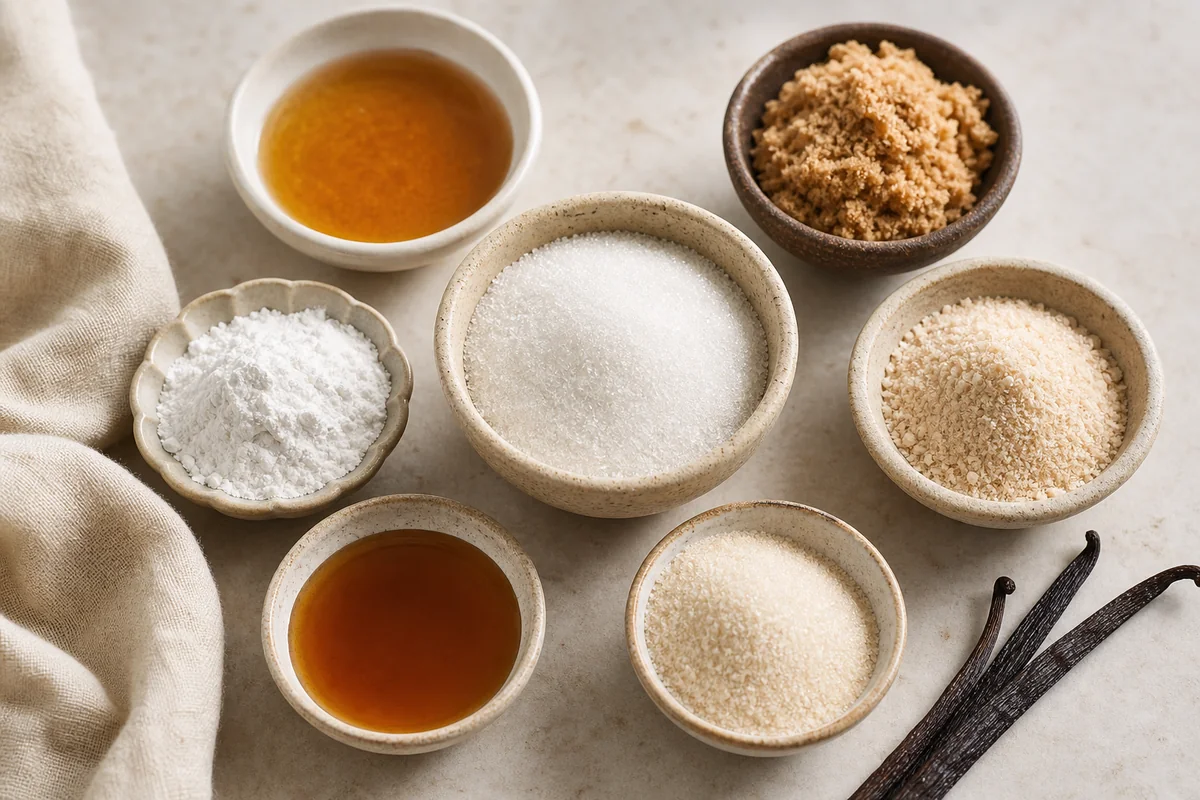
5 Best Vanilla Sugar Substitutes (Quick Swaps)
Ingredients
Method
- Identify what your recipe needs vanilla sugar for (caked sweetness, cookie crumb, or dough aroma).
- Pick the closest swap from the article (vanilla extract, vanilla bean paste, vanilla sugar by blending sugar, or vanilla powder).
- Measure using the swap ratio given for your chosen substitute; if the swap adds liquid, reduce another liquid ingredient slightly.
- Stir into batter/dough until evenly distributed, then taste-test the batter briefly if your recipe allows.
- Bake as directed; if the vanilla flavor seems faint, increase next time by 25–50% (not 2x) to avoid bitterness.
Notes
- Vanilla sugar is typically sugar + vanilla aromatics; substitutes should mimic both sweetness and aroma with minimal texture disruption.
Tried this recipe?
Let us know how it was!
Carrie is a food writer and editor with more than 15 years of experience. She has worked for some of the biggest names in the food industry, including Bon Appétit, Food & Wine, and Martha Stewart Living.
As the Editor in Chief of EpicureDelight, Carrie oversees all of the content on the site. She also manages the team of contributing writers and editors, who help to create delicious recipes, helpful tips, and informative articles that you’ll find on the site.
A native of the Chicago area, Carrie is passionate about all things food. She loves trying new restaurants and experimenting with new recipes in her kitchen. She’s also a graduate of the Culinary Institute of America, so she knows a thing or two about food!



