
Walnut oil has a quiet, almost delicate nuttiness that shows up most in finishing steps-a drizzle over roasted beets, a dressing whisked with shallots. Finding a good walnut oil substitute is less about matching chemistry and more about matching that subtle aromatic quality, which varies a lot by dish type.
Nutty oil flavor notes matter here because walnut oil sits in a specific register-not as bold as sesame, not as fruity as this grassy drizzle. The right swap depends on one question: is the oil meant for finishing, or will it take heat?
For finishing, flavor is everything. For cooking and baking, texture and fat content matter more.
Hazelnut oil is the closest match for dressings and finishing. Extra-virgin olive oil works well for low-heat cooking. Toasted sesame oil adds nuttiness but use less. Refined avocado oil handles heat without flavor. Canola oil is the neutral backup for baking.
5 Best Walnut Oil Substitutes Ranked by Flavor Fit
Every substitute below is matched to a specific cooking scenario. One quick reference table first, then the detail.
| # | Substitute | Best For | Ratio | Key Note |
|---|---|---|---|---|
| 1 | Hazelnut Oil | Finishing & Baking | 1:1 | Slightly sweeter; closest nut aroma |
| 2 | Extra-Virgin Olive Oil | Dressings & Low Heat | 1:1 | Pick mild, not peppery EVOO |
| 3 | Toasted Sesame Oil | Finishing Only | ¾:1 | Bolder; add off-heat |
| 4 | Refined Avocado Oil | Sautéing & Baking | 1:1 | Neutral flavor; high heat safe |
| 5 | Canola Oil | Baking | 1:1 | Most neutral; boost with nuts |
1. Hazelnut Oil
Hazelnut oil is the most natural stand-in for walnut oil. Both are nut-family oils with a light, aromatic quality that stays forward in dressings.
Hazelnut is a touch sweeter and slightly less earthy, but in most finishing applications, the difference is subtle enough to ignore.
If you want to know how this sweet nut oil compares before committing to it, a quick taste from the bottle tells you everything.
- Best use: Salad dressings, finishing drizzles, and light baked goods like nut muffins or cookies
- Flavor note: Nutty and aromatic with mild sweetness; slightly less earthy than walnut oil
- Ratio: Use 1:1, then taste before adding more-sweetness can build
- Heat: Keep it off high heat; use for finishing to preserve the aroma
- Skip if: Your dish relies on walnut oil's earthier, more bitter edge and you can't balance with salt
2. Extra-Virgin Olive Oil
A mild extra-virgin olive oil is a practical walnut oil alternative for dressings and low-heat cooking. Choose one labeled "mild" or "delicate"-a peppery EVOO will push the dish toward savory-bitter, which can override the lighter notes walnut oil usually supports.
If the this cold-pressed oil's flavor still feels too assertive, pull the quantity back by 1 to 2 teaspoons and stretch it with a small pour of canola oil.
The nut aroma will be absent here. What EVOO contributes is body, mild fruitiness, and a smooth mouthfeel that works in most dressings.
- Best use: Vinaigrettes, roasted vegetable finishes, low-heat sautéing
- Flavor note: Lightly fruity; works best when walnut's nuttiness is secondary to other flavors
- Ratio: Start 1:1; reduce by 1-2 teaspoon if the olive flavor reads too strong
- Stretch tip: Blend with neutral canola oil if olive flavor dominates
- Skip if: The recipe is nut-forward and you need that aroma to carry the dish
3. Toasted Sesame Oil
Toasted sesame oil brings genuine nuttiness, but it is more intense than walnut oil. It has a roasted, almost smoky quality that can dominate if you use too much.
The key is ratio control and timing-add it late or entirely off-heat.
Understanding sesame aroma differences helps set expectations before you pour.
Walnut Oil
Works for: gentle nut aroma, light dressings, delicate pastries, finishing drizzles
Skip if: you need high-heat stability or a neutral fat base
Toasted Sesame Oil
Works for: bold finishing, Asian-style dressings, noodle sauces, stir-fry finishes
Skip if: the dish is delicate or dessert-based-sesame will read too smoky
- Ratio: Start at ¾ teaspoon for every 1 teaspoon walnut oil; adjust up only after tasting
- When to add: Off-heat or in the last 30 seconds of cooking to preserve aroma
- Avoid: Prolonged high heat-sesame oil can turn sharp and acrid
- Skip if: You're making a delicate dessert or light dressing where the toasted note overwhelms
4. Refined Avocado Oil
Refined avocado oil is the right pick when walnut oil is providing fat and moisture-not flavor. It is close to neutral in taste and handles heat well, which makes it reliable for sautéing and oven baking.
When storing refined oil long-term, it holds up better than most nut oils too.
It will not recreate the nut aroma at all. If the recipe needs that quality, add toasted walnuts or a pinch of ground walnut alongside it.
- Best use: Sautéing, roasting, baking where walnut oil is structural rather than aromatic
- Ratio: Use 1:1 with no adjustment needed
- Flavor gap: Genuinely neutral-boost with toasted nuts or walnut pieces if aroma matters
- Skip if: The recipe is a finishing drizzle or dressing where walnut oil's taste is the point
5. Canola Oil
Canola oil is the pantry backup. It is neutral, affordable, and consistent in baking applications where walnut oil's job is mostly moisture and fat.
It lacks any nut aroma, so it works best when you plan to compensate through other ingredients.
- Best use: Muffins, quick breads, and cakes where another ingredient carries the nut flavor
- Ratio: 1:1, no adjustment needed
- Flavor fix: Stir in 2 tablespoon of toasted ground walnuts per ¼ cup of canola oil used
- For dressings: Skip it-canola will taste flat and watery compared with walnut oil
- Skip if: The walnut oil is the flavor driver and you have no separate nut component to add
Making Walnut Oil Substitutes Work
The single biggest variable is when the oil enters the recipe. Finishing oils-hazelnut, sesame, even a mild EVOO-should go in last.
Heat degrades their aromatic compounds fast, and storing delicate oils correctly matters just as much as how you cook with them. If you're deciding between two substitutes, ask which one is closer to walnut oil's gentleness-then choosing the nearest nut oil is almost always the right move for flavor-forward dishes.
- Add aromatic oils late: For sesame or hazelnut, add after removing the pan from heat or in the final 30 seconds to preserve the nut aroma.
- Correct a strong substitute: If sesame reads too bold, balance with a neutral oil (1 teaspoon canola per ½ teaspoon sesame) and a small pinch of salt to round it out.
- Compensate for lost nuttiness: When using canola or avocado oil, fold in 1-2 tablespoon of toasted chopped walnuts or a few drops of pure walnut extract into the dish.
Frequently Asked Questions
Hazelnut oil is the closest match. Use it 1:1 and taste as you go-it has the same nut-forward aroma with a slightly sweeter finish.
Yes, but choose a mild EVOO to avoid a peppery bite. The nut aroma will be gone, so add toasted nuts if the recipe is nut-forward.
Start at ¾ teaspoon for every 1 teaspoon of walnut oil. Sesame is more intense, so taste before adding more.
Yes for cooking and baking-it handles heat well and swaps 1:1. It adds no nut flavor, so supplement with toasted walnuts if needed.
Stir in finely chopped toasted walnuts or a few drops of pure walnut extract. Both options restore depth without changing the recipe's fat ratio.
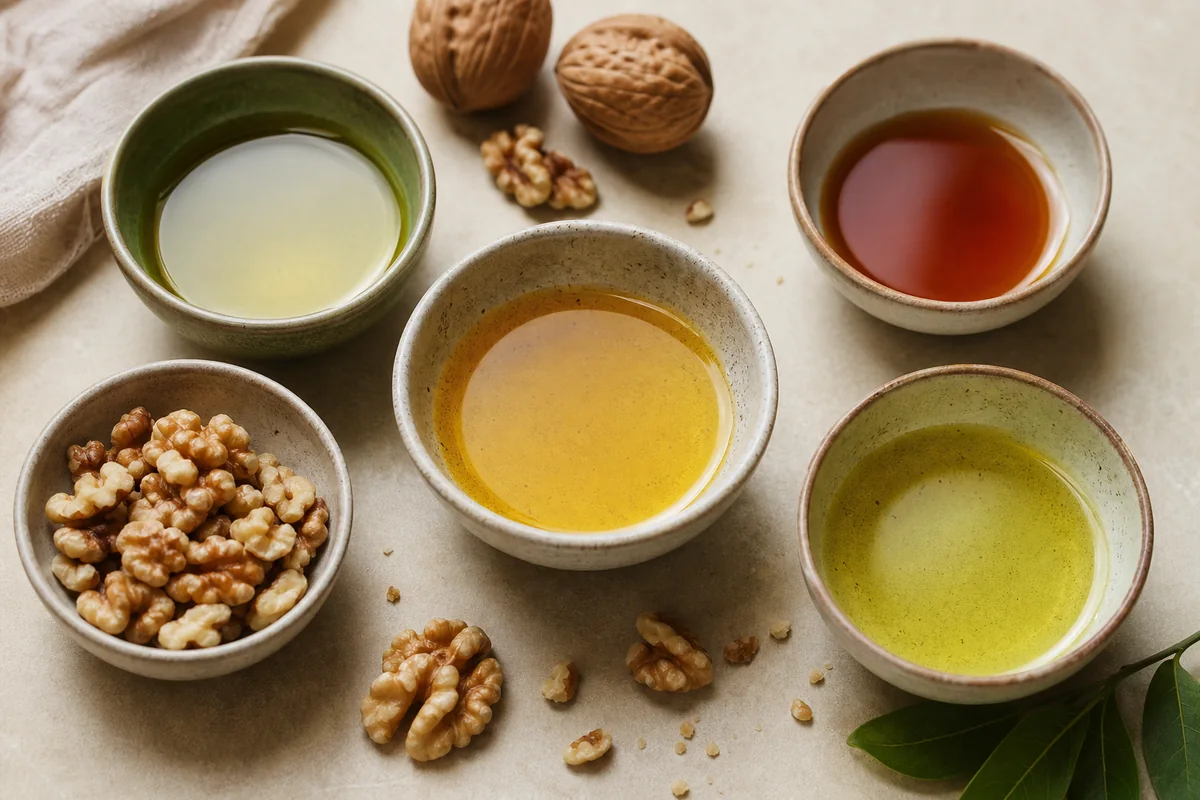
5 Best Walnut Oil Substitutes (Tested Swaps)
Ingredients
Method
- Decide whether your walnut oil is meant for finishing (dressings, drizzles) or cooking (sautéing, baking).
- Pick the closest flavor substitute first: hazelnut oil for nutty aroma, or EVOO for a gentle nut-fruit backup.
- Use the listed ratio, then taste and adjust: if the substitute is strong (sesame), start slightly low.
- For high-heat steps, prefer refined avocado or canola; reserve the most flavorful oils for finishing.
- If the dish needs nutty depth (like pastry or nut sauces), add a small boost such as toasted nuts or a pinch of ground walnut.
Notes
- Walnut oil is best treated as a delicate finishing oil; heat can mute aroma.
- Sesame oil is potent—use less and keep it off the highest heat.
Tried this recipe?
Let us know how it was!
Carrie is a food writer and editor with more than 15 years of experience. She has worked for some of the biggest names in the food industry, including Bon Appétit, Food & Wine, and Martha Stewart Living.
As the Editor in Chief of EpicureDelight, Carrie oversees all of the content on the site. She also manages the team of contributing writers and editors, who help to create delicious recipes, helpful tips, and informative articles that you’ll find on the site.
A native of the Chicago area, Carrie is passionate about all things food. She loves trying new restaurants and experimenting with new recipes in her kitchen. She’s also a graduate of the Culinary Institute of America, so she knows a thing or two about food!



