
That toasty, slightly grainy layer wheat germ adds to muffins and quick breads is easy to miss once it's gone. It brings a nutty depth, a fibrous bite, and enough absorbency to affect how your batter hydrates and sets.
Finding the right wheat germ substitute means thinking about all three: flavor, texture, and moisture behavior.
The swaps below are built for baking. Some are bran-based and lean into a hearty crumb; others are seed-based and add binding along with nutrition.
The five best wheat germ swaps for baking are wheat bran, oat bran, ground flaxseed, ground chia seeds, and ground rolled oats. Bran-based swaps match texture most closely; seed-based swaps add binding and nutrition. Use fine-milled versions for smoother batter, and let seed-based batters rest 5-10 minutes before baking.
5 Best Wheat Germ Substitutes Ranked by Baking Use
Each swap below covers a specific texture or nutrition goal. Bran-like swaps give you that fibrous crumb; ground seeds shift the texture toward denser, binding territory and can absorb extra liquid from your batter.
| # | Substitute | Best For | Ratio | Key Note |
|---|---|---|---|---|
| 1 | Wheat Bran (fine) | Both | 1:1 | Hearty, fiber-forward bite |
| 2 | Oat Bran (fine) | Both | 1:1 | Milder, gentle wheat flavor |
| 3 | Ground Flaxseed | Both | 1:1 | Rest batter 5-10 min |
| 4 | Ground Chia Seeds | Both | ¾:1 | High absorbency; use less |
| 5 | Ground Rolled Oats | Both | 1:1 | Lighter, softer crumb result |
1. Wheat Bran (Fine-Milled)
Wheat bran is the most direct swap for wheat germ in baking. It has that same fiber-forward, earthy bite, and when you use a fine-milled version, the grittiness stays low enough for muffins and quick breads.
The flavor is slightly more assertive than wheat germ. This fibrous outer grain layer leans a touch bitter in large amounts, so stay at the 1:1 ratio and don't go over.
- Ratio: Use 1:1 by volume; no adjustment needed for most recipes.
- Grind: Buy fine-milled, or pulse coarser bran in a blender for 10-15 seconds.
- Mix-in tip: Stir bran into dry ingredients first to distribute evenly before adding wet.
- Liquid: No change needed unless your bran is very coarse, in which case add 1 teaspoon of water per ¼ cup used.
Skip if: your batter is already thick and dense, or if your recipe calls for a very mild, smooth crumb. Wheat bran adds a coarser feel that reads more rustic than refined.
2. Oat Bran (Fine-Milled)
Oat bran is the right call when you want a hearty crumb without a pronounced wheat flavor. It swaps directly into muffins, pancakes, and cookies at a 1:1 ratio.
The flavor is noticeably softer than wheat bran. If you want to know what to expect before you bake, the flavor profile of milled oat bran is worth a quick read.
- Ratio: 1:1 by volume in most cookie and muffin recipes.
- Texture: Use fine-milled oat bran; coarse versions can feel gummy if the batter is wet.
- Rest tip: If the batter looks dry after mixing, let it sit 3-5 minutes before adding extra liquid. Oat bran softens as it hydrates.
- Storage: Keep oat bran sealed. this milled grain goes rancid faster than whole oats.
Skip if: your recipe depends on that toasted wheat note for flavor. Oat bran can taste flat in recipes where wheat germ's distinct character is part of the profile.
3. Ground Flaxseed
Ground flaxseed replaces wheat germ at a 1:1 ratio, but it behaves differently in the bowl. It absorbs liquid quickly, which means your batter can thicken up fast and produce a slightly denser crumb than you expect.
The flavor is nutty without tasting like wheat. this toasty seed is mild enough in small amounts that most people don't notice the change. The binding effect is a bonus in muffins and loaf-style quick breads.
- Ratio: 1:1 by volume; use brown or golden ground flax, both work.
- Rest tactic: After mixing, let batter rest 5-10 minutes before baking. This reduces graininess and lets flax hydrate fully.
- Liquid adjustment: If batter looks too thick after resting, add 1-2 teaspoon of water or milk and stir gently.
- Storage: Ground flax oxidizes fast. Buy pre-ground in small bags or grind fresh in a coffee grinder, then store in the fridge.
Skip if: you want the driest, crispest cookie crumb. Flax can soften the final bake, and its flavor is more distinct than wheat germ in recipes with delicate seasoning.
4. Ground Chia Seeds
Chia absorbs more liquid than wheat germ does. That extra absorbency can thicken your batter and push the final crumb toward dense, almost cakey territory if you're not careful.
Start at ¾ of the wheat germ amount. If you're exploring other swap options altogether, choosing a different seed base may give you more flexibility in recipes with limited liquid.
- Ratio: Use ¾ the amount of wheat germ called for; so 3 tablespoon chia replaces 4 tablespoon wheat germ.
- Liquid check: After mixing, if the batter looks stiff or pulls from the bowl cleanly, add 1 tablespoon of water at a time until it loosens.
- Grind well: Use fully ground chia, not whole seeds. Whole seeds don't integrate and create uneven texture pockets.
- Rest time: Like flax, let batter rest 5 minutes after mixing. Chia hydrates and expands, which helps with even crumb structure.
Skip if: your recipe uses very thick dough with minimal liquid, such as a dense drop cookie. Adding chia without extra moisture often makes the texture gummy rather than chewy.
5. Ground Rolled Oats
Ground Rolled Oats vs. Wheat Germ
Works for: muffins, quick breads, pancakes, and any recipe where a softer, oat-forward crumb is acceptable
Skip if: you need a pronounced fibrous bite or the recipe relies on wheat germ's denser texture contribution
Ground rolled oats are less fibrous than wheat germ and tend to soften the crumb rather than add structure. They work best when wheat germ is playing a bulk-and-flavor role rather than a binding or fiber role.
Grind size matters more here than with any other swap. Fine-ground oats behave like oat flour and blend smoothly into batter.
Coarser grinds stay more distinct and can leave visible flecks or a chewier bite.
- Ratio: 1:1 by volume, using finely ground oats.
- How to grind: Pulse old-fashioned rolled oats in a blender or food processor for 20-25 seconds. Stop before it turns to powder.
- Best uses: Muffins, banana bread, oat pancakes, and soft cookies where a gentle oat flavor is a plus.
- Flavor note: Ground oats add a mild sweetness that wheat germ doesn't have. Reduce added sugar by 1 teaspoon if you're sensitive to sweetness.
Making Wheat Germ Substitutes Work in Baking
Three variables decide whether a swap succeeds: grind size, moisture absorption, and rest time. Get these right and most batters won't read as different from the original.
Get them wrong and the crumb either turns gritty or comes out dense and wet.
For swapping seed-based ingredients, rest time is non-negotiable. Bran swaps, on the other hand, need attention to grind size more than anything else, and storing bran properly keeps it from turning stale between bakes.
- Match ratio to texture goal: Use bran swaps (wheat or oat bran) when you want a hearty, fiber-forward result. Use seed swaps (flax or chia) when you need binding or a nutrition bump alongside texture.
- Adjust hydration when needed: Seed-based swaps absorb extra liquid. Let batter rest 5-10 minutes, then check consistency before adding any extra liquid a tablespoon at a time.
- Bake-check the crumb: Pull a toothpick at the lower end of your bake window. Seed-based swaps can set faster than bran swaps because of the extra gel structure they create.
Frequently Asked Questions
Yes, oat bran swaps 1:1 by volume in most muffin recipes. The crumb stays moist and hearty, though the flavor is milder than wheat germ.
Use fine-milled wheat bran at a 1:1 ratio. It adds fiber-forward texture without the moisture-retaining effect that seed-based swaps can create.
Often yes. Both absorb more liquid than wheat germ does. Rest the batter 5-10 minutes, then add liquid one tablespoon at a time if it looks too stiff.
Psyllium husk is purely a structure and binding agent. It has no nutty or wheat-like flavor, so use it only when binding is the goal.
Grind until the texture resembles coarse flour, not powder. For oats, 20-25 seconds in a blender is enough; for flax or chia, a coffee grinder works best.
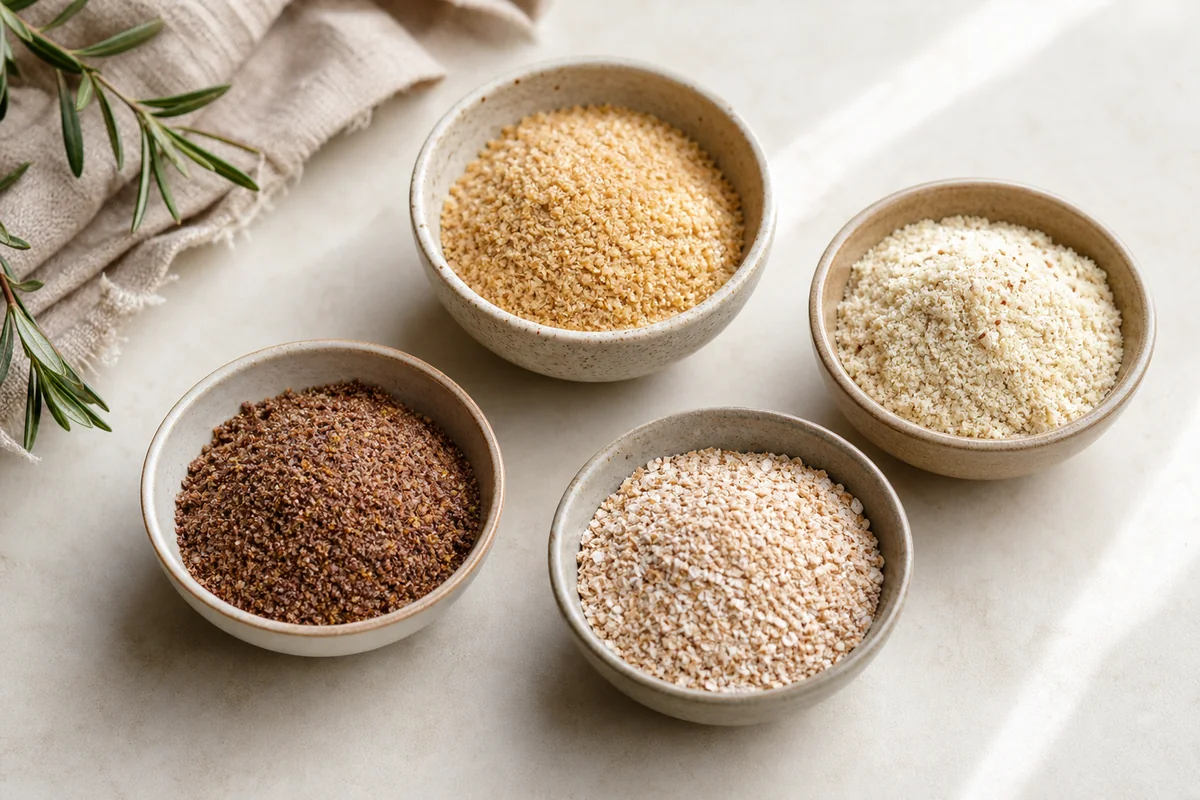
5 Best Wheat Germ Substitutes (Quick Swaps)
Ingredients
Equipment
Method
- Identify your wheat germ role in the recipe: crunch/texture vs nutrition vs bulk.
- Choose the substitute from the table: bran swaps (wheat/oat bran) for hearty texture; seed swaps (flax/chia) for nutrition and binding.
- Swap by the listed ratio (use fine-milled versions for smoother batter).
- If using seed-based swaps (flax/chia), let the batter rest 5–10 minutes to hydrate and reduce graininess.
- Bake as directed, then adjust next time: add a small splash of liquid if it seems dry, or reduce chia/seed amount if it’s too dense.
Notes
- For best results, use fine-milled substitutes so the batter doesn’t feel gritty.
- Seed swaps absorb more liquid; rest time helps prevent a dry, dense crumb.
Tried this recipe?
Let us know how it was!
Carrie is a food writer and editor with more than 15 years of experience. She has worked for some of the biggest names in the food industry, including Bon Appétit, Food & Wine, and Martha Stewart Living.
As the Editor in Chief of EpicureDelight, Carrie oversees all of the content on the site. She also manages the team of contributing writers and editors, who help to create delicious recipes, helpful tips, and informative articles that you’ll find on the site.
A native of the Chicago area, Carrie is passionate about all things food. She loves trying new restaurants and experimenting with new recipes in her kitchen. She’s also a graduate of the Culinary Institute of America, so she knows a thing or two about food!



