
That jar of whole grain mustard sits in the back of the fridge, and the moment you actually need it, it's gone. The right whole grain mustard substitute does two jobs at once: it brings the tang and it handles the texture, because those little seeds do real work in a sauce or dressing.
Whole grain mustard gets its coarse feel from partially crushed peppery whole seeds that no smooth mustard can fully replicate on its own. That said, most swaps land close enough, especially once you understand what each one changes and what it preserves.
Dijon mustard is the closest overall swap, with matched tang and a smooth body that works at 1:1 in most recipes. For graininess, a quick mustard seed and vinegar blend beats every jarred option. Yellow mustard works in a pinch but needs taming. Horseradish mustard suits bold sauces. Mayo plus Dijon handles creamy dressings.
5 Best Whole Grain Mustard Substitutes Ranked by Flavor and Texture
Every substitute below is ranked by how closely it matches both the tang level and the coarseness of whole grain mustard. The table gives you a fast reference before the detail sections dig in.
| # | Substitute | Best For | Ratio | Key Note |
|---|---|---|---|---|
| 1 | Dijon Mustard | Both | 1:1 | Smooth; add seeds for grain |
| 2 | Yellow Mustard | Both | ¾:1 | Sharper; balance with sugar |
| 3 | Horseradish Mustard | Sauces | ¾:1 | Extra heat; reduce for mild dishes |
| 4 | Mustard Seed + Vinegar | Both | 1:1 | Best graininess; needs 10-15 min |
| 5 | Mayo + Dijon | Dressings | 1:1 | Creamy; not for tang-forward sauces |
The table is your starting point. Each section below explains how to tune the swap so it actually tastes right in your dish.
1. Dijon Mustard
Dijon mustard is the closest substitute for whole grain mustard in most kitchens. It shares the same base tang, similar acidity, and enough body to emulsify a vinaigrette or hold a marinade together. The gap is texture: Dijon is smooth, so you lose the pop of the seeds.
The fix is simple. Stir in a small pinch of whole or cracked mustard seeds if you have them, and whisk the dressing a little longer to build the same body.
Use it at a 1:1 ratio in sauces, dressings, and marinades. The sharp, smooth spread already leans acidic, so add a tiny drop of extra vinegar only if you want more edge.
- Best for: Vinaigrettes, pan sauces, marinades, sandwich spreads
- Flavor feel: Tangy and clean, slightly wine-forward, no heat spike
- Texture workaround: Stir in a pinch of cracked mustard seeds or pulse briefly with a small spoonful of seeds
- Ratio: 1:1 in most recipes; add a drop of vinegar if you want more bite
Skip if: you need visible, intact mustard seeds for crunch or a coarse finish in the final dish.
2. Yellow Mustard
Yellow mustard is in almost every fridge, which makes it the most practical emergency swap. It runs sharper and more acidic than whole grain mustard, so you can't just pour in the same amount and move on.
Its color is also more vivid, which can shift the look of a pale dressing or a light sauce. Knowing when to swap yellow mustard out is just as useful as knowing when to use it.
Keep these quick adjustments in mind:
- Best use cases: Potato salad, BBQ sauces, burger spreads, quick marinades
- Tame the sharpness: Whisk in a small pinch of sugar or a teaspoon of Greek yogurt to round the edge
- Thin for sauces: Add a teaspoon of water if the sauce tightens too much
- Ratio: Start at ¾ of the amount; increase to 1:1 only after tasting
Skip if: your recipe needs a milder, rounded tang or you're counting on mustard-seed texture for the final bite.
3. Horseradish Mustard
Horseradish mustard earns its spot when you need bold, direct flavor in a hearty dish. It has mustard's tang plus a peppery, sinus-clearing warmth that works well in meat marinades, creamy dipping sauces, and roast beef sandwiches.
It won't replicate the coarse, seed-forward texture of whole grain mustard, but it replaces the flavor punch. The sharp, long-lasting bite of its seed base means a little goes a long way.
Use it at 1:1 in hearty sauces, but drop to ¾:1 any time the dish is on the milder side - the heat can creep up once the sauce sits and warms.
Skip if: your recipe already includes horseradish or wasabi, or if you're cooking for anyone sensitive to heat.
4. Mustard Seed + Vinegar Blend
This is the only swap on the list that actually replicates the grainy texture of whole grain mustard - and you probably have the two ingredients on your shelf right now.
Homemade Mustard Seed Blend
Works for: Recipes where visible grains and coarse texture matter - dressings, glazes, mustard-heavy spreads
Skip if: You need a substitute in the next two minutes - this needs 10-15 minutes of soaking to soften the seeds
The method is simple. Combine whole black and brown seed varieties in white wine vinegar or apple cider vinegar, let them sit for at least 10 minutes, then crush lightly with a spoon or fork.
You want a coarse, uneven texture, not a smooth paste. Use at 1:1 if the blend comes out thick.
If it's watery, simmer it for 1 to 2 minutes or drain off a little liquid before measuring.
Skip if: you're under a time crunch or don't have whole mustard seeds on hand.
5. Mayonnaise + Dijon
Blend mayonnaise with Dijon mustard and you get a creamy, emulsified swap that works anywhere whole grain mustard adds body to a dressing, slaw, or spread. It won't carry a strong mustard-forward punch, so it's not the right call when tang is the whole point of the recipe.
Think of it as a texture and richness fix. The mayo adds the body that whole grain mustard normally provides, and the Dijon keeps enough sharpness to stop it reading as plain mayonnaise.
Check how you're storing your mayo before mixing - opened jars go off faster than most people expect.
| Use | Ratio | Notes |
|---|---|---|
| Dressings / Slaws | 1:1 (2 parts mayo + 1 part Dijon) | Thin with 1 teaspoon vinegar if too mild |
| Sandwich Spreads | 1:1 (equal parts) | Skip extra vinegar; texture is the goal here |
| Creamy Dipping Sauces | ¾:1 | Add a pinch of salt; mayo dulls seasoning slightly |
- Best uses: Coleslaw dressings, egg salad, sandwich spreads, potato salad
- Quick adjustment: Stir in a teaspoon of vinegar or lemon juice if it tastes flat
Skip if: the recipe needs a tang-forward mustard flavor or you're using it in a cooked sauce where the mayo may break.
Making Whole Grain Mustard Substitutes Work
The three things you're always adjusting are tang, texture, and moisture. Get one wrong and the dish feels off, even if the swap seemed close on paper.
When you use a freshly opened smooth Dijon, it can lean sharper than an aged whole grain mustard, so taste first before committing to the full amount.
- Adjust tang first: If the substitute tastes too sharp, whisk in a small pinch of sugar or a teaspoon of mayo to soften it; if it tastes flat, add a few drops of vinegar.
- Fix the texture second: Smooth swaps like Dijon or yellow mustard benefit from a brief pulse with a pinch of whole mustard seeds, or a longer whisking time to build body.
- Tune moisture last: If the sauce thickens too much, thin with 1 to 2 teaspoons of water or vinegar so the substitute blends evenly rather than clumping.
The bright, acidic note in yellow mustard fades a little after a few minutes of resting. Let any swap sit for 2 to 3 minutes before tasting your final adjustment - the flavor settles and rounds once it bonds with the other ingredients.
Frequently Asked Questions
Dijon mustard is the closest match by taste. It shares the same tangy, wine-forward profile and works at a 1:1 ratio in most sauces and dressings.
Stir a pinch of whole or cracked mustard seeds into any smooth substitute. Soaking the seeds in vinegar for 10 minutes first makes them softer and easier to blend in.
Yes, but reduce the amount to ¾ of what the recipe calls for. Yellow mustard is sharper and wetter, so using less keeps the flavor and moisture balanced.
Whisk in a small pinch of sugar or a teaspoon of mayonnaise to soften the edge. Let the mixture rest for 2 minutes before retasting, since heat mellows quickly.
Soak whole mustard seeds in apple cider vinegar for 10 to 15 minutes, then crush lightly. The result is coarse, tangy, and close to a jarred whole grain mustard.
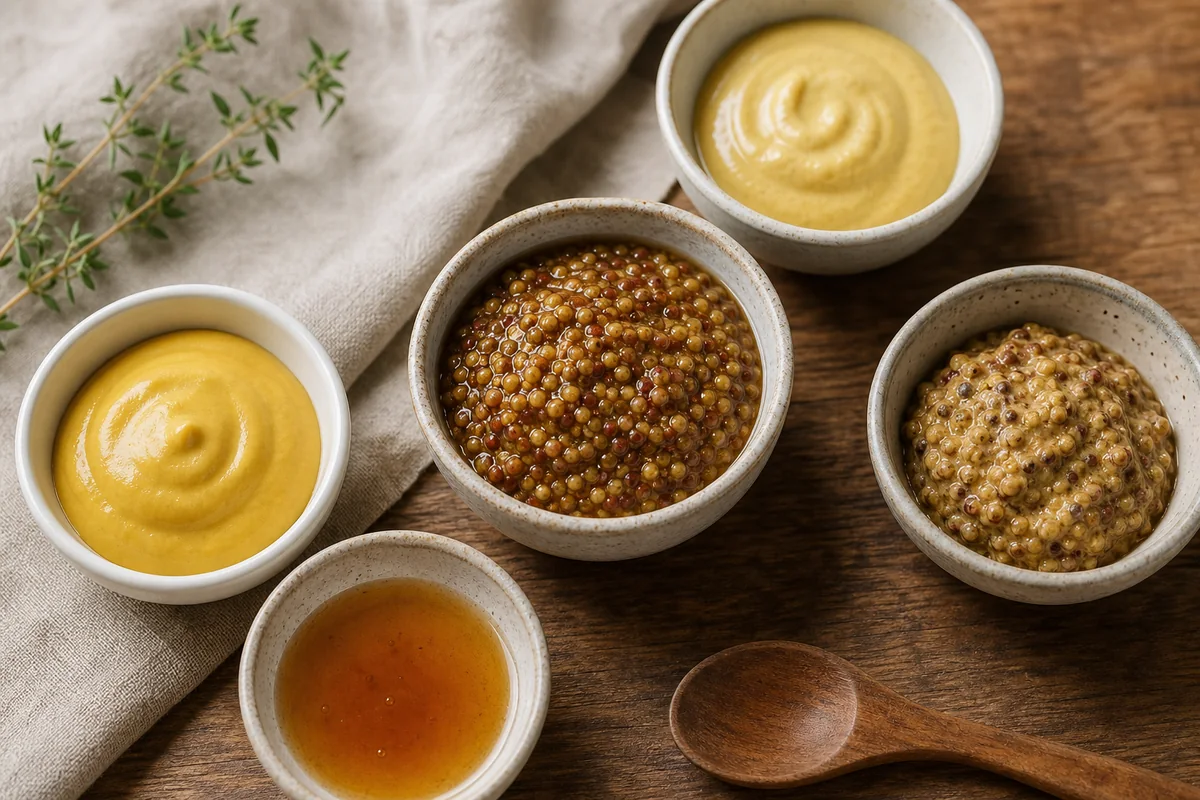
5 Best Whole Grain Mustard Substitutes (Ranked)
Ingredients
Equipment
Method
- Choose your swap based on what you need most: tang (Dijon), bite (horseradish mustard), or graininess (homemade mustard seeds).
- Use the listed ratio; if your substitute is sharper than whole grain mustard, start with slightly less and add more to taste.
- For texture matching, whisk longer or pulse briefly (homemade mustard seeds) to create a coarse grain feel.
- Thin with 1–2 teaspoons water or vinegar if the sauce becomes too thick; for baking, keep the swap smooth by stirring thoroughly.
- Rest 2–3 minutes before serving so mustard flavor rounds out and bonds with the other ingredients.
Notes
- Whole grain mustard differs by both tang and visible grain; match both for best results.
- In warm dishes, mustard flavors mellow—start slightly under, then adjust.
Tried this recipe?
Let us know how it was!
Carrie is a food writer and editor with more than 15 years of experience. She has worked for some of the biggest names in the food industry, including Bon Appétit, Food & Wine, and Martha Stewart Living.
As the Editor in Chief of EpicureDelight, Carrie oversees all of the content on the site. She also manages the team of contributing writers and editors, who help to create delicious recipes, helpful tips, and informative articles that you’ll find on the site.
A native of the Chicago area, Carrie is passionate about all things food. She loves trying new restaurants and experimenting with new recipes in her kitchen. She’s also a graduate of the Culinary Institute of America, so she knows a thing or two about food!



