Go Back
+ servings
5 Best Baking Soda Substitutes (Easy Swaps) | EpicureDelight

5 Best Baking Soda Substitutes (Easy Swaps)

No ratings yet
Use baking soda substitutes based on whether your recipe already has an acid (buttermilk, yogurt, vinegar, lemon) or not.
Prep Time 5 minutes
Cook Time 0 minutes
Total Time 5 minutes
Servings: 1 batch
Course: Substitutes

Ingredients
  

Best Matches
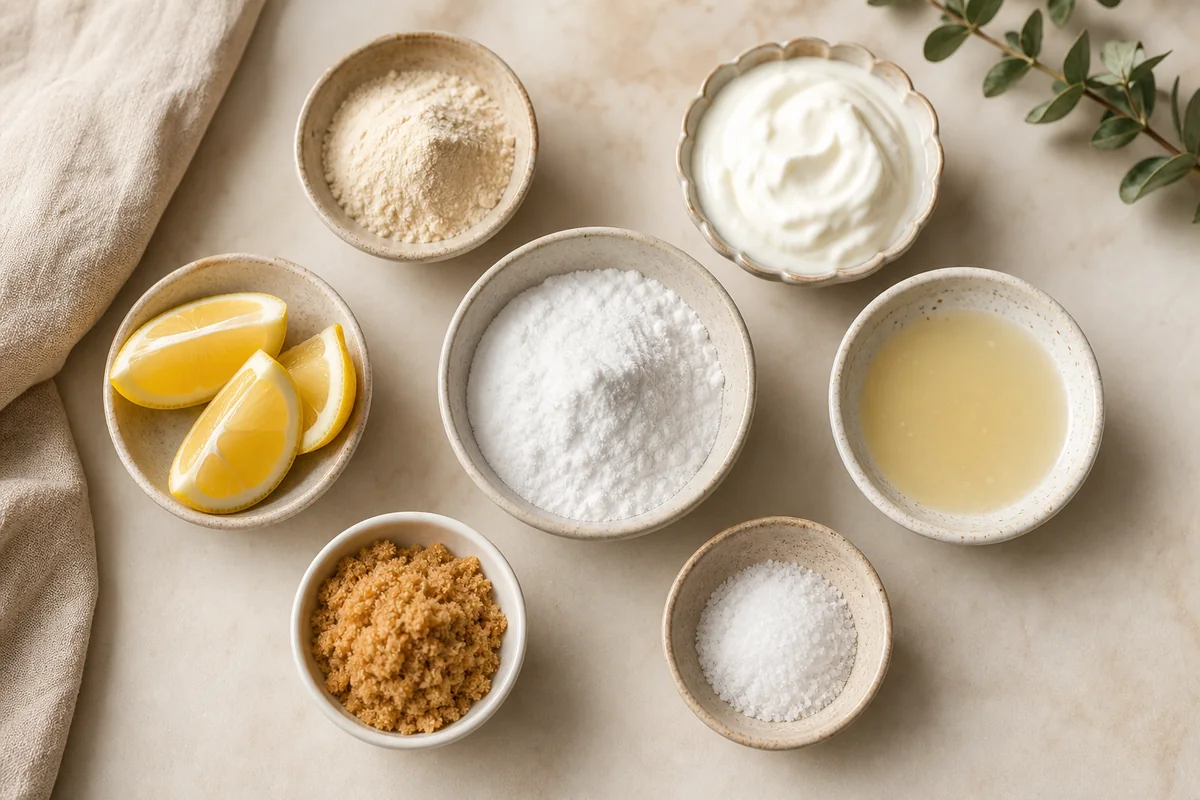
  • 3:1 baking powder (double-acting) Best general swap when you don’t have a dedicated acid; boosts lift but can taste slightly flatter if your batter was acid-heavy.
  • 1:1 potassium bicarbonate Closest alkaline baking lift when you need a direct bicarbonate-style replacement; may brown slightly less than sodium-based soda.
Good Alternatives
  • 1:1 (liquid) + 1:3 (powder) buttermilk (or plain yogurt) + baking powder When your recipe can tolerate tang; acid activates leavening from baking powder for rise.
  • 1:1 (acid) + 1:3 (powder) lemon juice + baking powder Use when the batter can handle bright flavor; start with small acid amount, then adjust for taste after rise.
  • 1:1 (acid) + 1:3 (powder) vinegar + baking powder Neutral-tasting in most batters; the vinegar’s job is to provide acid so powder can generate CO₂.
Emergency Swaps
  • 1:1 (flour base) self-rising flour Works only if you can treat it like a flour swap; it already contains baking powder and salt.
  • 1:1 (liquid) + small (optional) club soda (plus a little baking powder if needed) Helpful for quick breads/muffins when you can’t use soda; keep bubbles from going flat by mixing and baking immediately.

Equipment

  • Measuring spoons
  • Measuring cups
  • Whisk or fork
  • Mixing Bowl

Method
 

  1. Check your recipe for added acid (buttermilk, yogurt, sour cream, vinegar, lemon juice, brown sugar molasses).
  2. If there’s little/no acid, pick baking powder (about 3x the baking soda amount) or potassium bicarbonate (about 1:1).
  3. If there’s an acid already, use an acid-paired option (acid + baking powder) so the batter still produces enough CO₂ for lift.
  4. Mix gently and bake right away; if you’re using liquid carbonation/acid activation, delays reduce the rise.
  5. After baking, note the texture: flat/soft crumb means you likely need more leavening next time; overly tangy means reduce acid.
Notes

  • Ratios are starting points—your batter’s acid level and recipe type (cookies vs cakes) can change results.

Tried this recipe?

Let us know how it was!