Go Back
+ servings
5 Best Guar Gum Substitutes (Flavor-Matched) | EpicureDelight

5 Best Guar Gum Substitutes (Flavor-Matched)

No ratings yet
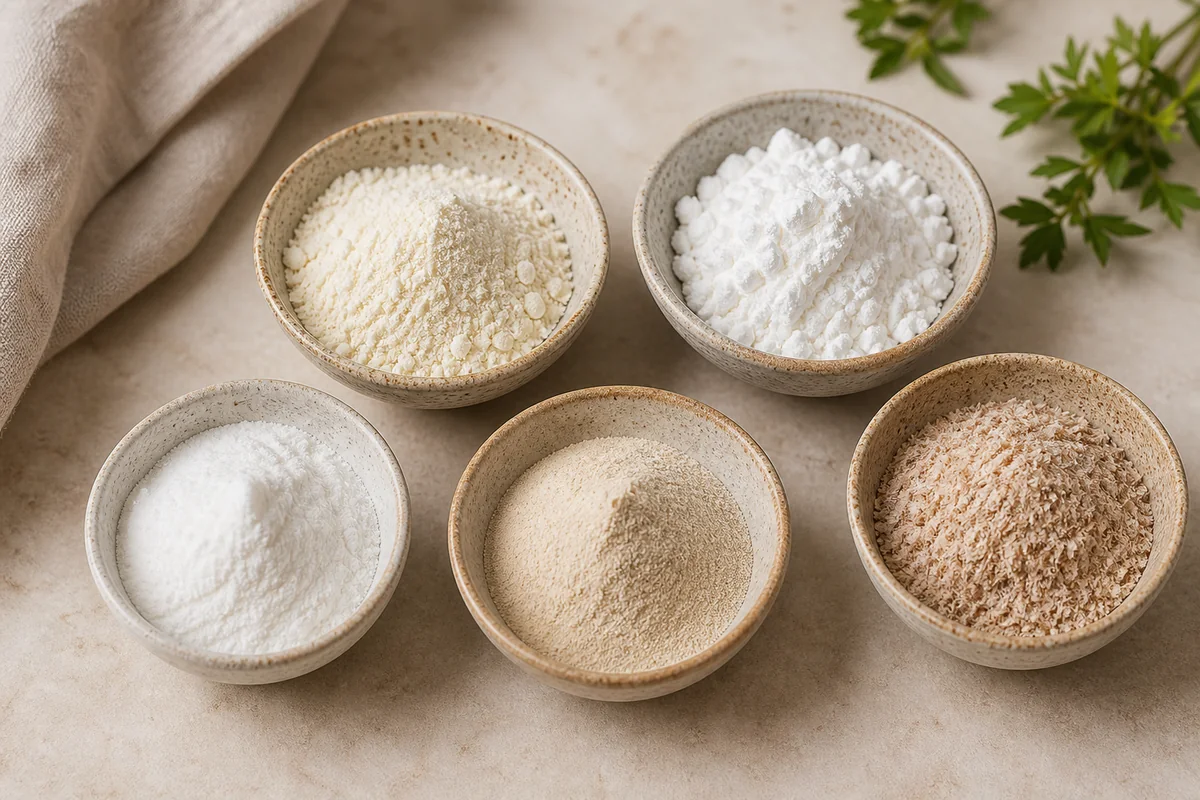
Guar gum substitute guide for thickening and smooth texture—pick by the role guar gum plays in your recipe (gel, thickener, or stabilizer).
Prep Time 5 minutes
Cook Time 0 minutes
Total Time 5 minutes
Servings: 1 batch
Course: Substitutes

Ingredients
  

Best Matches
  • 1:2 Tapioca starch (for gels and chew-less thickening) Closest for thickening without strong “slime” feel; works best when simmered to fully hydrate.
  • 1:1 Xanthan gum (small amounts for pourable, stable thickness) Very effective at low dosages; add gradually and blend to avoid clumps.
Good Alternatives
  • 1:3 Cornstarch (classic slurry thickener) Best for sauces; must be boiled for full thickening power.
  • 1:2.5 Arrowroot powder (clear, glossy thickening) Tends to produce a cleaner finish than cornstarch; avoid long aggressive boiling.
Emergency Swaps
  • 1:2.5 Potato starch (quick thickener with smooth texture) Swaps well in sauces and gravies; heat until thick and glossy.
  • 1:2 Gelatin (for set gel instead of thickener) Use when you need a set texture; bloom then melt—does not behave like a pourable thickener.

Equipment

  • Whisk or immersion blender
  • Small saucepan (for starch activation)
  • Measuring spoons
  • Timer

Method
 

  1. Identify guar gum’s job in your recipe: smooth thickening, gel structure, or stabilizing an emulsion.
  2. Start with the ratio for your chosen substitute, then mix thoroughly into cold liquid (or bloom gelatin) before heating.
  3. Apply heat as required: cornstarch/arrowroot/potato starch must reach boiling simmer to fully activate thickening.
  4. If the mixture looks too thick, thin with water/broth; if too thin, add a small pinch in 10–15 second increments and re-check.
  5. Let it rest 2–5 minutes after thickening—some gums and starches continue to set and smooth as they cool.
Notes

  • Guar gum is typically used in very small amounts for smooth thickening; starch substitutes often need more and require heat to activate.
  • For best results, blend substitutes into cold liquid first to reduce lumps, then heat/simmer until the texture matches your target.

Tried this recipe?

Let us know how it was!