Go Back
–+ servings
5 Best Unsalted Butter Substitutes for Home Cooks | EpicureDelight

5 Best Unsalted Butter Substitutes for Home Cooks

No ratings yet
Substitute unsalted butter with salted butter, olive-oil + neutral oil blend, or dairy swaps while controlling salt and maintaining melt/brown behavior.
Prep Time 5 minutes
Cook Time 0 minutes
Total Time 5 minutes
Servings: 1 batch
Course: Substitutes

Ingredients
  

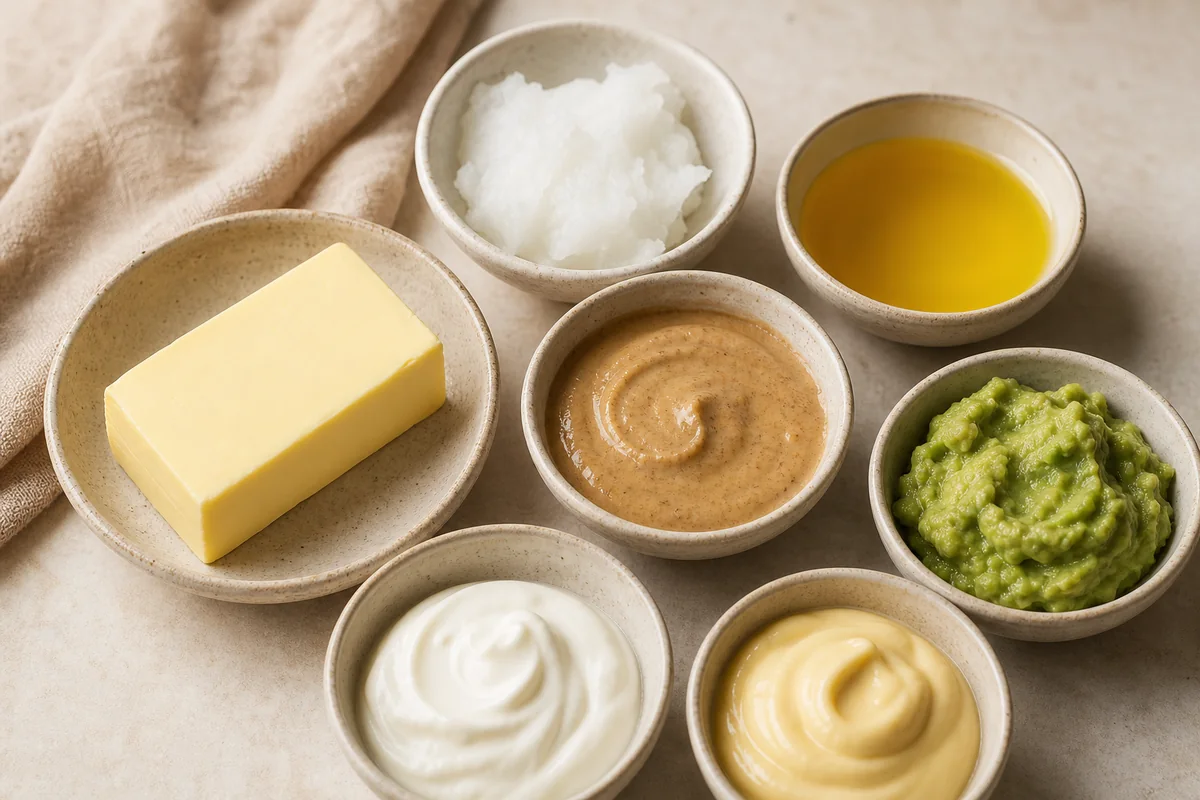
Best Matches
  • 1:1 Salted butter (same butter, controlled salt) Closest overall performance; reduce added salt by ¼ teaspoon per ½ cup if your recipe calls for extra salt.
  • 1:1 Store-bought cultured butter (if labeled unsalted) Best flavor match; use when baking needs predictable melt and browning.
Good Alternatives
  • 1:1 Ghee (clarified butter) Browns more easily and tastes nuttier; works best for savory cooking, less ideal for delicate pastries.
  • 1:1 Vegetable shortening (butter-like, neutral fat) Maintains structure in cookies/scones; flavor is blander than butter.
  • 1:1 Baking margarine (stick-style, not spread) Useful for cookies and quick breads; keep fat solid by chilling before use.
Emergency Swaps
  • 1:1 Olive oil + neutral oil blend Best for sautéing or finishing; for baking, replace only when the recipe tolerates lower flavor and less browning.
  • ¾:1 Greek yogurt (full-fat) + melted fat (for baking only) Adds tang and moisture; use with extra flour if batter looks thin to preserve structure.

Equipment

  • Measuring cups/spoons
  • Kitchen scale (optional for more accurate swaps)
  • Small saucepan or skillet (for stove-top tests)
  • Mixing Bowl

Method
 

  1. Choose a substitute based on the recipe’s job for butter: structure (cookies/scones), flavor (sauces), or browning (pan cooking).
  2. Match fat behavior: for most baking, start with 1:1 swaps that melt and cream like butter (salted butter, cultured unsalted butter, shortening, margarine-sticks).
  3. Control salt: if using salted butter, reduce any added salt in the recipe (especially for bread dough, frostings, and simple batter recipes).
  4. If the substitute is wetter or softer (yogurt, oil blend), adjust by chilling (for margarine) or thickening (add flour in small increments for batters).
  5. Taste-and-test: cook a small portion first (or do a quick bake test) to confirm browning and flavor before committing to the full batch.
Notes

  • When substituting for baking, the biggest variable is salt and water content; match those first, then texture.
  • Clarified butter (ghee) and neutral fats behave differently in browning—use them when the recipe tolerates a flavor shift.

Tried this recipe?

Let us know how it was!