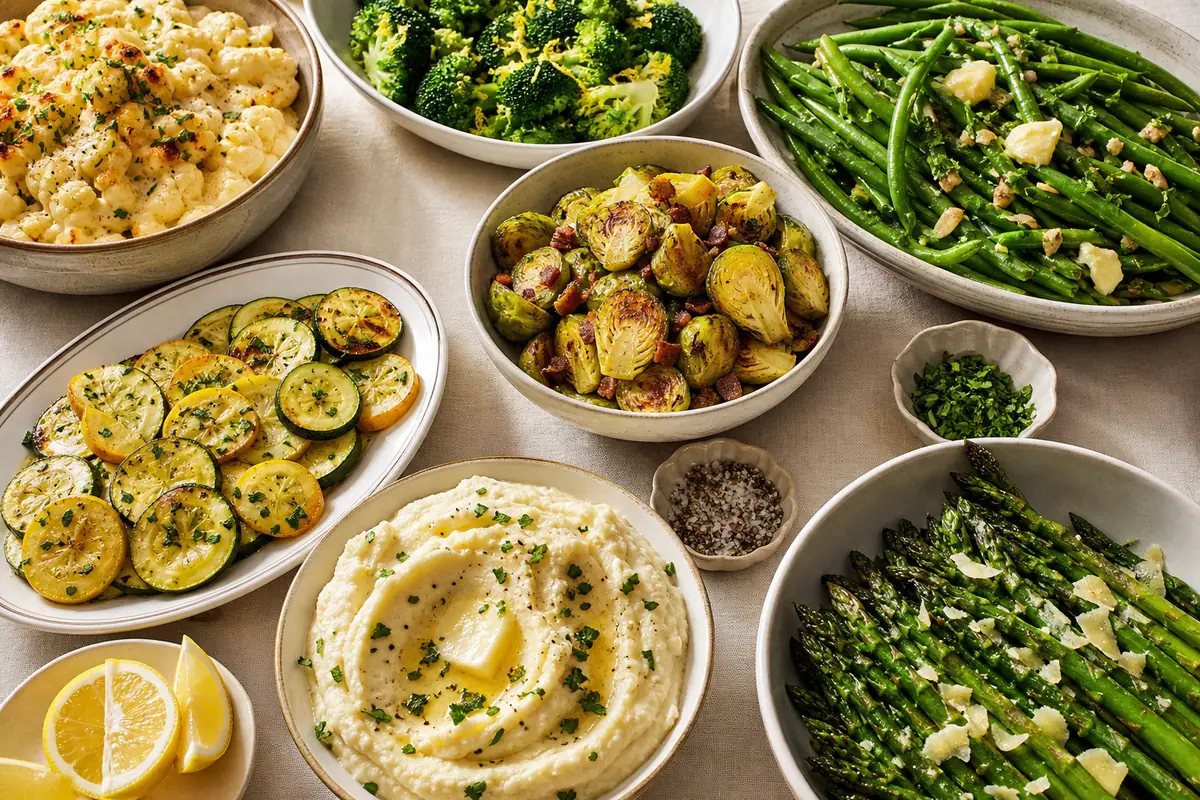
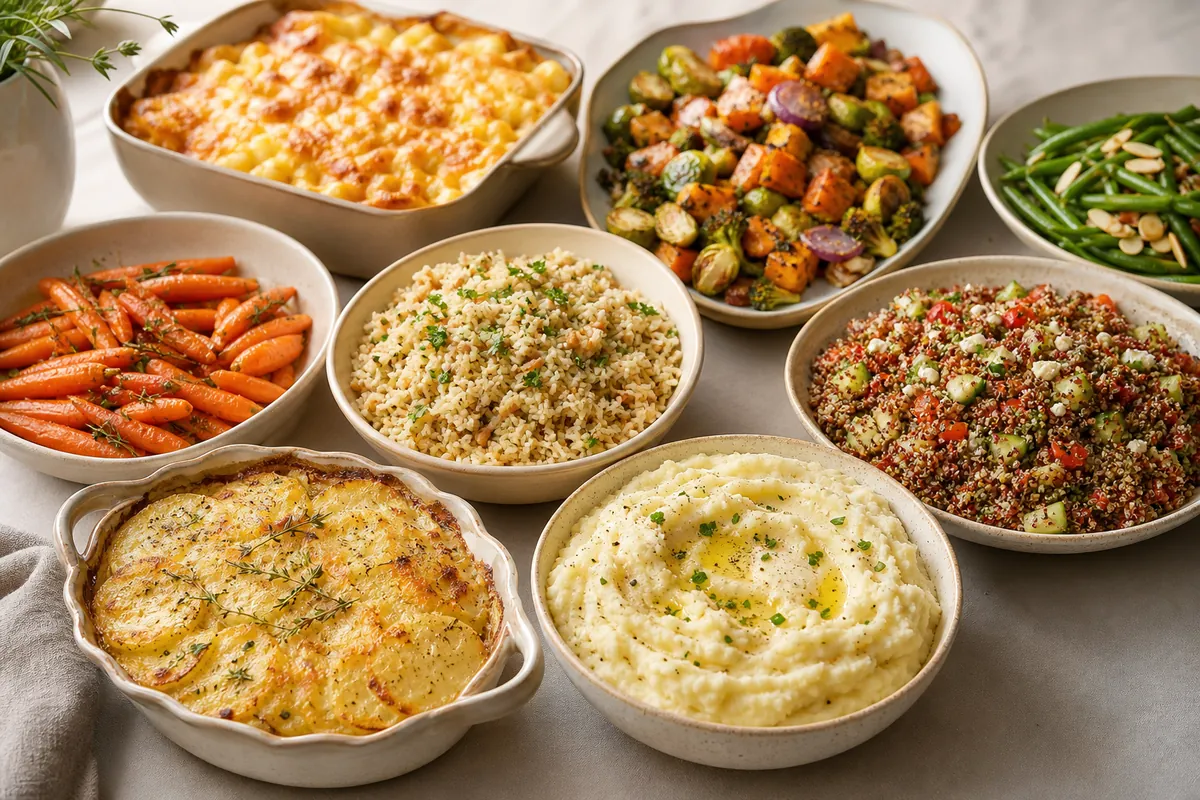
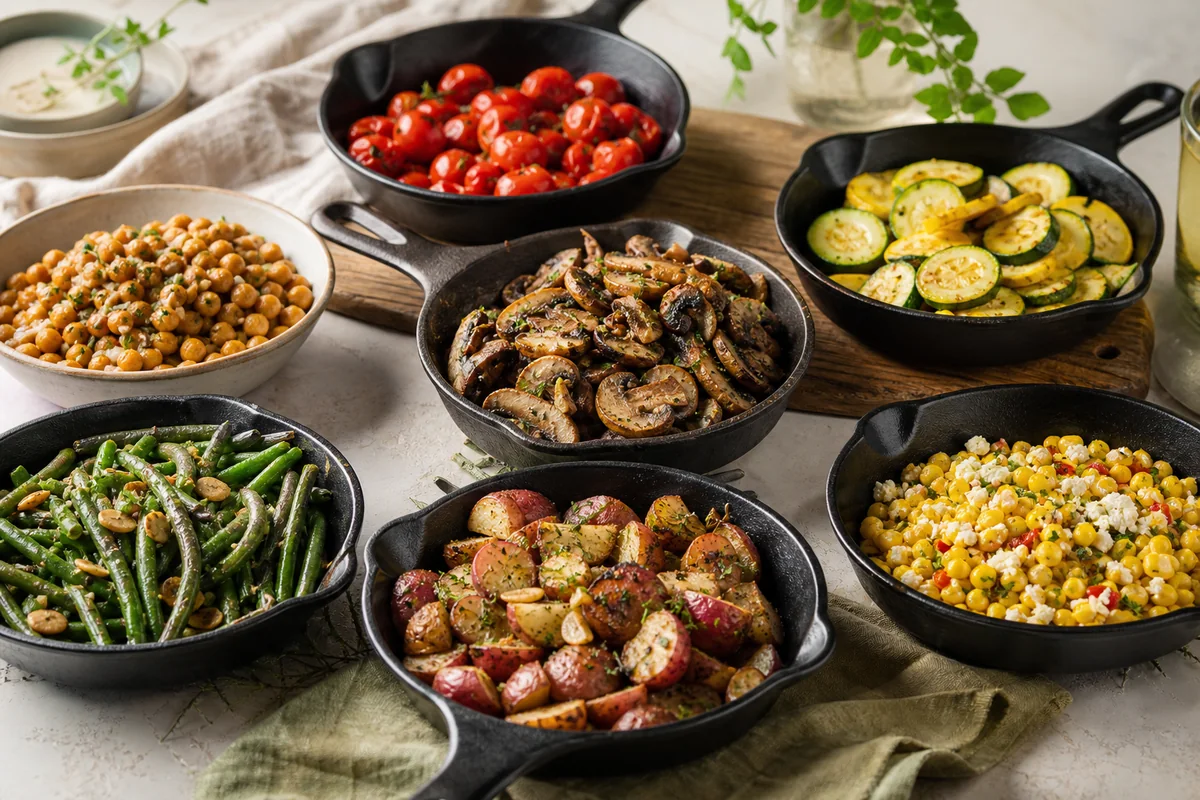
Pork roast pairs best with cider cabbage, mustard potatoes, roasted root vegetables, or green beans. The cut matters because lean pork loin benefits from moist sides, while rich shoulder needs vinegar, bitter greens, and crisp texture.
Use the pan drippings to season one side rather than the whole meal. Skim excess fat first, then add the juices to potatoes, cabbage, or a light pan sauce.
Keep fruit tart and savory. Apple, pear, or cranberry can flatter pork, but heavy sugar turns dinner sides into dessert.

Cider-braised cabbage is the best overall side for pork roast. Its vinegar balances shoulder fat, while the tender leaves and apple notes also support a lean loin.
Is It a Lean Pork Loin or a Rich Pork Shoulder?
Read the roast before building the plate. The same side can feel helpful beside lean slices and heavy beside tender shoulder meat.
Lean Pork Loin
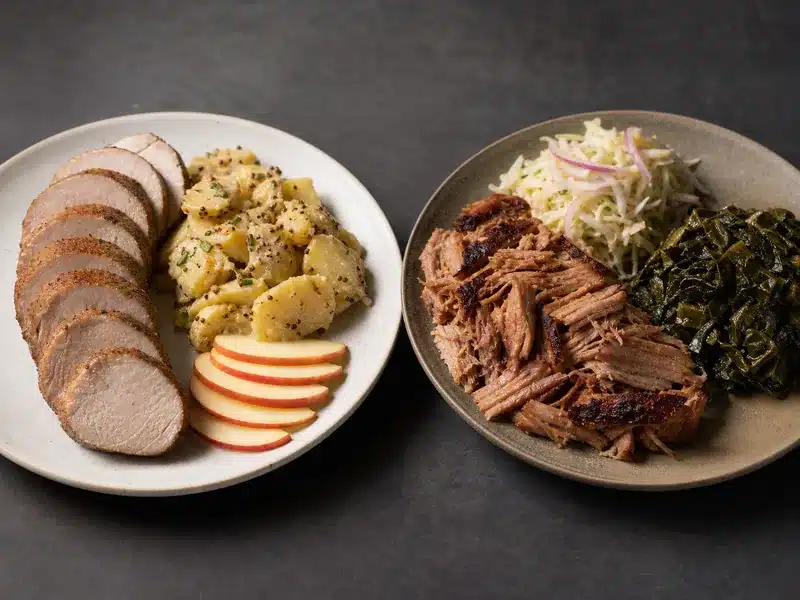
Loin has a fine texture and less internal fat, so moist mustard potatoes or braised cabbage help each slice. Green beans add snap without pulling more juice from the meat.
Use a small amount of skimmed pan juice on the plate. Thick cream sauce can hide the roast's mild flavor and make lean pork seem dry by contrast.
Rich Pork Shoulder
Shoulder has more fat and connective tissue, which creates a deep, tender bite. Vinegar slaw, bitter greens, or pickled vegetables clear that richness better than another creamy dish.
Choose a plain starch only when needed. Barley or simple potatoes support the meat, while mac and cheese can make the plate feel dense.
Herb-Crusted or Garlic Roast
A strong herb crust calls for mild roots, beans, or polenta that will not compete with rosemary and garlic. Lemon greens can still add a clean final note.
Taste the crust before adding herbs to every side. Repeating rosemary in potatoes, carrots, and beans makes the meal taste narrow.
Tart fruit works across all three styles when used with control. Apple in cabbage or cranberry in a sharp relish supports pork without covering it in sweetness.
How Can the Drippings and Resting Window Help the Sides?
Choose one side to receive the drippings. Spreading roast fat across potatoes, gravy, stuffing, and vegetables removes the contrast that makes each part useful.
Pour the pan liquid into a cup and let the fat rise. Spoon off most of that fat, then use the darker juices to loosen potatoes or deepen cabbage.
The roast's resting time frees the oven and one burner. Green beans, spinach, or a warm grain can finish while the meat sits on a board.
Hold roasted vegetables uncovered so their browned surfaces stay dry. A tight lid traps steam and softens carrots, parsnips, and Brussels sprouts.
- Move the roast to a board. Leave enough space for clean slicing and collecting juices.
- Separate the drippings. Skim excess fat and reserve the concentrated liquid.
- Finish one pan side. Loosen potatoes or cabbage with a small spoonful of juices.
- Cook the quick green. Saute beans or spinach during the final rest minutes.
- Taste before salting. The drippings and crust may already season the plate.
Carry the finished sides to the table before slicing the roast. Thin slices cool quickly, while a whole rested roast holds heat longer.
What Are the Best Sides for Pork Roast?
Match the side to both the cut and the season. Cabbage and roots fit cold weather, while green beans, barley salad, or tart relish keep a warm-weather roast lighter.
| Rank | Side | Best for | Prep |
|---|---|---|---|
| 1 | Cider-braised cabbage | Any pork roast | Medium |
| 2 | Mustard potatoes | Lean loin | Medium |
| 3 | Roasted carrots and parsnips | Herb roast | Easy |
| 4 | Lemon green beans | Rich shoulder | Easy |
| 5 | Apple fennel slaw | Warm weather | Easy |
| 6 | Barley herb salad | Buffet | Medium |
| 7 | Roasted Brussels sprouts | Fall dinner | Easy |
| 8 | White bean mash | Lean pork | Easy |
| 9 | Sauteed kale | Rich pork | Easy |
| 10 | Cornbread stuffing | Holiday meal | Medium |
| 11 | Roasted acorn squash | Cool weather | Easy |
| 12 | Soft polenta | Pan juices | Medium |
| 13 | Tart cranberry relish | Large roast | Easy |
| 14 | Cucumber dill salad | Summer meal | Easy |
1. Cider-Braised Cabbage
Cabbage softens into the pan while keeping enough structure for sliced pork. Cider vinegar cuts shoulder fat, and a small amount of apple supports loin without making the side sweet.

Cook it ahead and reheat gently during the roast's rest. Use unsalted broth so the final drippings can control the seasoning.
2. Mustard Potatoes
Potatoes absorb pork juices, while grainy mustard gives the starch a sharp edge. This pairing helps lean loin feel moist without covering it in cream.

Roast small potatoes or dress boiled potatoes while warm.
Avoid adding bacon because the main dish already supplies deep pork flavor.
3. Roasted Carrots and Parsnips
Carrots and parsnips caramelize beside an herb-crusted roast and bring firm, browned edges. Black pepper and thyme keep their natural sweetness on the savory side.

Roast them before or below the pork only when the pan has enough room. Crowded roots steam and absorb more fat than they need.
4. Lemon Green Beans
Green beans add clean snap to soft roast meat.
Lemon and parsley make them especially useful beside rich shoulder or gravy. Blanch them early, then warm them during the resting window.

Add lemon at the end so the flavor stays bright.
5. Apple Fennel Slaw
Raw fennel and cabbage bring crunch, while tart apple links naturally with pork. Mustard dressing gives the fruit enough savory force for dinner.
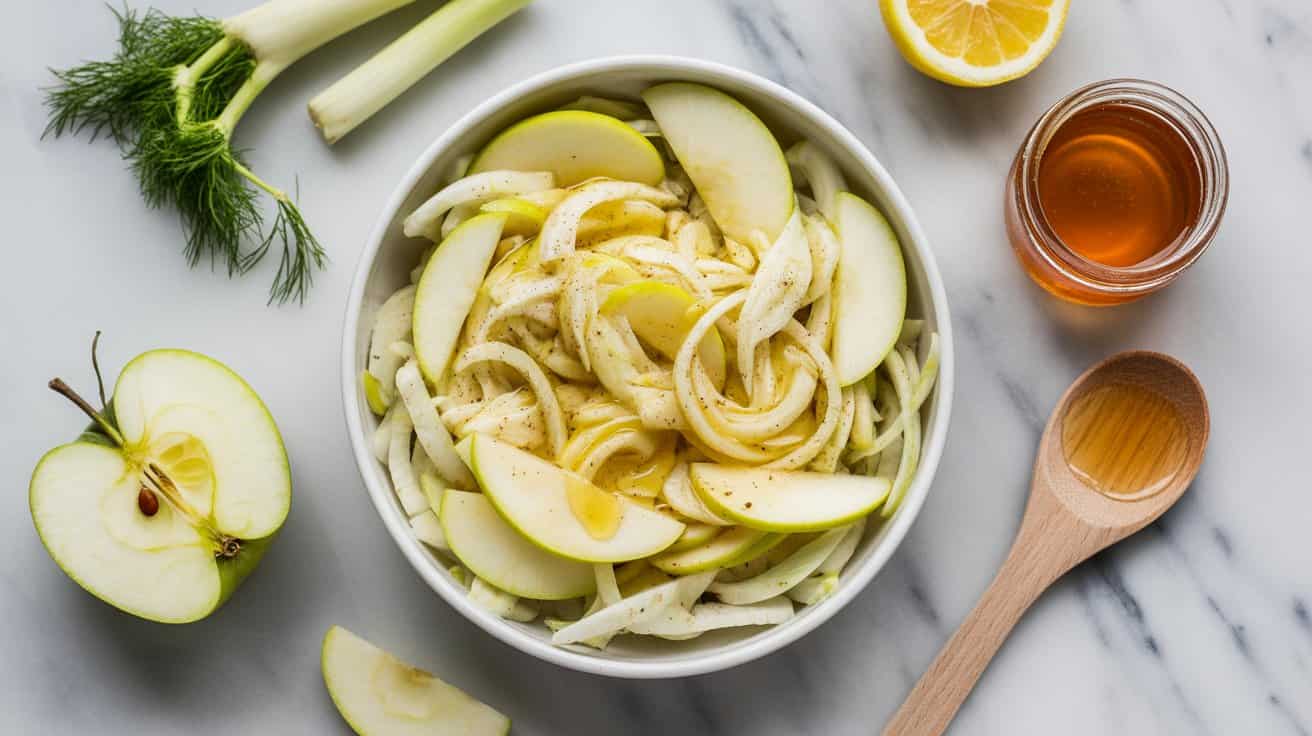
Keep the slaw cold until serving. It works best beside pulled or rich shoulder, where every hot item would otherwise feel soft.
6. Barley Herb Salad
Barley has a chewy texture that stands up to roast juices without becoming paste. Parsley, celery, lemon, and scallion keep the grain fresh on a buffet.
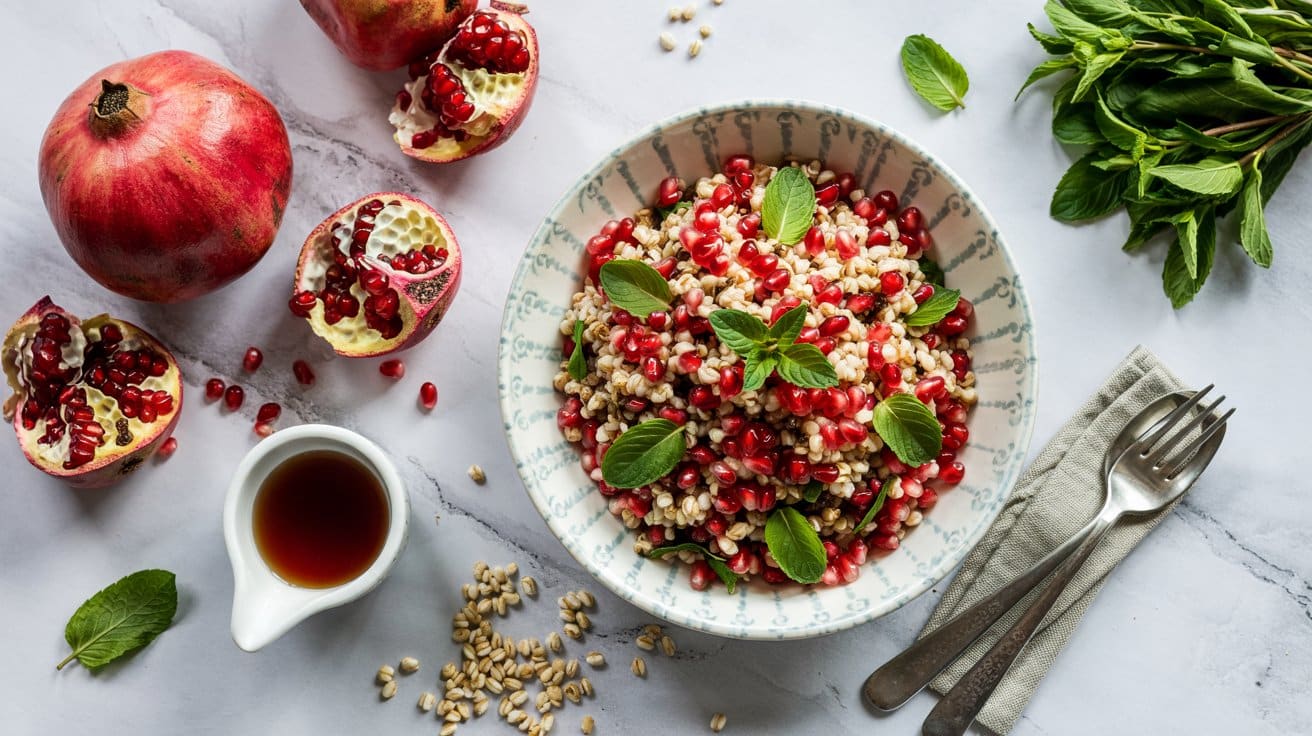
Serve it warm or at room temperature. Use a smaller scoop beside shoulder and a fuller one beside lean loin.
7. Roasted Brussels Sprouts
Brussels sprouts bring bitter leaves and caramelized centers to a fall pork dinner. Vinegar added after roasting prevents the browned vegetables from tasting overly sweet.

Keep them on a separate tray when possible. Sitting in roast drippings softens the leaves and makes the whole side taste fatty.
8. White Bean Mash
White beans create a soft base with more protein and fiber than potatoes.
Garlic, lemon, and olive oil give them enough flavor for mild loin. Thin the mash with broth or skimmed pork juices.
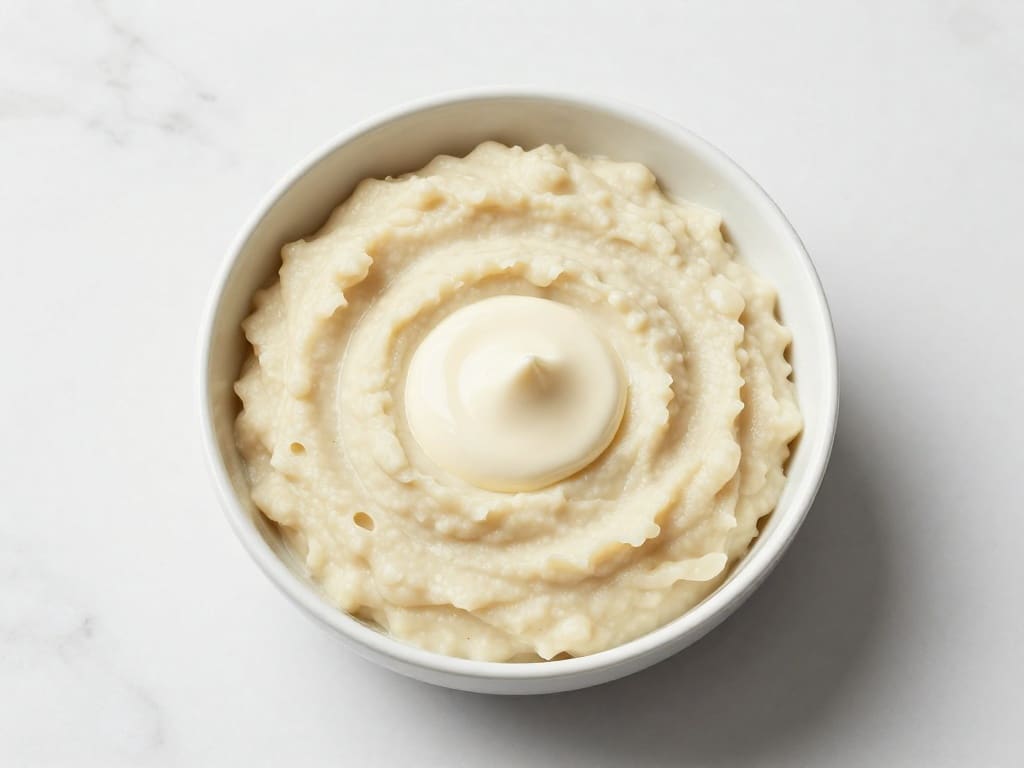
A large amount of cream can make the beans heavier than the meat.
9. Sauteed Kale
Kale keeps some chew after cooking and has enough bitterness for shoulder.
Garlic and cider vinegar tie it to the roast without copying a sweet glaze. Strip the thick stems and cut the leaves before the roast comes out.

The greens can cook during the rest in one wide skillet.
10. Cornbread Stuffing
Cornbread stuffing fits a holiday roast when it replaces, rather than joins, potatoes. Celery and herbs give it a savory center that catches pan juices.
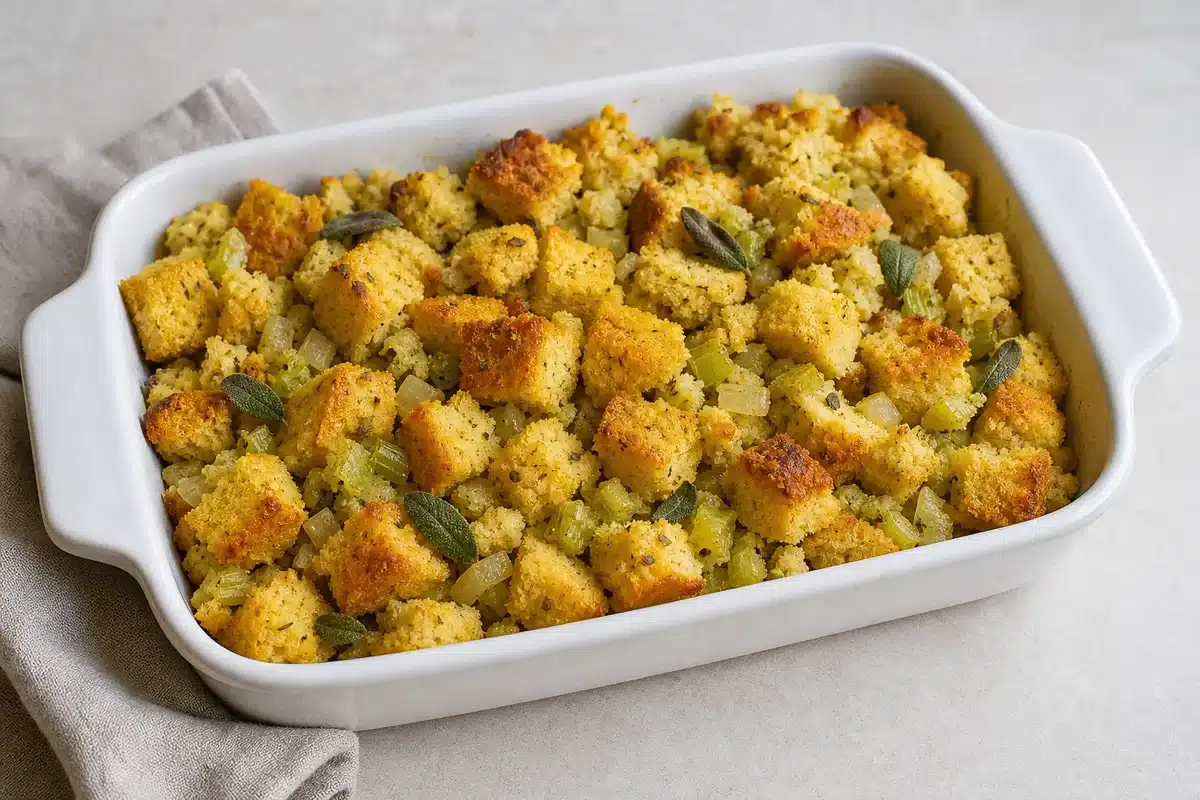
Keep the serving modest and add a green vegetable. Shoulder plus stuffing needs more acid than loin plus stuffing.
11. Roasted Acorn Squash
Acorn squash has a firm shell and a soft center that suits cool-weather pork. Chile, sage, or black pepper keeps its sweetness controlled.

Skip a thick maple coating when serving fruit relish. One sweet accent is enough to flatter the meat.
12. Soft Polenta
Polenta gives skimmed pan juices a mild base and works well with garlic or herb roasts. Its warm, smooth texture is most useful when a crisp green also appears.

Cook it with low-salt broth and finish lightly. Rich shoulder requires a smaller scoop than lean pork loin.
13. Tart Cranberry Relish
Cranberry relish gives a large roast bright color and strong acid in a small amount. Orange zest or mustard can steer it away from dessert.
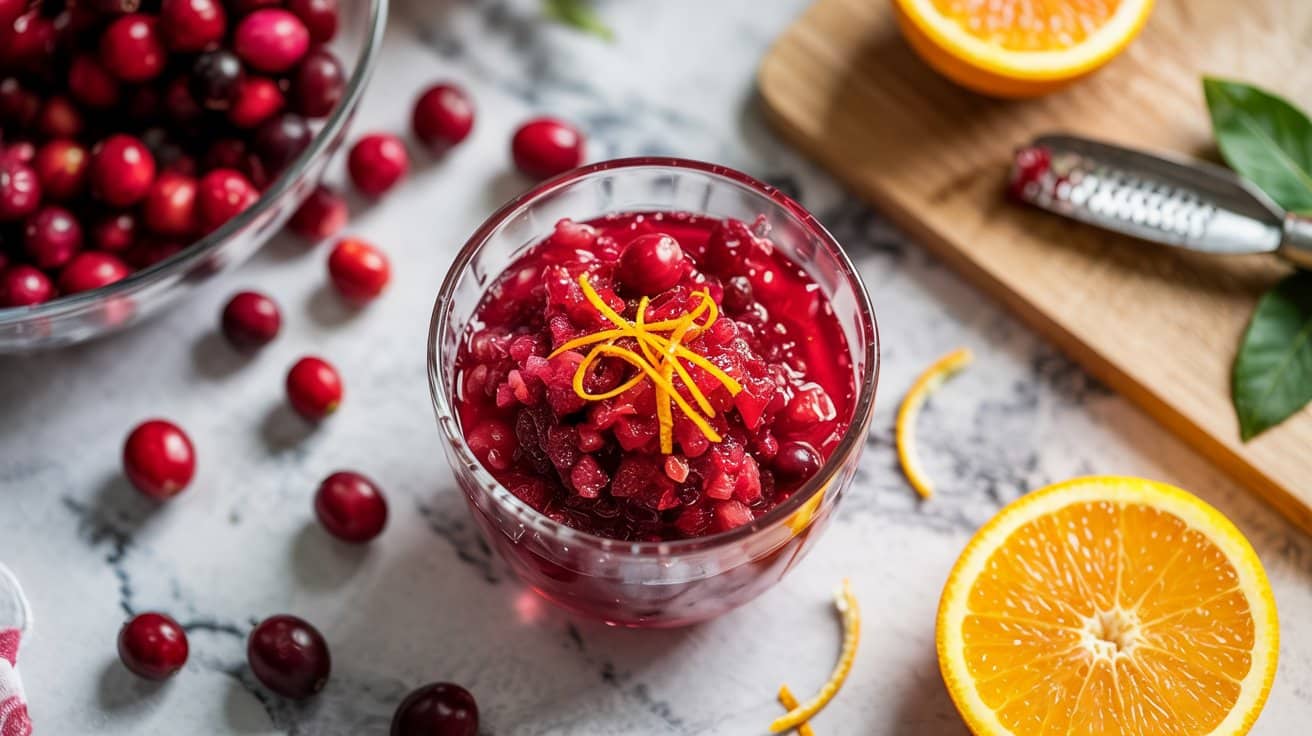
Use a spoonful per plate rather than a large serving. Pair it with cabbage, beans, or roots instead of another fruit side.
14. Cucumber Dill Salad
Cucumber and dill cool a summer pork dinner and require no oven space. Vinegar dressing makes the salad more useful beside rich meat than a creamy version.

Salt the cucumber close to serving or drain it well. Excess water dilutes the pork juices on the plate.
The roast's seasoning can break a close choice between sides. Mustard crust favors potatoes, cabbage, or beans, while garlic and rosemary fit roots, polenta, and green vegetables.
A chile-rubbed shoulder needs cool slaw or cucumber more than sweet squash. Peppery crust also benefits from plain barley or potatoes that absorb juices without adding more heat.
For a buffet, slice loin shortly before guests eat and keep shoulder in larger pieces until serving. Thin meat dries faster, so cold or room-temperature sides should already be placed before carving begins.
Plan side volume around the roast yield rather than the raw package size. A bone and thick fat cap reduce the meat that reaches the plate, which makes a grain or bean side more useful for a large group.
Leftover roast can support a different side plan the next day. Use cold loin with barley salad or warm shoulder with vinegar slaw, then skip the rich holiday sides that have already softened.
A final taste at the table should compare meat, side, and drippings together. Salt that seems mild in plain potatoes can become strong once concentrated pork juices reach the fork.
When the roast has a crisp fat edge, keep wet relish beside the slices rather than over them. Diners can combine each bite while the browned surface stays intact.
A lean roast carved very thin needs a moist side within easy reach. Put potatoes, cabbage, or bean mash next to the meat and place dry roasted roots farther away.
Outdoor service needs extra attention to cover and steam. Shield the roast from wind, but leave roasted vegetables loosely covered so their edges do not collapse before everyone eats.
Save These Pork Roast Sides
Keep the cut guide, resting-window plan, and ranked pairings ready for your next roast.
Pork Roast Side Dish FAQ
What is the best side for pork roast?
Cider-braised cabbage is the best all-purpose choice because it gives lean loin moisture and rich shoulder enough acid.
What vegetables go with pork roast?
Green beans, cabbage, carrots, parsnips, Brussels sprouts, kale, fennel, and acorn squash all suit roasted pork.
What goes with pork loin instead of pork shoulder?
Lean loin benefits from moist mustard potatoes, white bean mash, braised cabbage, or polenta with skimmed pan juices.
Can you make pork roast sides ahead?
Yes. Make cabbage, barley salad, cranberry relish, and slaw ahead, then finish green vegetables during the roast's rest.
Should fruit sides for pork be sweet?
Keep fruit tart and savory with vinegar, mustard, herbs, or pepper so it supports the meat rather than tasting like dessert.

Carrie is a food writer and editor with more than 15 years of experience. She has worked for some of the biggest names in the food industry, including Bon Appétit, Food & Wine, and Martha Stewart Living.
As the Editor in Chief of EpicureDelight, Carrie oversees all of the content on the site. She also manages the team of contributing writers and editors, who help to create delicious recipes, helpful tips, and informative articles that you’ll find on the site.
A native of the Chicago area, Carrie is passionate about all things food. She loves trying new restaurants and experimenting with new recipes in her kitchen. She’s also a graduate of the Culinary Institute of America, so she knows a thing or two about food!