A bowl of Korean kimchi beef stew delivers layers of deep, slow-simmered flavors with every bite. The combination of tender beef, aged kimchi, and a rich, umami-packed broth creates a dish that's both warming and deeply flavorful.

This stew has been a staple in Korean households for generations, evolving with different regional variations. It's known for its spicy, tangy, and slightly smoky flavors, making it an excellent meal for cold days or whenever you crave something hearty.
Aged kimchi is the key ingredient, as its deep fermentation brings out a natural complexity that balances the richness of the beef.
Unique Ingredients in Korean Kimchi Beef Stew
Kimchi beef stew stands apart from other beef soups due to its bold spice, depth of flavor, and balance of textures. The ingredients work together to create a broth that is both rich and tangy while keeping the beef fork-tender.
- Deep, Aged Kimchi Flavor - Using well-fermented kimchi brings a tangy depth that fresh kimchi can't provide.
- Slow-Simmered Beef - The beef absorbs all the spices, resulting in melt-in-your-mouth texture.
- Savory and Spicy Balance - The mix of gochujang (Korean chili paste) and gochugaru (Korean chili flakes) gives the stew its signature kick.
- Umami-Rich Broth - Anchovy stock, beef broth, and soy sauce create a layered base that enhances every ingredient.
- Great for Leftovers - The flavors deepen overnight, making it even better the next day.
This stew brings together heat, tang, and umami in one bowl, making it a meal that's both rich and refreshing.
Essential Ingredients for Kimchi Beef Stew
Each ingredient plays an essential role in shaping the flavors of this dish. Choosing the right ones ensures a bold, well-balanced broth and perfectly tender beef.

- Beef Short Ribs or Brisket - These cuts have enough marbling to remain juicy after simmering.
- Aged Kimchi - At least two weeks old for deeper, fermented flavors.
- Gochujang & Gochugaru - Adds heat and a subtle smokiness to the broth.
- Garlic & Ginger - Infuses the stew with a warming, aromatic base.
- Soy Sauce & Fish Sauce - Enhances umami and balances the tangy kimchi.
- Tofu & Mushrooms - Absorbs the broth's flavors while adding different textures.
- Scallions & Sesame Oil - Provides a fresh, nutty finish.
With these ingredients, the stew develops its signature richness and complexity while keeping the heat balanced.
Step-by-Step Guide to Making Korean Kimchi Beef Stew
The key to an incredibly rich broth and tender beef is in the slow cooking process. Taking time to build flavors at each stage ensures that every bite is filled with depth.

- Sear the Beef - Heat oil in a pot and brown the beef on all sides. This step enhances the richness of the broth.
- Sauté the Kimchi & Aromatics - Add garlic, ginger, and aged kimchi to the pot. Stir until the kimchi softens and releases its juices.
- Add Seasonings - Stir in gochujang, gochugaru, soy sauce, and fish sauce, letting them coat the ingredients.
- Simmer Slowly - Pour in beef broth and anchovy stock. Bring to a boil, then reduce heat and let it simmer for 60-90 minutes.
- Add Vegetables & Tofu - Stir in mushrooms, tofu, and scallions during the last 15 minutes of cooking.
- Serve Hot - Garnish with sesame oil and extra scallions before serving.
The slow simmering process blends the flavors beautifully, creating a broth that's both spicy and deeply savory.
Best Side Dishes for Kimchi Beef Stew
This stew pairs well with a variety of Korean and Asian-inspired sides that enhance its flavors. A mix of light, refreshing dishes and hearty textures balances out the meal.

| Side Dish | Why It Works |
|---|---|
| Steamed White Rice | Absorbs the spicy broth and balances the flavors. |
| Korean Pickled Radish | Adds a crisp, refreshing contrast to the rich stew. |
| Japchae (Stir-Fried Glass Noodles) | Brings a slightly sweet balance to the heat. |
| Korean Pancakes (Pajeon) | A crispy, savory side that goes with the soft textures of the stew. |
| Kimchi Fried Rice | Intensifies the kimchi flavors for an even bolder meal. |
| Spicy Cucumber Salad | A cool, slightly tangy contrast to the warm stew. |
| Steamed Dumplings | A soft and chewy addition that pairs well with the broth. |
These sides make the stew even more enjoyable, bringing variety in texture and taste to the table.
How to Store and Reheat Leftovers
Kimchi beef stew tastes even better after sitting overnight as the flavors continue to deepen. Proper storage and reheating help maintain its rich, spicy profile.
- Refrigerate in an Airtight Container - The stew keeps well for up to 4 days.
- Reheat Gently on the Stove - Simmer over low heat, adding a little broth or water if it thickens too much.
- Avoid Microwaving Tofu - If the stew contains tofu, remove it before reheating and add it back in at the end.
- Freeze for Longer Storage - It can be frozen for up to 3 months, though the texture of tofu and mushrooms may change slightly.
Reheating on the stove keeps the flavors intact, making sure each bowl tastes just as rich as the first serving.
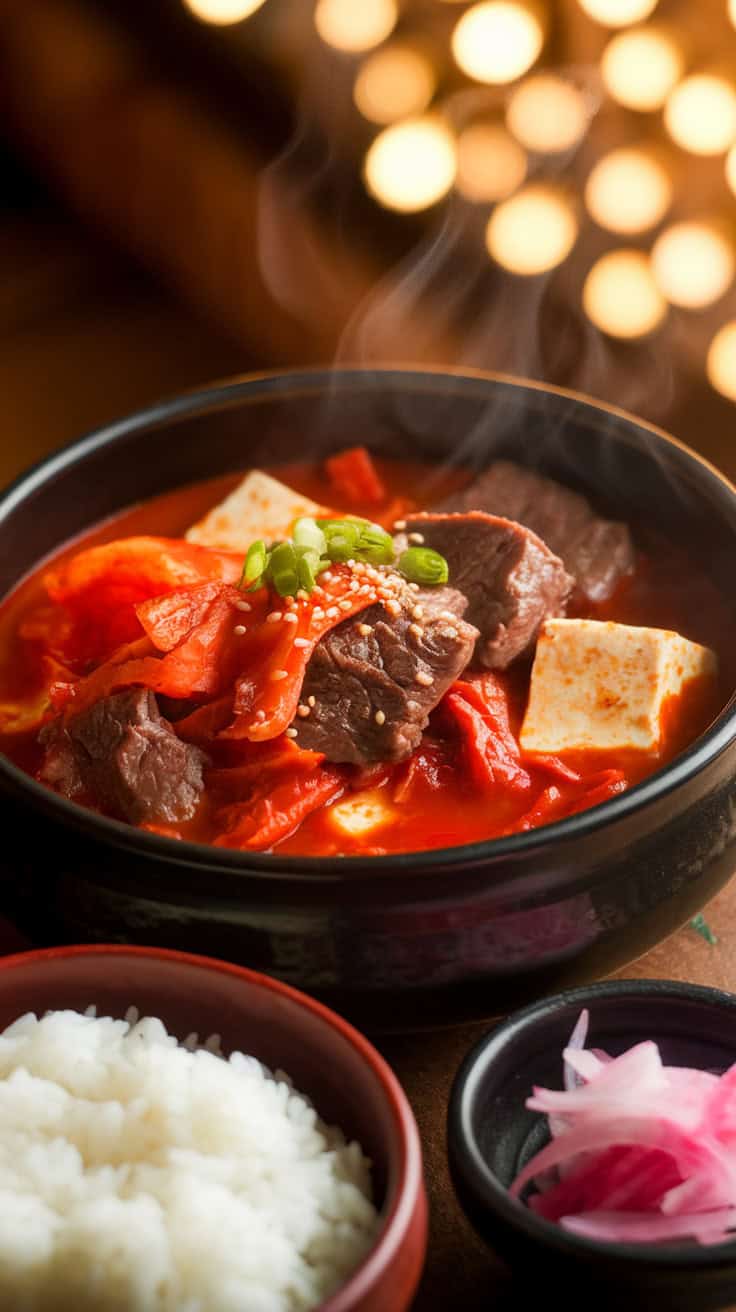
Korean Kimchi Beef Stew
Ingredients
Equipment
Method
- Heat oil in a large pot over medium-high heat. Sear the beef until browned on all sides, then remove and set aside.
- Add kimchi, garlic, and ginger to the pot. Stir and cook for 3 minutes until fragrant.
- Stir in gochujang, gochugaru, soy sauce, and fish sauce. Mix well to coat the kimchi.
- Pour in beef broth and return the beef to the pot. Bring to a boil, then lower the heat and let simmer for 60-90 minutes.
- Add mushrooms and tofu in the last 15 minutes of cooking.
- Garnish with scallions and drizzle with sesame oil before serving.
Notes
- Use well-fermented kimchi for the best depth of flavor.
- For a milder stew, reduce the amount of gochugaru and gochujang.
- Serve with rice and banchan (Korean side dishes) for a complete meal.
Tried this recipe?
Let us know how it was!More From EpicureDelight
The Complete Weeknight Dinner Guide - your complete resource for this topic.
Browse all dinner recipes →Korean Kimchi Beef Stew is an excellent weeknight option - most versions come together in 30-45 minutes with minimal prep and everyday pantry ingredients.
The foundation of Korean Kimchi Beef Stew is a handful of core ingredients - typically a protein or main component, aromatics, and a seasoning base. The full ingredient list is straightforward and easy to shop for.
Yes - it freezes well. Cool completely before storing in a freezer-safe container. Thaw overnight in the fridge and reheat gently on the stovetop or in the oven.
Store leftovers in an airtight container in the fridge for up to 4 days. For longer storage, freeze in portions for up to 3 months.

Carrie is a food writer and editor with more than 15 years of experience. She has worked for some of the biggest names in the food industry, including Bon Appétit, Food & Wine, and Martha Stewart Living.
As the Editor in Chief of EpicureDelight, Carrie oversees all of the content on the site. She also manages the team of contributing writers and editors, who help to create delicious recipes, helpful tips, and informative articles that you’ll find on the site.
A native of the Chicago area, Carrie is passionate about all things food. She loves trying new restaurants and experimenting with new recipes in her kitchen. She’s also a graduate of the Culinary Institute of America, so she knows a thing or two about food!