Bone-in skin-on thighs need a different approach than boneless - and the air fryer handles them better than a pan because hot air circulates under the skin without direct contact.
A dry rub goes on first; the teriyaki glaze comes in only for the last 3-5 minutes. It's one of the longer-cooking recipes in the air fryer chicken collection - 25 minutes - but almost all of it is hands-off.
Glazing too early burns the sugars before the thigh is cooked through. Pull at 165°F and rest 5 minutes - the glaze continues to set as it cools.
Teriyaki Chicken Thighs - bone-in skin-on thighs marinated in classic 1:1:1 teriyaki ratio, air fried at 375°F with glaze applied only in the final 5 minutes. Score the skin 3 times so marinade reaches the meat.
Remember it later
Planning to try this recipe soon? Save it for a quick find later!
Why This Recipe Works
The teriyaki glaze is not just flavor - it is a two-reaction system. Both Maillard browning and caramelization fire simultaneously in the last 5 minutes, which is why timing the glaze application is the most critical variable in this recipe.
- Mirin's sugars caramelize at 320°F: Mirin contains simple sugars that reach the caramelization threshold inside an air fryer set to 375°F, creating the characteristic lacquered sheen.
- Soy sauce drives Maillard browning: Soy contains free amino acids that react with reducing sugars at high heat, producing the deep mahogany color and roasted umami notes that distinguish teriyaki from plain glazed chicken.
- Scoring skin unlocks marinade penetration: Three shallow cuts through the skin and into the fat break the waterproof barrier - without scoring, the marinade sits on top and washes off in the fryer.
- Bone-in fat cap self-bastes throughout cooking: Subcutaneous fat renders downward and outward under heat, continuously lubricating the meat surface for the full 28 minutes without any manual basting.
- 175°F target retains maximum collagen: Thigh meat at 175°F has converted enough collagen to gelatin to feel luxuriously juicy - the same cut pulled at 165°F is noticeably drier because collagen breakdown is incomplete.
The glaze-at-the-end approach separates this from recipes where sauce goes on before cooking - sugar burns before meat is done. The same principle applies to the smoky barbecue glaze and the crispy baking-powder wings technique.
What You Need
- 4 bone-in skin-on chicken thighs (about 2 lbs)
- 3 tablespoon soy sauce
- 3 tablespoon mirin
- 3 tablespoon sake (or dry sherry)
- 1 tablespoon brown sugar
- 2 cloves garlic, minced
- 1 teaspoon fresh ginger, minced
- 2 cloves garlic, minced
- 1 teaspoon fresh ginger, minced
- 1 teaspoon sesame seeds (to finish)
- 2 scallions, sliced thin (to finish)
- Neutral oil (light coating for basket)
- Cornstarch, 1 teaspoon (optional, thickens glaze)
Ingredient Details
- Soy SauceUse regular (not low-sodium) soy sauce for this recipe - low-sodium versions reduce Maillard browning because fewer amino acids are present per tablespoon.
- MirinUse hon-mirin (true mirin, labeled "Hon Mirin") rather than aji-mirin (seasoning sauce with added salt and corn syrup) - hon-mirin's natural sugars caramelize more cleanly.
- SakeDry sherry is a direct substitute at 1:1. Avoid cooking sake with added salt - it throws off the sodium balance. Rice wine vinegar is not a substitute; it adds acid without the sugar.
- Chicken ThighsBone-in skin-on thighs weighing 6-8 oz each are ideal. Thighs under 5 oz will overcook before the glaze has time to set; thighs over 9 oz may need 3-4 extra minutes.
Ingredient Swaps
Every swap below preserves the caramelization behavior that makes teriyaki distinctive.
- Sake → dry sherry at 1:1 (closest flavor match) or mirin only (richer, sweeter profile)
- Brown sugar → honey (1 teaspoon - reduce quantity since honey is sweeter and burns faster)
- Bone-in thighs → boneless thighs (reduce cook time to 20 minutes; less self-basting fat)
- Fresh ginger → ¼ teaspoon ground ginger (acceptable substitute, less aromatic)
- Sesame seeds → none (finish garnish only, no flavor impact during cooking)
Bone-In vs Boneless Thighs
Works for: bone-in skin-on - fat cap self-bastes throughout, stays juicier at 175°F, holds up better to the glaze caramelization window
Skip if: using boneless thighs - reduce cook time to 20 minutes and check temperature at 18 minutes; no fat cap means less margin for error
Fresh vs Ground Ginger
Works for: fresh ginger - higher volatile oil content, brighter aroma, better marinade penetration through scored skin
Skip if: substituting ground ginger - use only ¼ teaspoon (not 1:1) and add it to the glaze, not the marinade, since ground ginger can turn gritty when marinated overnight
For a different Asian-inspired profile, the coconut-crusted version adds tropical sweetness, while lemon pepper breasts go citrus-bright instead of soy-sweet.
Instructions
The marinating step is where the technique starts - scoring before marinating is what separates genuinely juicy teriyaki from a surface-coated approximation.
- Score each thigh skin 3 times with a sharp knife, cutting through the skin and just into the fat layer. Mix soy sauce, mirin, sake, brown sugar, garlic, and ginger in a bowl or zip bag.
- Add thighs to the marinade, turning to coat. Marinate at room temperature for 30 minutes or refrigerate for up to 4 hours. Do not marinate longer - soy sauce begins to denature surface proteins and toughens the outer layer after 4 hours.
- Preheat air fryer to 375°F for 3 minutes. Lightly oil the basket. Remove thighs from marinade and shake off excess - excess marinade drips, smokes, and steams instead of browning.
- Place thighs skin-side down in a single layer. Air fry at 375°F for 14 minutes. Flip to skin-side up and cook for 9 more minutes.
- Reserve 3 tablespoon of the marinade in a small saucepan. Simmer over medium heat for 2 minutes to reduce slightly and kill bacteria (this becomes the basting glaze). Brush generously over each thigh. Air fry 5 more minutes at 375°F until the glaze is lacquered and internal temperature reads 175°F.
- Remove from fryer. Brush a second coat of glaze immediately while the surface is still hot - the residual heat sets the second layer into a glossy finish without further cooking. Rest 3 minutes before serving.
What to Serve With It
| Side Dish | Prep | Why It Works | How to Serve |
|---|---|---|---|
| Steamed white rice | Easy | Neutral starch absorbs teriyaki glaze without flavor conflict | Serve in a mound alongside the thigh; drizzle remaining glaze over rice |
| Steamed broccoli | Easy | Bitter brassica notes balance the sweetness of mirin caramelization | Steam 4 minutes, season with sesame oil and a pinch of salt |
| Pickled cucumber (sunomono) | Easy | Acidity and crunch cut through the fat from the chicken skin | Slice thin, toss with rice vinegar and sugar, serve cold |
| Miso soup | Easy | Umami in dashi base reinforces the soy browning notes in the glaze | Serve hot in a small bowl immediately before plating the chicken |
| Sesame spinach (gomae) | Easy | Earthy sesame flavor links back to the sesame seed garnish on the thigh | Blanch 30 seconds, squeeze dry, toss with sesame paste and soy |
Build a bigger table with spicy buffalo bites as a starter or the parmesan-crusted version for Italian contrast.
Store and Reheat
| Method | Time | Best For |
|---|---|---|
| Air fryer at 350°F | 6 min | Reviving the glaze sheen without burning the sugar layer |
| Oven at 325°F covered | 12 min | Gentle reheating for a large batch without crisping |
| Microwave | Not recommended | Steam softens the lacquered glaze into a sticky, uneven coating |
- Let thighs cool completely on a wire rack before refrigerating - trapping steam softens the glaze from the inside out.
- Freeze cooked thighs individually wrapped in plastic film, then placed in a freezer bag - keeps up to 2 months. Glaze may crack after freezing but reheats smoothly.
- Brush a thin layer of fresh teriyaki sauce over reheated thighs immediately after they come out - the heat activates the sugars and restores the lacquered appearance.
- Do not re-marinate leftovers - the cooked meat absorbs liquid differently and the exterior softens rather than glazing.
The same storage approach works for garlic herb crusted breasts and simple crispy thighs.
Frequently Asked Questions
Why do I need to score the skin?
Chicken skin is largely waterproof - the dense fat layer repels water-based marinades on contact. Three shallow scores cut through that barrier, creating channels that carry soy, mirin, and ginger directly into the fat and meat.
Unscored thighs marinate on the surface only and the flavor difference at the bone is significant.
Can I use the marinade as the glaze?
Yes, but only after cooking it first. Raw marinade contains bacteria from the raw chicken and must be simmered for at least 2 minutes at a full boil before brushing onto cooked meat.
Simmer 3 tablespoons of reserved marinade in a small pan over medium heat until slightly thickened - about 2 minutes.
What internal temperature should teriyaki thighs reach?
Target 175°F at the thickest point, away from the bone. The USDA minimum is 165°F, but thigh meat at 175°F has converted significantly more collagen to gelatin, producing a noticeably juicier result.
The bone-in cut gives a wider margin before the meat dries out.
Why does my glaze burn in the air fryer?
The glaze is being applied too early. Brown sugar and mirin reach their burn point quickly at 375°F - any contact with direct heat for more than 5-6 minutes produces acrid, blackened results.
Apply only in the final 5 minutes and use a thin coat; thick glaze application extends browning past the burn window.
Can I make the marinade ahead?
Yes - the soy, mirin, sake, garlic, and ginger mixture keeps refrigerated in a sealed jar for up to 5 days. Make a double batch and use half for marinating and reserve half for a fresh glaze.
The brown sugar is best added fresh to the glaze portion since it can crystallize slightly when stored with the acids in soy sauce.
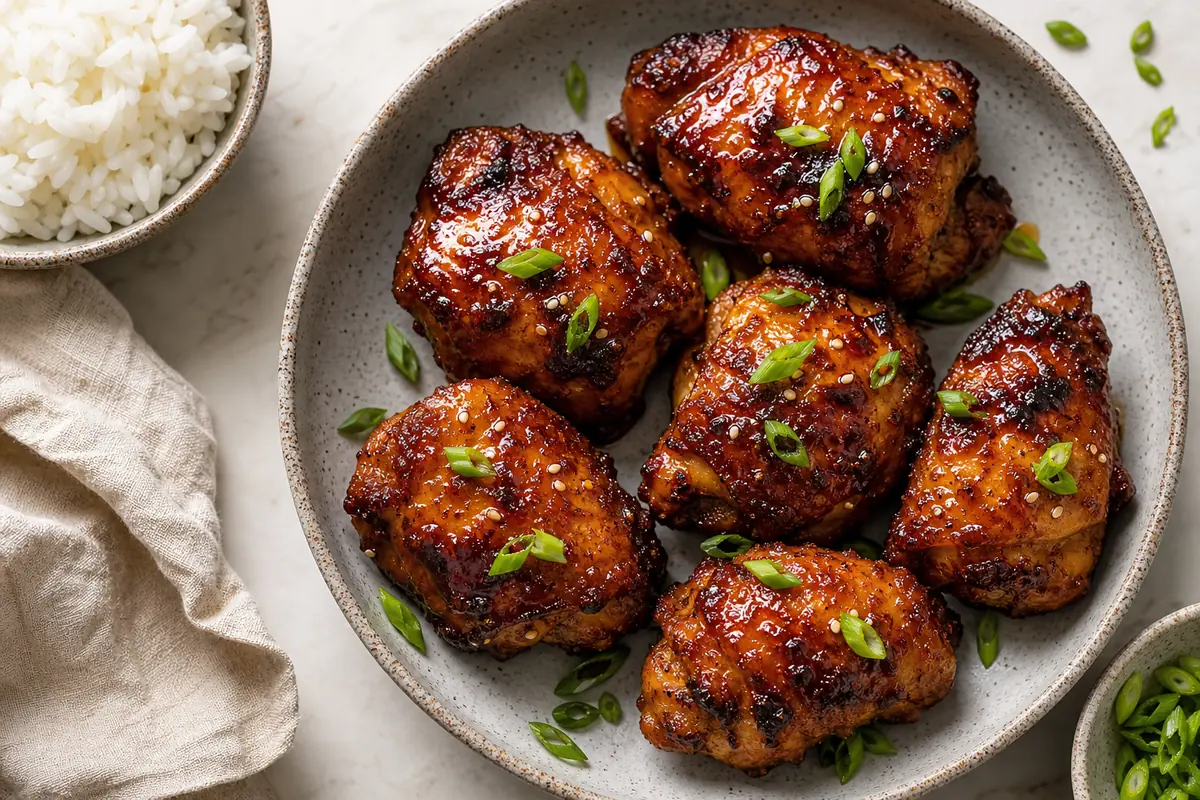
Air Fryer Teriyaki Chicken Thighs
Ingredients
Equipment
Method
- Pat chicken thighs completely dry with paper towels. Mix garlic powder, onion powder, salt, and pepper; rub evenly over the skin and underside of each thigh.
- Combine soy sauce, honey, mirin, sesame oil, minced garlic, and grated ginger in a small saucepan. Simmer over medium heat 3–4 minutes until slightly reduced. Stir in the cornstarch slurry and cook 30 seconds until glossy. Set aside.
- Preheat air fryer to 380°F for 3 minutes. Place thighs skin-side up in a single layer. Cook 20 minutes without opening the basket.
- Brush thighs generously with teriyaki glaze. Cook 3–5 more minutes until glaze caramelizes to deep amber. Pull at 165°F internal temp minimum — 175°F produces fall-off-bone texture.
- Rest 5 minutes. Brush with remaining glaze, garnish with sesame seeds and sliced green onions, and serve immediately.
Notes
- Score the skin 2–3 times so marinade penetrates the meat
- Apply teriyaki glaze in the last 5 minutes only — sugar burns early
- Bone-in, skin-on thighs stay juicier than boneless at this temp
- Pull at 175°F internal — thighs are better fully cooked through
- Brush a second coat of glaze right after removing from air fryer
Tried this recipe?
Let us know how it was!
Carrie is a food writer and editor with more than 15 years of experience. She has worked for some of the biggest names in the food industry, including Bon Appétit, Food & Wine, and Martha Stewart Living.
As the Editor in Chief of EpicureDelight, Carrie oversees all of the content on the site. She also manages the team of contributing writers and editors, who help to create delicious recipes, helpful tips, and informative articles that you’ll find on the site.
A native of the Chicago area, Carrie is passionate about all things food. She loves trying new restaurants and experimenting with new recipes in her kitchen. She’s also a graduate of the Culinary Institute of America, so she knows a thing or two about food!