
Butter disappears fast. One recipe, one forgotten shopping trip, and suddenly you're staring at an empty fridge with a pan already on the stove.
The good news is that butter substitutes work well when you match the swap to what butter is actually doing in your dish.
Butter is fat, flavor, moisture, and browning agent all at once. Replacing it wrong gives you flat cookies, greasy stir-fries, or dense muffins.
Pick the right stand-in and most people won't notice a difference.
The best butter substitute depends on what the butter is doing. Ghee is closest for browning and savory cooking. Coconut oil or shortening handles baking structure. Margarine spreads and bakes reliably at a 1:1 ratio. Choose by function first, then adjust salt and liquid.
Best Butter Swap Options for Baking, Cooking, and Spreading
Not every substitute handles every job. A fat that fries beautifully can wreck a layer cake, and a yogurt that tenderizes muffins has no place in a hot pan.
This table matches each option to its strongest use case so you can scan and decide in under a minute.
For most cooking fats, a 1:1 ratio is the safe starting point. Dairy-based swaps like yogurt are the exception - start at ¾:1 and adjust once you see the batter.
You can read more about swapping out margarine if you find yourself needing to go one step further.
| # | Substitute | Best For | Ratio | Key Note |
|---|---|---|---|---|
| 1 | Ghee | Cooking + Baking | 1:1 | Higher smoke point; no milk solids |
| 2 | Olive / Neutral Oil | Sautéing + Frying | ¾:1 | Skip for creamed batter recipes |
| 3 | Coconut Oil (refined) | Baking + Roasting | 1:1 | Mild coconut note; watch browning |
| 4 | Greek Yogurt | Baking Only | ¾:1 | Adds tang; reduce other liquids |
| 5 | Vegetable Shortening | Baking + Pastry | 1:1 | No flavor; add pinch of salt |
| 6 | Margarine | Spreading + Baking | 1:1 | Check salt level before adding more |
1. Ghee
Ghee is what you reach for when the dish *needs* that golden, nutty pan color. Because the milk solids are removed during clarification, it browns more predictably than butter and handles higher heat without burning.
If you're pan-searing fish, making scrambled eggs, or caramelizing onions, ghee delivers nearly the same aroma and a slightly deeper, roasted note.
Use it at a straight 1:1 ratio. In baking, it works in dense, moist cakes and quick breads where you'd melt the butter anyway - just don't expect the same rise as in a creamed recipe.
Ghee
Works for: sautéing, pan sauces, roasted vegetables, dense baked goods, any recipe where butter is melted first
Skip if: you need a dairy-free swap - ghee is still a dairy product and contains trace milk proteins
- Color: Expect a slightly more golden-amber result than butter gives you
- Aroma: Nutty and slightly caramelized; more pronounced than plain butter
- Adjustment: Ghee has no water content, so in baked goods add 1 teaspoon of water per ¼ cup to compensate
- Smoke point: Around 485°F, which is well above butter's 350°F - safe for high-heat cooking
2. Olive Oil or Neutral Oil
Oil is the most available substitute in most kitchens, and it handles heat transfer and fat coating as well as butter does in savory cooking. The key is choosing the right type: extra-virgin olive oil works in pasta, roasted vegetables, and anything Mediterranean-leaning, while a neutral oil like avocado, sunflower, or grapeseed disappears into the background.
For anyone exploring olive oil swaps that work beyond a single recipe, the principles here carry over across applications.
Use ¾ cup of oil for every 1 cup of butter called for, since oil is pure fat with no water content. Baked goods made with oil tend to stay moist longer but can feel denser if the recipe relied on creaming.
- Best choice for cooking: Any neutral oil (avocado, grapeseed) or extra-virgin olive oil for savory dishes
- Heat readiness: Oil is ready to cook immediately; no waiting for it to melt or foam
- Flavor shift: Olive oil adds a grassy note; use neutral oil if you want zero flavor impact
- Baking caveat: Works in muffins, quick breads, and some cakes - not in cookies or pastry that need a solid fat
Skip this if your recipe depends on creaming butter and sugar together. Oil cannot trap air the same way, and the texture will be noticeably different.
3. Coconut Oil (Refined)
Coconut oil behaves like butter in one important way: it is solid at room temperature and liquid when warm. That melting-and-setting cycle makes it a natural stand-in for recipes that depend on a fat that firms up as it cools, like fudgy brownies, shortbread, or granola bars.
Understanding how coconut oil in cooking behaves across different heat levels helps you predict what the final crumb will look like.
Always use refined coconut oil rather than unrefined (virgin) when you want to keep flavor close to neutral. Unrefined will leave a coconut note that works in some recipes and clashes in others.
- Graininess fix: If coconut oil looks grainy after melting, warm it gently and stir before measuring
- Browning: It browns a little faster than butter, so reduce oven temp by 10-15°F if your edges darken quickly
- Setting behavior: Cookies and bars firm up correctly once cooled; don't judge texture while still warm
- Salt adjustment: Coconut oil is unsalted, so add a small pinch of salt to match salted butter's flavor
Skip this if you can't tolerate any coconut aroma at all - even refined oil may carry a faint trace in delicate recipes like vanilla custard or white cake.
4. Greek Yogurt
Full-fat, strained Greek yogurt replaces both the fat and some of the moisture butter provides in baked goods. It keeps crumb tender and moist without adding grease, which is why it works especially well in muffins, quick breads, and coffee cakes. Understanding the role Greek yogurt plays in baked texture helps explain why straining is worth the extra step - thicker yogurt behaves more like a fat than a liquid.
If your yogurt seems thin, strain it through a fine mesh for 20-30 minutes before measuring. Unstrained yogurt adds too much liquid, which can extend bake time or leave the center gummy.
- Ratio: Use ¾ cup yogurt for every 1 cup butter; reduce other liquid in the recipe by 2 tbsp
- Flavor note: Adds a mild tang - works well with lemon, chocolate, or spiced batters, less ideal in plain vanilla recipes
- Temperature: Use room-temperature yogurt; cold yogurt can seize the batter and affect rise
Skip this if you're after a buttery, neutral flavor. Yogurt changes the taste profile noticeably, and no amount of vanilla extract will fully cover the tang.
For anyone who needs replacements for Greek yogurt itself, there are dairy and non-dairy options that behave similarly in baking.
5. Vegetable Shortening
Shortening is pure fat - no water, no dairy, no flavor - and that stripped-down profile is exactly what makes it reliable for structure. It creams with sugar almost as well as butter does, holds its shape during baking, and produces a flaky, tender crumb in pie crusts and biscuits.
The tradeoff is taste: shortening is flat where butter is forward.
Use it 1:1 wherever butter is creamed or used as a solid fat. Since shortening contains no salt, add ¼ teaspoon of salt per ½ cup when swapping into a recipe written for salted butter.
Vegetable Shortening
Works for: pie crusts, biscuits, layered pastries, any recipe needing flaky or tender structure
Skip if: buttery flavor matters - shortening is neutral and the taste difference is obvious in simple recipes like pound cake or shortbread
- Flavor gap: Add ½ teaspoon butter extract or a small amount of browned butter flavoring to bring back some richness
- Salt adjustment: Always taste-check - shortening has zero salt and the recipe may need more seasoning
- Texture win: Pie crust made with shortening is consistently flakier and less prone to shrinking
- Melting behavior: Shortening has a higher melting point than butter, so baked goods hold shape better in warm kitchens
6. Margarine
Margarine is the substitute most people already have in the fridge, and it earns that spot by being genuinely easy to use. It spreads, melts, and creams almost exactly like butter, which makes it the lowest-effort swap on this list.
Learning about the taste of margarine compared to butter shows where the two converge and where they split, which helps you decide if it's close enough for your specific recipe.
- Salted vs unsalted: Most margarine is salted - reduce added salt in the recipe by at least ¼ teaspoon per ½ cup
- Melting behavior: Melts slightly faster than butter; watch sauces and pan-frying closely to avoid scorching
- Best recipe types: Cookies, cakes, quick breads, frosting, toast, and pan-cooked vegetables all work well
- Stick vs tub: Use stick margarine for baking; tub margarine has higher water content and can make baked goods dense
Skip this if you need to avoid emulsifiers or certain additives - check the label, since margarine formulations vary widely by brand.
Making Butter Substitutes Work (No-Surprises Method)
The swap itself is only half the equation. Once you've chosen a substitute, three small adjustments prevent most failures: matching liquid levels, checking salt, and watching bake time.
A fat with no water content (like coconut oil or shortening) can make a batter stiffer than expected; a moisture-heavy swap (like yogurt) can loosen it. You can always find guidance on using olive oil for creaminess when working with liquid fats specifically.
Taste as you go. Most problems show up at the seasoning stage, not in texture.
- Liquid balance: If the batter is too stiff after swapping, add water or milk 1 teaspoon at a time until it looks right; if too loose, reduce another liquid by 2 tablespoon next batch
- Salt check: Taste the batter or dough before baking - margarine and some yogurts shift salt levels enough to notice in the final result
- Bake time: Fats that brown faster (coconut oil, ghee) may need the oven temp lowered by 10-15°F or bake time trimmed by 2-3 minutes
Frequently Asked Questions
Technically yes, but the texture changes significantly. Cookies need solid fat to cream with sugar and hold shape; oil makes them flat and greasy rather than chewy.
Ghee is the closest match - it has the same flavor base as butter but a higher smoke point and no milk solids to burn. Use it 1:1.
Yes. Reduce added salt by about ¼ teaspoon per ½ cup of margarine used, then taste before adding more.
No - use ¾ cup of strained, full-fat yogurt for every 1 cup of butter, and reduce other liquids by about 2 tablespoons to compensate for yogurt's extra moisture.
Always choose refined coconut oil, not virgin. Refined has most of the coconut aroma removed and behaves closer to a neutral fat in both baking and cooking.
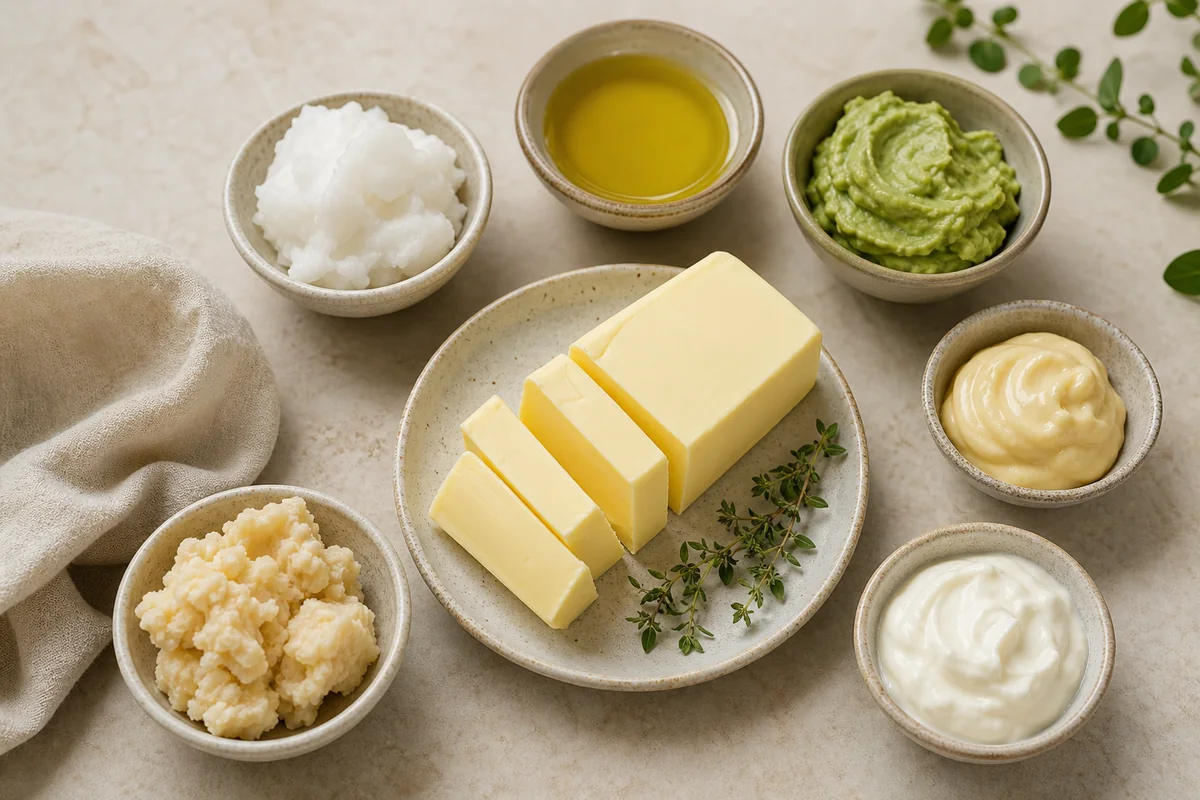
5 Best Butter Substitutes (Pantry Swaps)
Ingredients
Method
- Identify what butter is doing in your recipe: spreading, browning in a pan, richness in baking, or adding moisture/fat to bind.
- Choose the closest match: ghee for browning, oil for sautéing, shortening/margarine for baking structure, and yogurt for moisture-based recipes.
- Use the ratio from the table: for reduced-fat or watery substitutes (like yogurt), start slightly lower and adjust after mixing.
- If the batter/dough looks too thick or dry, add 1–2 teaspoons of water or milk at a time; if it looks loose, reduce liquid next batch.
- For savory dishes, taste at the end and adjust salt—many substitutes (margarine/yogurt) can shift seasoning.
Notes
- All ratios are starting points—texture can shift based on brand and fat percentage.
- If your recipe relies on butter flavor (cookies, finishing sauces), pick ghee or margarine with a closer fat profile.
Tried this recipe?
Let us know how it was!
Carrie is a food writer and editor with more than 15 years of experience. She has worked for some of the biggest names in the food industry, including Bon Appétit, Food & Wine, and Martha Stewart Living.
As the Editor in Chief of EpicureDelight, Carrie oversees all of the content on the site. She also manages the team of contributing writers and editors, who help to create delicious recipes, helpful tips, and informative articles that you’ll find on the site.
A native of the Chicago area, Carrie is passionate about all things food. She loves trying new restaurants and experimenting with new recipes in her kitchen. She’s also a graduate of the Culinary Institute of America, so she knows a thing or two about food!



