
Choosing a margarine substitute is less about finding a replica and more about matching the job. Spreading on toast needs softness.
Creaming in cookies needs fat structure. Greasing a pan needs heat tolerance.
Get the job right first, and the swap almost selects itself.
Unsalted butter is the closest all-purpose swap for margarine in baking. Plant-based stick butter is the best dairy-free match for creaming. Shortening or lard wins for flaky pastries. Refined coconut oil covers most cooking tasks at ¾:1. Salt and texture adjustments are often all you need.
5 Best Margarine Substitutes Ranked by Use-Case
Each substitute below targets a different cooking or baking scenario. The table maps them by format, ratio, and primary strength.
If your margarine is whipped or tub-style, stick-form substitutes may need a few minutes at room temperature to match spreadability.
| # | Substitute | Best For | Ratio | Key Note |
|---|---|---|---|---|
| 1 | Butter (unsalted) | Both | 1:1 | Closest baking structure |
| 2 | Plant-based butter | Both | 1:1 | Use stick form only |
| 3 | Butter (salted) | Both | 1:1 | Reduce added salt |
| 4 | Shortening or lard | Baking | 1:1 | Flakiest results |
| 5 | Refined coconut oil | Cooking | ¾:1 | Softened, not melted |
1. Butter (Unsalted, Softened)
Unsalted butter is the most predictable margarine swap for baking. Its fat content is close enough that cookies spread similarly, cakes rise cleanly, and frosting holds structure.
When you need to pick a reliable butter option for creaming, softened unsalted is the baseline everything else gets compared to.
- Baking ratio: Use 1:1 for cookies, cakes, muffins, and frosting
- Softening test: Press with a finger-butter should dent easily without leaving grease
- Salt adjustment: Add ¼ teaspoon salt per ½ cup butter if your margarine was salted
- Frosting: Works especially well in buttercream; texture is slightly denser than margarine-based versions
Skip if: Your recipe depends on margarine's water content for steam-rise (some flaky doughs)-shortening handles that better.
2. Plant-Based Butter (Stick Form)
Tub-style plant spreads are designed for toast, and they cause problems in the oven. Stick-form plant butter has a higher fat percentage and holds its structure during creaming and baking. Some brands are even labeled "baking sticks," and those are worth the extra search.
If you're after oil-based swap ideas for cooking instead of creaming, plant butter is not that solution-use it specifically where margarine is doing structural work.
- Best for: Cookies, cakes, and any recipe where you cream fat with sugar
- Common failure: Tub spreads have too much water and will make cookies spread thin and greasy
- Fix: Always check the label-fat content should be 70% or higher for baking to work properly
- Ratio: 1:1 replacement, no adjustments needed if fat content matches
Skip if: You need something you can spread straight from the fridge-baking sticks are firm and won't spread cold.
3. Salted Butter (Softened)
Salted butter is closer to margarine's flavor profile than unsalted, because most margarine has salt already built in. This matters most for spread applications and savory baking, where that baseline saltiness does real flavor work.
When you're storing butter for later use, salted also keeps a few days longer than unsalted, which is worth knowing.
Salted Butter vs. Unsalted Butter as Margarine Swaps
Works for: recipes with no added salt, spread use, savory cooking, and cookies where margarine flavor is expected
Skip if: recipe already includes ½ teaspoon or more of added salt-doubling up creates a noticeably salty result
Salted butter browns at roughly the same rate as margarine. It handles sautéing, pan sauces, and toast just as well.
- Ratio: 1:1 with no other changes if your original margarine was salted
- Sweet baking tip: Reduce any added salt in the recipe by ¼ teaspoon per stick used
- Spreading: Let it sit at room temperature for 20 minutes for best spreadability
Skip if: Your recipe is already salt-sensitive-start with unsalted and add salt to taste.
4. Shortening or Lard (Unflavored)
These fats are structure-forward. They contain almost no water, which means your pastry dough stays flakier and your biscuits rise taller.
Lard has a faint savory quality worth knowing about-that neutral-but-rich fat is why old-school pie crust recipes still call for it. Shortening is completely flavorless, which makes it the safer default for sweet baking.
| Use | Ratio | Notes |
|---|---|---|
| Pie crust | 1:1 | Lard or shortening; keep dough cold between steps |
| Cookies | 1:1 | Shortening preferred; expect less spread, crisper edge |
| Biscuits | 1:1 | Either works; lard gives a slightly savory finish |
| Pan greasing | As needed | Shortening is clean and doesn't scorch at moderate heat |
- Temperature: Keep shortening at room temperature; lard can be chilled for pastry work
- Flavor note: Neither adds dairy taste-expect a more neutral result than butter
Skip if: Dairy flavor is part of what makes your recipe work-shortening and lard won't provide it.
5. Refined Coconut Oil (Re-Softened)
Refined coconut oil is mild in flavor, but its texture is temperature-sensitive in a way margarine is not. It melts fully at around 76°F, then firms up again when cooled.
For baking, you want it in its softened-solid state, not poured in liquid. If you have questions about storing coconut oil properly, keeping it in a cool pantry helps it stay at that workable semi-solid texture.
- Ratio: Use ¾ cup refined coconut oil per 1 cup margarine called for
- Texture check: It should look like cold shortening-opaque and scoopable, not runny
- Best for: Cookies, quick breads, muffins, and pan greasing
- Flavor: Refined is nearly tasteless; unrefined has a coconut note that changes most baked goods
Skip if: Your recipe requires true creaming-coconut oil doesn't hold air the same way butter does in that step.
Making Margarine Substitutes Work (Texture, Salt, and Ratios)
Most substitution failures come down to three things: wrong salt level, wrong temperature, and not catching separation early. The flaky-fat swap options often need a chill step that butter-based recipes skip.
And if you're reaching for a dairy alternative, checking the right liquid match for your batter helps keep moisture in balance.
- Match salt: If your margarine was salted, use salted butter or add ¼ teaspoon salt per ½ cup of unsalted substitute
- Match temperature: Your fat should be at the same temperature as your other ingredients-cold fat in warm batter separates; warm fat in chilled dough melts structure
- Fix dry or crumbly results: Add 1-2 teaspoon water or milk to the batter and fold gently before assuming the recipe is broken
Frequently Asked Questions
Yes. Unsalted butter works 1:1 for margarine in most cookie recipes. If your margarine was salted, add ¼ teaspoon salt per stick or simply use salted butter instead.
Softened unsalted butter is the best swap for margarine-based frosting. It holds shape better and gives a cleaner flavor than most plant-based alternatives.
Use salted butter at the same ratio, or add ¼ teaspoon of salt per ½ cup of unsalted substitute. Taste before baking when the recipe allows.
Stick-form plant butter with 70% or more fat content creams comparably to margarine. Tub-style spreads have too much water and perform poorly in creaming.
Refined coconut oil works at ¾:1 for cookies and quick breads. Olive oil is best kept to cooking and sautéing-it won't cream and changes flavor noticeably in baked goods.
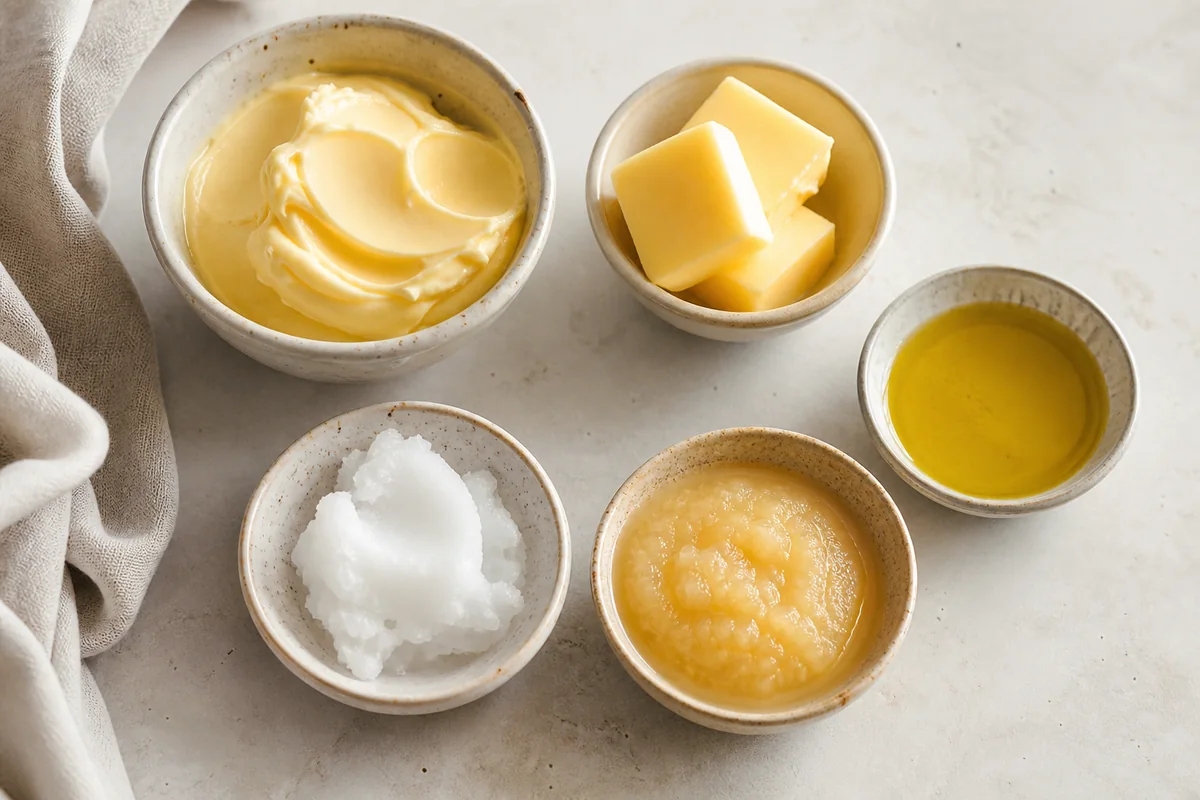
5 Best Margarine Substitutes Worth Trying
Ingredients
Method
- Identify the job: spreading on toast, creaming in cookies, or greasing/pan-release for cooking.
- Choose the closest substitute from the table: butter for dairy recipes, plant-based butter for similar creaming, and shortening/lard for flakiness.
- Use the listed ratio; if the substitute is harder/less water, warm it slightly so it creams evenly.
- For salted margarine, match saltiness by using salted butter or adding a small pinch adjustment.
- If the final texture seems dry or crumbly, increase moisture slightly (e.g., add 1–2 teaspoons water or milk to the batter) and re-mix.
Notes
- Stick/solid forms substitute most reliably for creaming and baking.
- Water content affects spread and crumb—so softening temperature matters.
Tried this recipe?
Let us know how it was!
Carrie is a food writer and editor with more than 15 years of experience. She has worked for some of the biggest names in the food industry, including Bon Appétit, Food & Wine, and Martha Stewart Living.
As the Editor in Chief of EpicureDelight, Carrie oversees all of the content on the site. She also manages the team of contributing writers and editors, who help to create delicious recipes, helpful tips, and informative articles that you’ll find on the site.
A native of the Chicago area, Carrie is passionate about all things food. She loves trying new restaurants and experimenting with new recipes in her kitchen. She’s also a graduate of the Culinary Institute of America, so she knows a thing or two about food!



