
The warm, spiced smell of apple pie comes almost entirely from a single jar - and when that jar is empty mid-recipe, you feel it immediately.
Apple pie spice substitute options are closer than you think, and most involve spices already sitting in your rack.
Apple pie spice is mostly cinnamon with support from nutmeg, ginger, and sometimes allspice or cloves. Understanding that flavor architecture - which you can read more about by tasting apple pie spice - makes choosing a swap much easier.
If cinnamon is the spine, nutmeg is the warmth, and ginger is the bite.
The swaps below are tested in actual pie fillings and baked crisps, not just on paper. Each one includes a condition where you should skip it so you don't ruin a good batch.
Quick Apple Pie Spice Substitute Guide (No Jar Needed)
Running out mid-bake is a real problem, but any of these five swaps will keep your recipe on track. The blends stay closest to the original; cinnamon alone is a distance-runner fallback.
Pumpkin pie spice is the fastest one-jar fix at a 1:1 ratio. A DIY mix of cinnamon, nutmeg, and ginger is the most accurate from-scratch option. Cinnamon plus allspice plus ginger gives a rounder, fruitier tone. Cinnamon, nutmeg, and cardamom shift the aroma to something more floral. Plain cinnamon works in a pinch but needs a reduced amount.
Apple pie spice is a cinnamon-forward blend with nutmeg, ginger, and sometimes allspice. When your jar is empty, use pumpkin pie spice at 1:1 for the fastest fix, or mix cinnamon + nutmeg + ground ginger at equal parts for the most accurate DIY match. Single-spice cinnamon works but needs a lower amount.
Reference Table: The Best 1:1 Swaps (and the One Exception)
Most of these swaps are weight-for-weight replacements - no math required. The only real exception is cinnamon alone, which runs sharp and needs pulling back by about a quarter.
| # | Substitute | Best For | Ratio | Key Note |
|---|---|---|---|---|
| 1 | Pumpkin Pie Spice | Both | 1:1 | Closest packaged swap available |
| 2 | Cinnamon + Nutmeg + Ginger | Both | 1:1 | Most accurate DIY blend |
| 3 | Cinnamon + Allspice + Ginger | Both | 1:1 | Rounder, fruitier finish |
| 4 | Cinnamon + Nutmeg + Cardamom | Baking | 1:1 | Floral shift; reduce if needed |
| 5 | Ground Cinnamon Only | Both | ¾:1 | Use less; lacks nutmeg depth |
One quick note on ingredients: spice freshness matters more in blends than in any single-spice recipe. Ground spices over 12 months old lose potency fast, and your substitute will taste flat if the base ingredients are stale.
Check the bloom date before you mix.
5 Tested Apple Pie Spice Swaps Worth Knowing
1. Pumpkin Pie Spice
Pumpkin pie spice is the easiest swap because its backbone is nearly identical to apple pie spice: cinnamon, nutmeg, allspice, and ginger in ratios close enough that most tasters won't notice the difference. It's a one-jar answer when you're already mid-recipe.
If you're curious how pumpkin pie spice in cooking behaves across different applications, it tends to run slightly stronger on allspice than apple pie spice - which is worth knowing before you add extra.
- Pie filling: Swap 1:1 directly into your apple mixture; stir well so the spices distribute evenly before baking.
- Cookie dough: Works exactly like apple pie spice; no adjustment needed in most drop or rolled cookie recipes.
- Fruit crumbles: Mix into the topping streusel and the fruit layer separately so you get spice in both layers.
- Spiced syrup or glaze: Stir into warm butter or simple syrup off heat so the spices bloom without burning.
Skip if: your recipe already contains cloves or your brand of pumpkin pie spice has a heavy clove note - that combination can turn bitter in a long bake.
2. Cinnamon + Nutmeg + Ground Ginger
This DIY blend is the most structurally accurate substitute because it reproduces all three flavor layers: cinnamon is the base, nutmeg adds that low warm depth, and ginger provides the sharp, lightly spicy finish. Together they hit nearly every note the jar would.
If you want to understand the difference between fresh nutmeg vs ground nutmeg before you reach for your grater, that comparison is worth a quick read.
This mix works best in recipes where spices are stirred into a filling or folded into dry ingredients - things like apple pie, spiced apple butter, and quick breads. It's also the right call when you want full control over the ginger intensity, since you can dial it up or down.
Knowing how ginger paste vs ground ginger differs in heat level can help if you're tempted to improvise with what's in the fridge.
- Base ratio: Mix ½ teaspoon cinnamon + ¼ teaspoon nutmeg + ¼ teaspoon ground ginger to replace 1 teaspoon apple pie spice.
- Scale up: Double or triple freely; the ratios hold across larger batches without adjustment.
- Tart apples: If your apples are very acidic (like Granny Smith), the ginger can read sharper - reduce ginger by a pinch and slightly increase the sugar rather than changing the spice ratio.
- Forgiving recipes: Quick crisps, muffins, and pancake batters are all tolerant of minor variation, so this blend works even if your measurements are slightly off.
Skip if: you dislike ginger's sharpness and your recipe already has ginger in the ingredient list - doubling up creates a bite that can overwhelm the apple flavor.
3. Cinnamon + Allspice + Ginger
Allspice is an underrated player in spiced fruit desserts. It adds a rounded, almost fruity-pepper note that no other single spice replicates, and it gives this trio a "pie shop" aroma that feels complete.
For apple compote or spiced butter in particular, this blend is the one we reach for first. If you ever run low on allspice itself, there are solid replacements for allspice that work in a pinch.
Cinnamon + Allspice + Ginger
Works for: apple compote, stovetop spiced fillings, crumble toppings, spiced cider, anything where "rounded warmth" is the goal
Skip if: you want the sharp ginger-nutmeg brightness of classic apple pie spice, or your allspice is old and flat
- Base ratio: Mix ½ teaspoon cinnamon + ¼ teaspoon allspice + ¼ teaspoon ground ginger to replace 1 teaspoon apple pie spice.
- Ginger adjustment: If your filling already tastes gingery from other ingredients, pull ginger back to ⅛ teaspoon and let allspice carry more weight.
- Sweetness pairing: This blend works best with a little brown sugar rather than white - the molasses note in brown sugar amplifies the allspice.
Skip if: your allspice smells faded or dusty. An old jar of allspice will make this blend taste thin, and you'd be better off using the cinnamon + nutmeg + ginger option instead.
4. Cinnamon + Nutmeg + Cardamom
Cardamom is the wildcard here. It brings a floral, faintly citrus-forward aroma that reads "warm spiced fruit" but doesn't taste like classic apple pie spice in a direct sense.
The result is more aromatic than expected - and in many apple-forward fillings, that's a genuinely pleasant shift rather than a compromise.
This blend works best in recipes where you want the apple to take center stage and the spice to play a supporting, fragrant role: think baked apples, apple galette, or a light apple compote for yogurt or pancakes. Use it at a 1:1 ratio, then taste the filling once it's warmed and add a pinch more cinnamon if it needs anchoring.
When working with alternatives to pumpkin pie spice in adjacent recipes, cardamom often appears in similar aromatic blends - so it's a versatile addition to keep around.
Skip if: you find cardamom's flavor too distinctive or polarizing. It's not a neutral spice, and in a heavily layered recipe, it can stick out more than you want.
5. Ground Cinnamon Only
Cinnamon alone doesn't give you the nutmeg depth or the ginger warmth that round out apple pie spice. But it's what most of us actually have on hand, and for quick crisps or emergency apple toppings, it does the job.
- Best use cases: Quick oat crumble toppings, spiced whipped cream, fast stovetop apple sauce - places where "cinnamon" reads as complete on its own.
- Rebalance the flavor: Add a tiny pinch of ground nutmeg or ginger if you have either on hand; even ⅛ teaspoon of one changes the profile noticeably.
- Mix method matters: Stir cinnamon into warm melted butter or into your dry ingredients first; this distributes it more evenly than adding it to wet batter directly. For savory applications where cinnamon appears, check savory angles that require a different type of swap.
- Sweetness check: Cinnamon-only can taste sharp without the other spices softening it - a slight increase in sugar (about 1 teaspoon per cup of apples) balances it out.
Skip if: your recipe is a true spiced apple pie filling and you have nutmeg or ginger in the rack. The effort to grab one extra spice is worth it.
Making the Swap Work (How to Adjust in Real Baking)
Spice blends behave differently depending on whether they're going into a 10-minute stovetop compote or baking for 45 minutes in a deep-dish pie. Heat concentrates spice intensity, so what tastes balanced in the raw filling may turn sharp by the time the pie cools.
Start with the listed ratio and adjust with pinches, not spoonfuls, after the first taste. If your apple filling tastes tart, that tartness will amplify any spice sharpness - rebalance the sweetness first before adding more spice.
- For baked pies and crumbles: Mix your substitute into dry ingredients or toss with the apple filling before adding to the dish. This ensures even distribution and prevents concentrated spice pockets.
- For stovetop fillings and compotes: Add spice early (with the butter or sugar) so it blooms in the fat before the apples release their liquid. Spices added late taste raw and sharp.
- For toppings and glazes: Stir your substitute into warm (not boiling) liquid. Boiling can dull volatile spice aromatics, especially in cardamom and ginger blends.
Frequently Asked Questions
A DIY mix of cinnamon, nutmeg, and ground ginger at a 1:1 ratio is the most accurate replacement. Pumpkin pie spice is the best single-jar option and also works at 1:1.
Yes, a straight 1:1 swap works in most recipes. Some pumpkin pie spice blends run heavier on clove or allspice, so taste the filling before adding more.
Use ¾ teaspoon of ground cinnamon for every 1 teaspoon of apple pie spice called for. Cinnamon alone is sharper, so the reduced amount keeps it from overpowering.
Increase the sugar in your filling by 1-2 teaspoon rather than reducing the spice. Tartness in the apples amplifies sharpness, so sweetness is the fastest rebalancing tool.
Yes. Use cinnamon, allspice, and ginger instead - allspice provides much of the warm depth that nutmeg would contribute. The result is slightly rounder but still tastes like pie spice.
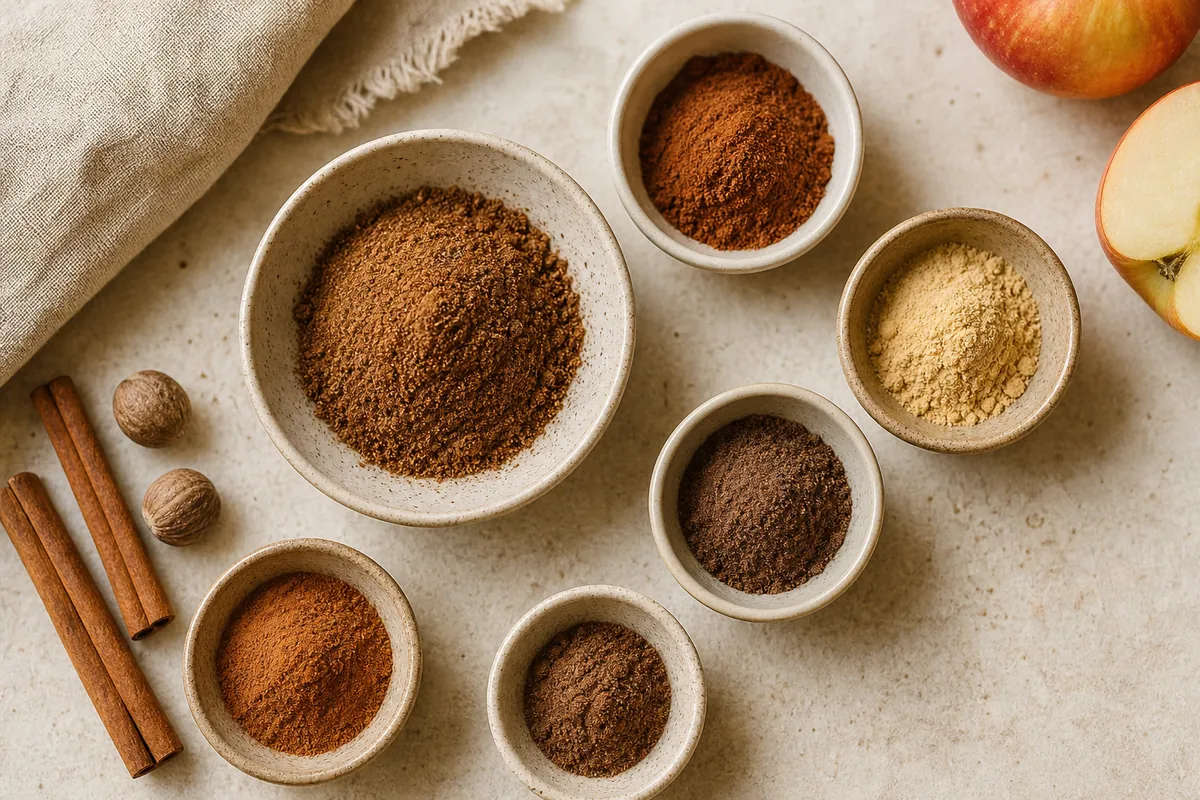
5 Best Apple Pie Spice Substitutes (Tested Swaps)
Ingredients
Equipment
Method
- Decide whether you need a blend (most baking) or a single-spice rescue (cinnamon-only).
- Replace apple pie spice using the listed ratio (use 1:1 for blends; use the ¾:1 for cinnamon-only).
- Mix the substitute into dry ingredients before adding liquids, or stir into melted butter/syrup if your recipe uses a spiced glaze.
- If the substitute includes ginger/allspice and your apples taste tart, you can slightly increase the sweet element (like sugar) to rebalance.
- Taste once the filling is warmed (or right before baking if your recipe allows). Adjust with a pinch more cinnamon or nutmeg rather than adding lots of spice.
Notes
- These swaps are designed for baking and stovetop warming (filling, compote, glaze).
- Most apple pie spice flavor comes from cinnamon + nutmeg + ginger; allspice adds the rounded "pie" character.
Tried this recipe?
Let us know how it was!
Carrie is a food writer and editor with more than 15 years of experience. She has worked for some of the biggest names in the food industry, including Bon Appétit, Food & Wine, and Martha Stewart Living.
As the Editor in Chief of EpicureDelight, Carrie oversees all of the content on the site. She also manages the team of contributing writers and editors, who help to create delicious recipes, helpful tips, and informative articles that you’ll find on the site.
A native of the Chicago area, Carrie is passionate about all things food. She loves trying new restaurants and experimenting with new recipes in her kitchen. She’s also a graduate of the Culinary Institute of America, so she knows a thing or two about food!



