
That dark, syrupy splash of balsamic does a lot of work in a recipe. It brings acidity, a quiet sweetness, and a glaze-like body that most other vinegars can't match on their own.
The right balsamic vinegar substitute depends on what your dish actually needs from it.
If the recipe needs tang for a salad dressing, almost any vinegar plus a small sweetener gets you there. If you're building a glaze or a reduction, you'll need something that can stand up to heat and concentrate.
If it's baking, you may only need the acid at all.
The best balsamic vinegar substitutes are red wine vinegar or sherry vinegar with a pinch of sugar - they cover the sweet-acid balance well. For dressings, apple cider vinegar plus honey works cleanly. For baking, lemon juice handles the acidity without complicating the flavor.
5 Best Balsamic Vinegar Substitutes (and the Ratios to Use)
Before you pick, match the substitute to your goal. Start with the ratio, then adjust sweetness or simmer time based on how close you want the finish to actual balsamic.
| # | Substitute | Best For | Ratio | Key Note |
|---|---|---|---|---|
| 1 | Red wine vinegar + sugar | Both | 1:1 | Add 1-2 teaspoon sugar per ¼ cup |
| 2 | Sherry vinegar + brown sugar | Both | 1:1 | Deeper aroma; reduce to thicken |
| 3 | Apple cider vinegar + honey | Both | 1:1 | Fruity and rounded, best cold |
| 4 | Champagne vinegar + simple syrup | Both | 1:1 | Bright and mild; syrup adds body |
| 5 | Rice vinegar + sugar | Both | 1:1 | Gentle tang; easiest to correct |
1. Red Wine Vinegar + Sugar
Red wine vinegar is the closest vinegar in character to balsamic. It has the same grape base and a similar acidity, just without the sweetness or body.
Add sugar and you're most of the way there for dressings, marinades, and sauces.
If you're curious how their flavors compare before committing to a swap, the details on red wine vinegar flavor are worth a quick read. For a deeper list of what else can stand in for red wine vinegar itself, the guide on best red wine vinegar alternatives covers the field well.
- Sweetening: Start with 1 teaspoon sugar per 1 tablespoon vinegar; taste before adding more
- For glazes: Simmer the mixture 3-4 minutes over medium heat until slightly reduced
- For dressings: Whisk at room temperature; no heat needed
Skip if you need a syrupy texture but can't simmer - without reduction this stays thin and sharp.
2. Sherry Vinegar + Brown Sugar
Sherry vinegar has a drier, nuttier profile than balsamic and sits closer to an aged flavor than red wine vinegar does. That makes it a strong option when a recipe needs depth rather than just tang.
Brown sugar is the right sweetener here because its molasses edge complements sherry's dry finish and pulls the flavor toward something that reads like aged balsamic. Use 1:1 in place of balsamic, with a pinch of brown sugar per tablespoon.
- Sweetening: Use ½ teaspoon brown sugar per 1 tablespoon sherry vinegar; adjust after tasting
- Reduction: Simmer 2-3 minutes for a thicker, glaze-like consistency
- Best uses: Braises, roasted vegetables, pan sauces
For more on replacing red wine in similar savory contexts, that guide covers overlapping use cases.
Skip if your recipe needs fruity balsamic notes specifically - sherry is earthy, not bright.
3. Apple Cider Vinegar + Honey
Apple cider vinegar is sharper and fruitier than balsamic, but honey rounds out the bite and adds a gentle caramel undertone that comes close to balsamic's mellow sweetness. This works especially well for cold applications.
Understanding apple cider vinegar in cooking gives you a fuller picture of how it behaves before you swap.
Bright ACV (no sweetener)
Works for: recipes that need bold acidity with no sweetness
Skip if: you need mellow balsamic depth - it will taste sharp and one-dimensional
ACV + Honey
Works for: dressings, marinades, light glazes, finishing sauces
Skip if: you're avoiding honey - use maple syrup or dissolve plain sugar instead
- Ratio: 1 tablespoon ACV + ½-1 teaspoon honey replaces 1 tablespoon balsamic
- Too sharp? Add honey in ¼ teaspoon increments; taste between additions
- For thickness: Reduce over low heat 2 minutes, stirring to prevent burning
4. Champagne Vinegar + Simple Syrup
Champagne vinegar is delicate. It has a clean, light acidity that won't overpower a dish the way a bolder vinegar might, which makes it a good choice for recipes where balsamic is meant to be subtle - think light vinaigrettes, poached fruit, or finishing a white fish.
The issue is body. Champagne vinegar is thin and quiet on its own, so simple syrup is necessary to restore some of the roundness balsamic carries.
If you happen to need a different swap for the vinegar itself, the guide on replacements for champagne vinegar is a handy reference.
- Syrup ratio: Mix 1 tablespoon champagne vinegar with 1 teaspoon simple syrup (1:1 sugar-to-water syrup)
- For more body: Simmer 1-2 minutes; it concentrates quickly so watch the heat
- Best uses: Light vinaigrettes, fruit sauces, finishing drizzles
Skip if your dish needs dark color - champagne vinegar won't bring the deep hue balsamic provides.
5. Rice Vinegar + Sugar
Rice vinegar has a gentle tang that's easy to work with. It lacks balsamic's grape-based depth, but that mildness is actually useful when you want the other flavors in the dish to stay in front.
It's the easiest swap to correct if you overshoot sweetness. If you ever need a different direction, a guide to alternatives to rice vinegar covers the options.
- Starting ratio: 1 tablespoon rice vinegar + ¾ teaspoon sugar replaces 1 tablespoon balsamic
- Too sweet? Cut sugar by half and taste; rice vinegar's mildness makes it forgiving
- For sauces: Simmer 3-4 minutes to concentrate; it reduces faster than darker vinegars
- Best uses: Stir-fry sauces, simple dressings, light marinades
Skip if you're trying to mimic aged balsamic's deep caramel character - this is closer to clean sweet-tang than anything approaching barrel depth.
Making the Swap Taste Like Balsamic
The three things balsamic actually brings to a dish are sweetness, acidity, and viscosity. When you understand which one matters most in a given recipe, the swap becomes straightforward.
For a full sense of what you're working to replicate, the page on tasting balsamic vinegar breaks down its flavor profile clearly. Good information on storing apple cider vinegar is also worth bookmarking if ACV is your regular go-to swap.
- Taste first: Before simmering or adding sweetener, taste your substitute straight - identify whether it's too sharp, too thin, or needs sweetness
- Simmer for viscosity: For any glaze or reduction, simmer the vinegar+sweetener mixture 2-4 minutes on medium-low; the balsamic "gloss" comes from concentration, not just sugar
- For baking: Keep the swap at the same volume as the original; baking acid ratios are sensitive, so don't add extra to compensate for flavor
Frequently Asked Questions
Use 1 tablespoon red wine vinegar plus 1 teaspoon sugar for every 1 tablespoon balsamic. Apple cider vinegar with ½ teaspoon honey works just as well for a fruitier finish.
Combine vinegar and sweetener in a small saucepan, then simmer on medium-low 3-4 minutes until reduced by about a third. It thickens more as it cools.
Yes, at a 1:1 ratio. Add ½ teaspoon sugar per tablespoon to approximate balsamic's mild sweetness, though the flavor won't match closely.
Add sweetener in small increments - ¼ teaspoon at a time - and taste after each addition. A brief simmer also mellows sharpness by concentrating the mixture.
Sherry vinegar with brown sugar is your best option. The brown sugar adds color and a molasses-like depth that comes closest to aged balsamic's darker character.
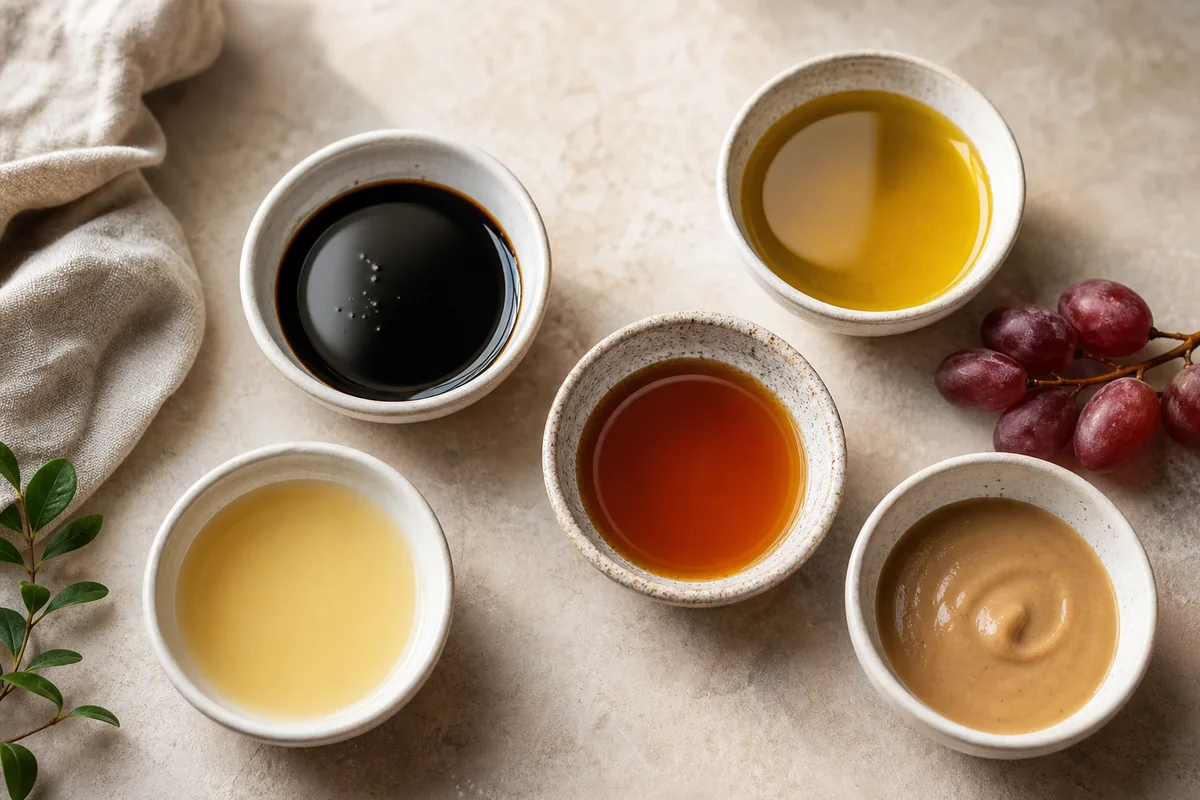
5 Best Balsamic Vinegar Substitutes (with Ratios)
Ingredients
Equipment
Method
- Identify your goal: sweetness and dark glaze, tang for dressings, or acid for baking.
- Start with the listed ratio, then adjust after 1 taste (sweetness) or 1 minute (if you simmer).
- If your substitute is thinner or sharper (vinegar-only), add a small amount of sugar/honey and stir to dissolve.
- For sauces that need a balsamic-like finish, simmer the substitute 2-4 minutes to concentrate.
- For baking, keep the swap equal to the recipe's vinegar amount, then taste the batter/sauce if time allows.
Notes
- Ratios assume you're replacing the vinegar's acid/tang first, then add sweetness to match balsamic's mellow profile.
- If you need balsamic thickness, simmer a vinegar+sweetener mix 2-4 minutes.
Tried this recipe?
Let us know how it was!
Carrie is a food writer and editor with more than 15 years of experience. She has worked for some of the biggest names in the food industry, including Bon Appétit, Food & Wine, and Martha Stewart Living.
As the Editor in Chief of EpicureDelight, Carrie oversees all of the content on the site. She also manages the team of contributing writers and editors, who help to create delicious recipes, helpful tips, and informative articles that you’ll find on the site.
A native of the Chicago area, Carrie is passionate about all things food. She loves trying new restaurants and experimenting with new recipes in her kitchen. She’s also a graduate of the Culinary Institute of America, so she knows a thing or two about food!



