
Champagne vinegar has a clean, delicate tang that makes it popular in vinaigrettes and light sauces. It's mild, barely fruity, and it doesn't bully other flavors.
When your bottle runs out mid-recipe, the good news is that several pantry vinegars come close enough to keep your dish on track.
The best champagne vinegar substitute matches that mild acidity first. Fruitiness and depth are secondary concerns.
Use whichever option fits your recipe, then taste and adjust before serving.
White wine vinegar is the closest swap at 1:1. Apple cider vinegar adds mild fruitiness and works in most dressings. Rice vinegar gives gentler acidity. Sherry vinegar brings nutty depth for marinades. Distilled white vinegar works at ¾ the amount. Taste and adjust salt or sweetness after any swap.
5 Best Champagne Vinegar Alternatives (Trustworthy Options)
These five swaps cover nearly every recipe that calls for champagne vinegar. The table below is your quick reference before you pick one.
| # | Substitute | Best For | Ratio | Key Note |
|---|---|---|---|---|
| 1 | White Wine Vinegar | Both | 1:1 | Closest flavor match |
| 2 | Apple Cider Vinegar | Both | 1:1 | Mild apple fruitiness |
| 3 | Rice Vinegar | Cooking | 1:1 | Mildest bite of all |
| 4 | Sherry Vinegar | Cooking | 1:1 | Nutty, mellow depth |
| 5 | Distilled White Vinegar | Cooking | ¾:1 | Dilute before using |
1. White Wine Vinegar
White wine vinegar is the most straightforward swap here. It shares champagne vinegar's clean, gentle tang and mild acidity, and most tasters won't notice the difference in a finished dish.
Use it 1:1 in vinaigrettes, pan sauces, and pickling brines. It also holds up well when a recipe calls for reducing the vinegar slightly, since it doesn't sharpen dramatically under heat.
If you're already browsing picking a sharper vinegar instead, white wine vinegar is the gentler path worth trying first.
White Wine Vinegar
Works for: Vinaigrettes, light pan sauces, marinades, pickling brines, baking when a neutral tang is needed
Skip if: Your recipe depends on champagne vinegar's subtle fruity character and you can't add a small sweetener to compensate
- Dressings: Use 1:1 with no other changes; the result is nearly indistinguishable.
- Sauces: Add it off heat or toward the end of cooking to preserve brightness.
- Baking: Works as a direct swap where acidity activates baking soda.
2. Apple Cider Vinegar
ACV brings mild fruitiness along with its acidity, which makes it a natural fit for dressings and marinades that can handle a hint of apple warmth. It's not identical to champagne vinegar, but it's close enough that most recipes still land well.
If you're unsure how pronounced the apple flavor will be, understanding that mild fermented character helps you decide whether the swap fits your dish. A small pinch of salt usually brings everything back into balance.
- Vinaigrettes: Use 1:1; add a touch of honey if the apple note feels too forward.
- Marinades: Works well with poultry and pork, where fruitiness is welcome.
- Baking: Mix into wet ingredients at 1:1; the apple note fades during baking.
- Skip if: You're making a delicate butter sauce or cream-based dressing where any apple character will stand out.
3. Rice Vinegar
Rice vinegar is the mildest option on this list. Its acidity is lower and softer than most Western vinegars, which makes it a safe swap when you want brightness without any sharp vinegar bite.
Use it 1:1 as a champagne vinegar alternative in dressings, slaws, and light marinades. If you're reaching for seasoned rice vinegar, reduce added salt and any sugar in the recipe, since seasoned versions already contain both.
You can check on this mild pantry staple's condition before using, since older bottles can turn flat.
Rice vinegar won't give you the same "vinegar snap" that champagne vinegar has. It's better suited to recipes where gentleness is the goal.
Skip if: The recipe depends on a more assertive acidity to balance fat or richness, like a heavy cream-based dressing.
4. Sherry Vinegar
Sherry vinegar is mellow, slightly nutty, and a bit more complex than champagne vinegar. It's not a neutral swap, but in marinades and reductions it can make the final dish taste more layered.
Start at 1:1, then taste immediately. If it reads too dark or round for what you need, stir in a teaspoon of water or broth from the recipe to soften it.
Sherry Vinegar
Works for: Marinades, warm vinaigrettes, roasted vegetable dressings, pan reductions
Skip if: You need a clean, neutral tang for a pale or very delicate dressing where the amber color or nutty note would show
- Marinades: Pairs well with red meat, mushrooms, and roasted alliums.
- Warm vinaigrettes: Adds complexity that plain champagne vinegar can't match.
- Reductions: Use 1:1, then dilute by 1 teaspoon if the flavor concentrates too strongly.
5. Distilled White Vinegar
Distilled white vinegar is sharper and more aggressive than champagne vinegar. It works in a pinch, but it needs adjustment before you add it to anything delicate.
- Starting ratio: Use ¾ of the called-for amount, then taste before adding more.
- Dressings: Dilute with 1 teaspoon of water per tablespoon to soften the sharpness.
- Marinades: Works fine at ¾ ratio; the other marinade ingredients absorb the edge.
- Baking: Use ¾ ratio and add a small pinch of sugar to balance.
| Use | Ratio | Notes |
|---|---|---|
| Vinaigrette (1 tbsp) | ¾ tbsp | Add ¼ teaspoon water + pinch of sugar |
| Marinade (2 tbsp) | 1½ tbsp | Other flavors absorb the sharpness |
| Baking (1 tsp) | ¾ tsp | Mix into wet ingredients; add tiny pinch of sugar |
Skip if: Your recipe is flavor-sensitive and cannot tolerate a sharper vinegar note, like a delicate béarnaise or a light fruit dressing.
Making Champagne Vinegar Substitutes Work
Swapping vinegars is simple, but the result depends on tasting and adjusting rather than assuming the sub works perfectly at the listed ratio. Every swap introduces a slightly different acidity level, and some bring flavor notes that your original recipe didn't account for.
- Match acidity first: Start with white wine vinegar or ACV for the mildest adjustments. Reach for distilled white vinegar only when nothing else is available.
- Adjust in small increments: A pinch of salt softens sharpness. A small amount of honey or sugar corrects a swap that reads too sour. Add ½ teaspoon at a time.
- Time your addition in baking: Dissolve any acidic swap into wet ingredients before combining with dry ones. This keeps leavening even and prevents dense spots.
Let dressings and marinades rest for 5 to 10 minutes after mixing. The acidity softens as the liquid hydrates the other ingredients, and what tasted sharp at first often mellows on its own.
If you're working with ACV and want other options, browsing choosing a milder acid swap gives you additional ideas when the apple note is too much.
The same principle applies when choosing instead of champagne vinegar in cooked sauces. Add the swap near the end of cooking so heat doesn't concentrate the acidity too far.
For context on gentler options, the mild vinegar picks for rice vinegar are worth a look too.
Frequently Asked Questions
White wine vinegar is the closest match at 1:1. It has a clean, gentle tang that stays nearly identical to champagne vinegar in finished vinaigrettes.
Yes, but start at ¾ of the amount and dilute slightly with water. Distilled white vinegar is sharper and needs adjustment to avoid overpowering the dish.
No dilution needed for either. Use both at 1:1, but reduce added salt if you're using seasoned rice vinegar.
It provides acidity that activates baking soda, so it works structurally. The flavor differs since lemon juice doesn't have vinegar's fermented tang.
Add a small pinch of salt or ½ teaspoon of honey and stir well. Let the dressing or marinade rest 5 minutes before tasting again.
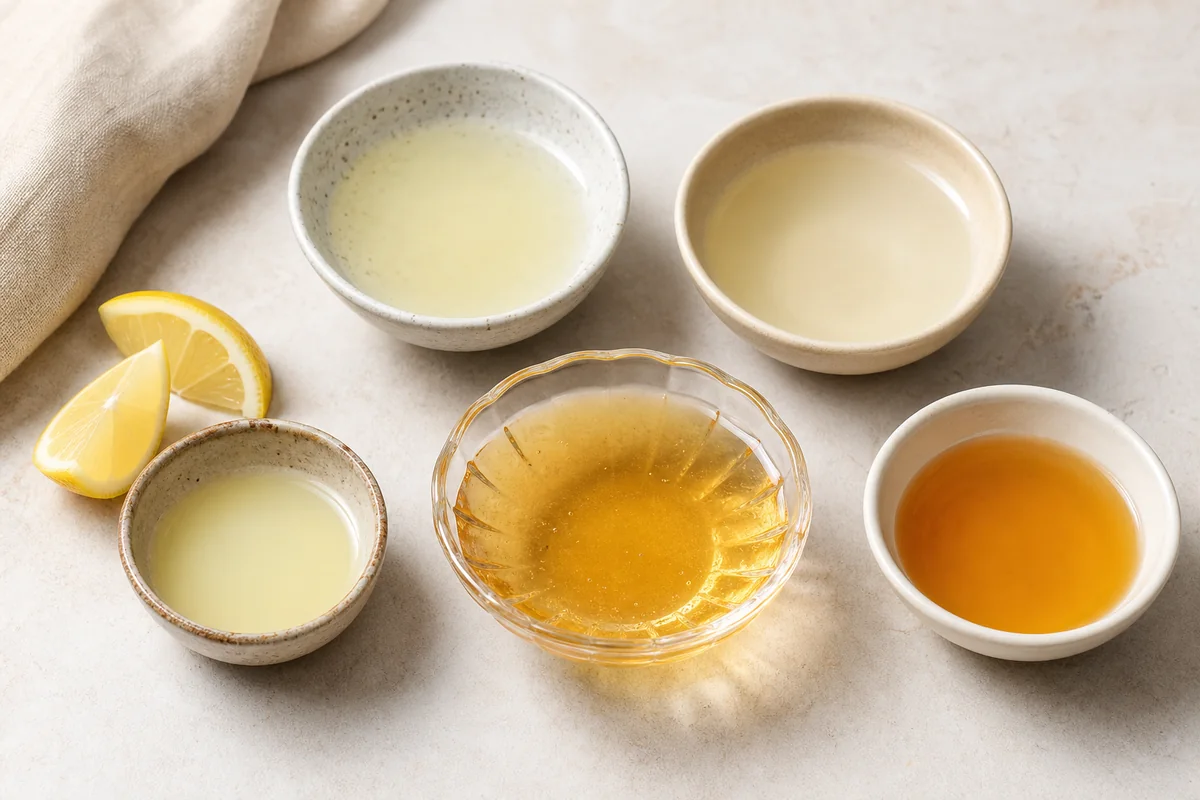
5 Best Champagne Vinegar Substitutes You Can Trust
Ingredients
Method
- Start with the substitute closest to champagne vinegar’s mild, slightly fruity tang (white wine vinegar or ACV).
- Use the listed ratio; if using a sharper vinegar (like distilled white), start with slightly less to avoid overpowering acidity.
- Taste after mixing into the dish (especially dressings and marinades) and correct balance with a small pinch of salt or a tiny amount of sweetness.
- For baking, dissolve/dilute acidic swaps evenly in wet ingredients so the batter rises predictably.
- Let flavors sit for 5–10 minutes before judging—vinegar brightness softens as it hydrates.
Notes
- Champagne vinegar is valued for mild acidity and a slightly fruity finish—avoid highly sharp vinegars unless diluted.
- If your recipe relies on the vinegar’s flavor (not just acidity), prefer white wine vinegar, ACV, or sherry vinegar.
Tried this recipe?
Let us know how it was!
Carrie is a food writer and editor with more than 15 years of experience. She has worked for some of the biggest names in the food industry, including Bon Appétit, Food & Wine, and Martha Stewart Living.
As the Editor in Chief of EpicureDelight, Carrie oversees all of the content on the site. She also manages the team of contributing writers and editors, who help to create delicious recipes, helpful tips, and informative articles that you’ll find on the site.
A native of the Chicago area, Carrie is passionate about all things food. She loves trying new restaurants and experimenting with new recipes in her kitchen. She’s also a graduate of the Culinary Institute of America, so she knows a thing or two about food!



