
No birds eye chili in the pantry and a stir-fry waiting on the stove. That's a fixable problem, as long as you pick the right birds eye chili substitute for the job.
These small chilies sit between 50,000 and 100,000 Scoville units. That's serious heat, so the substitution matters more than it does with mild peppers.
Match heat level first, flavor second.
Fresh form is not the same as dried or powder. A recipe that wants minced fresh chili behaves differently from one that can absorb a pinch of flakes.
Keep that in mind as you scan the list below.
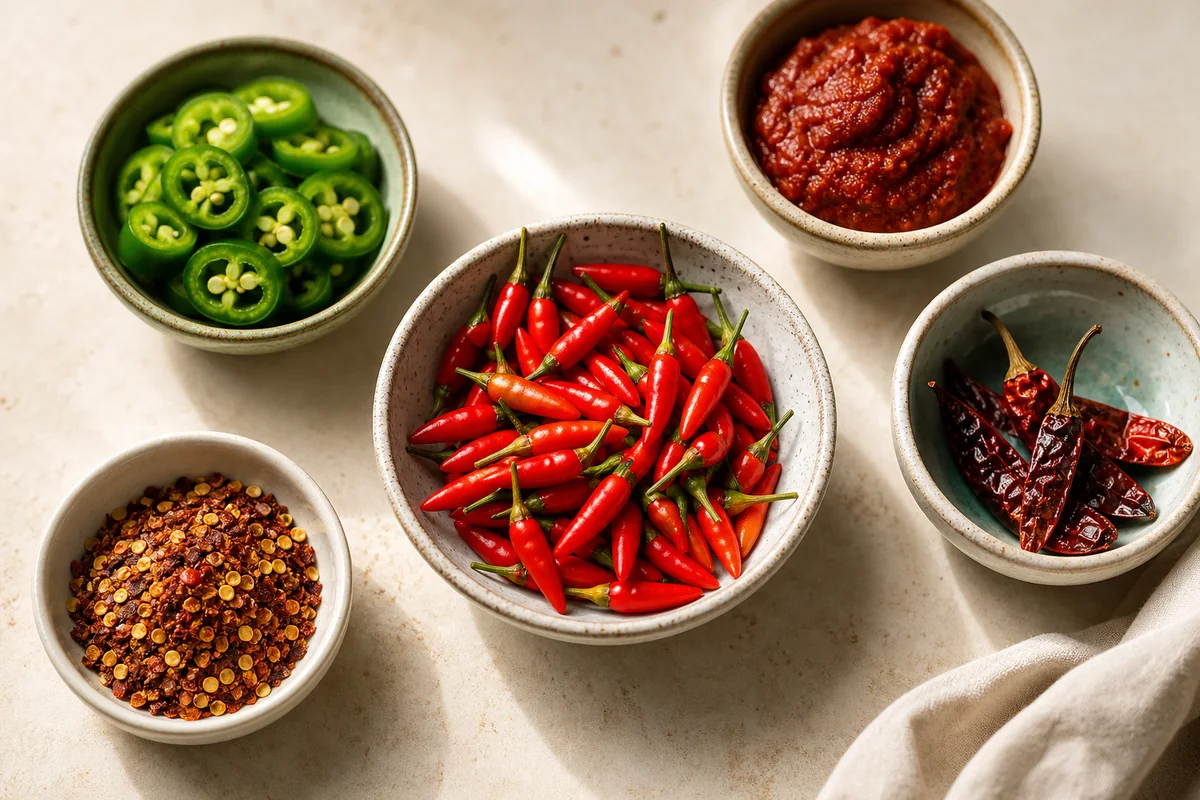
Thai chili is the closest fresh swap, matching heat and texture almost exactly. Serrano works if thai chili isn't available. For baking or sauces without texture, use dried flakes or cayenne powder. A pepper-forward hot sauce is the emergency option when you have no whole peppers at all.
5 Birds Eye Chili Substitutes Ranked by Heat Match
The table below maps each substitute to its best use case and tells you how far to scale before tasting. Heat concentration changes significantly between fresh, flake, and powder forms.
| # | Substitute | Best For | Ratio | Key Note |
|---|---|---|---|---|
| 1 | Thai chili (fresh, minced) | Both | 1:1 | Closest fresh match |
| 2 | Serrano pepper (fresh, minced) | Both | 1:1 | Slightly milder, citrusy |
| 3 | Dried chili flakes | Sauces | ½:1 | Bloom in oil first |
| 4 | Cayenne powder | Baking | ¼:1 | Even heat, no texture |
| 5 | Hot sauce (pepper-forward) | Both | ½:1 | Watch vinegar and salt |
1. Thai Chili (Fresh, Minced)
Thai chili pepper sits almost exactly where birds eye chili does on the heat scale. The flavor is similar too: sharp, clean, and hot without much fruitiness.
Mince it as finely as you would birds eye chili and add at the same point in cooking. The swap is genuinely 1:1.
- Best use: Stir-fries, curries, nam prik, and any dish where whole or minced chili pieces are visible
- Scaling: Start at 1:1, then add more only after tasting at serving temperature
- Prep tip: Remove seeds if you want slightly less burn, keeping all the chili flavor
- Fresh only: This advice applies to fresh thai chili; dried thai chili flakes are a different form and should be treated like other dried flakes
Skip if: You're replacing birds eye chili in baking. Fresh minced chili adds moisture and visible green or red pieces, which can look and feel out of place in a batter.
2. Serrano Pepper (Fresh, Minced)
Serrano is easier to find at most grocery stores and lands at about 10,000 to 23,000 Scoville units. That's noticeably milder than birds eye chili, so you'll want to use slightly more, not less.
The flavor skews brighter and a little grassy. In a coconut curry or chili oil, that difference mostly disappears.
In a simple dipping sauce with few other flavors, it's more detectable.
- Ratio: Use about 1.5 serrano peppers for every 1 birds eye chili called for
- Best use: Salsas, marinades, Thai-style sauces, and fresh garnishes where texture matters
- Mince finely: The thicker flesh means larger chunks if you chop roughly; fine mincing blends into sauces better
Skip if: Your recipe is built around the sharp heat of birds eye chili and uses minimal other spices. Serrano's milder, brighter notes may dominate in a simpler preparation.
3. Dried Chili Flakes
Dried chili flakes work best when you're building heat into a cooked sauce, stir-fry, or marinade. They dissolve into oil or liquid over heat, spreading warmth evenly without adding fresh pepper texture.
Blooming makes a real difference here. Add flakes to a small amount of hot oil for 30 to 60 seconds before adding other ingredients. It rounds out the flavor and reduces the slight bitterness that can come from dry-toasted or raw flakes. Cayenne in flake form works the same way if birds eye flakes aren't available.
Skip if: You don't have oil or time to bloom spices. In batters or wet mixes without a blooming step, flakes can taste sharp and uneven.
4. Cayenne Pepper (Powder)
Cayenne pepper is the most practical option when a recipe needs heat with no visible pepper pieces. It disperses evenly into batters, doughs, and thick sauces, making it the go-to for baking applications.
Cayenne Powder
Works for: Baking, spice rubs, smooth sauces, any dish needing invisible, even heat
Skip if: The recipe needs visible chili texture or the fresh-pepper bite that minced chilies provide
- Ratio: Start with ¼ teaspoon cayenne for every 1 birds eye chili, then taste before adding more
- When to add: Stir into dry ingredients for baking, or add to hot oil early when cooking on the stove
- Heat note: Cayenne is hotter per gram than birds eye chili by weight, so underestimate first and build up
- Texture: Powder fully disappears into liquid and fat, leaving no trace of pepper
Skip if: Your recipe needs actual chili texture. Cayenne is heat only, with none of the bite or visual contrast of a minced fresh pepper.
5. Hot Sauce (Pepper-Forward)
A good pepper-forward hot sauce is the "I have nothing else" option, and it works better than most people expect. The key is choosing one where the first ingredient is chilies, not vinegar or sugar.
The tradeoff is liquid volume and added acidity. Hot sauce is wet, salty, and often vinegar-bright.
Accounting for that before you pour is what makes the swap work.
| Use | Ratio | Notes |
|---|---|---|
| Stir-fry or curry | 1 teaspoon per chili | Add early so vinegar cooks off |
| Dipping sauce | ½ teaspoon per chili | Balance with a pinch of sugar |
| Marinade | 1 teaspoon per chili | Reduce other acid (lime/vinegar) by same amount |
| Baking | ½ teaspoon per chili | Reduce other liquid by equal amount |
A hot sauce blend made primarily from thai-style or habanero peppers is the closest in character to birds eye chili. Stay away from sweet chili sauces entirely.
They are built around sweetness, not heat, and will change your dish completely.
Consider storing hot sauce properly once opened. It keeps much longer than fresh chilies, which makes it a reliable pantry backup for recipes that only need occasional heat.
Skip if: Your recipe is sweet or delicate. Hot sauce adds vinegar and salt that will shift the balance in ways that are hard to reverse after cooking.
Making Any Birds Eye Chili Substitute Taste Right
The single biggest mistake cooks make with chili substitutes is adding the full amount at the start. Heat compounds as it cooks, so the right move is always to add less than you think, simmer or mix, then taste before adding more. Serrano pepper is a good example of this: it tastes noticeably milder raw but heats up considerably once it's cooked into oil or sauce.
- Start under your target: Use 75% of the stated substitute amount, cook fully, then taste before adjusting
- Bloom dried forms first: Flakes and powder need 30 to 60 seconds in hot oil to open up fully and avoid raw, harsh heat
- Re-balance after adding: Heat can make a dish taste less sweet and more sour; a small pinch of sugar or a drop of extra lime juice often fixes an off-balance result
Frequently Asked Questions
No. Dried flakes are more concentrated than fresh chili. Start with half the amount of flakes, taste after cooking, then add more gradually if needed.
Use cayenne powder. It disappears into the batter without adding moisture or visible pieces, and ¼ teaspoon replaces roughly one birds eye chili.
Thai chili is closer. It overlaps almost directly with birds eye chili on the Scoville scale. Serrano is milder and needs a higher quantity to match.
Use less of it and reduce any added sugar in the recipe. A sweetened hot sauce will shift the dish's balance, so compensate before the sauce hits the pan.
Add fat, starch, or acid to dilute the heat. Coconut milk, a spoonful of rice, or a squeeze of lime can all pull a too-spicy dish back into balance.
5 Best Birds Eye Chili Substitutes for Any Recipe
Ingredients
Equipment
Method
- Match the form: use fresh peppers for dishes where you want visible chili bits, or use powder/flakes when you need heat with no texture.
- Start slightly under the heat target (especially with flakes, powder, and hot sauce), then taste after simmering or mixing.
- If using dried flakes or powder, bloom it briefly in hot oil (or add later for baking) so the flavor rounds out.
- For spicy dishes, adjust in small increments: add more chili gradually rather than dumping in a full extra pinch.
Notes
- Heat varies by batch of birds eye chili—taste and adjust.
- If your recipe includes sweet or acidic elements, under-swap chili at first to avoid overpowering.
Tried this recipe?
Let us know how it was!
Carrie is a food writer and editor with more than 15 years of experience. She has worked for some of the biggest names in the food industry, including Bon Appétit, Food & Wine, and Martha Stewart Living.
As the Editor in Chief of EpicureDelight, Carrie oversees all of the content on the site. She also manages the team of contributing writers and editors, who help to create delicious recipes, helpful tips, and informative articles that you’ll find on the site.
A native of the Chicago area, Carrie is passionate about all things food. She loves trying new restaurants and experimenting with new recipes in her kitchen. She’s also a graduate of the Culinary Institute of America, so she knows a thing or two about food!



