
That sharp, tangy bite Thai chili peppers bring to a stir-fry or dipping sauce is hard to fake. But there are six solid options that get you close, and knowing which one fits your recipe makes all the difference.
The swaps below are grouped by heat match, fresh vs. powder form, and flavor impact.
Thai chili pepper substitutes fall into three buckets: fresh chilies with similar heat, powders and flakes for pantry emergencies, and pastes that add heat plus extra flavor. Start with the closest heat match and adjust from there. Heat intensity shifts with variety and ripeness, so always taste before adding more.
Thai chili peppers have sharp, bright heat that's hard to replicate exactly. Your best fresh swap is Thai red chili or bird's-eye chili. For pantry substitutes, use cayenne powder at ¼ the amount or crushed red pepper flakes at ⅓ the amount. Harissa paste works in sauces but adds extra spice notes.
5 Best Thai Chili Pepper Substitutes Ranked by Heat
A quick scan of the table below tells you the starting ratio and best use for each swap. Fresh chilies go first because they match texture and heat-release timing.
Powders and pastes follow, and those need more care since concentrated heat adds up fast.
| # | Substitute | Best For | Ratio | Key Note |
|---|---|---|---|---|
| 1 | Thai Red / Bird's-Eye Chili | Both | 1:1 | Closest heat and size |
| 2 | Serrano Chili | Both | ¾:1 | Often hotter; seed first |
| 3 | Jalapeño (seeded) | Savory | 1:1 | Milder; remove seeds |
| 4 | Cayenne Powder | Both | ¼:1 | No texture; add slowly |
| 5 | Crushed Red Pepper Flakes | Both | ⅓:1 | Variable heat by brand |
Fresh swaps preserve the chili's texture and the way heat blooms in hot oil. Powder and flakes concentrate heat and skip the aroma that fresh chilies bring to the pan.
1. Thai Red Chili or Bird's-Eye Chili
These are the closest relatives to the Thai chili peppers called for in most recipes. Size, pungency, and heat-release timing are nearly identical in stir-fries and quick sauces.
Understanding these sharp, tangy notes helps you decide how thinly to slice and when to add the chili. Cutting thinner releases heat faster, which matters a lot in fast-cooking dishes.
- When it works: Any recipe that calls for whole or sliced fresh Thai chilies
- How to cut: Match the slice thickness in the original recipe; thinner = faster heat bloom
- Adjusting heat: Use fewer chilies if yours are unusually bright red and ripe
- Seeds: Leave in for full heat, remove for a slightly gentler result
Skip if: your dish needs milder heat overall. In that case, a seeded jalapeño is a better call.
2. Serrano Chili
Serrano is a strong heat match and often the best fresh swap when bird's-eye chilies aren't available.
Serranos can actually run hotter than Thai chilies, so start with about ¾ of the amount your recipe calls for. You can always add more after the first taste.
If you're choosing a milder pepper for sensitive palates, jalapeño is the safer pick.
- Seed removal: Pull out seeds and membranes to lower heat while keeping bright pepper flavor
- Best uses: Stir-fries, fresh salsas, dipping sauces, and noodle soups
- Starting point: Use ¾ of the called-for amount, then add the remaining ¼ only after tasting
Skip if: your recipe already has multiple spicy components. The heat can compound quickly.
3. Jalapeño (Fresh, Seeded)
Jalapeño is milder and greener in flavor than a Thai chili, but it's a reliable swap when you need fresh-chili texture without aggressive heat. Seeding is the key move here.
The seeds and inner membrane hold most of the heat, so removing them brings jalapeño into a gentler, more balanced range. For bright, late-added heat, picking the right mild pepper matters as much as the cutting style.
- Best uses: Salads, salsas, creamy sauces, and quick stir-fries
- Seed strategy: Remove all seeds and membranes for medium heat; leave half in for more kick
- Timing: Add near the end of cooking to keep a fresh, bright heat rather than a cooked, muted one
- Dice finely: The larger size means you need smaller pieces to match Thai chili's quick heat release
Skip if: the recipe depends on the chili's small size and fast heat release in oil. You'll need to dice much finer than usual.
4. Cayenne Pepper (Powder)
Cayenne is pure concentrated heat, so it overshoots fast if you add too much at once. Start at ¼ teaspoon for every Thai chili pepper called for and taste before adding more.
Cayenne Powder
Works for: sauces, marinades, soups, and baked goods where fresh chili texture isn't needed
Skip if: your recipe depends on chili texture or fresh pepper aroma (use flakes or fresh pepper instead)
Understanding dry spice heat profiles helps you judge how much to use before you commit. Mix the cayenne into the dish's liquid base first so it distributes evenly before you taste.
- Starting ratio: ¼ teaspoon cayenne per Thai chili pepper, then build up
- Mix first: Stir into sauce or broth before tasting; hot spots form if you add to dry ingredients
- No texture: If your recipe needs chili pieces, add a pinch of cayenne to flakes instead
5. Crushed Red Pepper Flakes
Flakes are the most common pantry backup, and they work well when you bloom them briefly in warm oil. That step opens up their heat and helps it distribute through the dish evenly.
Knowing how storing dried flakes affects their potency saves you from under- or over-seasoning. A fresh jar is meaningfully hotter than one that's been open for a year.
- Starting amount: Use ⅓ the number of Thai chili peppers called for, measured in teaspoons
- Blooming: Add to warm (not screaming hot) oil for 20-30 seconds before adding other ingredients
- Adjust after tasting: Add more only once the dish is fully mixed and you've tasted the baseline heat
- No fresh texture: Flakes won't replicate the bite of sliced chili, so pair with an extra texture element if needed
Skip if: you need consistent, predictable heat. Flake strength is too variable for precision cooking.
Making Thai Chili Pepper Substitutes Work in Any Recipe
The first question to settle is whether your recipe needs fresh-chili texture or just heat. Fresh swaps (serrano, jalapeño) behave like the original.
Concentrated substitutes (cayenne, flakes, harissa) need smaller starting amounts and gradual adjustment. If you're working with choosing between heat-only powders, cayenne is the most consistent option.
For spiced pastes, check paste-based heat swaps before you commit to a larger amount.
- Start at the low end of the ratio for concentrated substitutes and taste after the dish is fully mixed
- Match cutting size for fresh swaps so heat releases at the same pace as Thai chili would
- Add timing matters: fresh chilies added early lose sharpness; add near the end if you want that bright bite
Frequently Asked Questions
Thai red chili or bird's-eye chili is the closest 1:1 swap. If those aren't available, use serrano at ¾ the called-for amount and taste before adding more.
Start with ¼ teaspoon of cayenne per Thai chili pepper and stir it into the dish's liquid base first. Taste after mixing and add more in small pinches only if needed.
Yes, but dice it finely so it releases heat quickly, similar to sliced Thai chili. Remove the seeds and membranes to keep the heat at a manageable level.
They can be, depending on the brand and freshness. Start with ⅓ the equivalent amount, bloom them in warm oil, and adjust after tasting the finished dish.
Harissa adds heat plus earthy spices like cumin and coriander, so the flavor direction shifts noticeably. Dilute it into the sauce liquid first and balance with a small amount of acid or sweetness.
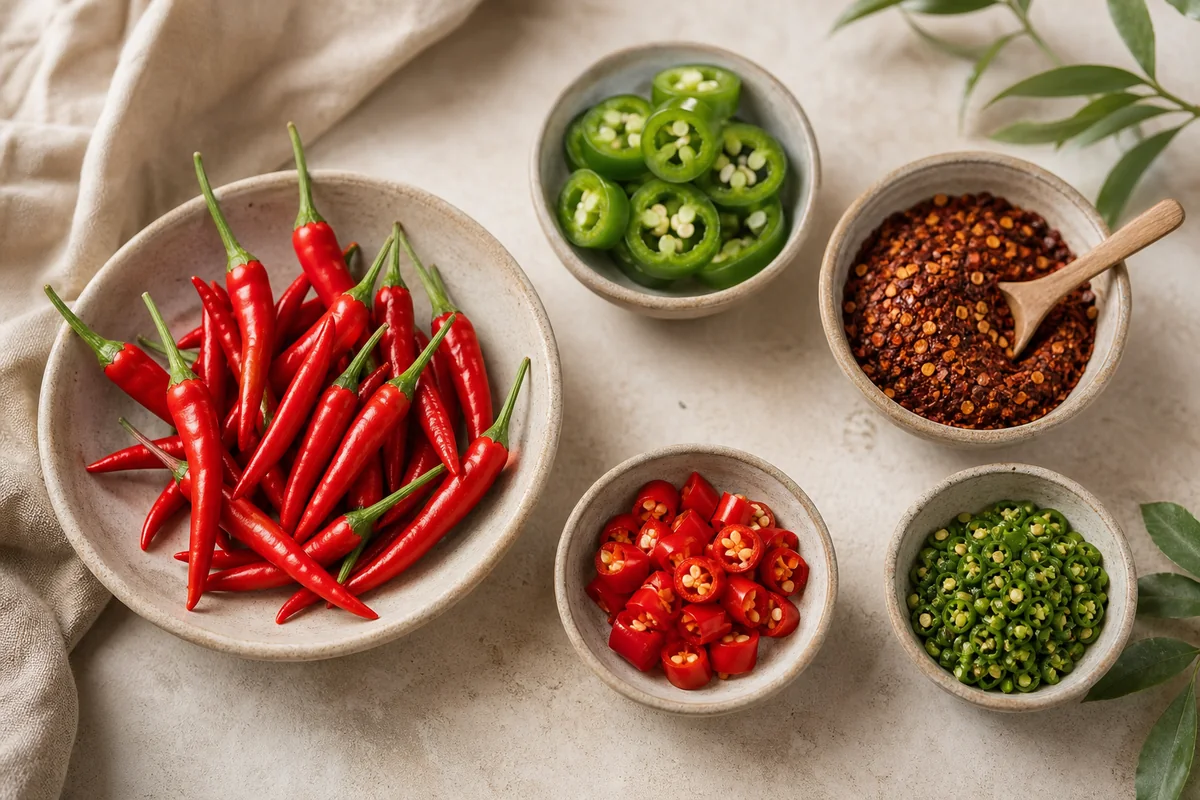
5 Best Thai Chili Pepper Substitutes (Easy Swaps)
Ingredients
Method
- Identify your recipe form: fresh chili vs sliced/chopped, or powdered/flaked heat (texture won’t be identical).
- Match heat first using the ratios: start at the lower end for cayenne/flakes/harissa, then increase in small steps.
- If your substitute is a paste (harissa), stir it into a liquid base (sauce, broth, or dressing) before adding to prevent hot-spots.
- Taste as you go: after simmering or mixing, add more heat only after the dish’s acid/sweet elements are balanced.
- For fresh-chili swaps, match cutting size (same slice/chop thickness) so it releases heat at the same pace.
Notes
- Ratios are starting points—heat varies by chili variety and freshness.
- Powder/flakes lack chili texture; if texture matters (stir-fries/salsas), choose fresh options instead.
Tried this recipe?
Let us know how it was!
Carrie is a food writer and editor with more than 15 years of experience. She has worked for some of the biggest names in the food industry, including Bon Appétit, Food & Wine, and Martha Stewart Living.
As the Editor in Chief of EpicureDelight, Carrie oversees all of the content on the site. She also manages the team of contributing writers and editors, who help to create delicious recipes, helpful tips, and informative articles that you’ll find on the site.
A native of the Chicago area, Carrie is passionate about all things food. She loves trying new restaurants and experimenting with new recipes in her kitchen. She’s also a graduate of the Culinary Institute of America, so she knows a thing or two about food!



