
That savory, almost funky punch from black bean sauce is hard to fake. It's salty, faintly earthy, and carries a fermented depth that most pantry sauces don't quite replicate on their own.
Knowing which black bean sauce substitute matches the flavor role in your dish is what separates a successful swap from a flat one.
Black bean sauce usually does three jobs at once. It salts the dish, adds fermented complexity, and sometimes adds a mild sweetness depending on the brand.
Your substitute only needs to match whichever of those matters most in your recipe.
Black bean sauce is salty, fermented, and earthy with a sometimes-sweet edge. The closest swaps are fermented black bean paste and a soy-miso blend. For sweet-umami needs, oyster sauce or hoisin work well. A simple soy sauce with brown sugar covers fast pantry emergencies.
5 Best Black Bean Sauce Substitutes, Ranked by Flavor Match
Each substitute below is matched to where it performs best. The table gives you the ratio at a glance, then the sections below explain exactly how to use each one.
| # | Substitute | Best For | Ratio | Key Note |
|---|---|---|---|---|
| 1 | Black bean paste (fermented) | Both | 1:1 | Blend smooth first |
| 2 | Soy sauce + miso paste | Both | 1:1 | Dilute before heating |
| 3 | Oyster sauce | Cooking | ¾:1 | Thin and reduce sugar |
| 4 | Hoisin sauce | Cooking | ½:1 | Simmer 30-60 seconds |
| 5 | Soy sauce + brown sugar | Both | 1:1 | Add sugar slowly |
1. Black Bean Paste (Fermented)
Black bean paste is the most direct swap here, since it shares the same fermented base as black bean sauce. The main difference is texture. Paste is thicker and chunkier, so you'll need to blend it before using it as a sauce replacement.
Add a teaspoon of water (or a splash of broth) and blend or mash until smooth. If the paste tastes very salty on its own, thin it further rather than adding more liquid sweetener.
Fermented Black Bean Paste
Works for: Stir-fries, noodle sauces, marinades, any dish where fermented bean flavor is the point
Skip if: You want a mild, not-too-funky flavor - this paste is intense and can overpower delicate proteins
- Texture: Blend with 1-2 teaspoons of water until it reaches a pourable consistency
- Too salty: Add a small splash of unsalted broth to broaden the flavor without losing body
- Best dishes: Mapo tofu, black bean noodles, stir-fried beef or shrimp
- Sweetness: If your original recipe expects a sweet edge, add a tiny drop of honey or sugar after blending
2. Soy Sauce + Miso Paste
This blend is the best option when you don't have fermented bean ingredients but still need that savory, slightly funky backbone. Miso adds fermented complexity that plain soy sauce alone can't deliver.
The combination works especially well in noodle sauces and marinades.
Mix equal parts soy sauce and white or yellow miso, then thin the blend with a little water until it pours like black bean sauce. Skip this for baking unless you can taste-test the saltiness first, since miso brands vary significantly in salt level.
- Mixing order: Stir miso into soy sauce first, then add water 1 teaspoon at a time
- Target viscosity: It should coat the back of a spoon lightly, not sit in a thick clump
- Best uses: Stir-fry glazes, noodle sauces, vegetable marinades
- Color note: White miso keeps the sauce lighter; red miso deepens both color and intensity
3. Oyster Sauce
Oyster sauce lands closer to black bean sauce than most people expect. It has real umami depth and a glossy body that coats stir-fry ingredients well.
The catch is that it reads sweeter and has more of a seafood-umami quality than a bean-fermented one.
- Thickness: Thin with 1 teaspoon of water per tablespoon to match black bean sauce's consistency
- Sweetness: Cut or skip any added sugar the recipe already calls for
- Best dishes: Glossy stir-fries with beef or bok choy, noodle toss sauces
Skip it if you need that distinctly fermented bean flavor - oyster sauce leans seafood-umami and won't deliver bean-forward depth.
You can find more ideas for black bean ingredients that work across similar recipes.
4. Hoisin Sauce
Hoisin is sweet, thick, and savory all at once. It works as a black bean sauce substitute when the recipe tolerates a sweeter profile, like a noodle glaze or a quick stir-fry sauce.
It won't bring fermented bean notes, but it has enough salty complexity to hold its own.
Simmer it in the pan for 30 to 60 seconds before adding other ingredients. That brief heat darkens the color and rounds out the sweetness slightly, bringing it closer to the deeper flavor of black bean sauce.
Skip it if your dish specifically needs the funky fermented character - hoisin leans five-spice and sweet, not earthy-fermented.
Use half the quantity the recipe asks for, then taste. You can always add more hoisin sauce or thin it with soy to push it saltier.
If you're curious how it compares on its own, the full hoisin sauce flavor profile is worth a look before you commit to the swap.
5. Soy Sauce + Brown Sugar
This is your fastest emergency option. Soy sauce handles the salt and umami, and a small amount of brown sugar mimics the mild sweetness that many black bean sauce brands carry.
It won't replicate fermented depth, but it gets the balance close enough for stir-fries and quick marinades.
Add the sugar gradually. Start with a quarter teaspoon per tablespoon of soy sauce, taste, then go from there.
| Use | Ratio | Notes |
|---|---|---|
| Mild stir-fry | 1 tablespoon soy + ¼ teaspoon sugar | Light sweetness; skip extra salt |
| Noodle sauce | 1 tablespoon soy + ½ teaspoon sugar | Add a drop of rice vinegar to balance |
| Marinade | 1 tablespoon soy + ½ teaspoon sugar + splash water | Thin so it penetrates the protein |
- Sweetness control: Brown sugar adds molasses notes; white sugar is cleaner if you want neutral sweetness
- Too sweet: Add a small splash of rice vinegar to pull it back without making it sour
- Skip if: Your dish depends on true fermented bean flavor - this swap is salty and sweet but not funky
Looking at teriyaki sauce alternatives is also worth it if your recipe overlaps with that flavor profile.
Making Black Bean Sauce Substitutes Work
The fastest decision rule is to ask three questions in order: How salty does it need to be? Does it need that fermented edge?
Does the dish expect sweetness? Answering those three tells you whether to reach for black bean paste, a soy-miso blend, or a sweeter option like hoisin or oyster sauce.
- Taste and adjust sequence: Always taste your substitute after a brief 15-second heat in the pan - salt and sweetness shift once warm, and what seemed balanced cold may read too salty or too flat after cooking
- Thickness control: For stir-fries, thin with water 1 teaspoon at a time; for baking, keep the substitute slightly thicker so it doesn't add excess liquid to your batter or dough
- Timing in the pan: Add your substitute when the pan is hot but before the protein or vegetables are fully cooked - 30 to 45 seconds of contact heat helps the substitute meld rather than sit on top
Frequently Asked Questions
Fermented black bean paste blended smooth is the closest match. Use it at a 1:1 ratio and thin with a teaspoon of water if it's too thick to pour easily.
Yes, and it works well. Mix equal parts soy sauce and miso, thin slightly with water, and use at a 1:1 ratio in stir-fries or noodle sauces.
Add a small splash of soy sauce to push the saltiness up, or a few drops of rice vinegar to cut sweetness without adding more salt.
Soy sauce with brown sugar or black bean paste both work in baking. Avoid miso blends unless you taste-test first, since miso's salt level varies by brand.
Add water 1 teaspoon at a time and stir until it pours like black bean sauce. For hoisin, a short 30-second simmer also helps loosen it and reduce sweetness.
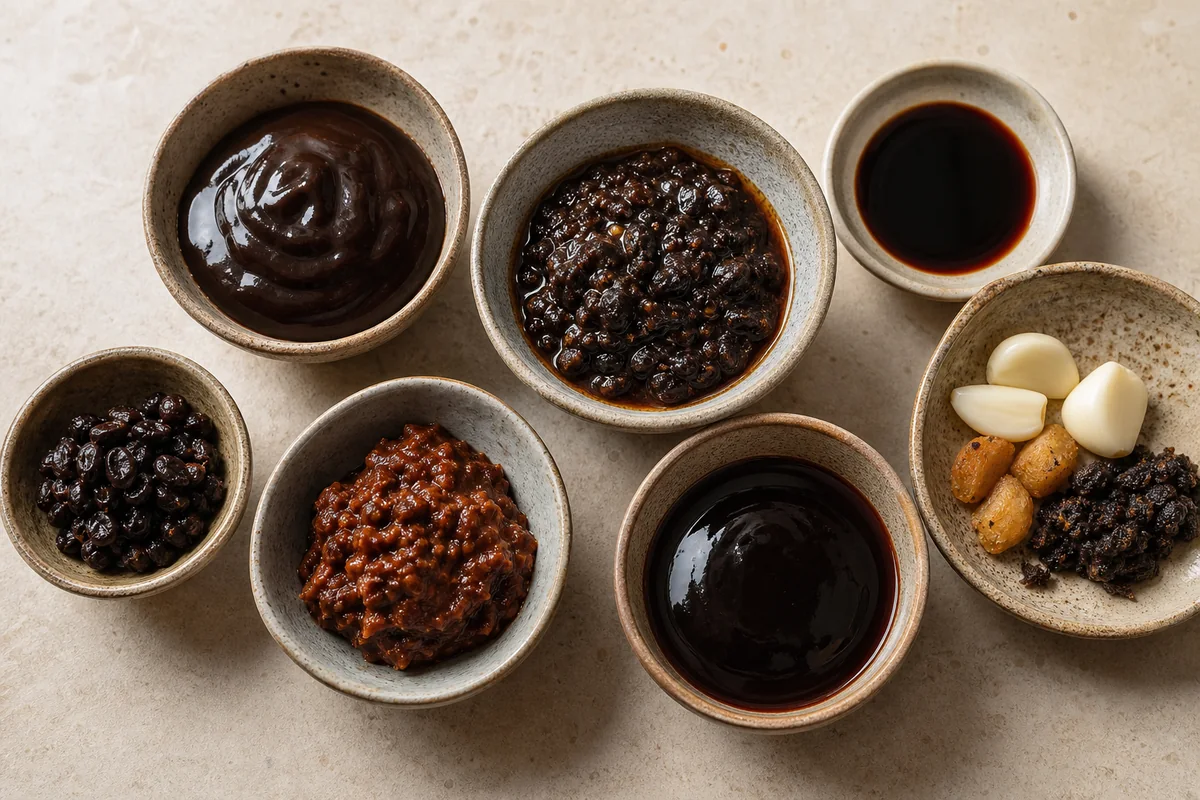
5 Best Black Bean Sauce Substitutes (Flavor-Matched)
Ingredients
Equipment
Method
- Identify the role of black bean sauce in your dish (stir-fry glossy base, marinade depth, or baked umami).
- Choose the closest match from the ratio table: fermented black bean paste first, then soy+miso, then oyster/hoisin for sweet-umami profiles.
- Use the listed ratio; if your substitute is thicker than black bean sauce, thin with 1–2 teaspoons water at a time.
- Taste and fine-tune in small steps: add salt (soy) for more savor, or balance sweetness (less hoisin/teriyaki, or reduce sugar additions).
- For stir-fries, briefly simmer the sauce in the pan (15–45 seconds) to round flavors before serving.
Notes
- Black bean sauce varies widely (more sweet vs. more fermented). Adjust with small taste tests.
- For baking uses, keep the substitute slightly thicker for cling, or dilute for smoother batter flow.
Tried this recipe?
Let us know how it was!
Carrie is a food writer and editor with more than 15 years of experience. She has worked for some of the biggest names in the food industry, including Bon Appétit, Food & Wine, and Martha Stewart Living.
As the Editor in Chief of EpicureDelight, Carrie oversees all of the content on the site. She also manages the team of contributing writers and editors, who help to create delicious recipes, helpful tips, and informative articles that you’ll find on the site.
A native of the Chicago area, Carrie is passionate about all things food. She loves trying new restaurants and experimenting with new recipes in her kitchen. She’s also a graduate of the Culinary Institute of America, so she knows a thing or two about food!



