
That deep blue-purple stain in your muffin batter is doing more than coloring things. Blueberries bring mild sweetness, gentle acidity, and just enough juice to keep a bake moist without drowning it.
When you swap them out, those three factors are what you're really replacing.
A good blueberries substitute matches at least two of the three: flavor, juice release, and whether the fruit holds its shape under heat. Each option below includes a Skip if note, so you can avoid the most common bake failures before they happen.
Blueberries affect sweetness, moisture, and berry texture in bakes. Frozen blueberries are the closest 1:1 match. Raspberries and blackberries bring sharper berry flavor. Chopped strawberries work but need draining. Blueberry jam is a pantry-only emergency swap. Always control moisture before mixing berries into batter.
5 Best Blueberries Substitutes for Any Recipe
Most of these swaps use a 1:1 ratio by volume, which keeps batter density and fruit pockets consistent. Where that changes, the table says so.
Pay attention to the "Best For" column: sweetness and tartness shifts matter more in delicate recipes than in a chunky crumble.
| # | Substitute | Best For | Ratio | Key Note |
|---|---|---|---|---|
| 1 | Frozen Blueberries | Both | 1:1 | Drain if thawed |
| 2 | Raspberries | Both | ¾:1 | More tart, reduce sugar |
| 3 | Blackberries | Both | 1:1 | Toss with thickener |
| 4 | Chopped Strawberries | Both | 1:1 | Macerate and drain |
| 5 | Blueberry Jam (Thinned) | Cooking | ½:1 | Fillings and sauces only |
1. Frozen Blueberries
Frozen blueberries are the most reliable swap because the berry shape, skin structure, and flavor profile are identical to fresh. The only variable is moisture.
Handled right, they behave the same way in muffins, pancakes, and cobblers.
- Best use: Muffins, pancakes, scones, cobblers, and any baked good that already calls for blueberries
- Prep (from frozen): Fold in without thawing; this reduces bleeding and keeps the batter from going purple
- Prep (thawed): If you thaw first, drain the liquid and pat berries dry before folding in
- Batter adjustment: If batter looks wet after folding, add 1 extra tablespoon of flour to compensate
Skip if: you fully thaw and keep all the liquid. The extra juice makes baked centers gummy and can throw off your rise.
2. Raspberries
Raspberries bring a brighter, more assertive tartness than blueberries. That sharpness works well in sweet batters and custard-based fillings, where blueberries might disappear into the background.
The color shifts from blue-purple to pink-red, so expect a different look in the final dish.
Use about three-quarters of the called-for amount first, then taste. If the recipe is already on the sweeter side, raspberries balance it well without any sugar reduction.
If it's a lightly sweetened batter, reduce added sugar by 1 to 2 teaspoons to keep things from tipping too tart.
For more options when you're working around this berry, the raspberries substitutes page covers the same prep logic in reverse.
- Best use: Sweet muffins, fruit crumbles, tarts, and custard fillings
- Prep: Use fresh or frozen; if frozen, drain briefly before folding in
- Sweetness fix: Reduce added sugar by 1-2 teaspoon if your batter or filling is already sweet
- Texture note: Raspberries are softer and break down faster, so they create more of a jammy pocket than a whole-berry bite
Skip if: your recipe needs that blue or purple color. Raspberries turn everything pink, which matters in toppings and layered desserts.
3. Blackberries
Blackberries hold their shape better than most berry swaps. Their skin is firm enough to stay mostly intact in muffin batter, which means you still get defined fruit pockets rather than a smeared purple center.
The flavor is deeper and slightly more earthy than blueberries, but it reads as berry without feeling out of place.
Knowing how blackberries taste helps here: they lean toward a wine-like depth that can make your bake feel a little bolder.
Blackberries vs Blueberries
Works for: Muffins, scones, pancakes, pies where deep berry flavor and firm pieces are welcome
Skip if: Your sauce or filling relies on blueberries' mild sweetness. Blackberries taste heavier and more tannic in delicate sauces.
- Prep: Halve large blackberries so they distribute evenly in batter
- Thickening tip: Toss with 1 teaspoon cornstarch or flour before folding in to reduce juice bleed
- Moisture: Fresh blackberries need no draining; frozen ones should be briefly drained after thawing
4. Chopped Strawberries
Strawberries are sweeter and softer than blueberries, and they release more juice under heat. That's not disqualifying, but it does mean prep is the difference between a good result and a soggy center.
The flavor is pleasant in most baked goods, just noticeably different.
Understanding how strawberries taste compared to blueberries is useful: they're fruitier, less tangy, and noticeably sweeter right out of the gate.
- Prep: Chop into blueberry-sized pieces, then macerate with a pinch of sugar for 10 minutes and drain the liquid
- Best use: Muffins, quick breads, crumbles, and galettes where softness isn't a problem
- Moisture fix: After draining, pat dry and toss with 1 teaspoon flour before folding into batter
- Sweetness: Reduce added sugar by 1-2 teaspoon since strawberries are already sweet
Skip if: your recipe depends on the firm pop of a blueberry skin. Strawberries go soft quickly and won't replicate that burst.
5. Blueberry Jam (Thinned)
Blueberry jam is a pantry swap for when you have no fresh or frozen fruit at all. It won't give you fruit pieces or fresh berry flavor, but it delivers the right general color and a cooked blueberry taste in fillings, sauces, and no-bake layers.
The texture is fully jammy, which works in some applications and fails in others.
Jam is concentrated, so it's much sweeter and thicker than whole berries. Use half the volume called for, then thin with a small splash of water, about 1 to 2 teaspoons per tablespoon of jam, until it spreads like fruit and not paste.
- Best use: Pie fillings, sauce layers, swirled into yogurt or oatmeal, or as a spread in no-bake bars
- Ratio: Start at ½ the volume of fresh berries; taste and adjust
- Thinning: Add 1-2 teaspoon water per tablespoon of jam, stir, and add more gradually if needed
- Sugar reduction: Cut added sugar in your recipe by at least 1-2 teaspoon to account for jam's sweetness
Skip if: your recipe needs intact fruit pieces on top or folded through, like a blueberry muffin crown. Jam won't replicate the look or the bite.
Making Blueberry Substitutes Work in Baking and Cooking
Three things decide whether your swap succeeds: moisture control, sweetness balance, and whether the recipe needs whole fruit pieces or just berry flavor. A crumble topping forgives a lot.
A delicate muffin batter does not. If you're folding fruit into batter, always drain first and coat lightly.
If you're making a sauce or filling, sweetness calibration matters more than texture. For tart swaps like raspberries or blackberries, taste the batter before baking and pull back on added sugar if needed.
Whole-piece needs (like muffin tops or fruit tarts) rule out jam immediately, and require firm berries that hold shape under heat.
- Moisture method: Toss any substitute berry with 1 teaspoon of flour or cornstarch before folding into batter; this reduces sink and bleed significantly
- Sweetness method: After folding fruit, taste the raw batter or filling and reduce added sugar by 1-2 teaspoon if the substitute is already sweet or tart
- Recipe-type rule: Use whole berry substitutes (frozen blueberries, blackberries, raspberries) for batters; use jam or macerated strawberries only for fillings, sauces, and toppings where texture is forgiving
Frequently Asked Questions
Frozen blueberries are the closest match because they share the same skin structure, flavor, and juice behavior. Use them straight from frozen in most batter recipes to minimize bleeding.
No. Fold them in frozen to reduce juice bleed. If you do thaw, drain all liquid and pat dry before adding to batter.
Yes, but macerate chopped strawberries for 10 minutes and drain before using. Reduce added sugar slightly, since strawberries are sweeter than blueberries.
Only in fillings, sauces, and no-bake layers. Use half the volume of fresh berries, thin with a splash of water, and cut added sugar. It won't work where whole berry pieces are needed.
Toss berries with 1 teaspoon of flour or cornstarch before folding in. This light coating slows juice release and helps keep fruit suspended in the batter.
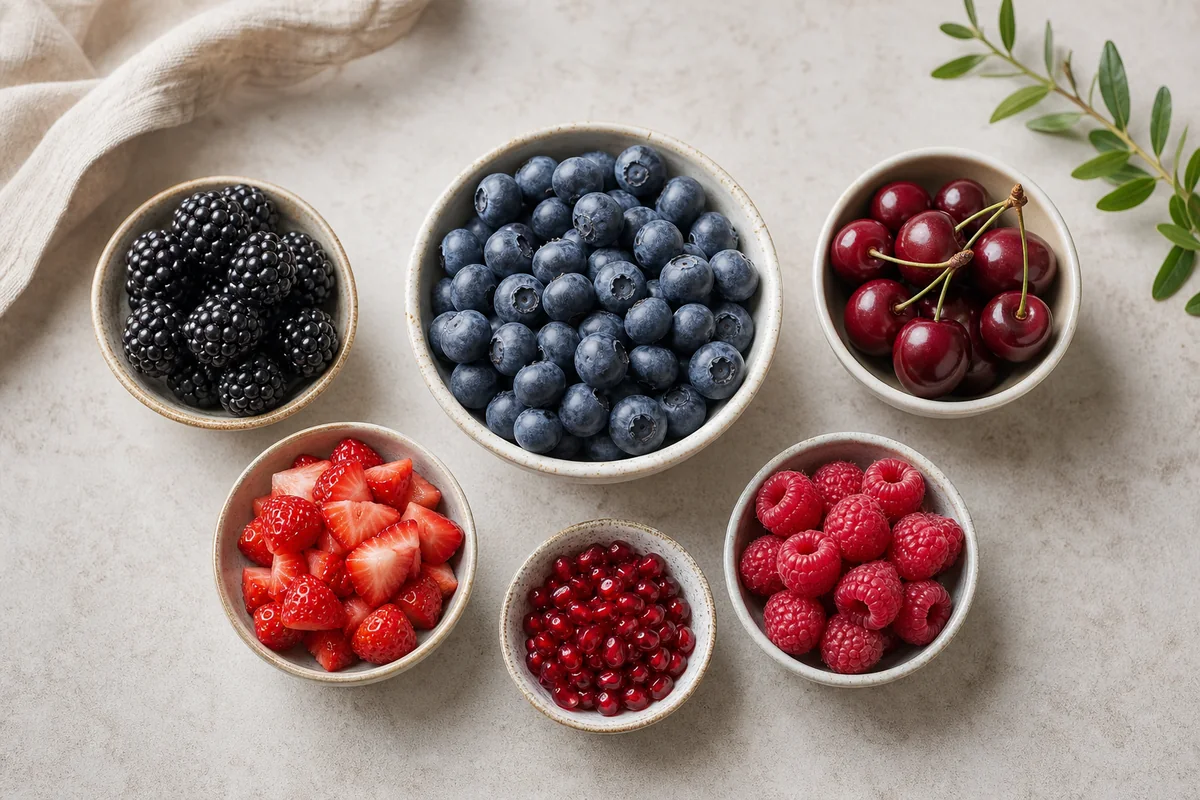
5 Best Blueberries Substitutes for Any Recipe
Ingredients
Equipment
Method
- Identify where blueberries go in your recipe: batter (muffins/pancakes), filling (crumble/pie), or topping (yogurt/oats).
- Choose the closest match from the list: frozen blueberries for texture, raspberries/blackberries for tart depth, strawberries for sweetness, jam for emergency cooking.
- Measure by the listed ratio (or use 1:1 for most berry-to-berry swaps). For jam, start at the lower ratio since it's concentrated.
- Control moisture: if the substitute releases lots of liquid (thawed berries or jam), drain briefly or stir in a spoon of thickener to prevent soggy centers.
- Adjust sweetness and color: raspberries lean tangier, strawberries lean sweeter-taste the batter/filling before baking.
Notes
- For baked goods, preventing juice bleed is usually more important than perfect flavor match.
- If you swap tart berries into a sweet batter, reduce added sugar slightly to balance.
Tried this recipe?
Let us know how it was!
Carrie is a food writer and editor with more than 15 years of experience. She has worked for some of the biggest names in the food industry, including Bon Appétit, Food & Wine, and Martha Stewart Living.
As the Editor in Chief of EpicureDelight, Carrie oversees all of the content on the site. She also manages the team of contributing writers and editors, who help to create delicious recipes, helpful tips, and informative articles that you’ll find on the site.
A native of the Chicago area, Carrie is passionate about all things food. She loves trying new restaurants and experimenting with new recipes in her kitchen. She’s also a graduate of the Culinary Institute of America, so she knows a thing or two about food!



