
No broccolini? You can still get a similar tender-crisp bite with the right swap.
The tricky part is that a broccolini substitute has to match on two levels: the delicate stems that cook fast, and the small florets that stay slightly sweet and mild.
Broccolini is a hybrid of broccoli and Chinese kale. Its stems are thin enough that the whole stalk finishes in roughly the same time window, which makes swapping in a thicker-stemmed green risky without some adjustment.
The five options below are matched by crunch, green flavor, and cook speed. Most work at a 1:1 ratio with minor tweaks.
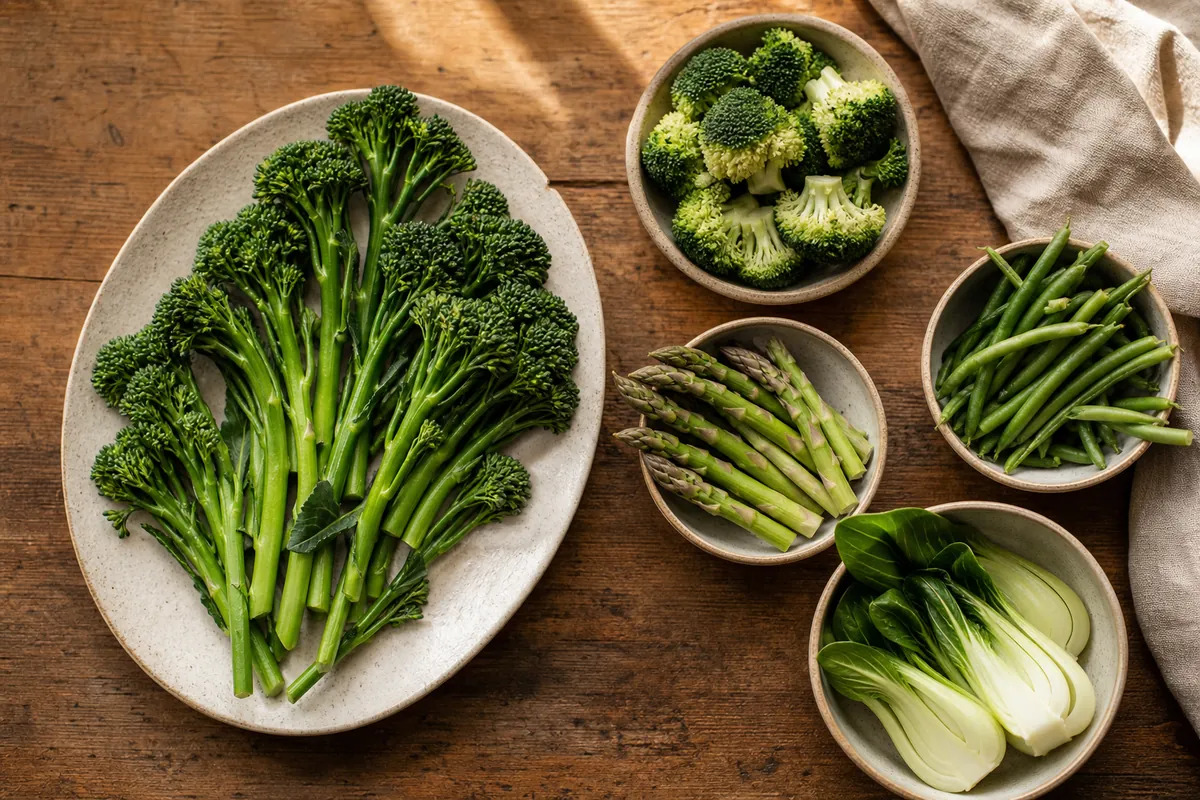
The best broccolini substitutes are broccoli rabe, broccoli florets with trimmed stems, asparagus spears, thin green beans, and baby bok choy. Each works at a 1:1 ratio. Small cuts and high heat keep the tender-crisp bite that broccolini delivers. Blanch bitter greens briefly before cooking.
Broccolini Substitutes That Keep the Tender-Crisp Bite
| # | Substitute | Best For | Ratio | Key Note |
|---|---|---|---|---|
| 1 | Broccoli Rabe | Both | 1:1 | Blanch to cut bitterness |
| 2 | Broccoli Florets | Both | 1:1 | Cut stems small |
| 3 | Asparagus Spears | Both | 1:1 | Watch cook time closely |
| 4 | Thin Green Beans | Both | 1:1 | Mild, neutral flavor |
| 5 | Baby Bok Choy | Both | 1:1 | Separate stems and leaves |
Pick by bitterness tolerance and stem thickness: thicker-stemmed options need smaller cuts or a longer cook. Knowing storing greens before stir-frying them also keeps texture sharper when you finally hit the pan.
1. Broccoli Rabe (Rapini)
Broccoli rabe is the closest match for anyone who wants leafy tenderness with a quick cook. It has thin stems, small florets, and a slightly bitter edge that garlic and lemon balance easily.
If bitterness is a concern, a 1-to-2-minute blanch in salted water before sautéing handles it without softening the texture too much.
The peppery, leafy character of rapini suits pasta, roasted dishes, and grain bowls where broccolini would normally sit.
- Blanch first: 1-2 minutes in boiling salted water, then transfer to ice water
- Sauté hot and fast: High heat, 2-3 minutes, with garlic for balance
- Cut to match: Trim stems to similar lengths as broccolini stalks
- Ratio: 1:1 by weight or volume
Skip if: your recipe calls for a very mild, non-bitter green. Rapini can skew sharp even after blanching.
2. Broccoli Florets with Trimmed Stems
This is the most direct flavor and shape swap on the list. Regular broccoli tastes almost identical to broccolini, and trimming the stems thin closes the texture gap considerably.
Closest Match
Works for: sautéing, roasting, stir-fries where broccoli family flavor is the goal
Skip if: recipe relies on ultra-thin broccolini stems for very fast cooking
Roasting broccoli florets works especially well. Try roasting florets with parmesan for a finish that rivals anything broccolini delivers on a sheet pan.
- Cut stems thin: Slice lengthwise so stems are no thicker than 1 cm
- Add 1-2 minutes: Florets need slightly longer than broccolini at the same heat
- Use small florets: Break large heads down so pieces finish evenly
Skip if: you need the specific long, slender stalk shape for presentation.
3. Asparagus Spears
Asparagus holds a crisp bite under high heat and works well in both sauté and roast applications. The flavor is more grassy and vegetal than broccolini, but the cooking behavior is close enough that most dishes won't suffer.
If asparagus is your only option but the variety feels off, check choosing a different spear green for additional ideas that land closer to broccolini's profile.
- Trim the woody ends: Cut off the bottom 1-2 inches before cooking
- Use medium spears: Thin spears overcook; thick ones stay raw at the center
- High heat, short time: Roast at 425°F for 10-12 minutes or sauté 3-4 minutes
- Ratio: 1:1, matched by weight
Skip if: you want that same mild broccoli-family sweetness. Asparagus reads differently on the palate.
4. Thin Green Beans
Green beans are mild, tender-crisp when cooked correctly, and easy to find year-round. They won't bring broccoli-family flavor, but their snap and color stay close to broccolini's appeal in stir-fries and side dishes.
Understanding what makes green beans distinct helps you decide if a neutral-flavored green suits your dish before committing to the swap.
- Trim both ends: Keep beans at a similar length to broccolini stalks
- Blanch briefly: 2 minutes in boiling water, then sauté for 2-3 minutes at high heat
- Thin-cut only: French-style haricots verts are the best match for texture
- Ratio: 1:1 by weight
Skip if: your dish needs the broccoli-floret flavor. Green beans are more neutral and won't add the same green, slightly sweet note.
5. Baby Bok Choy
Baby bok choy has the stem-and-leaf combo that makes broccolini so versatile. The stems are mild and slightly sweet, and the leaves wilt beautifully in a hot pan.
The key is cooking them in stages so the stems don't stay raw while the leaves turn to mush.
Stems First
Works for: stir-fries and sheet-pan meals where you want even texture throughout
Skip if: recipe depends on broccolini's long thin florets for even char across the pan
For anyone who regularly swaps Asian greens, looking at leafy green picks for bok choy gives you a backup when bok choy itself is unavailable.
- Halve or quarter: Cut baby bok choy lengthwise to expose the stems
- Stems go in first: Cook stems 2-3 minutes before adding leaves
- Leaves last: Add leaves in the final 1 minute over high heat
- Ratio: 1:1 by weight; 1 medium head roughly equals 1 broccolini bunch
Skip if: your recipe needs long, even stalks for visual presentation or uniform char.
Making Your Broccolini Substitute Taste Right
The biggest factor in any swap is cut size. Tender-crisp comes from controlling thickness and heat, not from adding extra oil or sauce.
Keep pieces at roughly the same diameter as broccolini stems and cook over high heat with minimal stirring.
Flavor differences between swaps are smaller than they seem once you add the right finish. Garlic, lemon zest, or chili flakes work across all five options.
For bitterness control, use lemon juice rather than more fat. Those finishing fresh leafy stems quickly after purchase also means less bitterness before the swap even starts.
- Match thickness first: Cut stems or spears to broccolini's diameter (roughly 1 cm) so cook times stay consistent
- Blanch bitter greens: Broccoli rabe benefits from a 1-2 minute parboil; other swaps on this list don't need it
- Season at the end: Add garlic, lemon, or soy sauce in the last 60 seconds to avoid burning and to let the green's flavor come through first
Frequently Asked Questions
Broccoli rabe is the closest match for tender-crisp texture and quick cooking. Blanch it for 1-2 minutes first if you want to reduce its natural bitterness before sautéing.
Broccoli florets with trimmed stems are the mildest option. Thin green beans are a close second and are even more neutral in flavor.
Yes, but thaw and pat dry first to remove excess moisture. Cook on high heat in a single layer so it browns rather than steams.
Cut thicker stems to 1 cm width so they finish at the same speed as broccolini. Asparagus runs faster, so pull it 1-2 minutes earlier than you would broccolini.
No major changes needed. Garlic, lemon, or soy sauce work equally well across all five swaps listed here.
5 Best Broccolini Substitutes (Flavor-Matched)
Ingredients
Equipment
Method
- Decide your texture target: keep a tender-crisp bite (sauté/roast) or go softer (steam).
- Choose the closest match from the table: broccoli rabe for leafy snap, broccoli florets for the most direct flavor/shape.
- Use the listed ratio (1:1) and cut stems/spears to similar thickness so they finish together.
- Adjust cook time by 1–3 minutes: thicker stems need longer; leafy greens like rapini may need a quick blanch.
- Finish with the same flavor style (garlic/lemon/chili flakes or sesame/soy) to mask small differences in natural bitterness.
Notes
- If your recipe expects broccolini’s mild sweetness, avoid overcooking—many swaps get bitter or dull when soft.
Tried this recipe?
Let us know how it was!
Carrie is a food writer and editor with more than 15 years of experience. She has worked for some of the biggest names in the food industry, including Bon Appétit, Food & Wine, and Martha Stewart Living.
As the Editor in Chief of EpicureDelight, Carrie oversees all of the content on the site. She also manages the team of contributing writers and editors, who help to create delicious recipes, helpful tips, and informative articles that you’ll find on the site.
A native of the Chicago area, Carrie is passionate about all things food. She loves trying new restaurants and experimenting with new recipes in her kitchen. She’s also a graduate of the Culinary Institute of America, so she knows a thing or two about food!



