
Bok choy pulls double duty in a stir-fry. The stems stay crisp; the leaves wilt soft.
That two-texture thing is exactly what makes it hard to replace.
Most greens do one job well but not both. The good news is that with smart timing, five swaps can get you very close.
The best bok choy substitute is napa cabbage for stir-fries or Chinese broccoli (gai lan) when you want stem crunch. For leaf-only swaps, baby spinach works fast. Match your substitute to what the recipe needs: crisp stem bite or tender leaf finish.
5 Best Bok Choy Substitutes Ranked by Texture
| # | Substitute | Best For | Ratio | Key Note |
|---|---|---|---|---|
| 1 | Napa Cabbage | Both | 1:1 | Stems first, leaves last |
| 2 | Chinese Broccoli | Both | 1:1 | Blanch stems if needed |
| 3 | Broccoli Rabe | Both | 1:1 | Balance with sweeter sauce |
| 4 | Baby Spinach | Cooked | 1:1 | Add last 30-60 seconds |
| 5 | Collard Greens | Cooked | ¾:1 | Remove ribs, slice thin |
1. Napa Cabbage
Napa cabbage is the swap that surprises people. It has a mild, slightly sweet flavor that sits close to bok choy's neutral baseline.
Cut the stem sections into 1-inch pieces and separate them from the leafy tops before cooking. That two-step approach keeps both parts from finishing at the wrong time.
If you're curious how napa cabbage stores before you buy extra, napa cabbage shelf life is worth a quick check.
- Stem timing: Add stem pieces first; sauté 1-2 minutes over high heat before adding leaves.
- Leaf timing: Toss leafy tops in during the last 60 seconds, then pull off heat.
- Flavor note: Napa is sweeter than bok choy; reduce any added sugar in the sauce by a small amount.
- Skip if: You need a firm, pronounced stem crunch - napa softens faster than bok choy and won't hold up to long cooking.
2. Chinese Broccoli (Gai Lan)
Gai lan is the closest structural match when stem crunch is non-negotiable. Its stems are thicker, so they need a head start, but the payoff is a texture that reads almost identical to bok choy once plated.
If you're deciding between gai lan and other options, the Chinese broccoli substitute guide covers how it compares across preparations.
Gai Lan vs. Bok Choy
Works for: stir-fries, braises, and steamed dishes where you want visible stem bite
Skip if: cook time is under 3 minutes total - stems won't soften enough without a brief early sauté
- Prep: Trim the bottom inch off stems; cut stems and leaves into separate piles.
- Blanch option: Drop stems in boiling water for 60 seconds before stir-frying if you want fast even cooking.
- Bitterness: Gai lan is mildly bitter - a splash of oyster sauce or a pinch of sugar keeps it balanced.
3. Broccoli Rabe (Rapini)
Broccoli rabe has a peppery, assertive edge that bok choy does not. It is sturdy and holds its shape well, making it good for high-heat cooking.
But the bitterness is real, and it needs handling. Understanding how broccoli rabe tastes before you swap it in helps you prepare the sauce correctly.
- Blanch first: Drop rapini in salted boiling water for 90 seconds, then transfer to the wok. This cuts bitterness noticeably.
- Sauce fix: Add a small amount of honey or a few drops of rice vinegar to your stir-fry sauce to counter the bitter edge.
- Stem timing: Stems go in 2 minutes before leaves; the thinner floret ends finish at the same time.
- Skip if: You or your guests strongly prefer mild vegetables - broccoli rabe's bitterness stays present even after blanching.
4. Baby Spinach
Baby spinach is the fastest option on this list. There's no chopping, no stem separation, and no blanching required.
The catch is that spinach has zero stem structure. If your dish depends on that crunch, spinach won't deliver it.
For a quick breakdown of how baby and regular spinach compare in cooked dishes, the spinach vs. baby spinach comparison is handy.
- Add timing: Stir in baby spinach during the last 30-60 seconds of cooking only.
- Moisture: Spinach releases water fast; pat leaves dry and keep heat high so they wilt without pooling liquid.
- Amount: Use the same volume as bok choy called for - spinach shrinks dramatically, so don't cut the quantity.
- Skip if: Your recipe specifically relies on stem texture; spinach is leaf-only and cannot replicate that crunch.
5. Collard Greens
Collard greens take more prep than the other options, but thinly sliced and de-ribbed, they cook closer to bok choy than most people expect. The leaves are hearty without being chewy once the thick ribs are out.
| Use | Ratio | Notes |
|---|---|---|
| Quick stir-fry | ¾:1 | Slice very thin; add 2 min before finish |
| Braise or simmer | 1:1 | Full rib-removed leaves hold up well |
| Soup or noodle bowl | 1:1 | Chiffonade cut, add in final 3 minutes |
If you want to understand bok choy's shelf life versus a heartier green like collards, collards win by several days in the fridge.
- Rib removal: Fold each leaf in half and strip the center rib out before slicing.
- Slicing: Cut into thin ribbons (chiffonade) or 1-inch strips so they soften quickly.
- If too tough: Simmer sliced collards in a little broth for 1-2 minutes before adding to the wok.
- Skip if: You're short on prep time - collards need rib removal and thin slicing to work like bok choy.
Making the Substitute Taste Like Bok Choy
The swap itself matters less than how you sequence the cooking. Bok choy's flavor is mild and slightly mineral, so any sauce that works with it will carry a substitute just as well.
For a deeper look at what bok choy actually tastes like, the bok choy flavor profile helps you calibrate how much adjustment your swap needs. If you're branching into related swaps, the napa cabbage substitute options overlap usefully with this list.
- Cut stems smaller than you think: Smaller pieces finish faster and close the timing gap between stems and leaves; aim for pieces no larger than ¾ inch wide.
- Stop cooking early: Pull the pan off heat when the leaves are just barely wilted - residual heat finishes them without turning them soggy.
- Adjust the sauce last: If your substitute is more bitter (rapini) or more watery (spinach), fix the sauce balance after the greens go in, not before.
Frequently Asked Questions
Napa cabbage is the closest overall match for stir-fry. Chinese broccoli (gai lan) is the better pick if you specifically need stem crunch rather than tender leaves.
Yes, but only for the leafy component. Add baby spinach in the last 30-60 seconds of cooking so it wilts without releasing excess water into the dish.
Blanch broccoli rabe in salted boiling water for 90 seconds before stir-frying. Add a small amount of honey or sugar to the sauce to offset the remaining bitterness.
Yes. Both need 1-2 extra minutes, especially in the stem or rib areas. Removing ribs and slicing thin brings the cook time much closer to bok choy's.
Use a 1:1 ratio by volume. Napa cabbage shrinks slightly less than bok choy, so the amounts stay roughly equivalent across most recipes.
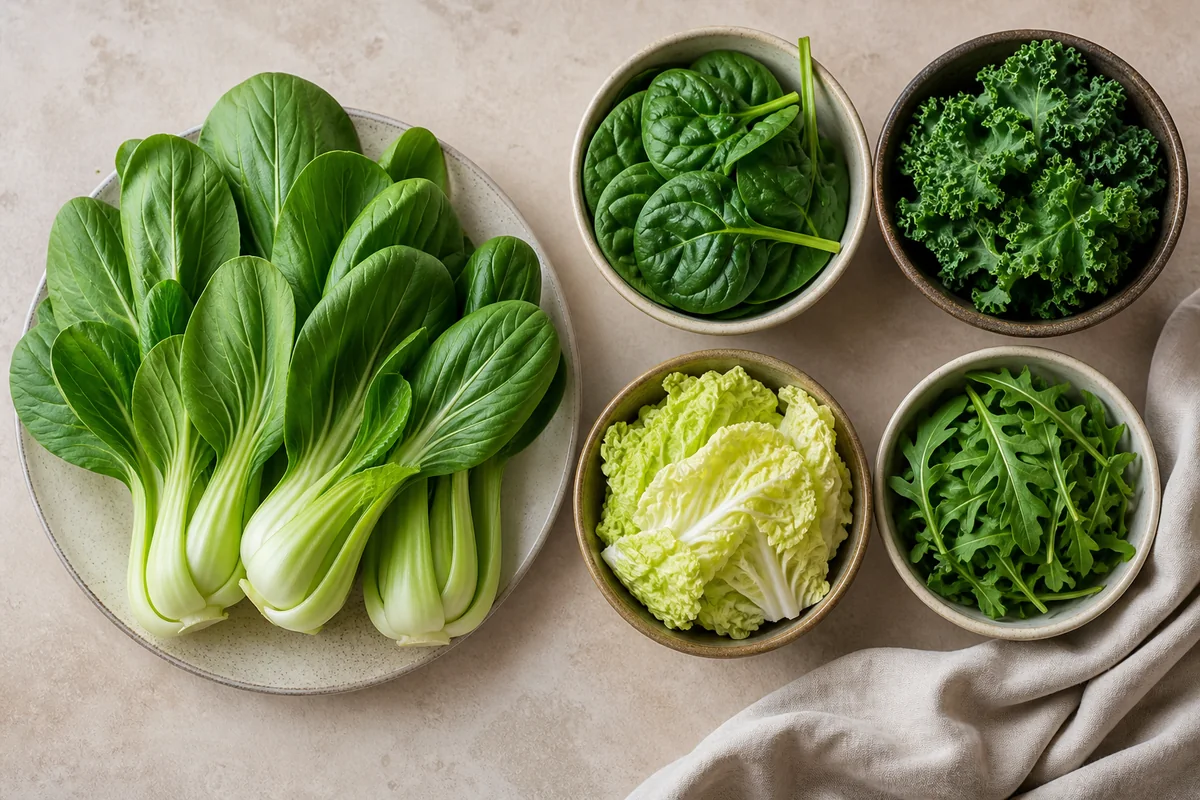
5 Best Bok Choy Substitutes (Pantry Swaps)
Ingredients
Equipment
Method
- Choose a substitute that matches your goal: crisp stems (gai lan, broccoli rabe) or tender leaves (napa cabbage, spinach).
- Use the listed ratio; if your substitute is leaf-only (spinach), add it at the end instead of early in the stir-fry.
- Adjust timing: sauté stem-heavy options 1-2 minutes before adding leaves; add fast-wilting greens only for the last 30-60 seconds.
- Balance flavor: if the swap is bitter (broccoli rabe), slightly increase the sauce’s sweet element (or reduce acidic notes).
- Finish the texture: stop cooking as soon as greens are just tender to avoid mushy results.
Notes
- For stir-fries, the main difference between substitutes is cooking time: stem-heavy greens go in earlier; leaf-only greens go in last.
Tried this recipe?
Let us know how it was!
Carrie is a food writer and editor with more than 15 years of experience. She has worked for some of the biggest names in the food industry, including Bon Appétit, Food & Wine, and Martha Stewart Living.
As the Editor in Chief of EpicureDelight, Carrie oversees all of the content on the site. She also manages the team of contributing writers and editors, who help to create delicious recipes, helpful tips, and informative articles that you’ll find on the site.
A native of the Chicago area, Carrie is passionate about all things food. She loves trying new restaurants and experimenting with new recipes in her kitchen. She’s also a graduate of the Culinary Institute of America, so she knows a thing or two about food!



