
Baking is mostly chemistry, and buttermilk powder is one of those quiet workers doing a lot at once. It adds tang, activates leavening, and gives batters a slightly creamy body.
When the canister is empty, the right buttermilk powder substitute can cover all three jobs without a second trip to the store.
The key is matching both acidity and moisture. Swaps that skip one or the other can leave your pancakes flat or your muffins dense.
This list runs from closest match to emergency-pantry fix. You'll find options for dairy bakers, dairy-free bakers, and everyone stuck mid-recipe with only what's in the fridge.
The best buttermilk powder substitute matches both tang and moisture. DIY buttermilk (milk + lemon juice or vinegar) is the closest overall swap. Plain yogurt and sour cream both work well when thinned. For dairy-free, use plant milk + acid and let it rest before mixing.
5 Best Buttermilk Powder Substitutes Ranked for Baking
Here's a fast reference before we get into the details. Use it to pick your swap, then read the H3 section for exact ratios and baking tips.
| # | Substitute | Best For | Ratio | Key Note |
|---|---|---|---|---|
| 1 | DIY Buttermilk (Milk + Acid) | Both | 1:1 | Rest 5-10 min first |
| 2 | Plain Yogurt (Thinned) | Both | 1:1 | Thin to pourable first |
| 3 | Sour Cream (Thinned) | Baking | 1:1 | Richer, softer crumb |
| 4 | Kefir | Both | 1:1 | Strong acid, use fresh |
| 5 | Plant Milk + Acid | Baking | 1:1 | Use unsweetened only |
Each substitute below is ranked from best overall down to reliable emergency swap. Choose based on what's in your kitchen right now.
1. DIY Buttermilk
Mix 1 cup of milk with 1 tablespoon of lemon juice or white vinegar, stir briefly, and let it sit for 5-10 minutes. The milk curdles slightly, and when you're swapping in dairy liquids, that curdled texture is exactly what gives batter its characteristic body and tang.
DIY Buttermilk
Works for: Pancakes, quick breads, muffins, cakes, marinades
Skip if: Recipe needs buttermilk powder's dry solids for a dry-batter coating or dusting application
- Acid amount: 1 tablespoon per cup of milk is the standard; go to 1.5 tablespoons for a more pronounced tang
- Rest time: Always rest 5-10 minutes before adding to dry ingredients so curds form evenly
- Lemon vs. vinegar: Lemon juice gives a slightly brighter flavor; white vinegar is more neutral
- Thickness: If your batter looks too thin, reduce other liquid by 2 tablespoons to compensate
Skip if: Your recipe depends on dry buttermilk solids for structure, not just liquid hydration.
2. Plain Yogurt (Thinned)
Plain yogurt produces a noticeably tender crumb, often more so than liquid buttermilk alone. The fat content in full-fat yogurt adds a slight creaminess that coats gluten strands, and baked goods come out with a tighter, moister texture overall.
The tang in yogurt is real but softer than straight DIY buttermilk. If you're baking something where sharp tang matters (like a classic Southern biscuit), add a tiny squeeze of lemon.
For most cakes, muffins, and quick breads, yogurt's natural acidity is enough to activate baking soda. When deciding between similar options, knowing the dairy fat differences can help you pick the right one.
- How to thin: Whisk 1 cup yogurt with 2-3 tablespoons of water or milk until pourable
- Best yogurt type: Full-fat plain; avoid flavored or sweetened, which shift browning
- Greek yogurt: Needs more thinning than regular; add up to ¼ cup of milk per cup of yogurt
- Ratio: Use thinned yogurt 1:1 in place of reconstituted buttermilk powder
Skip if: You only have sweetened or fruit-flavored yogurt, which will change the flavor balance.
3. Sour Cream (Thinned)
Sour cream is tangier and fattier than yogurt, and those two qualities push baked goods toward a softer, almost velvety crumb. It's especially effective in pound cakes, coffee cakes, and dense muffins where a rich interior is the goal.
When storing sour cream for baking use, check the date: older product tastes sharper, which can work in your favor or against it.
- Thinning method: Stir 1 cup sour cream with 3-4 tablespoons of milk until it pours easily
- Tang level: Stronger than yogurt, so reduce to ¾ cup if the recipe is tang-sensitive
- Crumb effect: Expect a softer, denser result than DIY buttermilk; good for cakes, less ideal for light pancakes
- Salt interaction: Sour cream's dairy richness can amplify perceived saltiness; taste batter before adding extra salt
Skip if: You're making something where a light, airy crumb is the priority, like a fluffy chiffon cake.
4. Kefir
Kefir is already liquid and already fermented, so it needs almost no prep. It matches buttermilk's tang more closely than yogurt or sour cream because it comes from a similar bacterial culture.
If you're choosing a fermented dairy swap, picking the right kefir style (whole milk vs. low-fat) affects how much body it adds to batter.
- Thickness check: Most plain kefir pours like thin buttermilk; if watery, reduce other recipe liquids by 2 tablespoons
- Acidity warning: Older kefir is sharper. If it smells very sour, use ¾ cup and supplement with ¼ cup plain milk
- Use it cold: Cold kefir mixes better into batter and doesn't shock a warm fat like melted butter
- Ratio: 1:1 replacement for reconstituted buttermilk in pancakes, quick breads, and cake batters
Skip if: Your kefir is very thin and watery; that extra liquid can throw off batter structure without adjustment.
5. Plant Milk + Acid
This is the emergency shelf option that also doubles as the go-to for dairy-free baking. Stir 1 tablespoon of swapping out white vinegar or lemon juice into 1 cup of unsweetened plant milk, and rest it for 5 minutes.
The mixture won't curdle quite the same way dairy does, but it acidifies enough to activate baking soda.
Plant Milk + Acid
Works for: Pancakes, quick breads, muffins, dairy-free cakes
Skip if: Plant milk is sweetened or flavored, which can over-brown and taste off
- Best plant milks: Soy milk curdles most like dairy; oat milk adds mild sweetness; almond milk is thinner
- Acid amount: 1 tablespoon per cup; if using lemon juice, choosing a milder citrus acid keeps flavor cleaner
- Rest time: 5 minutes minimum so the acid distributes before mixing into dry ingredients
Skip if: Your recipe needs the fat and protein complexity of dairy to get a proper rise and tender crumb.
Making Your Buttermilk Powder Substitute Work (Baking Tips)
Getting the substitute into the batter correctly matters as much as choosing the right one. The main goal is matching batter consistency before it hits the pan: if it looks thicker than usual, loosen it with 1-2 teaspoons of milk; if it looks thin, let it rest another 5 minutes so the acid and liquid proteins firm up slightly.
- Reconstitute or thin first: Always prepare your substitute fully before adding it to dry ingredients, so hydration is even from the start
- Rest the batter: After mixing, a 5-10 minute rest lets acidity interact with baking soda for a more consistent rise, especially with DIY acid swaps
- Adjust if flavor seems off: A flat-tasting crumb usually means not enough acid; add ¼ teaspoon more vinegar next time; if it's too tangy, cut acid by 1 teaspoon and compensate with plain milk
Frequently Asked Questions
DIY buttermilk (milk + 1 tablespoon of lemon juice or white vinegar) is the closest match. It replicates both the tang and the liquid hydration buttermilk powder provides when reconstituted.
Most recipes use about ¼ cup of buttermilk powder per cup of liquid called for. Replace the powder and liquid together with 1 cup of DIY buttermilk (milk + 1 tablespoon acid).
Yogurt or sour cream is likely undiluted. Thin it with 2-3 tablespoons of milk until pourable, then re-check consistency before adding to dry ingredients.
Slightly. Both add a creamier, richer flavor compared to standard buttermilk. Sour cream is tangier; yogurt is milder. Most people won't notice in a spiced cake or muffin.
Yes. Unsweetened soy milk with 1 tablespoon of vinegar or lemon juice works well in both. Let it rest 5 minutes before mixing so the acid activates properly.
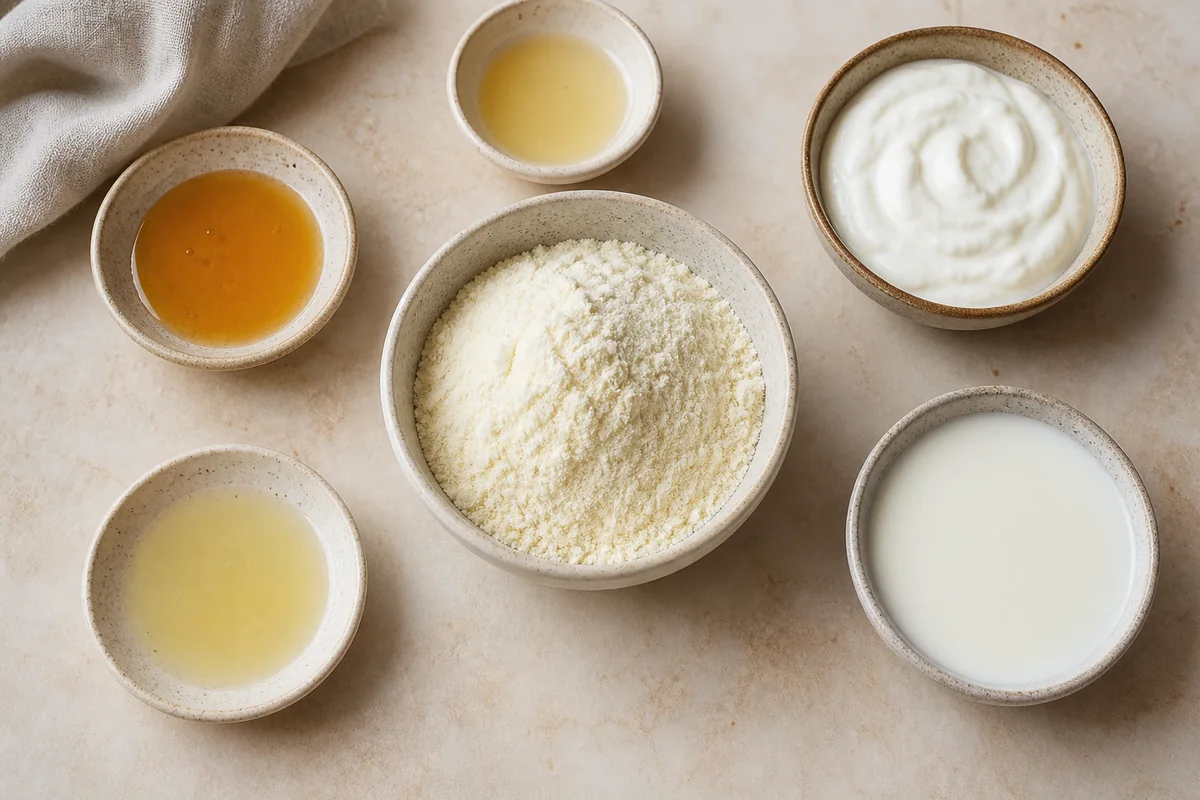
5 Best Buttermilk Powder Substitutes for Better Results
Ingredients
Equipment
Method
- Identify whether your recipe uses buttermilk powder for tang, moisture, or both (most baked goods need both).
- Pick the closest substitute from the ranked list and match the role: tang + acidity first, then adjust thickness to match batter consistency.
- Reconstitute/thin as needed before adding to dry ingredients so the batter hydrates evenly.
- Rest the batter 5–10 minutes if using DIY acids/yogurt so it slightly thickens and reacts more consistently.
- Bake and evaluate: if the crumb tastes flat, add a tiny pinch of extra acid next time; if it’s too thick, loosen with 1–2 teaspoons of milk.
Notes
- For powder-to-liquid behavior, focus on the final liquid tang/moisture, not just the ingredient name.
- If your batter seems too thick after swapping, add a small splash of milk or water to reach the original pour/drag consistency.
Tried this recipe?
Let us know how it was!
Carrie is a food writer and editor with more than 15 years of experience. She has worked for some of the biggest names in the food industry, including Bon Appétit, Food & Wine, and Martha Stewart Living.
As the Editor in Chief of EpicureDelight, Carrie oversees all of the content on the site. She also manages the team of contributing writers and editors, who help to create delicious recipes, helpful tips, and informative articles that you’ll find on the site.
A native of the Chicago area, Carrie is passionate about all things food. She loves trying new restaurants and experimenting with new recipes in her kitchen. She’s also a graduate of the Culinary Institute of America, so she knows a thing or two about food!



