Carrots do three jobs at once: they add sweetness, hold moisture in baked goods, and give texture you can see or bite through. Finding a good carrot substitute means deciding which of those jobs matters most for your recipe.
Shredding for structure, mashing for moisture, or adding for mild sweetness all point to different swaps.
The ratio question is easier than most cooks expect. Almost every substitute below works at 1:1 by volume.
The trickier part is adjusting for water content and flavor.
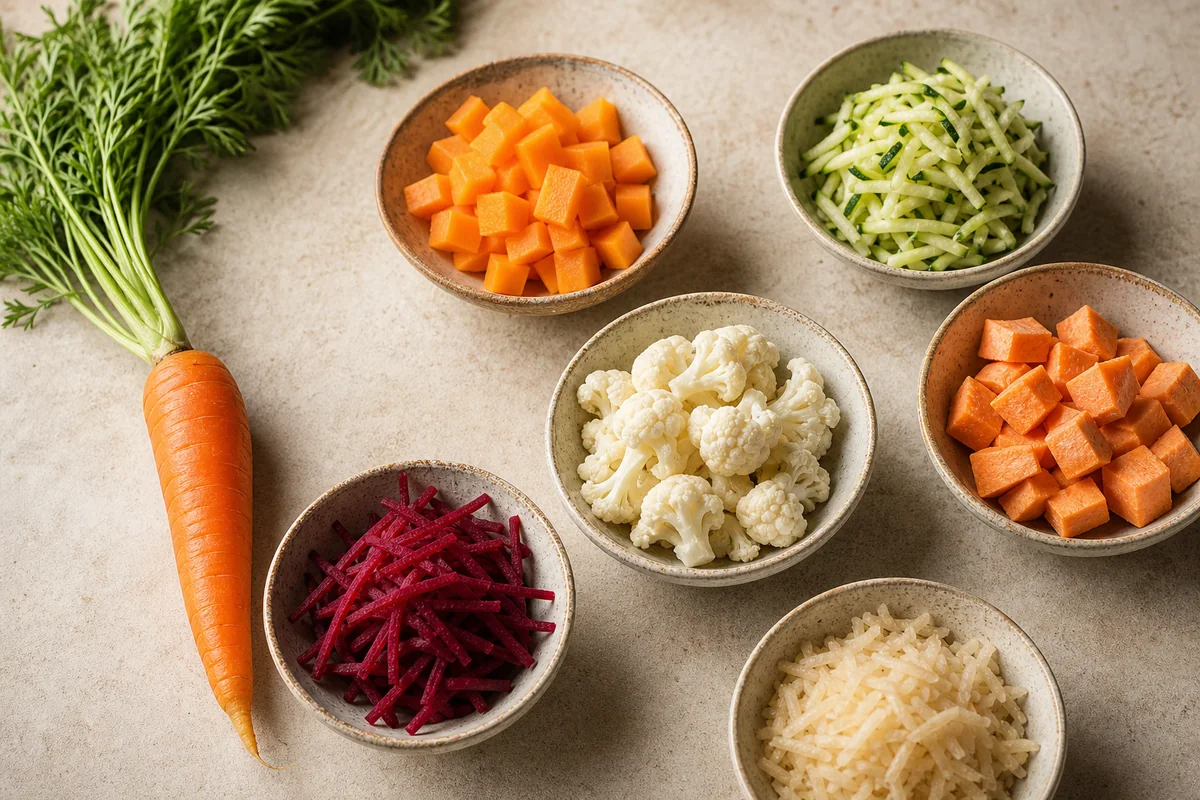
Carrots bring sweetness, structure, and moisture to both savory and baked dishes. Parsnip is the closest texture match for shredded or diced uses. Sweet potato and butternut squash work best when baking needs tender body. Zucchini and pumpkin purée fill moisture roles with adjustments.
5 Best Carrot Substitute Options (Texture-Matched)
| # | Substitute | Best For | Ratio | Key Note |
|---|---|---|---|---|
| 1 | Parsnip | Both | 1:1 | Closest strand texture |
| 2 | Sweet Potato | Both | 1:1 | Sweeter; great for bakes |
| 3 | Butternut Squash | Both | 1:1 | Roast first; drain well |
| 4 | Zucchini | Both | 1:1 | Squeeze dry before use |
| 5 | Pumpkin Purée | Both | 1:1 | Reduce other liquids slightly |
Each option below is sorted by texture first, then by how it handles baking moisture. Pick by what your recipe actually needs: visible strands, smooth body, or a neutral filler.
1. Parsnip
Parsnip is the swap to reach for first when a recipe calls for shredded or grated carrot. It has the same fibrous structure, so it grates into thin strands that hold their shape in soups, slaws, and roasted dishes.
The flavor is slightly more peppery and less sweet than carrot, but most people can't detect the difference once it's cooked. Use a fine or medium grater to keep the strand length similar to shredded carrot.
- Texture match: Very close when finely grated; holds up in both raw and cooked applications
- Flavor direction: Mildly peppery with earthy undertones; less sweet than carrot
- Best prep: Grate on medium holes; for soups and stews, dice to a ¼-inch cube
For recipes where parsnip is also the main ingredient and you need a backup, root vegetable swaps can help you layer options.
Skip if: your recipe depends on carrot's orange color and you can't accept a cream or white result in the finished dish.
2. Sweet Potato
Sweet potato steps in when a recipe needs both sweetness and body, especially in baking. It carries more natural sugar than carrot, and that extra sweetness actually works in your favor for cakes, muffins, and quick breads.
For savory dishes, grate it raw at 1:1. If it's too firm for your batter, steam or microwave it briefly first, then grate or mash.
Knowing the flavor profile of this starchy root helps you decide when it fits and when it'll overpower a savory recipe.
- Grate vs. mash: Grate for visible texture; mash for smooth, even moisture in batter
- Flavor shift: Noticeably sweeter than carrot, so reduce added sugar by 1-2 tbsp
- Prep tip: If raw grated sweet potato feels too stiff, microwave for 30 seconds to soften before mixing
Skip if: your dish needs to stay firmly savory. Sweet potato pushes flavor toward the sweet side in soups and stews.
3. Butternut Squash
Butternut squash works best in baked goods where you want a smooth, even crumb rather than visible strands. It blends into batters cleanly and adds a gentle, nutty sweetness that pairs well with cinnamon and warm spices.
Always roast it first. Raw squash has too much water and an uneven texture.
Roast at 400°F until fork-tender, then mash and let it cool before measuring. If your batter still seems loose, you can find squash swap options that may offer a drier consistency.
If the mixture is runny even after cooling, reduce the other liquids in your recipe by 2 tablespoon or stir in an extra tablespoon of flour.
Skip if: your recipe needs visible carrot pieces, like a chunky soup or a shredded-carrot salad. Squash won't give you that bite.
4. Zucchini
Zucchini's biggest problem is water. It releases a lot of it, and if you skip the squeezing step your cake or muffin comes out gummy in the center.
Grate it first, then wrap it in a clean towel and wring firmly for 10 to 15 minutes.
Once squeezed, this high-moisture vegetable actually behaves much like carrot in baked recipes. It adds bulk and tenderness without competing flavors.
- Best uses: Quick breads, muffins, soups where you want soft texture without added sweetness
- Prep step: Squeeze grated zucchini for 10-15 minutes; discard liquid before measuring
- Flavor effect: Very mild; add an extra pinch of cinnamon or nutmeg to compensate for carrot's absent sweetness
Skip if: you need the swap to carry sweetness. Zucchini is nearly flavor-neutral and won't fill that role.
5. Pumpkin Purée
Pumpkin purée is strongest in spice-forward baking: think carrot cake, spiced loaves, and autumn muffins. It brings orange color and moisture, two things that make it an easy visual stand-in for carrot.
Pumpkin Purée
Works for: spiced cakes, muffins, smooth batters that need warm color and moisture
Skip if: recipe is unsweetened or savory; pumpkin adds a distinct earthy-sweet note
Carrots (for comparison)
Works for: both savory and sweet recipes; adds texture and mild sweetness without dominant flavor
Skip if: you need a fully smooth purée texture; grated carrot adds visible bits
For canned purée, check that your opened pumpkin purée is still fresh before using it in a batter. Opened cans go off faster than most cooks realize.
- Ratio: Use 1:1 by volume; measure after draining any excess liquid from the can
- Best spices: Pair with cinnamon, ginger, and nutmeg; they bridge pumpkin toward carrot-cake flavor
- Liquid adjustment: Reduce milk, water, or oil in your recipe by 2-3 tablespoon to compensate for purée's added moisture
Making Carrot Substitutes Work in Any Recipe
The core rule is simple: match texture first, then adjust moisture. A swap that's too wet will collapse a baked crumb; one that's too firm can leave raw pockets in a finished dish.
When choosing between watery vegetable swaps, the squeeze-and-drain step is non-negotiable.
- Grate vs. mash: Choose grated if your recipe needs visible texture; choose mashed or puréed if the carrot would have disappeared into the batter anyway
- Reduce or squeeze: Zucchini needs 10-15 minutes of squeezing; pumpkin purée and butternut squash need a 2-3 tablespoon liquid reduction elsewhere in the recipe
- Flavor adjustment: Add a pinch of salt to mild swaps to bring out sweetness; add cinnamon or nutmeg if the original recipe leaned on carrot's earthiness
Frequently Asked Questions
Parsnip is the nearest match. Grate it on a medium grater and it produces strands almost identical in length and firmness to shredded carrot.
Yes, but squeeze it dry first. Zucchini holds far more water than carrot, and skipping that step makes baked goods gummy.
Reduce the sugar in your recipe by 1-2 tablespoon when using sweet potato or pumpkin purée. Taste the batter before baking and adjust from there.
Yes. Raw butternut squash is too firm and watery for most substitutions. Roasting removes excess moisture and softens it to a mashable, batter-ready texture.
Sweet potato is the best choice. It keeps the cake moist and tender, and its natural sweetness pairs well with the cream cheese frosting typically used.
5 Best Carrot Substitutes for Home Cooks
Ingredients
Equipment
Method
- Decide your end goal: crunchy carrots (use parsnip grated) or soft moisture (use sweet potato, butternut squash, or pumpkin).
- Swap at a 1:1 ratio for grated/mashed substitutes; if using bell pepper, start at ¾ of the carrot amount and cook until soft.
- For baking, squeeze excess moisture from zucchini and drain/adjust very watery purées before mixing.
- Taste and fine-tune: add a pinch of salt to bring out sweetness, and balance flavor with cinnamon/spice if your recipe uses them.
- If your batter seems looser than expected, thicken with a tablespoon of flour or reduce mix-ins slightly.
Notes
- For the closest strand-like texture, grate parsnip or sweet potato finely.
- If your substitute is wetter than carrots, reduce added liquid next time or squeeze it first.
Tried this recipe?
Let us know how it was!
Carrie is a food writer and editor with more than 15 years of experience. She has worked for some of the biggest names in the food industry, including Bon Appétit, Food & Wine, and Martha Stewart Living.
As the Editor in Chief of EpicureDelight, Carrie oversees all of the content on the site. She also manages the team of contributing writers and editors, who help to create delicious recipes, helpful tips, and informative articles that you’ll find on the site.
A native of the Chicago area, Carrie is passionate about all things food. She loves trying new restaurants and experimenting with new recipes in her kitchen. She’s also a graduate of the Culinary Institute of America, so she knows a thing or two about food!