
That sweet, creamy bite butternut squash brings to a roasted sheet pan or a blended soup is genuinely hard to fake. But hard is not impossible, and a good butternut squash substitute is closer to your kitchen than you think.
The key is matching by cooking goal. A swap that works beautifully in soup may turn mushy when roasted.
Knowing which substitute fits your method means you never land on a watery, flavorless result.
Proper butternut storage helps you avoid this problem next time. For now, the five swaps below cover every situation.
The best butternut squash substitutes are kabocha squash and buttercup squash for near-identical sweetness and creaminess. Delicata works when that's what you have. Frozen butternut squash is the fastest same-flavor swap. A carrot-potato blend is your no-squash emergency option for soups and purees.
5 Best Butternut Squash Swaps (By Texture + Use)
Every substitute below is rated by the cooking method where it performs best. Understanding butternut squash taste up front helps you judge whether a swap will actually deliver that same warm, honey-sweet finish.
| # | Substitute | Best For | Ratio | Key Note |
|---|---|---|---|---|
| 1 | Kabocha squash | Roast + Mash | 1:1 | Sweetest match overall |
| 2 | Buttercup squash | Soup + Puree | 1:1 | Silky blend, less nutty |
| 3 | Delicata squash | Roast + Mash | 1:1 | Milder; season generously |
| 4 | Frozen butternut (thawed) | Soup + Puree | 1:1 | Drain excess moisture first |
| 5 | Carrot + potato mash | Soup + Puree | ¾:1 | No-squash emergency only |
If you're working with an ingredient you don't know well, checking best delicata squash alternatives is useful context before you start.
1. Kabocha Squash
Kabocha is the closest all-around butternut squash alternative you'll find in most grocery stores. Its flesh goes dense and creamy when roasted and blends without any stringiness, making it equally at home in mash or puree.
The flavor runs slightly sweeter and earthier than butternut, which most people prefer rather than tolerate. It holds cube shape well during roasting, so expect similar caramelized edges.
- Ratio: Use 1:1 by weight in any roasting or mashing recipe
- Texture check: Flesh is denser than butternut - roast until a fork slides in easily
- Flavor note: Slightly sweeter; reduce any added honey or maple by 1 teaspoon if blending
- Skin: Edible when roasted, so you can skip peeling for sheet-pan dishes
*Skip if:* your recipe needs a very mild, neutral squash flavor or a paler orange color in the finished dish.
2. Buttercup Squash
Buttercup is the one to reach for when the recipe is a blended soup or a smooth puree. It cooks down to soft, scoopable flesh faster than butternut does, and it blends into a genuinely silky texture without extra cream.
The flavor is sweet but slightly less nutty than butternut's. That difference is barely noticeable once you add stock and warm spices.
- Ratio: 1:1 by weight for soups and purees
- Blend tip: Roast or steam first, then blend hot for the smoothest result
- Flavor gap: Add a small pinch of nutmeg to replicate butternut's nuttier edge
Buttercup Squash
Works for: blended soups, smooth purees, creamy bisques
Skip if: you need firm roasted cubes that hold shape under high heat
3. Delicata Squash
Delicata is milder and a little drier than butternut, which means it needs help to reach that same warm, sweet depth. Knowing what delicata squash tastes like before you commit to the swap saves you a bland result.
Add a splash of broth or a knob of butter when mashing, and lean on spices harder than you usually would with butternut.
- Ratio: 1:1 by weight, but reduce roast time by about 5 minutes
- Moisture fix: Stir in 2-3 tablespoon broth per cup when mashing to prevent dryness
- Seasoning: Double your cinnamon and nutmeg - delicata's sweetness is quieter than butternut's
- Skin: Edible and thin; no need to peel for roasting
*Skip if:* the recipe leans on butternut's deep, custardy sweetness without much added seasoning - delicata won't carry that on its own.
4. Frozen Butternut Squash (Thawed)
This is the fastest same-flavor swap in the list. Frozen butternut squash is already cut and sometimes partially cooked, so it drops straight into soups and purees with zero prep beyond thawing.
The one catch: it releases water. Drain it in a colander for 10 minutes and pat dry before adding to any recipe where excess liquid matters.
- Ratio: 1:1 by weight - it's still butternut, just pre-processed
- Moisture step: After thawing, drain for at least 10 minutes; for purees, simmer briefly to cook off extra liquid
- Soup use: Add directly from frozen to a simmering pot - no thaw needed for blended soups
- Thickening: If your puree looks loose, reduce uncovered on low heat for 3-4 minutes
*Skip if:* you need firm roasted edges or caramelized cubes for a grain bowl or salad topping - frozen squash goes soft and won't brown properly.
5. Carrot + Potato Mash
This is the emergency option when there's no squash of any kind in the house. Carrot brings the natural sweetness and orange color; a starchy potato - or savory floury variety - gives body and creaminess when blended.
The result won't taste like butternut squash, but it hits the same sweet-creamy notes in soup. For carrot swaps when you're also short on carrots, there are good alternatives that keep the color and sweetness intact.
| Use | Ratio | Notes |
|---|---|---|
| Blended soup | 2 parts carrot : 1 part potato | Blend until fully smooth; add stock to loosen |
| Puree/mash | 1 part carrot : 1 part potato | More potato = creamier, less sweet; adjust to taste |
| Thick stew base | ¾ total volume vs butternut | Use slightly less - potato adds starch quickly |
- Sweetness boost: Add 1 teaspoon maple syrup or a small roasted shallot to close the flavor gap
- Blend target: Blend at least 90 seconds for a smooth, lump-free texture similar to squash puree
- Seasoning: Nutmeg and a little ginger do the most work here to mimic butternut's warmth
*Skip if:* you want genuine roasted squash flavor - this reads as root-vegetable puree, not squash.
Making Any Butternut Squash Substitute Taste Right
Swapping the vegetable is the easy part. Getting the final dish to taste right comes down to three things: moisture, sweetness, and cook time.
Learning more about the flavor of kabocha squash or whichever substitute you're using will tell you exactly how far the flavor sits from butternut's baseline before you start adjusting.
- Moisture: Watery substitutes (frozen squash, blended mash) should be drained and simmered for 3-5 minutes before seasoning to avoid a loose, thin result
- Sweetness: Milder substitutes like delicata need an extra pinch of nutmeg, cinnamon, or a few drops of maple syrup to match butternut's warmth
- Cook time: For purees and soups, cook until a fork slides through with no resistance; for roasting, add 5-8 minutes if the flesh is denser than butternut's
Frequently Asked Questions
Yes, kabocha substitutes 1:1 by weight in roasting and mashing recipes. Its flesh is slightly denser, so roast until fork-tender and reduce any added sweetener by about 1 tsp.
Buttercup is the better soup pick - it cooks to a softer texture and blends slightly smoother. Kabocha works too but may need a longer blend time.
It can if you don't adjust seasoning. Add extra nutmeg, a knob of butter, and a splash of broth to bring the warmth and sweetness closer to butternut's level.
Drain thawed squash in a colander for 10 minutes, then pat dry. For purees, simmer the drained squash on low heat for 3-4 minutes to cook off remaining moisture.
Yes, use a 2:1 carrot-to-potato ratio and blend smooth. Add a pinch of nutmeg and a small drizzle of maple syrup to match butternut's warmth and sweetness.
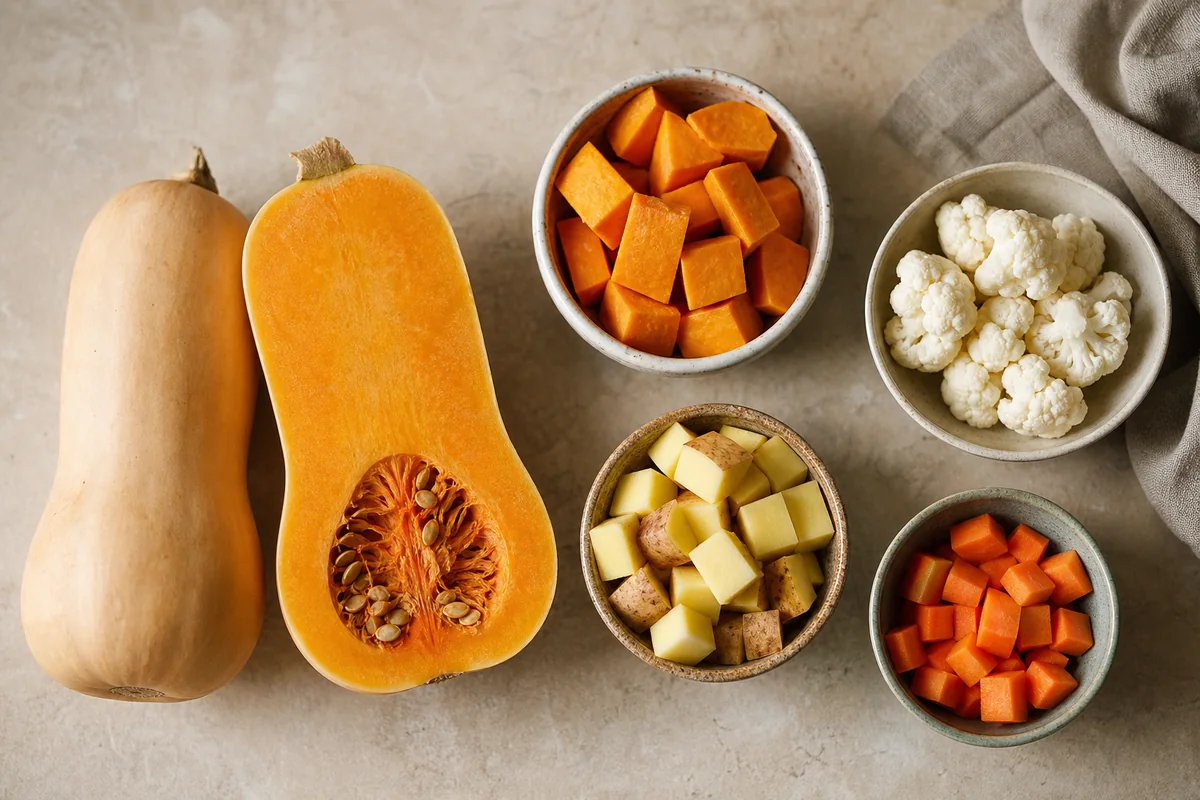
5 Best Butternut Squash Substitutes (Pantry Swaps)
Ingredients
Equipment
Method
- Identify your use: roasting, soup, or mash/puree—then pick the substitute that matches the texture you need.
- Substitute 1:1 by weight for the squash-for-squash options; for the carrot+potato mix, use the listed blend ratio.
- If the substitute is watery (frozen squash or blended mash), drain and reheat briefly to thicken before seasoning.
- Adjust flavor: for milder options (delicata), add a little salt and a pinch of nutmeg or cinnamon to bring back warmth.
- Taste and fine-tune your final texture: blend smooth for puree, or roast longer for firmer edges.
Notes
- Match sweetness first (kabocha/buttercup). Match creaminess second (for puree/soup).
- For soups, aim for tender cubes before blending to avoid grainy texture.
Tried this recipe?
Let us know how it was!
Carrie is a food writer and editor with more than 15 years of experience. She has worked for some of the biggest names in the food industry, including Bon Appétit, Food & Wine, and Martha Stewart Living.
As the Editor in Chief of EpicureDelight, Carrie oversees all of the content on the site. She also manages the team of contributing writers and editors, who help to create delicious recipes, helpful tips, and informative articles that you’ll find on the site.
A native of the Chicago area, Carrie is passionate about all things food. She loves trying new restaurants and experimenting with new recipes in her kitchen. She’s also a graduate of the Culinary Institute of America, so she knows a thing or two about food!



