
Celery flakes have a dry, grassy-herbal bite that quietly anchors a lot of recipes. They're not celery in the vegetable sense.
They're a concentrated seasoning that adds peppery, slightly bitter depth to soups, rubs, and savory bakes without adding moisture.
Choosing the right celery flakes substitute depends on what the flakes are actually doing. If they're the main flavor note, you want something equally concentrated and dry.
If they're just background seasoning, a pinch of a different herb blend often covers it.
Most swaps fall into three groups: more-concentrated (celery seed), same-format (dried celery), and salt-bearing (celery salt). Each has a different ceiling for how much you can add before the dish tips.
Celery flakes add a dry, peppery-herbal note to savory cooking. The closest swaps are celery seed (most concentrated), dried celery (same family), and celery salt (adds sodium). For herbal backup, a parsley-fennel blend works when celery flavor is secondary.
5 Best Celery Flakes Substitutes, Ranked by Flavor Match
These five swaps are ordered from closest flavor match to most creative workaround. Each ratio is a starting point.
Taste after adding and adjust from there.
| # | Substitute | Best For | Ratio | Key Note |
|---|---|---|---|---|
| 1 | Celery Seed (ground) | Both | 1:1 | Strong; taste before adding more |
| 2 | Dried Celery (minced) | Both | 1:1 | Closest texture to flakes |
| 3 | Celery Salt | Savory | ¾:1 | Reduce added salt in recipe |
| 4 | Celery Seed + Fennel | Both | 1:1 | DIY blend; fennel adds sweetness |
| 5 | Parsley + Ground Fennel | Savory | 1:1 | Herbal backup, not celery-forward |
1. Celery Seed (Ground)
Ground celery seed is the most flavor-accurate swap. It's made from the same plant and carries that sharp, bitter-herbal note in a concentrated dry form.
You can find it in this dry-herb category of seasoning, where it plays similarly in rubs and spice blends.
- Dry rubs: Use at a full 1:1 ratio; celery seed holds up to heat well.
- Soups and stews: Start with ¾ of the called amount; it blooms in liquid.
- Savory baking: Works cleanly in bread or cracker dough at 1:1.
Skip if your recipe needs visible flake texture. Celery seed is fine and powdery, not flake-shaped, so the visual finish is different.
2. Dried Celery (Minced)
Dried celery is the same-family, same-format substitute. It smells almost identical to celery flakes when you open the jar.
The aroma is dry and grassy, without any of the salt-forward quality you get from celery salt.
If you want clean flavor and are choosing among dry celery options, dried celery minced is usually the most reliable pick for textured seasoning blends.
- Ratio: Use 1:1; if pieces are coarse, crush lightly in your palm first.
- Rubs and spice blends: Direct 1:1 replacement with no other adjustments needed.
- Soups: Add early so it rehydrates fully in the liquid.
Skip if your recipe needs a very fine, uniform sprinkle. Dried celery can be chunky and may not distribute as evenly as flakes.
3. Celery Salt
Celery salt delivers real celery flavor, but it carries sodium with it. Every half-teaspoon swap adds meaningful salt to the dish.
That's manageable in soups or casseroles. It's harder to control in baking.
Understanding what celery salt brings to a dish makes it easier to decide when the trade-off is worth it. The celery flavor is genuine, just packaged with salt you have to account for.
Celery Salt Swap
Works for: soups, casseroles, seasoning blends, marinades where salt is expected
Skip if: recipe is salt-precise, you're baking, or sodium is restricted
- Ratio: Use ¾ teaspoon celery salt per 1 teaspoon celery flakes called for.
- Salt reduction: Cut any added salt in the recipe by at least ¼ teaspoon per swap.
- Taste check: Season at the end, not the beginning, to avoid over-salting.
Skip if the recipe is already salt-precise or if you're making a sweet-savory bake where extra sodium changes the balance.
4. Celery Seed + Pinch of Fennel
This is a DIY blend that comes close to the full celery-flake profile. Celery seed gives the core bitter-herbal note, and a small amount of anise-forward seed swaps adds the mild sweet undertone that celery flakes often have in the background.
The ratio is simple: for every 1 teaspoon of celery flakes, use ¾ teaspoon ground celery seed plus a small pinch of ground fennel, about ⅛ tsp. Start there. The fennel is supporting, not starring.
Watch the fennel amount closely. Too much and the blend reads as anise, not celery. If you're sensitive to licorice-adjacent flavors, reduce the fennel to just a dusting or skip this option entirely.
Skip if you can't tolerate fennel's anise character at all, even in small amounts. In that case, straight celery seed on its own is a cleaner choice.
5. Dried Parsley + Ground Fennel
This is the furthest from true celery flavor, but it works well when celery flakes are adding general herbal seasoning rather than a specific celery note. Parsley contributes a clean green-herb quality, and this mildly sweet seed adds just enough complexity to bridge the gap.
- Ratio: Use 1 teaspoon dried parsley plus ⅛ teaspoon ground fennel per 1 teaspoon celery flakes.
- Dry seasoning mixes: Blend thoroughly before adding to ensure even distribution.
- Breading: Works well; the green color from parsley blends into the coating naturally.
- Color note: This blend is greener than celery flakes, which are pale yellow-green.
Skip if celery flavor is the point of the dish. In a celery-forward soup or potato salad dressing, this blend reads as "herby" rather than "celery."
Making Celery Flakes Substitutes Work (No-Miss Tips)
The most common mistake is swapping without tasting first. Taste your dish after adding the substitute, before you season further.
Celery seed can be punchy and sharp after heat exposure, so what seems mild in the jar can become bold in the pot. If using celery salt, always account for adjusting salt levels before you add anything else.
- For baking: Stick to dry substitutes only. Fresh celery and even coarse dried celery can create moisture pockets that affect crumb texture.
- For soups and stews: Add your substitute early if it's seed-based, so it has time to bloom in liquid and mellow out.
- For rubs and spice blends: Grind celery seed fine before mixing so it distributes evenly and doesn't clump against coarser spices.
If you have time to check how long dried celery seasoning stays potent, older flakes may already be faded and any substitute will outperform them anyway.
Frequently Asked Questions
Yes. Celery seed is the closest flavor match. Start at a 1:1 ratio and reduce slightly if the celery flavor comes through too sharp after cooking.
Ground celery seed is the best option for baking. It stays dry, distributes evenly in dough, and won't add moisture like fresh celery would.
Use ¾ teaspoon celery salt for every 1 teaspoon celery flakes. Reduce any other added salt in the recipe by at least ¼ teaspoon to compensate.
They are very similar. Celery flakes are thinly dried and often finer; dried celery minced can be coarser. Crush lightly for a closer texture match.
Only in flexible recipes. Fresh celery adds moisture, so sauté and pat it dry before using. Never substitute it directly in dry rubs or baking.
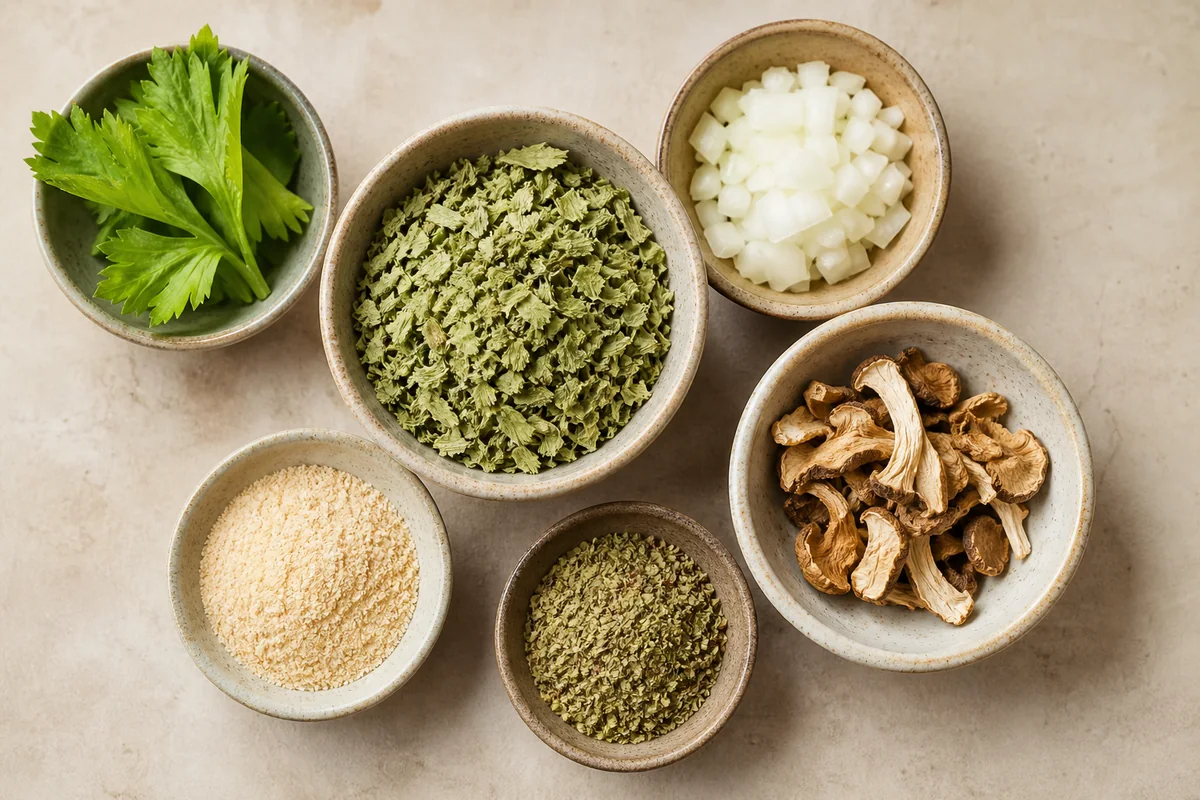
5 Best Celery Flakes Substitutes (Flavor-Matched)
Ingredients
Method
- Identify how celery flakes are used: dry seasoning/rub (most common), or baked-in flavor where texture can matter.
- Choose the closest match from the table: celery seed for maximum similarity, dried celery for aroma/texture, celery salt if you can reduce recipe salt.
- Apply using the listed ratio; if your swap is wetter (fresh celery) or saltier (celery salt), scale down to prevent overpowering.
- Adjust after the first taste: add a pinch more herb to boost, or cut back and rebalance salt/sweetness if the profile shifts.
Notes
- Celery flakes are typically a concentrated, dry celery seasoning. Substitutes should preserve that dry, savory-herbal top note.
Tried this recipe?
Let us know how it was!
Carrie is a food writer and editor with more than 15 years of experience. She has worked for some of the biggest names in the food industry, including Bon Appétit, Food & Wine, and Martha Stewart Living.
As the Editor in Chief of EpicureDelight, Carrie oversees all of the content on the site. She also manages the team of contributing writers and editors, who help to create delicious recipes, helpful tips, and informative articles that you’ll find on the site.
A native of the Chicago area, Carrie is passionate about all things food. She loves trying new restaurants and experimenting with new recipes in her kitchen. She’s also a graduate of the Culinary Institute of America, so she knows a thing or two about food!



