
Cheddar does a lot of work in a recipe. It melts into sauces, browns on casseroles, and adds that salty, slightly sharp bite that pulls a dish together.
When you're out of it, the right cheddar cheese substitute depends on two things: how your recipe uses the cheese and how much tang you actually need.
Most cheddar swaps fall apart because people chase flavor and ignore melt. A cheese that turns grainy in a hot sauce is useless, no matter how good it tastes cold.
Match the melt first, then tweak the flavor.
Monterey Jack and Colby Jack are the closest all-around swaps for cheddar. They melt smoothly and work in most hot dishes. Gruyère and aged provolone add more depth. Mozzarella is an emergency melt-only option. Use processed cheese only when sauce smoothness matters most.
5 Cheddar Cheese Alternatives Ranked by Melt and Flavor
Not every cheese behaves the same way at high heat. This table gives you a fast read on which substitute fits your exact use case, so you spend less time guessing.
| # | Substitute | Best For | Ratio | Key Note |
|---|---|---|---|---|
| 1 | Monterey Jack | Both | 1:1 | Smooth melt, mild tang |
| 2 | Colby Jack | Both | 1:1 | Closest color match |
| 3 | Gruyère | Both | 1:1 | Nutty, savory depth |
| 4 | Sharp Provolone | Both | 1:1 | Good chew and stretch |
| 5 | Mozzarella | Melt | ¾:1 | Needs flavor boosters |
1. Monterey Jack
Monterey Jack is the quietest cheddar stand-in. It melts into a glossy, smooth layer with almost no effort, making it reliable in grilled cheese, quesadillas, and baked pasta dishes where you want the cheese to disappear into the dish rather than dominate.
The flavor is mild. There's no sharpness here.
If you need that bite, add a small pinch of mustard powder or a few drops of hot sauce to the dish itself.
For recipes where meltability matters more than tang, check out these jack cheese swapping options that can also fill in when Monterey Jack runs short.
Monterey Jack
Works for: grilled cheese, quesadillas, baked mac, casserole toppings, nachos
Skip if: you need pronounced cheddar sharpness or a strong orange color in the dish
- Flavor: Mild and buttery, none of cheddar's sharp tang
- Melt: Excellent - smooth, even, no graininess
- Best in: Hot dishes where cheese is a binder or topping
- Adjust: Add mustard powder or a pinch of salt to push flavor closer to cheddar
2. Colby Jack
Colby Jack sits closer to cheddar than most people realize. It has a mild orange-yellow color, a gentle sweetness, and a melt that holds up well under broiler heat without turning rubbery.
It shreds easily and browns in the oven at roughly the same rate as medium cheddar. For casseroles and toasted sandwiches, it's a near-seamless swap.
- Flavor closeness: Very close to mild or medium cheddar, less so to sharp cheddar
- Melt: Melts evenly; holds together under broiler heat without splitting
- Shredding: Shreds clean from cold; no crumbling or clumping
- Best in: Casseroles, grilled cheese, tacos, baked potatoes, and quesadillas
If you're deciding between these two options, the side-by-side comparison of Colby and Monterey Jack breaks down the differences clearly.
Skip if you need a tangy, sharp sauce - Colby Jack is too mellow and the flavor gap will show.
3. Gruyère
Gruyère is a different kind of melt. It goes silky and pulls in long strands, making it excellent for fondue-style sauces and gratins.
The flavor is savory and nutty, not sharp or tangy like cheddar.
It works well when cheddar's role in a dish is more about body and richness than bite. Think baked potato toppings, French onion-style casseroles, and hot dips.
- Flavor: Nutty, slightly earthy, savory - not tangy
- Melt: Outstanding; goes very smooth at moderate heat
- Best in: Gratins, baked dips, creamy pasta sauces, toasted sandwiches
- Adjust: Add a tiny squeeze of lemon or a splash of white wine to sauces for brightness
- Cost: Pricier than cheddar; worth it for small amounts in cooked dishes
If you're running low on Gruyère too, melting into Gruyère alternatives covers your next best options.
Skip if you want classic cheddar sharpness or you're on a tight budget and need a large quantity.
4. Sharp Provolone (Aged)
Aged provolone has more bite than regular provolone and a melt that's firm rather than silky. It stretches nicely but doesn't go fully fluid the way Gruyère or Monterey Jack does.
Slice it thin for sandwiches - thin slices melt faster and more evenly under a broiler. For grating onto baked dishes, shred it cold and apply near the end of cooking time.
Sharp Provolone
Works for: toasted sandwiches, baked casseroles, pizza-style toppings, panini
Skip if: you need a creamy, fluid sauce melt or can't find the aged variety
- Flavor intensity: Noticeably stronger than mild cheddar; closer to sharp cheddar
- Best heat method: Broiler or oven at 400°F; avoid very high direct heat
- Slicing advice: Thin-slice for fastest melt in sandwiches; shred for casserole toppings
- Best in: Stromboli, baked potatoes, casserole gratins, and toasted subs
For more aged and semi-firm options, sharper aged alternatives are worth checking before you settle.
5. Mozzarella (Whole-Milk)
Whole-milk mozzarella pulls and stretches without graining up in a sauce, which makes it a solid emergency option. The flavor, though, is almost neutral.
It won't bring cheddar's tang without a little help from the cook.
A pinch of salt, a few drops of lemon juice, and a tiny amount of mustard powder can push this fresh stretchy cheese surprisingly close to cheddar's profile in cooked applications.
- Melt texture: Smooth pull and stretch; no graininess at moderate heat
- Browning: Browns well on top of baked dishes; gets a slight golden color
- Flavor fix: Add ¼ teaspoon mustard powder + a small pinch of salt per cup of shredded cheese
- Ratio: Start with ¾ the amount called for, then adjust up to taste
Skip if your dish depends on sharp cheddar tang in the sauce itself. You'll need one of the other swaps on this list instead.
Making Cheddar Cheese Substitutes Work in Any Recipe
The rule is simple: match melt behavior first, then close the flavor gap. A cheese that splits in a hot sauce will ruin the dish even if the flavor is perfect.
Low heat and gradual stirring prevent most graininess issues with natural cheese substitutes.
When you know the sharp and tangy profile of cheddar, it's easier to decide how much flavor adjustment your substitute needs.
- For sauces: Shred cheese cold, add it off direct heat, and stir slowly - never dump cold cheese into boiling liquid
- For milder cheeses: Add a small pinch of mustard powder, a few drops of lemon juice, or extra salt to mimic cheddar's tang
- For baked toppings: Apply shredded substitute in the last 8-10 minutes of baking so it melts without over-browning
If you're building a creamy stovetop pasta dish, pull the pot off heat before stirring in your substitute. That single step prevents the gritty texture that appears when cheese proteins seize under high heat.
Frequently Asked Questions
Monterey Jack is the closest melt match. It goes smooth without graining and handles both sauces and baked toppings reliably at 1:1.
The melt works, but the flavor gap is real. Add a pinch of mustard powder and a little salt to get closer to cheddar's profile.
Colby Jack or Gruyère both stay creamy when baked. Colby Jack is milder; Gruyère adds a nuttier depth to the sauce.
Pull the pot off the heat before adding cheese, and stir slowly. High heat seizes natural cheese proteins and causes graininess.
It works well for melt and texture, but the tang is milder. Add a swipe of Dijon mustard to the bread to compensate.
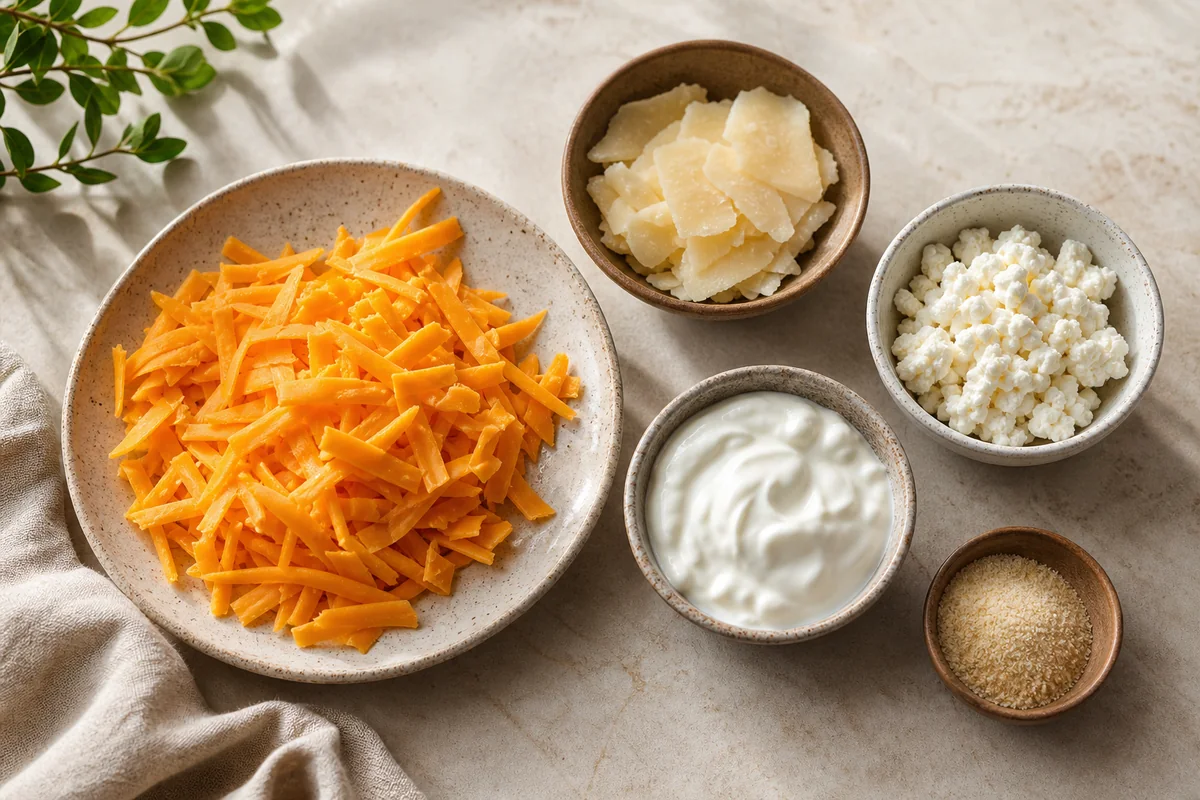
5 Best Cheddar Cheese Substitutes in Every Recipe
Ingredients
Method
- Identify your use case: shredding/topping, melting in sandwiches, or stirring into sauces/bakes.
- Choose the closest melt match first: Monterey Jack/Colby Jack for melt + chew; Gruyère/provolone for deeper savory melt.
- Apply the listed ratio: use 1:1 for most swaps; for mozzarella, start at ¾ the amount and adjust to taste.
- If the substitute is milder than cheddar, boost flavor gradually (pinch of salt, small mustard powder pinch, or a tiny lemon squeeze).
- Test melt behavior: add shredded cheese to hot food and stir briefly for sauce dishes; for baking, add on top near the end.
Notes
- All ratios assume shredded/crumbled use. Adjust for stronger or milder brands and water content.
- For sauce applications, grate and melt slowly over lower heat to avoid graininess.
Tried this recipe?
Let us know how it was!
Carrie is a food writer and editor with more than 15 years of experience. She has worked for some of the biggest names in the food industry, including Bon Appétit, Food & Wine, and Martha Stewart Living.
As the Editor in Chief of EpicureDelight, Carrie oversees all of the content on the site. She also manages the team of contributing writers and editors, who help to create delicious recipes, helpful tips, and informative articles that you’ll find on the site.
A native of the Chicago area, Carrie is passionate about all things food. She loves trying new restaurants and experimenting with new recipes in her kitchen. She’s also a graduate of the Culinary Institute of America, so she knows a thing or two about food!



