
Provolone brings a mild tang and reliable melting to sandwiches, baked pastas, and gratin dishes that most cheeses can't quite replicate straight out of the fridge.
It's a semi-hard Italian cow's-milk cheese aged 2-6 months for mild versions and 6-12+ months for sharp, with moisture content around 42-48% and a melting range that starts softening near 130-140°F and flows smoothly by 150-160°F.
Understanding how provolone cheese tastes helps set realistic expectations for any swap.
Swaps fail when cooks ignore moisture, aging, and salt gaps. A high-moisture cheese floods a baked dish; a sharp aged cheese oversalts it.
The five substitutes below are sorted by use case - melting, cold sandwich builds, and oven baking - so you can pick the right one fast.
---
Fontina is the best overall provolone substitute. Use it 1:1 by weight; it melts closest to provolone and suits most cooking applications. Its main limit is a nuttier flavor in older versions. Low-moisture mozzarella covers cold sandwiches fast, and a mild cheddar blend holds structure for baking.
---
5 Best Substitutes for Provolone Cheese to Try
Here's a quick reference for all five swaps before we break each one down.
| # | Substitute | Best For | Ratio | Key Note |
|---|---|---|---|---|
| 1 | Fontina | ✨ Both | 1:1 | Nuttier flavor when aged |
| 2 | Low-Moisture Mozzarella | 🥗 Cold/Melt | 1:1 | More stringy, less tang |
| 3 | Fontina + Mozzarella Blend | ✨ Both | ¾ cup:1 cup | Firmer texture when baked |
| 4 | Young Gouda | 🍳 Cooking | 1:1 | Sweeter, oilier above 165°F |
| 5 | Mild Cheddar (Blended) | 🧁 Baking | ¾ cup:1 cup | Browns faster, sharper taste |
---
Common Mistakes When Swapping Provolone Cheese
Not every semi-hard cheese behaves the same way under heat. Knowing where cooks go wrong saves a ruined dish.
- Assuming all semi-hard cheeses melt identically. Each cheese has a different fat-to-moisture ratio; test a small portion in the pan first to confirm flow before committing the full amount.
- Using high-moisture mozzarella in baked dishes. Fresh mozzarella sits near 60% moisture versus provolone's 42-48%; pat dry or drain for 10 minutes to remove 10-20% surface moisture before it goes into the oven.
- Ignoring salt differences with aged cheeses. Sharp aged cheeses run 10-20% saltier than mild provolone; taste the dish after melting and reduce any added salt before serving.
- Swapping a softer cheese without adjusting bake time. A softer substitute can shift browning by 3-6 minutes; start checking the dish early to avoid over-browning or under-browning.
- Skipping weight measurements for blends. Volume measurements shift the Fontina-to-mozzarella ratio; weigh both cheeses for consistent melt and texture.
- Using the wrong provolone age in the original recipe. Mild (2-6 months) and sharp (6-12+ months) provolone behave differently; match your substitute's age profile to the recipe's intent.
---
1 - Fontina
Fontina is a cow's-milk Italian cheese that ranges from semi-soft to semi-hard depending on age. Young Fontina, aged 1-3 months, has a mild, nutty, slightly creamy flavor and is the closest single-cheese match to provolone for melting applications.
Older versions, up to 12 months, push into more pronounced nuttiness, so younger wheels are the better call for most swaps.
Use Fontina at a straight 1:1 ratio. It softens around 140-150°F and flows by roughly 155°F, which nearly mirrors provolone's melt window.
That makes it reliable for fonduta, hot sandwiches, and casseroles. To learn what sets Fontina cheese apart from other Italian semi-hards, the flavor profile is worth understanding before you buy.
Fontina
Works for: grilled sandwiches, fonduta, casseroles, stovetop melts - flows smoothly at 155°F with a mild, nutty tone that reads as close to provolone in most cooked dishes
Skip if: you need a very neutral flavor or the recipe uses aged sharp provolone - older Fontina's nuttiness can read differently than provolone's mild tang
Provolone (reference)
Works for: all applications - melting, cold cuts, baking - with a mild tang and moisture around 42-48% that stays consistent across uses
Skip if: unavailable or if a nuttier, creamier profile is preferred - Fontina fills the gap reliably
---
2 - Mild Low-Moisture Mozzarella
Low-moisture mozzarella is a stretched-curd cheese with moisture around 45%, compared to fresh mozzarella's 60%. That lower moisture makes it much more stable in heat and gives it a firmer bite cold, which suits sandwich slicing well.
The trade-off is minimal tang; the flavor reads as neutral rather than the mild brightness provolone has.
Use it at 1:1. For baking, pat it dry or drain it on paper towels for 10 minutes to shed surface whey before it goes into the dish.
It melts and stretches at 140-155°F, producing more string pull than provolone. Good mozzarella storage methods also matter here - low-moisture mozzarella kept past its window gets rubbery and won't melt cleanly.
---
3 - Fontina + Mozzarella Blend (Closest All-Purpose)
For recipes where one cheese alone falls short, a blend of Fontina and low-moisture mozzarella covers more ground. Fontina brings the mild nuttiness and smooth melt; mozzarella adds stretch and tones down any strong nuttiness in older Fontina.
Together they come closer to provolone's balanced behavior than either does alone.
Fontina + Mozzarella Blend
Works for: baked pastas, casseroles, pizza toppings, grilled sandwiches - blends at 3:1 Fontina to mozzarella by weight; melts smoothly at 150-160°F with moderate stretch
Skip if: Fontina is hard to find locally or budget is tight - the blend costs more than a single-cheese swap
Mix 3 parts Fontina to 1 part low-moisture mozzarella by weight. Use ¾ cup of the blend per 1 cup of provolone called for in baked recipes, since the mix produces a slightly firmer set.
If Fontina isn't in your cheese drawer, check the options in this guide on working without Fontina cheese for backup ideas.
---
4 - Young Gouda
Young Gouda, aged 1-3 months, is mild and creamy with a touch of sweetness that provolone doesn't have. It melts well and works in gratins, grilled sandwiches, and stovetop applications at a straight 1:1 ratio.
The sweeter profile is the main flavor gap - dishes read as richer and less tangy than they would with provolone.
Watch the heat. Gouda softens near 135-150°F but turns oily above 165°F, especially in high-fat commercial wheels with typical fat content around 27-31% by weight.
For baked gratins, keep oven temp at or below 375°F and pull the dish as soon as the top colors. High-heat broiling is where young Gouda most often disappoints.
---
5 - Mild Cheddar (Blended for Baking)
Mild cheddar alone is too assertive and too firm to swap directly for provolone, but blended with Fontina it becomes a reliable baking option.
The cheddar holds structure, browns predictably, and adds a sharper flavor; the Fontina keeps the melt smooth enough to prevent a grainy texture.
Use ¾ cup mild cheddar plus ¼ cup Fontina per 1 cup provolone in casseroles and baked pasta dishes.
Mild cheddars typically contain 1.0-1.5% salt by weight, which is higher than most young provolone. Taste the dish before adding any extra salt.
---
Flavor and Texture Differences at a Glance
Each substitute lands differently on the plate. Here's a fast sensory and technical read on all five.
Fontina has a mild, nutty flavor and a smooth melt near 150-155°F; it's the most interchangeable with provolone across cooked applications. Low-moisture mozzarella is neutral and elastic, with a distinctive stretch at 140-155°F and almost no tang. The Fontina-mozzarella blend sits between the two: controlled stretch, moderate flavor, smooth melt at 150-160°F.
Young Gouda reads as creamy and faintly sweet; it tolerates heat to about 135-150°F before the fat starts separating.
Mild cheddar is the sharpest of the group and browns the fastest, making it best reserved for baked dishes where structure and crust matter more than flavor neutrality.
Matching the substitute to the job, melt vs bake vs cold, cuts down on guesswork.
For dishes where cheese is the main event, pairing cheese with chicken sandwiches shows how melt behavior changes the whole build.
---
Frequently Asked Questions
Yes, you can freeze provolone and most of its substitutes, but freezing breaks down the protein structure and causes the cheese to crumble more easily after thawing. Melting performance generally holds up in cooked applications like casseroles and sauces, but texture in cold uses (sandwiches, charcuterie) degrades noticeably. Wrap tightly in plastic, then foil, and use within two months for best results. For details on provolone cheese storage methods, including freezing timelines, the shelf life guide covers the full picture.
Boar's Head mild provolone is widely regarded as the closest match to traditional deli-style provolone in American supermarkets. It has a clean mild tang, consistent moisture, and slices without crumbling. Sargento and Tillamook also produce decent mild provolone in pre-sliced packs, though both can run slightly drier than a deli wheel.
Many commercial versions of low-moisture mozzarella and mild cheddar sold in US supermarkets use microbial or vegetable rennet rather than animal rennet. Check the label's ingredient list for "microbial rennet," "vegetable rennet," or "enzymes (non-animal)." Fontina and Gouda sourced from European producers more often use animal rennet, so those require more careful label reading.
Low-moisture mozzarella and the Fontina-mozzarella blend work on pizza without adjusting bake time in most cases. Cheddar-heavy blends brown 3-5 minutes faster at high heat (400-475°F), so watch the crust and reduce time accordingly. Young Gouda can pool oily at pizza temperatures above 165°F, so it's not the best pick for a standard pizza application. Fontina alone on pizza does fine and storing Fontina cheese properly before the pizza night keeps it from drying out prematurely.
Opened provolone, wrapped tightly in wax paper then plastic, lasts 3-4 weeks in the fridge. Low-moisture mozzarella holds 1-2 weeks once opened. Young Gouda and mild cheddar are similar to provolone at 3-4 weeks if wrapped well. Fontina is the shortest keeper of the group at roughly 2-3 weeks, as its higher moisture content speeds up mold growth at the cut surface.
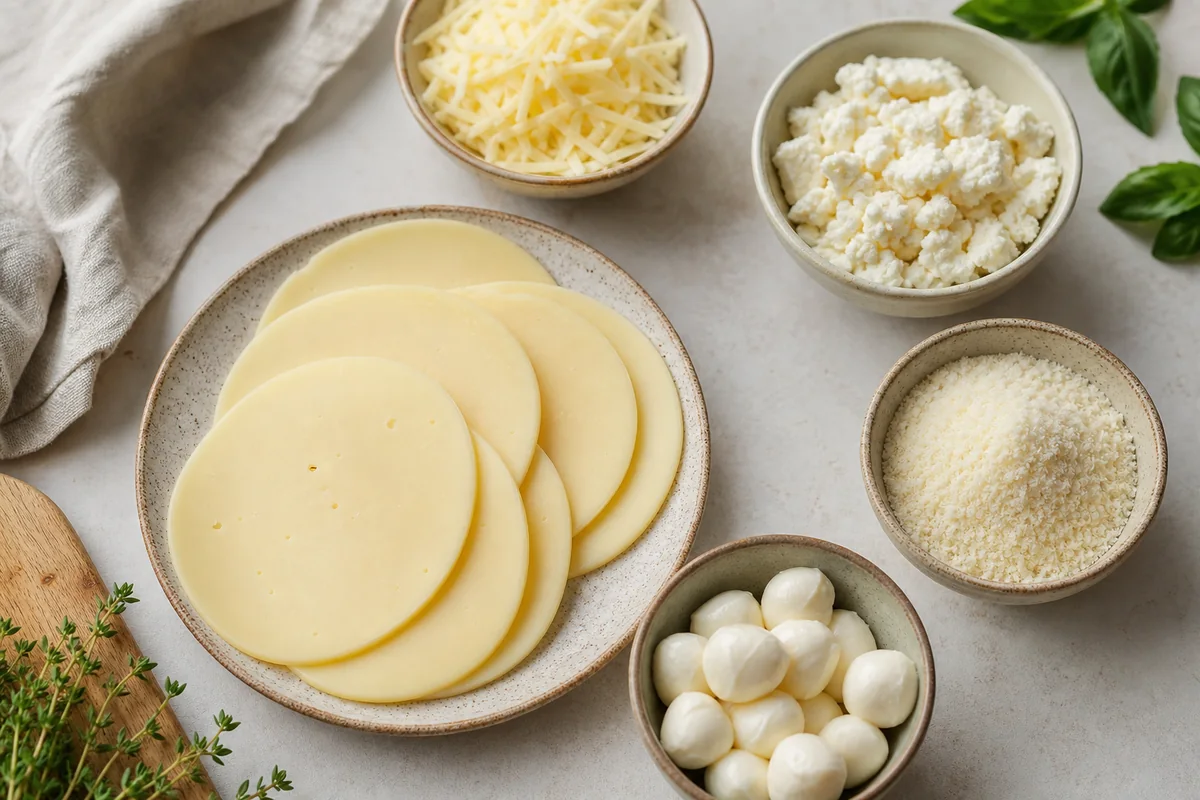
5 Best Provolone Cheese Substitutes That Taste Right
Ingredients
Equipment
Method
- Measure the substitute at the stated ratio (use weight when possible for blends).
- If using higher-moisture replacements, pat or drain for 5-10 minutes to remove surface whey before baking.
- For blends: combine cheeses thoroughly, then test a small portion in the pan or oven to confirm melt and browning (200-400 g test).
- Adjust salt after melting test-aged cheeses can add 0.5-1% extra salt; reduce added salt accordingly.
- When baking, start checking for browning 3-5 minutes earlier than the original recipe's time if using cheddar-containing blends.
Notes
- Use weight measures for blends to maintain consistent melt.
- Pat-dry high-moisture cheeses to prevent soggy bakes.
Tried this recipe?
Let us know how it was!
Carrie is a food writer and editor with more than 15 years of experience. She has worked for some of the biggest names in the food industry, including Bon Appétit, Food & Wine, and Martha Stewart Living.
As the Editor in Chief of EpicureDelight, Carrie oversees all of the content on the site. She also manages the team of contributing writers and editors, who help to create delicious recipes, helpful tips, and informative articles that you’ll find on the site.
A native of the Chicago area, Carrie is passionate about all things food. She loves trying new restaurants and experimenting with new recipes in her kitchen. She’s also a graduate of the Culinary Institute of America, so she knows a thing or two about food!



