
Chestnut mushrooms have a way of disappearing from supermarket shelves right when a recipe needs them most. They bring a mild, earthy flavor and a firm bite that holds up whether you're sautéing, stewing, or tossing them into a stir-fry.
The good news is that several mushrooms match that profile closely enough that your dish won't miss a beat.
Finding the right chestnut mushroom substitute comes down to two things: how the mushroom feels after cooking (tender vs. chewy) and how much savory depth it adds. This guide walks through the five best options, ranked by how closely they match, with a reference table and ratio notes so you can swap with confidence.
Chestnut mushrooms are mild, firm, and earthy. For the closest swap, reach for cremini or shiitake at a 1:1 ratio. Oyster mushrooms match the tenderness well. King oyster and portobello work but need trimming. Dried porcini replaces at just ¼ the amount.
5 Best Chestnut Mushroom Substitutes for Any Recipe
Each mushroom below sits in a different spot on the texture and umami scale. Use this table to match your dish first, then read the item sections for prep details and ratio notes.
The "Best For" column reflects cooked behavior, not raw appearance.
| # | Substitute | Best For | Ratio | Key Note |
|---|---|---|---|---|
| 1 | Shiitake | Both | 1:1 | Trim stems, slice thin |
| 2 | Oyster | Both | 1:1 | Cook hot and fast |
| 3 | Cremini | Both | 1:1 | Sauté until browned |
| 4 | King Oyster | Both | ¾:1 | Slice against the grain |
| 5 | Portobello | Both | ¾:1 | Remove gills, trim down |
1. Shiitake Mushrooms
Shiitake lands higher on the umami scale than chestnut mushrooms. The caps are firm and meaty, and they hold their shape through long cooking times.
What changes most is the flavor: shiitake is noticeably more savory, so it works best in hearty stews, ramen, and braised dishes where that depth is welcome.
The stems are tough and chewy. Remove them before cooking and either discard or save for broth.
If you want more on the flavors you're working with, the profile of this wood-grown mushroom is worth a read before you commit.
Shiitake
Works for: Soups, stews, ramen, stir-fries, and any dish that benefits from deeper umami
Skip if: You need a mild, neutral mushroom flavor - use cremini or oyster instead
- Use as: 1:1 by volume, caps only, sliced to about 5mm
- Best for: Hearty soups, braised dishes, noodle bowls
- Timing cue: Sauté 4-5 minutes over medium-high until edges curl and darken
2. Oyster Mushrooms
Oyster mushrooms are the gentlest option on this list. Their flavor is mild and slightly sweet, which puts them closest to chestnut mushrooms in terms of subtlety.
The texture is tender and silky when cooked correctly, but they go soft fast, so the cooking method matters a lot.
If you want to understand how choosing oyster over other mushrooms changes a dish, that comparison covers the key trade-offs. The main rule here is high heat and no crowding in the pan.
- Cut tip: Tear into strips rather than slicing for better surface area and browning
- Pan method: Use a very hot, dry pan or a thin layer of oil - never steam them
- When to stop: Pull them when edges are lightly golden, about 3-4 minutes total
Skip if: You need a chewy, meaty texture. Oyster mushrooms soften quickly and won't give you that firm bite.
3. Cremini (Baby Bella) Mushrooms
Cremini is the closest everyday match to chestnut mushrooms. Both are from the same species family, and their raw appearance is nearly identical.
Cremini has a slightly earthier, sweeter baseline, but it cooks up with the same firm-then-tender texture that makes chestnut mushrooms so useful.
If you want to explore how cremini compares in other contexts, similar brown mushroom options are worth checking before you shop.
- Flavor match: Very close - slightly sweeter and earthier, not sharply savory
- Browning strategy: Sauté in a single layer over medium-high heat for 5-6 minutes without stirring early
- Where it fits: Pasta, risotto, stews, roasted vegetable dishes, and savory pies
Skip if: You want a very gentle mushroom flavor. Cremini is earthier than oyster mushrooms, which are milder.
4. King Oyster Mushrooms
King oyster mushrooms have a dense, almost steak-like texture. That chewiness is their main difference from chestnut mushrooms, which are more tender.
You'll need to cut them into thinner strips to get a bite that doesn't dominate the dish.
Knowing how this firm, pale mushroom behaves in heat helps you decide on slice thickness before you start.
- How to cut: Slice across the grain into rounds or thin strips, no thicker than 6mm
- Ratio: Use ¾ the amount called for - they're denser and more filling
- Cook method: Medium-high heat, 5-7 minutes, flipping once for even browning
Skip if: You want a soft, tender mushroom. King oyster holds its chew even after long cooking.
5. Portobello Mushrooms
Portobello has a bold, earthy flavor and a lot of surface area. Both of those things can overpower a dish if you're not careful about how you prep and portion them.
Portobello vs. Chestnut Mushroom
Works for: Hearty pasta sauces, grain bowls, roasted dishes, and stuffed preparations where bold flavor is welcome
Skip if: You're making a delicate cream sauce or light broth where portobello's intensity would stand out
If you want a broader look at how large-cap mushroom swaps play out in different recipes, that page breaks it down by dish type.
- Trim: Scrape out the dark gills with a spoon - they release a lot of dark liquid that colors sauces
- Ratio adjustment: Use ¾ the volume and cut into smaller pieces to avoid overwhelming the dish
- Keep it balanced: Add a small splash of broth or water during cooking and season lightly at first
Making Chestnut Mushroom Substitutes Taste Right
The substitute you pick matters, but how you cook it matters just as much. Most failed mushroom swaps come from one of two problems: too much water in the pan, or seasoning added too early.
If you're working with bold, meaty mushroom flavors like portobello, keeping a light hand on salt early gives you control over the final depth. For delicate options like oyster, tracking how fresh your mushrooms are before cooking makes a real difference in how much water they release.
- Pan method: Sauté uncovered over medium-high heat in a single layer - crowding traps steam and makes mushrooms soggy instead of browned
- Seasoning timing: Add salt after the mushrooms have released and reabsorbed their liquid, not before, so they brown rather than steam
- Texture cue by dish: For stir-fries, cook 3-4 minutes max and keep some firmness; for soups, add mushrooms in the last 10 minutes; for roasting, go 20-25 minutes at 400°F for a concentrated, chewy result
Frequently Asked Questions
Yes, shiitake swaps 1:1 by volume, but remove the tough stems first. The flavor is more savory than chestnut mushrooms, so it works best in hearty soups or stews rather than delicate dishes.
Oyster mushrooms are the best call for stir-fries. Cook them hot and fast for 3-4 minutes so they stay slightly firm at the center without turning mushy.
Use about ¼ the amount: 25g dried porcini replaces roughly 100g fresh chestnut mushrooms. Rehydrate in warm water for 20 minutes and strain the soaking liquid before adding it to the dish.
No - cook them shorter, not longer. Oyster mushrooms soften faster than chestnut mushrooms, so 3-4 minutes over high heat is enough to get a similar tender bite without turning them limp.
Cremini is the safest choice for soups. It holds its shape, stays mild, and adds no grit. Add it in the last 10 minutes of simmering so it stays firm rather than dissolving into the broth.
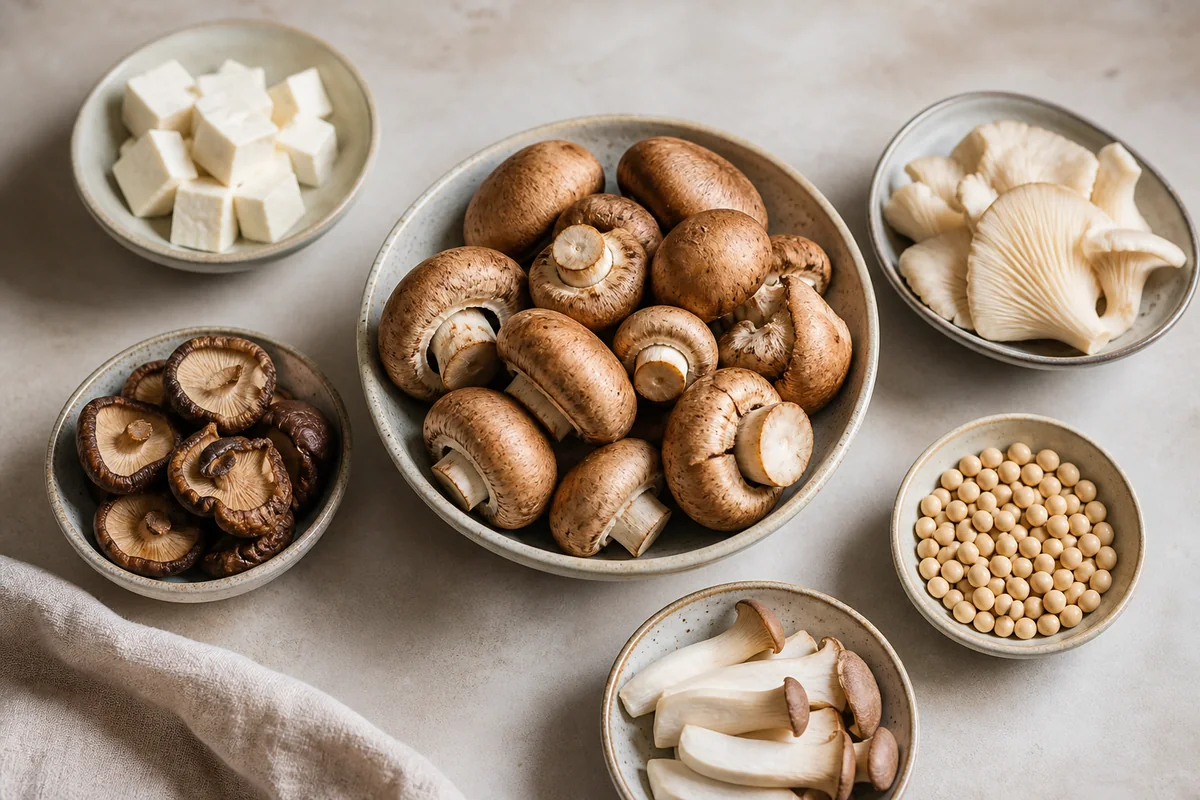
5 Best Chestnut Mushroom Substitutes for Any Recipe
Ingredients
Equipment
Method
- Choose a substitute by your goal: mild + tender (oyster/cremini) or deeper umami (shiitake/porcini).
- Use the ratio for the form you have: fresh mushrooms usually swap 1:1, while dried porcini need only about ¼ the amount.
- Adjust moisture: if the substitute releases lots of water (oyster/portobello), sauté uncovered until the pan looks drier.
- Match texture timing: slice thinner for a closer tender bite; cut thicker for a meatier chew.
- Taste the sauce after cooking—if it feels flat, add a small pinch of salt or a splash of mushroom soaking liquid (when using dried).
Notes
- For best texture, don’t crowd the pan—cook in batches if needed.
- If you rinse mushrooms, dry them well so they brown instead of steaming.
Tried this recipe?
Let us know how it was!
Carrie is a food writer and editor with more than 15 years of experience. She has worked for some of the biggest names in the food industry, including Bon Appétit, Food & Wine, and Martha Stewart Living.
As the Editor in Chief of EpicureDelight, Carrie oversees all of the content on the site. She also manages the team of contributing writers and editors, who help to create delicious recipes, helpful tips, and informative articles that you’ll find on the site.
A native of the Chicago area, Carrie is passionate about all things food. She loves trying new restaurants and experimenting with new recipes in her kitchen. She’s also a graduate of the Culinary Institute of America, so she knows a thing or two about food!



