That savory, tender bite you get from oyster mushrooms is hard to replace-but not impossible. The right oyster mushroom substitute depends on what your dish actually needs.
Some recipes want that soft, feathery pull. Others want body, browning, and umami.
Pick your swap based on three things: meaty texture, savory depth, or sauce-friendliness. Each substitute below is matched to those goals, with exact ratios and notes on when to skip it.
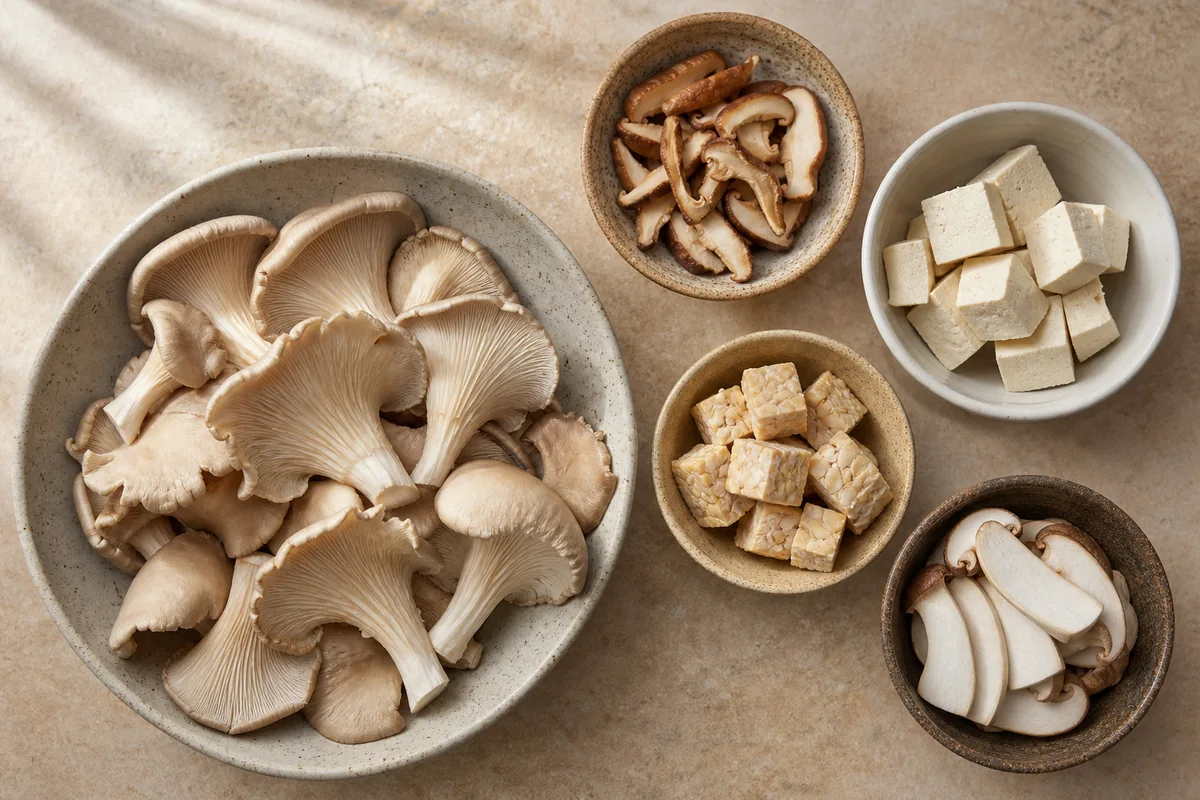
The best oyster mushroom swap is king oyster mushrooms at a 1:1 ratio for texture-forward dishes. Use shiitake when you need deep umami. For budget or pantry cooks, cremini or frozen mushrooms (drained and seared) both hold up well in sautés and soups.
5 Best Oyster Mushroom Substitutes for Better Results
These five options cover almost every cooking situation. The table below gives you ratios and best uses at a glance.
The full breakdowns follow.
| # | Substitute | Best For | Ratio | Key Note |
|---|---|---|---|---|
| 1 | King Oyster Mushrooms | Both | 1:1 | Slice thick, sear hard |
| 2 | Shiitake Mushrooms | Both | 1:1 | Remove tough stems first |
| 3 | Cremini Mushrooms | Both | 1:1 | Brown well, add garlic |
| 4 | Portobello (cooked, chopped) | Both | ¾:1 | Pre-cook to shed water |
| 5 | Frozen Mixed Mushrooms | Both | 1:1 | Drain, then sauté hot |
1. King Oyster Mushrooms
King oyster is the closest match you'll find for texture. The stems are dense and meaty, and when sliced into thick rounds and seared over high heat, they develop a chewy, satisfying bite that behaves almost identically to oyster mushrooms in stir-fries and braises.
Their flavor is mild enough to stay in the background of any sauce.
For recipes where delicate fungal notes matter, king oyster delivers without overpowering. Use them at 1:1, slice at least ½ inch thick, and don't crowd the pan.
King Oyster Mushrooms
Works for: stir-fries, searing, braises, ramen toppings, anything needing a meaty chew
Skip if: your recipe needs a thin, feathery texture-king oyster is too firm for delicate applications
- Slice thickness: Cut stems into ½-inch rounds or planks for the best sear
- Pan temperature: Use a very hot, dry pan for 2-3 minutes per side before adding oil
- Ratio: 1:1 by weight or volume-no adjustment needed
- Seasoning: Add soy sauce or garlic after browning, not before, to keep the crust
2. Shiitake Mushrooms
Shiitake is the umami powerhouse on this list. It hits harder than oyster mushrooms on depth, so the key is tempering it: remove the stems (they stay rubbery), sauté the caps until the edges start to crisp, then add your sauce.
That short extra step keeps the flavor from going muddy.
If you ever need to swap out shiitake itself, swapping dried mushrooms follows a similar logic of moisture management. Use shiitake at 1:1 for stir-fries, soups, and sautés, but start with a slightly smaller amount if your dish is subtle.
- Stir-fry: Slice caps thin, cook on high heat for 3-4 minutes, add to wok last
- Soup: Add caps in the last 5-8 minutes so they stay tender, not rubbery
- Sauté: Cook in a single layer with a touch of oil until edges turn golden before deglazing
- Skip if: Your recipe relies on oyster mushrooms' clean, mild taste-shiitake reads noticeably stronger
3. Cremini (Baby Bella) Mushrooms
Cremini is the easy weeknight swap. It has a deeper earthiness than oyster mushrooms, but when you slice it thin and let it properly brown in a hot pan, that earthy edge mellows into something close to satisfying.
The flavor behind cremini is genuinely savory once you get the browning right.
- Slice: Cut into ¼-inch slices for faster, more even browning
- Pan method: Don't stir for the first 2 minutes-let one side caramelize before flipping
- Aromatics: Add garlic and ginger after browning to lift the earthy flavor
- Ratio: 1:1 by weight-no reduction needed
- Skip if: Your dish is a light, broth-forward soup where a clean mushroom flavor matters
4. Portobello (Cooked and Chopped)
Portobello holds more water than oyster mushrooms. Drop one raw into a hot pan and it steams instead of browning, which softens your sauce and dilutes the flavor.
The fix is simple: cook the portobello first as a whole cap or in large pieces, let the water cook off, then chop it into oyster mushroom-sized pieces before adding it to the dish.
Once pre-cooked, the chopped portobello behaves well. It holds a meaty texture and absorbs sauce without falling apart.
If you're already using other hearty alternatives for this type of swap, the moisture-first principle applies there too.
Portobello (Cooked and Chopped)
Works for: pasta sauces, grain bowls, slow-cooked dishes, anything that can handle a bold savory note
Skip if: your dish is a quick stir-fry or a short-cook recipe-portobello needs pre-cooking time to work
- Pre-cook method: Sear whole caps in a dry pan over medium-high heat for 4-5 minutes per side
- Chop size: Cut into ½-inch pieces after cooking to mimic oyster mushroom portions
- Ratio: Use ¾ of the amount called for-portobello is denser once cooked down
- Water control: If liquid pools in the pan during pre-cooking, increase heat and cook uncovered until it evaporates
5. Frozen Mixed Mushrooms
Freezing breaks down cell walls, which means thawed mushrooms release water fast. That's not a flaw-it just means you need to drain them thoroughly before they hit the pan.
Press them in a clean towel, then sauté in a very hot pan in a single layer to recover the browning that fresh mushrooms develop naturally.
The storage timeline for fresh mushrooms is short, which makes frozen a genuinely practical fallback. Use them at 1:1, but treat the draining step as non-negotiable.
| Use | Ratio | Notes |
|---|---|---|
| Stir-fry | 1:1 | Drain, press dry, sauté on high heat in batches |
| Soup | 1:1 | Add directly from thawed; water releases into broth (fine) |
| Pasta sauce | 1:1 | Pre-sauté and reduce before adding to sauce base |
- Thaw: Overnight in the fridge or 30 minutes at room temperature
- Drain: Press in a kitchen towel to remove as much moisture as possible
- Sauté: Cook in a hot pan without stirring for 2-3 minutes to build color
- Skip if: Your recipe has a 1-2 minute cook window-frozen mushrooms need more time to develop a proper bite
Making Oyster Mushroom Substitutes Work
Choosing the right swap is only half the job. The other half is controlling moisture and browning, because both determine whether your substitute tastes like a thoughtful choice or an afterthought.
Start by deciding what your dish needs most: texture, umami, or liquid absorption. Then manage the pan accordingly.
A hot, uncrowded pan is the single most important variable across every substitute on this list. If your substitute steams instead of browns, it will taste flat no matter how good it is.
For dishes where savory liquid swaps are also in play, get your mushrooms browned before you add any sauce.
- Control moisture first: Pre-cook wetter substitutes (portobello, frozen) before combining with other ingredients. Reduce liquid until the pan looks almost dry.
- Match piece size: Cut your substitute to the same size oyster mushrooms would be in that dish. Bigger pieces stay meatier; smaller pieces absorb sauce faster.
- Season after browning: Salt draws moisture out during cooking. Add pungent aromatics like garlic and salt only once you have a crust, not before, so your substitute browns instead of steaming.
Frequently Asked Questions
King oyster mushrooms are the best match. Slice the stems into thick rounds and sear on high heat for a chewy, satisfying bite that holds up in a wok.
Cook portobello first as a whole cap over medium-high heat until the liquid evaporates. Then chop and add it to your dish-it won't release more water after that.
No. Shiitake stems stay fibrous and chewy even with long cooking. Use only the caps, and save stems for making stock.
Yes, if you drain them well. Thaw overnight in the fridge, press out moisture with a kitchen towel, then sauté in a very hot pan to restore browning.
Shiitake caps hold their shape well in broth without going mushy. Add them in the last 5-8 minutes of simmering for the best texture.
5 Best Oyster Mushroom Substitutes for Better Results
Ingredients
Equipment
Method
- Identify your dish goal (meaty stir-fry bite, deep umami, or saucy mushroom texture) and pick the closest substitute from the list.
- Use the listed ratio as your starting point; if the substitute is wetter (portobello, frozen), cook first and drain/reduce before adding sauce.
- Match the prep: slice thick for “meaty” bites (king oyster), remove shiitake stems for tenderness, or chop seared portobello/eggplant into similar-sized pieces.
- Finish with heat control: cook uncovered and don’t overcrowd the pan so the substitute browns instead of steaming.
- Taste and adjust seasoning after the first sauté—mushrooms mute salt early and then brighten the flavor once browned.
Notes
- Browning is the key to replacing oyster mushrooms’ savory depth—high heat and space in the pan matter.
- For sauces, reduce water first (especially portobello and frozen mushrooms) to prevent a thin, watery result.
Tried this recipe?
Let us know how it was!
Carrie is a food writer and editor with more than 15 years of experience. She has worked for some of the biggest names in the food industry, including Bon Appétit, Food & Wine, and Martha Stewart Living.
As the Editor in Chief of EpicureDelight, Carrie oversees all of the content on the site. She also manages the team of contributing writers and editors, who help to create delicious recipes, helpful tips, and informative articles that you’ll find on the site.
A native of the Chicago area, Carrie is passionate about all things food. She loves trying new restaurants and experimenting with new recipes in her kitchen. She’s also a graduate of the Culinary Institute of America, so she knows a thing or two about food!