
Clotted cream sits somewhere between butter and whipped cream, and that's exactly what makes it hard to replace. It holds its shape, carries a faint cooked sweetness, and lands on a scone like it was made for that specific moment.
The right clotted cream substitute depends entirely on what job you need it to do.
If you need a thick, spoonable dollop, you want something with very little free moisture. If you need a smooth spread for a filling or frosting, you have more flexibility.
Not every dairy product works both ways, so knowing your goal first saves you from fixing a texture problem after the fact.
Clotted cream substitutes depend on whether you want a thick dollop or a smooth spread. Greek yogurt (strained) and mascarpone are the two closest matches. Cream cheese and sour cream work well with small adjustments. Ricotta and a butter-milk reduction are solid emergency swaps.
Best Clotted Cream Substitute Options (Quick Table)
Picking the right swap is faster when you can see all five options side by side. Use this table to match your recipe's needs before committing to one.
| # | Substitute | Best For | Ratio | Key Note |
|---|---|---|---|---|
| 1 | Greek Yogurt (strained) | Scones & Toppings | 1:1 | Strain 20-30 min first |
| 2 | Mascarpone | Desserts & Fillings | 1:1 | Chill for firmer set |
| 3 | Sour Cream (full-fat) | Baking & Quick Desserts | 1:1 | Optional 10-15 min strain |
| 4 | Cream Cheese (softened) | Frosting & Spreads | ¾:1 | Loosen with milk splash |
| 5 | Ricotta (whole milk, blended) | Cakes & Fillings | 1:1 | Blend smooth, drain briefly |
5 Best Clotted Cream Substitutes, Ranked by Texture
1. Greek Yogurt (Full-Fat, Strained)
Full-fat Greek yogurt is one of the strongest options here, especially when you strain it. After 20-30 minutes in a fine-mesh sieve lined with cheesecloth, it firms into a spoonable, thick body that sits on a scone without sliding.
If choosing a yogurt-based swap feels uncertain, this version is the most dependable.
It won't have clotted cream's faint cooked sweetness, but the texture is right. The flavor is clean and mild enough that most people don't notice the difference with jam or fruit on top.
- Best use: Spooned onto scones, crumbles, or fruit-forward desserts
- How to strain: Line a sieve with cheesecloth, add yogurt, refrigerate 20-30 minutes
- Texture result: Noticeably thicker and less watery than straight-from-tub yogurt
- Ratio: 1:1 after straining
- Flavor note: Mild tang; balance with a small amount of honey if your recipe skews sweet
Skip if: you're replicating the specific golden, cooked flavor of traditional clotted cream for a formal cream tea.
2. Mascarpone (Stirred Smooth)
Mascarpone is the richest option on this list and the easiest to use straight from the container. It is high-fat, barely tangy, and smooth in a way that feels close to clotted cream's lush body.
For anyone working with soft Italian cheese in a dessert context, this is the most natural fit.
- Best use: Cheesecake-style desserts, tarts, creamy fillings, and dessert frostings
- Temperature tip: Chill after stirring to firm it up; it softens quickly at room temperature
- Texture gap: Slightly less "set" than clotted cream; the smooth, buttery profile makes up for it in most recipes
- Ratio: 1:1, no adjustment needed
- Flavor note: Neutral and rich, without the tang of sour cream or cream cheese
Skip if: you need a firm, spoonable dollop that holds its peak at room temperature.
3. Sour Cream (Full-Fat)
Full-fat sour cream works well in baking where a bit of tang fits the flavor profile. It is thinner than clotted cream out of the tub, but a quick 10-15 minute strain through a fine-mesh sieve brings it closer.
The dairy profile comparison between sour cream and yogurt is worth checking if you're deciding between the two for a specific recipe.
Stir it smooth after straining and use it immediately. It won't match clotted cream's cooked richness, but it blends into batters and dollops onto warm puddings without any fuss.
Skip if: you're making a lightly flavored scone topping where the tang would compete with the cream's neutral sweetness.
4. Cream Cheese (Softened, Loosened)
Cream cheese has the right thickness, but it needs a small adjustment before it behaves like clotted cream. Straight from the block, it is too dense and too tangy.
Whisk it smooth, then add 1-2 teaspoons of whole milk per ½ cup until it reaches a soft, dollop-able consistency. If you're already familiar with picking the right dairy thickener, this adjustment will feel intuitive.
Cream Cheese vs Clotted Cream
Works for: frosting-style applications, thick spreads, cream-based fillings, and recipes that tolerate a mild tang
Skip if: your recipe depends on a neutral, butter-forward flavor with no tang at all
- Best use: Frostings, thick cake fillings, and sandwich-style spread applications
- How to loosen: Whisk until smooth, then add milk 1 teaspoon at a time until you hit a soft spoonable texture
- Ratio: Start at ¾:1, then adjust up with milk to reach full volume
- Flavor note: Tangier than clotted cream; a pinch of powdered sugar balances it in sweet recipes
Skip if: you need a butter-forward flavor with zero tang.
5. Ricotta (Whole Milk, Blended)
Ricotta is grainier than clotted cream by nature, but blending it smooth fixes most of that texture problem. Use whole-milk ricotta, blend for 60-90 seconds, then drain briefly in a sieve to reduce the extra moisture.
The result is a mild, creamy spread that works in fillings and layered desserts. For a sense of how tart dairy profiles shift as you move between options, ricotta sits at the mildest, least tangy end.
- Best use: Layered cakes, ricotta-based desserts, creamy fillings, and baked pastries
- Blending step: Use a food processor or immersion blender for 60-90 seconds until totally smooth
- Draining step: Optional, but 10 minutes in a fine-mesh sieve reduces wateriness noticeably
- Ratio: 1:1 after blending and draining
Skip if: you need the silky, cooked richness of clotted cream without any trace of graininess.
Making Any Clotted Cream Substitute Work
Every substitute on this list has one fixable flaw: too thin, too tangy, or too loose. The cooked, velvety character of the original is hard to fully replicate, but closing the gap is mostly about controlling moisture and letting the swap rest before serving.
Most substitutes settle and firm after 10-20 minutes in the fridge, which makes texture much easier to judge.
- Fix thickness: Strain yogurt, sour cream, or ricotta through a fine-mesh sieve for 10-30 minutes; this alone closes most of the texture gap.
- Fix tang: A small pinch of powdered sugar or a drop of vanilla balances the sharpness of cream cheese and sour cream in sweet applications.
- Fix looseness after chilling: Stir mascarpone or cream cheese substitutes once more before serving; cold storage can separate the texture slightly.
Frequently Asked Questions
Strained full-fat Greek yogurt is the closest for scones because it holds a thick, spoonable shape. Mascarpone is richer but slightly softer; sour cream works but adds noticeable tang.
Yes, if you keep it chilled until just before use. Mascarpone softens quickly at room temperature, so stir and chill it after mixing to maintain a stable, set texture.
Add whole milk one teaspoon at a time and whisk between additions. Stop when the substitute reaches a soft, spreadable consistency without becoming runny or loose.
Most substitutes keep for 3-5 days refrigerated in a sealed container. Stir before each use, as mascarpone and strained yogurt can release a small amount of liquid on standing.
It adds a mild tang that clotted cream doesn't have. In most desserts with jam, fruit, or sweetened bases, the difference is minor and rarely noticeable to most people.
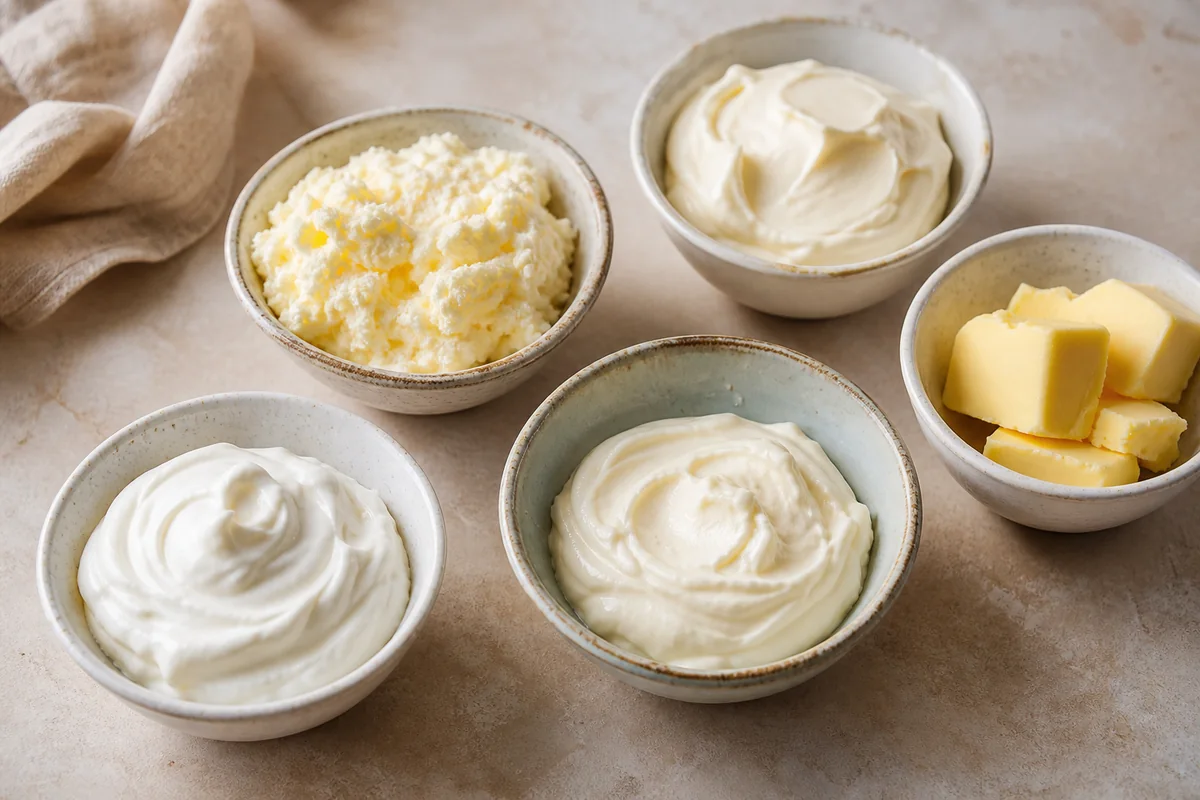
5 Best Clotted Cream Substitutes (Honest Picks)
Ingredients
Equipment
Method
- Decide the goal: thick dollop/spoonable (scones & toppings) vs smooth spread (cakes & fillings).
- Pick the closest match from the list above, using the given ratio as your starting point.
- Adjust consistency: strain thickening-prone swaps (yogurt/sour cream/ricotta) or loosen cream cheese with a small splash of milk.
- Taste-adjust for recipes: add a pinch of salt if your swap tastes flat, or balance tanginess with a tiny amount of sugar for desserts.
- Use immediately for best texture; if chilling, stir again right before serving to restore a creamy body.
Notes
- Clotted cream is thick because of its fat and reduced whey—thickness is usually the main target, not just flavor.
- If your recipe bakes (scones, cakes), choose a substitute that holds texture: strained yogurt or mascarpone tend to be easiest to bake with.
Tried this recipe?
Let us know how it was!
Carrie is a food writer and editor with more than 15 years of experience. She has worked for some of the biggest names in the food industry, including Bon Appétit, Food & Wine, and Martha Stewart Living.
As the Editor in Chief of EpicureDelight, Carrie oversees all of the content on the site. She also manages the team of contributing writers and editors, who help to create delicious recipes, helpful tips, and informative articles that you’ll find on the site.
A native of the Chicago area, Carrie is passionate about all things food. She loves trying new restaurants and experimenting with new recipes in her kitchen. She’s also a graduate of the Culinary Institute of America, so she knows a thing or two about food!



