
Out of Cointreau, a margarita goes flat fast. That bright orange-oil edge, the clean finish, the middle-ground sweetness that holds a cocktail together without pushing it syrupy-those are exactly the things a good cointreau substitute needs to replicate.
Most swaps get one or two of those right. This guide ranks five by how closely they nail all three.
Cointreau is triple-distilled with both bitter and sweet orange peels, which gives it a sharper, cleaner citrus note than most liqueurs. That's what separates it from a generic orange-flavored syrup.
When citrus extract flavors or other liqueurs step in, the closest matches are the ones that keep bitterness in the picture.
Dry-style triple sec is the closest cointreau substitute for cocktails, swapping 1:1 with minimal flavor shift. Grand Marnier works for spirit-forward drinks at ¾ the amount. For baking without alcohol, orange extract plus simple syrup covers the aroma gap.
5 Best Cointreau Substitutes (Reference Guide)
Every swap below targets Cointreau's defining profile: orange-oil aroma, moderate sweetness, and a finish that doesn't cling. The table covers starting ratios and the one flavor variable most likely to need fixing.
| # | Substitute | Best For | Ratio | Key Note |
|---|---|---|---|---|
| 1 | Triple Sec (dry-style) | Both | 1:1 | Check sugar level first |
| 2 | Grand Marnier | Both | ¾:1 | Adds cognac body |
| 3 | Dry Orange Liqueur | Both | 1:1 | Avoid syrupy varieties |
| 4 | Orange Extract + Syrup | Baking | 1:1 | No alcohol structure |
| 5 | OJ + Zest + Neutral Spirit | Both | 1:1 | Less bitter, more fresh |
1. Triple Sec (Dry-Style)
Dry-style triple sec is the most direct swap for Cointreau in drinks. The orange-oil character stays close, the sweetness level is manageable, and it blends into cocktails without announcing itself. Check the orange liqueur swaps page if you need to go one level deeper on triple sec variations.
- Flavor match: Clean citrus with moderate bitterness-very close to Cointreau's profile
- Best for: Margaritas, spritzes, and punches; acceptable in citrus glaze recipes too
- Ratio: Use 1:1; no adjustment needed if the triple sec is a dry-style bottle
- If too sweet: Cut back added syrup by 1-2 teaspoon or squeeze in a little extra lime to restore tang
- Label check: Look at sugar content on the bottle-anything heavily sweetened will push cocktails over
Skip if your triple sec is the thick, very syrupy kind. That extra sugar will overpower a balanced drink.
2. Grand Marnier
Grand Marnier earns its spot here for cocktails that want more depth. The choosing between cognac liqueurs question comes up often, and Grand Marnier answers it with warm vanilla and mild spice underneath the orange note.
- Start at ¾: Use 3 tablespoon Grand Marnier where you'd use 4 tablespoon Cointreau, then taste
- Flavor shift: Expect warmer notes-vanilla, soft spice-instead of Cointreau's crisper citrus
- If too boozy: Dilute with citrus juice rather than adding sweetener; it keeps balance without tipping sweet
- Baking use: Works well in chocolate-orange cakes, crêpes Suzette, and soufflés where the cognac base adds to the dish
Skip if you need a clean, bright orange finish-delicate citrus desserts will taste heavier than intended.
3. Dry Orange Liqueur
A lower-sweetness dry orange liqueur keeps the citrus oils front and center, which is what makes it a reliable Cointreau stand-in. Look for bottles that mention reduced sugar or use the word "dry" prominently-the this aged citrus spirit category includes several good options at different price points.
- Flavor match: Orange-oil aroma without syrupy texture; crisp finish similar to Cointreau
- Ratio: 1:1 across cocktails; taste for sweetness before scaling in baking
- In baking: Use it as an aroma booster, but account for its sugar content when measuring other sweeteners
- How to check: Taste a small amount straight-if it coats your tongue heavily, it's too sweet for a direct swap
Skip if the bottle tastes strongly syrupy before you even open the recipe. Sweetness overshoots what Cointreau provides and throws off balance.
4. Orange Extract + Simple Syrup
This combination is alcohol-free, which makes it the right pick for baking, glazes, and citrus syrups where the liqueur's orange aroma matters but the spirit itself doesn't. Understanding the syrup alternative choice also affects how you build the base sweetness here.
Orange Liqueur vs. Extract + Syrup
Works for: baking glazes, citrus cakes, fruit tarts, simple syrups for mocktails
Skip if: you need alcohol evaporation, boozy aroma, or cocktail structure
- Starting blend: Mix ¼ teaspoon orange extract into 1 tablespoon simple syrup; scale up to match the recipe volume
- Start small: Extract is concentrated-taste before adding the full amount or the aroma goes harsh
- If it tastes artificial: Pull back the extract by half and add fresh orange zest for natural orange-oil character instead
- Total volume: For 2 tablespoon of Cointreau, blend about ½ teaspoon extract with 2 tablespoon syrup, then adjust sweetness
Skip if the recipe depends on alcohol-cocktail structure and the evaporation effect in baking both need actual spirit.
5. Orange Juice + Zest + Neutral Spirit
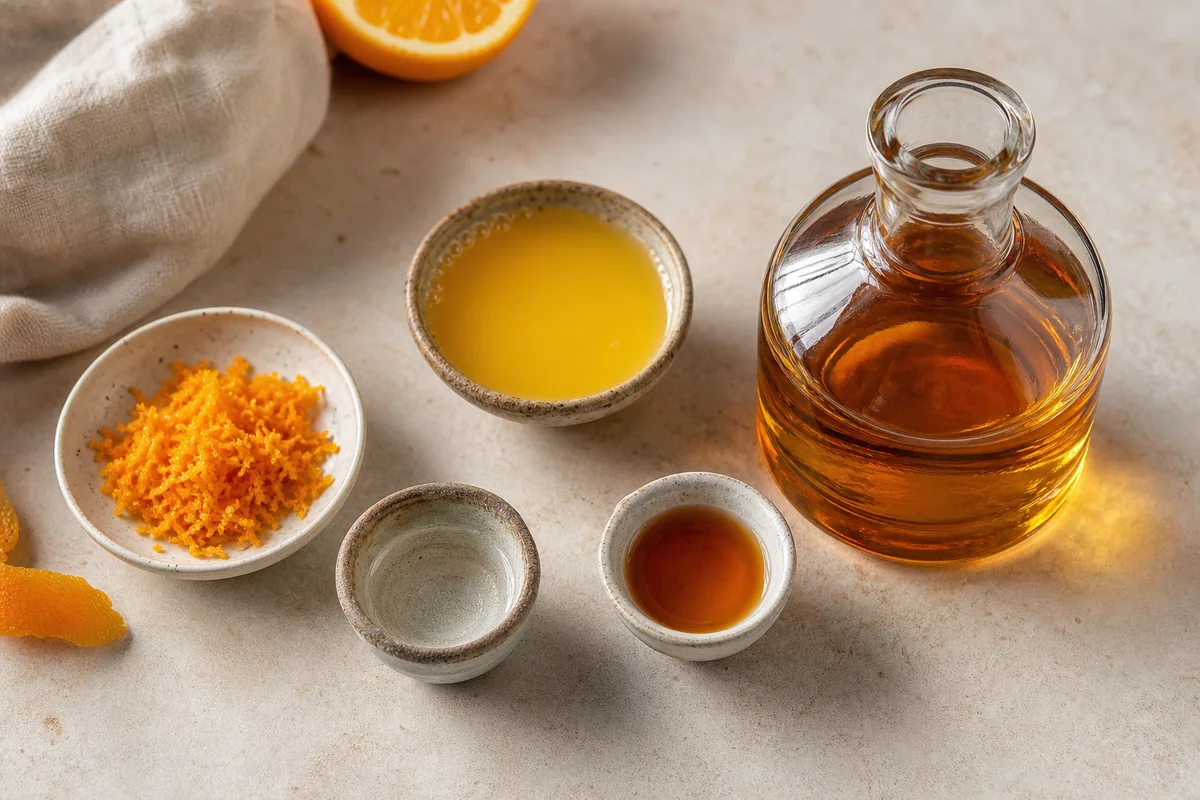
This is the emergency swap when you have citrus and a bottle of vodka but no liqueur. Juice handles the bulk, zest carries the orange-oil flavor that juice alone misses, and a splash of neutral spirit gives it the liqueur presence that fresh zest options can't fully replace on their own.
| Use | Ratio | Notes |
|---|---|---|
| Cocktails | 2 tablespoon OJ + ½ teaspoon zest + 1 teaspoon vodka | Per 2 tablespoon Cointreau; add extra lime to sharpen |
| Baking | 2 tablespoon OJ + 1 teaspoon zest | Skip neutral spirit; zest alone carries the oil |
| Glazes | 1 tablespoon OJ + 1 teaspoon zest + ½ teaspoon syrup | Reduce by 1 teaspoon to compensate for lower sweetness |
- Zest first: Always include it-juice without zest tastes flat and thin compared to any liqueur
- Flavor shift: Less bitter, more fresh-squeezed; works in lighter recipes but lacks Cointreau's sharpness
- Balance fix: Add a squeeze more lime or lemon in cocktails if the mix tastes dull
- Neutral spirit: Vodka works best; use just enough to round the flavor, not enough to taste it
Skip if your recipe depends on orange liqueur's bitterness and complexity. This mix is fresher but noticeably less structured.
Making Cointreau Substitutes Taste Right
Getting a swap to land correctly comes down to three variables: sweetness, orange-oil aroma, and bitterness or alcohol character. Most substitutes nail one or two but need a small correction on the third.
Learning how swapping citrus extracts affects balance helps here, and the same logic applies across all five options on this list.
- Tasting workflow: Mix a small test batch first. Taste it fully assembled-then decide whether sweetness or acid needs adjustment before changing the substitute volume.
- Cocktails vs. baking: In cocktails, fix sweetness with acid (more lime or lemon) rather than dilution. In baking, reduce sugar elsewhere in the recipe before pulling back the substitute amount.
- Ratio dialing: Always start at the lower end of the suggested ratio. Add more in half-tablespoon increments until the orange presence reads right-going too far is harder to undo.
Frequently Asked Questions
Dry-style triple sec is the closest match, used 1:1. It keeps the orange-oil aroma and clean finish that hold a margarita together without adding extra sweetness.
Start at ¾ the Cointreau amount. Grand Marnier is sweeter and more spirit-forward, so using the full measure often tips the balance toward cognac and away from bright citrus.
Orange extract mixed with simple syrup works well in glazes and citrus cakes. Start with ¼ teaspoon extract per tablespoon of syrup, then adjust aroma to taste.
Add acid first-a squeeze of lime or lemon cuts perceived sweetness without diluting the drink. In baking, reduce other sweeteners by 1-2 teaspoon before adjusting the substitute amount.
Not always. Dry-style triple sec swaps cleanly, but heavily sweetened versions push cocktails syrupy. Check the sugar content before using it at a 1:1 ratio.
5 Best Cointreau Substitutes (Honest Picks)
Ingredients
Method
- Identify your use: cocktail, syrup, or baked dessert—this changes whether you prioritize alcohol burn, sweetness, or pure orange aroma.
- Pick the closest match from the ranked list, then start with the swap ratio for that substitute.
- If the substitute is sweeter than cointreau (many triple secs), reduce sweetness elsewhere (e.g., less sugar/syrup) or add a touch more lime/lemon in cocktails.
- If the substitute tastes too bitter or too boozy, dilute slightly with citrus juice (drinks) or add a bit more fat/base (baking) to smooth it out.
- Taste once you’ve mixed your full batch; adjust in small increments so you don’t overshoot the balance.
Notes
- For cocktails, prioritize the orange-oil aroma and sweetness balance first; alcohol strength second.
- For baking, alcohol mainly contributes aroma—accuracy matters less, but flavor oils matter more.
Tried this recipe?
Let us know how it was!
Carrie is a food writer and editor with more than 15 years of experience. She has worked for some of the biggest names in the food industry, including Bon Appétit, Food & Wine, and Martha Stewart Living.
As the Editor in Chief of EpicureDelight, Carrie oversees all of the content on the site. She also manages the team of contributing writers and editors, who help to create delicious recipes, helpful tips, and informative articles that you’ll find on the site.
A native of the Chicago area, Carrie is passionate about all things food. She loves trying new restaurants and experimenting with new recipes in her kitchen. She’s also a graduate of the Culinary Institute of America, so she knows a thing or two about food!



