
Sticky candy that turns grainy, glazes that lose their shine, bars that crumble instead of chew. Most of those problems trace back to one missing ingredient.
Finding the right corn syrup substitute means knowing what the syrup actually does before you swap it out.
Corn syrup keeps sugar from crystallizing and gives recipes a smooth, glossy finish. It also adds body, which is why candy made without it can feel dry or brittle.
The substitute you pick depends on whether you need that anti-crystallization effect, a thick pour, or just a clean sweetness.
Corn syrup keeps sugar smooth and prevents crystallization. Honey and agave work 1:1 for most baking. Invert sugar is the top pick for candy. Brown rice syrup handles chew well. Maple syrup adds aroma-use less. Molasses is powerful-start at half the amount.
5 Best Corn Syrup Substitutes Ranked by Use Case
Not every swap behaves the same way in heat, moisture, or acid. The reference table below shows ratios at a glance, and each section after it walks through when the substitute actually works.
| # | Substitute | Best For | Ratio | Key Note |
|---|---|---|---|---|
| 1 | Honey | Both | 1:1 | Slight floral flavor |
| 2 | Agave Syrup | Both | 1:1 | Very neutral taste |
| 3 | Brown Rice Syrup | Both | 1:1 | Good chew, low grain |
| 4 | Maple Syrup | Baking | ¾:1 | Use slightly less |
| 5 | Invert Sugar | Candy | 1:1 | Best anti-crystallization |
1. Honey
Honey is the easiest reach for most home bakers. It swaps in at a 1:1 ratio and handles glazes, bar cookies, and sticky sauces without requiring extra math.
The flavor is mild in most applications, but it does come through. Light or "mild" honey varieties stay closest to neutral.
For context on this floral sweetener's flavor range, clover honey reads cleanest while buckwheat reads almost molasses-like.
- Cookies and bars: Replace corn syrup 1:1; no other adjustment needed.
- Glazes: Apply warm so honey stays pourable and glossy.
- Caramel-style sauces: Works well at medium heat, but watch closely-honey browns faster than corn syrup.
Skip if: the recipe is flavor-sensitive, like a delicate vanilla fondant or a pale glaze where any aroma would read as off.
2. Agave Syrup
Agave is the closest thing to a flavor-neutral liquid sweetener. It swaps at 1:1 and doesn't compete with other ingredients the way honey can.
That makes it a solid pick for these syrup-to-syrup swaps in frostings and quick glazes.
The one catch is viscosity. Some agave brands pour thinner than corn syrup, which can affect set time in candy or chilled bars.
- Thin agave: Simmer for 1-2 minutes before use to reduce and thicken slightly.
- Frostings: Use as-is; thinner texture is less noticeable when whipped in.
- Cold glazes: Let the finished dish chill longer than usual to compensate for lower viscosity.
- Vegan baking: Agave is plant-based, so it works when honey is off the table.
Skip if: you can't spare 1-2 extra minutes to reduce it and the recipe depends on exact set texture.
3. Brown Rice Syrup
Brown rice syrup has a mild, almost buttery sweetness that stays out of the way. It performs well in recipes where chew matters, like granola bars, chewy cookies, and soft candy.
If you're choosing among grain-based syrups, this one handles crystallization better than most.
Brown Rice Syrup vs. Corn Syrup
Works for: granola bars, chewy candy, frostings that need body and a smooth set
Skip if: you have a rice allergy or need a completely allergen-free product
- Ratio: Use 1:1 by volume.
- Candy and frostings: Anti-crystallization performance is close to corn syrup.
- Flavor: Very mild-you won't taste it in most finished recipes.
- Texture: Slightly thicker than corn syrup, so it blends best when warmed first.
Skip if: you're cooking for someone with a rice-derived ingredient allergy.
4. Maple Syrup
Maple syrup brings aroma, so the ratio drops to ¾:1. Use three-quarters of the amount the recipe calls for, and reduce any other added sugar by about 1 tablespoon per quarter cup.
Grade A light amber keeps the flavor mild; grade B reads stronger and works better in spiced or dark recipes. For recipes where you're also swapping out maple in the same dish, check that your sweetness levels balance.
- Best use: Pancake glazes, spiced cookies, gingerbread, and pecan-style fillings.
- Ratio: ¾ cup maple syrup replaces 1 cup corn syrup.
- Crystallization risk: Moderate-maple syrup is not as protective as invert sugar.
Skip if: you're making a delicate or lightly flavored dessert where maple's aroma would read out of place.
5. Invert Sugar
Invert sugar is the most technically precise swap for corn syrup. It handles anti-crystallization better than honey or agave, and it keeps candy, fondant, and smooth glazes looking glossy far longer.
You can buy it as Trimoline or make a simple version at home by cooking sugar, water, and cream of tartar until it breaks down.
Invert Sugar vs. Corn Syrup
Works for: candy, fondant, smooth caramel, glazes that need to hold at room temperature
Skip if: you don't want to source specialty ingredients or add an extra prep step
For a quick look at lighter syrup options when invert sugar feels like overkill, agave or honey will handle most everyday jobs.
- Ratio: 1:1 by weight or volume.
- Candy: Best choice for hard candy, toffee, and fondant centers.
- Homemade version: Combine 2 cups sugar, ¾ cup water, ¼ teaspoon cream of tartar; simmer 20 minutes.
- Storage: Keeps well sealed at room temperature for several weeks.
Skip if: sourcing or making invert sugar adds more complexity than the recipe warrants.
Making a Corn Syrup Substitute Work
Picking the substitute is only half the job. Matching its viscosity and sweetness to what corn syrup would have done is what keeps the recipe on track.
If you're working with a thinner syrup like agave, a brief 2-minute simmer brings it closer to corn syrup's body. For crystallization-sensitive recipes, invert sugar or brown rice syrup are the safest picks-they suppress grain formation the way corn syrup does.
It also helps to know how this sticky syrup behaves over time, so you understand what you're mimicking in the first place.
- Viscosity fix: Simmer thin substitutes for 1-2 minutes, or extend the recipe's chill/set time by 10-15 minutes.
- Sweetness balance: Honey and maple read sweeter than corn syrup-reduce other sugar by 1-2 tablespoon per cup of substitute used.
- Crystallization risk: If graininess is a concern, choose invert sugar or brown rice syrup over honey or maple every time.
Frequently Asked Questions
Honey is the closest 1:1 swap for most baking. It adds mild sweetness and keeps texture smooth, though a faint floral note may come through in delicate recipes.
Honey offers some protection against crystallization, but it's not as reliable as invert sugar. For hard candy or fondant, use invert sugar instead.
Simmer the substitute for 1-2 minutes before adding it to your recipe. You can also extend the recipe's set or chill time by 10-15 minutes.
Agave syrup is the cleanest pick for clear glazes-its neutral flavor and light color won't cloud or tint the finish the way honey or molasses can.
Agave, brown rice syrup, maple syrup, molasses, and invert sugar are all vegan. Honey is not considered vegan and should be avoided if that matters.
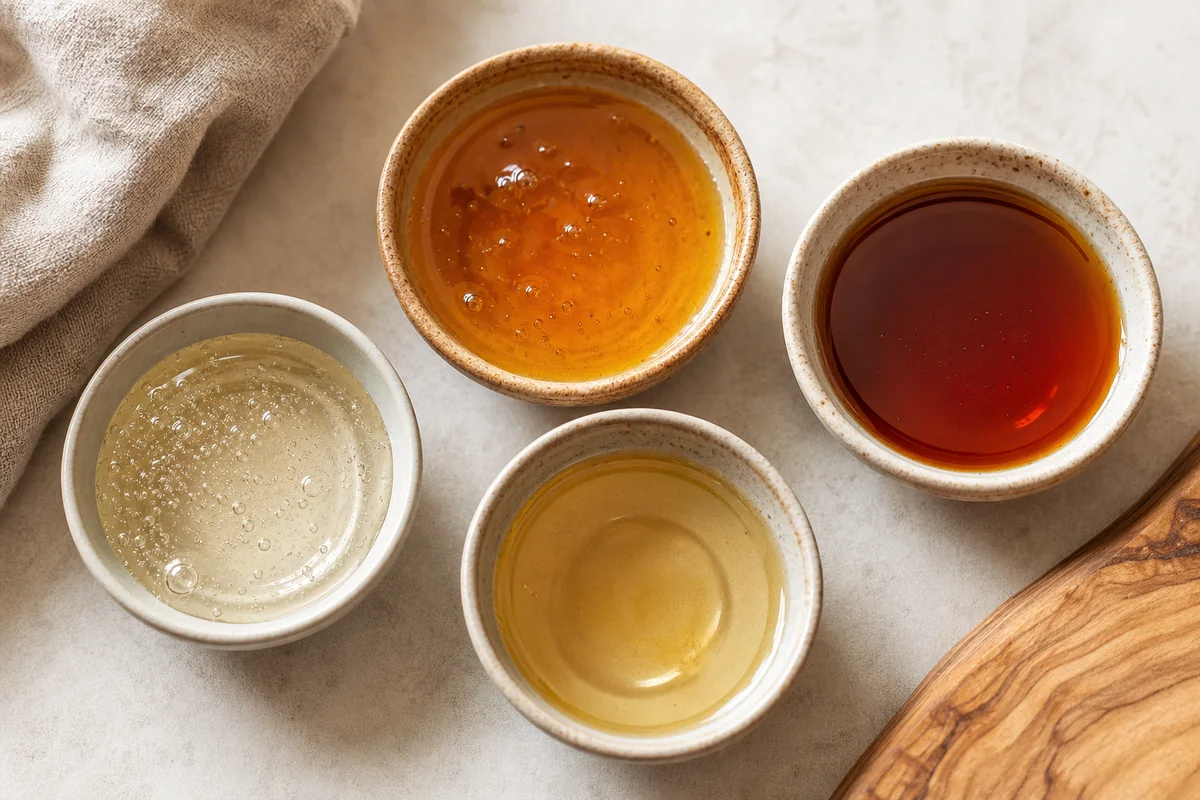
5 Best Corn Syrup Substitutes Worth Trying
Ingredients
Equipment
Method
- Identify your goal: anti-crystallization (candy/frosting smoothness) vs. chew/viscosity (bars, glazes).
- Choose the closest substitute from the grouping above and use the listed ratio (e.g., ¾:1 means use ¾ as much by volume or weight).
- If the substitute is thinner than corn syrup (often agave), simmer 1–2 minutes to concentrate before mixing.
- Mix into warm ingredients when possible, then let the recipe rest or chill long enough for the syrup to set.
- Taste-adjust at the end: add a small pinch of salt for harsh sweetness or a touch of sugar if your substitute is less sweet than corn syrup.
Notes
- For crystallization-sensitive candy, invert sugar or brown rice syrup typically performs best.
- For sticky glazes and baking, honey or agave often gives the smooth finish you want with minimal disruption.
Tried this recipe?
Let us know how it was!
Carrie is a food writer and editor with more than 15 years of experience. She has worked for some of the biggest names in the food industry, including Bon Appétit, Food & Wine, and Martha Stewart Living.
As the Editor in Chief of EpicureDelight, Carrie oversees all of the content on the site. She also manages the team of contributing writers and editors, who help to create delicious recipes, helpful tips, and informative articles that you’ll find on the site.
A native of the Chicago area, Carrie is passionate about all things food. She loves trying new restaurants and experimenting with new recipes in her kitchen. She’s also a graduate of the Culinary Institute of America, so she knows a thing or two about food!



